

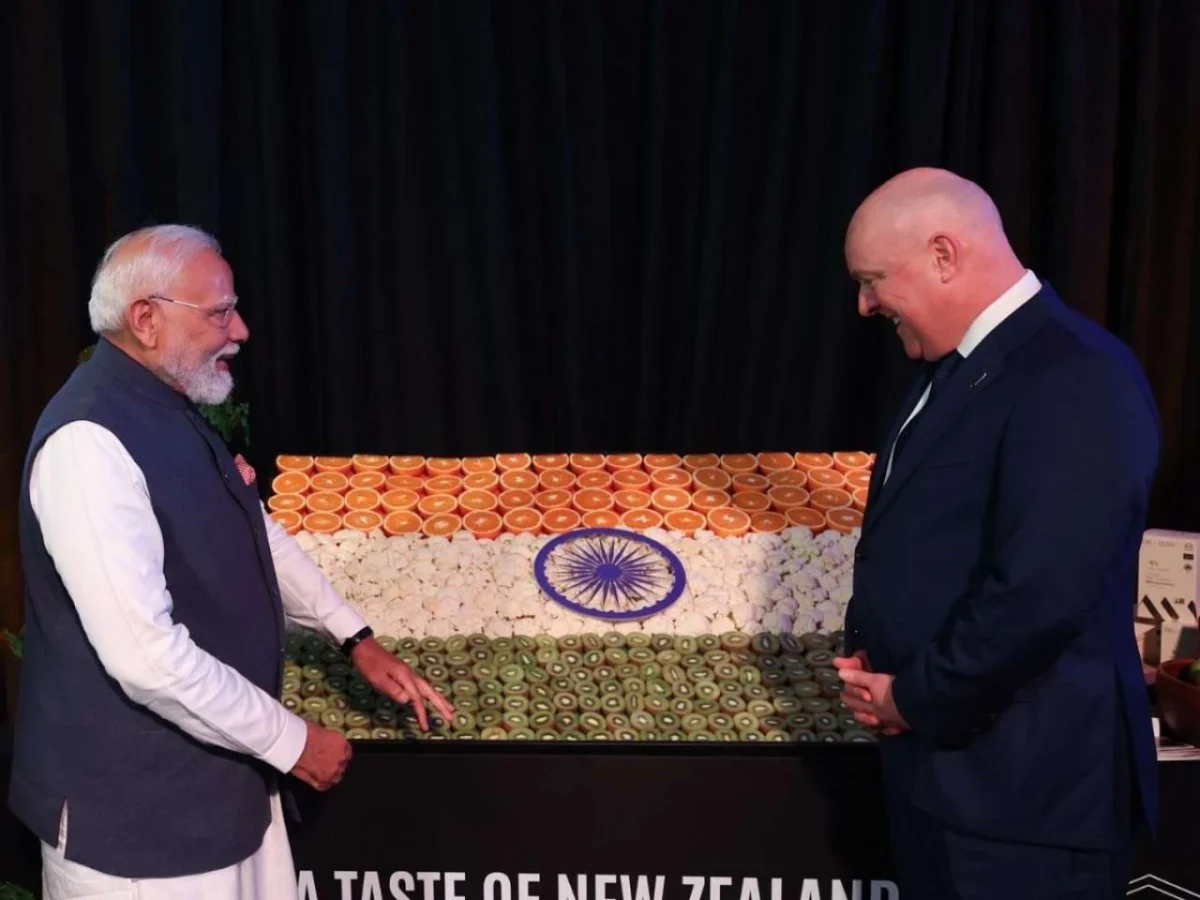
Auckland, New Zealand – July 11, 2026 – In a landmark visit marking the first by an Indian Prime Minister to New Zealand in four decades, Prime Minister Narendra Modi on Saturday declared an era of unprecedented economic collaboration between India and New Zealand. Highlighting the swift conclusion of a historic Free Trade Agreement (FTA) and a substantial investment commitment, PM Modi expressed unwavering confidence that bilateral economic ties are poised for a significant transformation, targeting a doubling of two-way trade to NZ$7 billion (approximately Rs 35,000 crore) by 2030.
The visit, culminating in the formal elevation of bilateral relations to a "Strategic Partnership," saw the adoption of the "India-New Zealand Strategic Partnership: Roadmap to 2030." This ambitious framework is designed to deepen cooperation across a spectrum of vital sectors, including trade, agriculture, security, innovation, and crucial people-to-people connections over the next four years and beyond. New Zealand’s commitment of a staggering USD 20 billion investment in India over the next 15 years underscores a robust global confidence in India’s dynamic economic trajectory and its role as a key partner in development.
Main Facts: A New Chapter in Bilateral Relations
Prime Minister Modi’s address at the Business and Sports Engagement event in Auckland served as the central platform for outlining this renewed vision. The core tenets of this burgeoning partnership include:
- Strategic Partnership Elevation: India and New Zealand formally elevated their relationship to a ‘Strategic Partnership,’ signifying a deeper, more comprehensive engagement across all facets.
- Historic FTA in Record Time: The Free Trade Agreement (FTA) was concluded in an impressive nine months, hailed by PM Modi as a testament to both nations’ commitment and a harbinger of unprecedented opportunities in market access, investment, services, and technology.
- Ambitious Trade Target: A definitive goal to double bilateral trade in goods and services to NZ$7 billion (Rs 35,000 crore) by 2030 was set, reflecting a shared aspiration for robust economic growth.
- Massive Investment Commitment: New Zealand pledged a substantial USD 20 billion investment in India over the next 15 years, positioning itself as a pivotal partner in India’s ongoing development journey.
- Roadmap to 2030: The "India-New Zealand Strategic Partnership: Roadmap to 2030" was officially adopted, providing a structured blueprint for cooperation in trade, agriculture, security, innovation, and cultural exchange.
- First PM Visit in 40 Years: This visit by Prime Minister Modi marks a historic moment, being the first by an Indian Prime Minister to New Zealand in four decades, underscoring its profound significance in recalibrating diplomatic and economic engagement.
Chronology of a Transformative Visit
Prime Minister Narendra Modi’s two-day official visit to New Zealand, from July 10-11, came at the invitation of New Zealand Prime Minister Christopher Luxon. The visit was meticulously planned to inject fresh momentum into the bilateral relationship, which, despite cordial ties, had seen limited high-level political engagement over the past few decades.
)
The sequence of events unfolded rapidly, reflecting the urgency and mutual interest in accelerating cooperation:
- Arrival and Bilateral Discussions (July 10): PM Modi arrived in New Zealand, immediately engaging in high-level bilateral discussions with Prime Minister Luxon. These discussions laid the groundwork for the formal announcements, covering a broad agenda from economic cooperation to regional security and climate change. The talks likely focused on finalizing the details of the Strategic Partnership and the trade roadmap.
- Formal Agreements and Joint Statement (July 11): The core of the visit saw the formal signing and endorsement of several key documents. This included the official elevation of the bilateral relationship to a ‘Strategic Partnership’ and the adoption of the "India-New Zealand Strategic Partnership: Roadmap to 2030." The Joint Statement issued by both Prime Ministers encapsulated their shared vision for an ambitious long-term partnership, designed to strengthen existing cooperation mechanisms and explore new avenues.
- Business and Sports Engagement Event (July 11): A crucial highlight was Prime Minister Modi’s address at the Business and Sports Engagement event in Auckland. This platform allowed him to directly engage with the New Zealand business community, emphasizing the vast opportunities presented by India’s burgeoning economy and the newly forged agreements. His message conveyed the "aspirations and ambitions of 140 crore people," positioning India as a compelling destination for investment and partnership.
- Cultural and Diaspora Engagements (Throughout the visit): While not explicitly detailed in the provided content, such high-profile visits typically include engagements with the Indian diaspora in New Zealand, cultural exchanges, and potentially discussions on sports cooperation, given the event’s title. These interactions play a vital role in strengthening people-to-people ties, which are a cornerstone of any robust bilateral relationship.
The rapid conclusion of the Free Trade Agreement in just nine months stands out as a testament to the focused efforts and political will from both sides. FTA negotiations are often protracted, spanning years, making this achievement particularly noteworthy and indicative of a strong desire to unlock economic potential quickly.

Supporting Data: Unpacking the Economic Commitments
The figures presented during the visit paint a clear picture of the ambitious economic vision shared by India and New Zealand.
- Trade Doubling Target: The aspirational goal to double bilateral two-way trade in goods and services to NZ$7 billion (Rs 35,000 crore) by 2030 represents a significant leap from current levels. While specific current trade figures were not provided in the original text, typical estimates place the current bilateral trade in goods and services around NZ$2-3 billion. Achieving the NZ$7 billion target would require an aggressive annual growth rate, driven by enhanced market access and diversified trade baskets.
- Goods: India’s exports to New Zealand typically include pharmaceuticals, textiles, machinery, and agricultural products. New Zealand’s primary exports to India are often dairy products, wood and wood products, and wool. The FTA is expected to reduce tariffs and non-tariff barriers, making these goods more competitive in each other’s markets.
- Services: This sector holds immense potential. India, a global hub for IT and business process outsourcing (BPO) services, can find new avenues in New Zealand. Conversely, New Zealand’s expertise in education, tourism, and specialized agricultural services can cater to India’s growing middle class and evolving economic needs.
- USD 20 Billion Investment Commitment: New Zealand’s pledge of USD 20 billion in investment in India over the next 15 years is a substantial financial commitment. This long-term investment reflects a deep strategic confidence in India’s economic stability, growth prospects, and policy environment. Such an investment can be channeled into various sectors crucial for India’s development, including:
- Infrastructure: India’s massive infrastructure push (roads, ports, airports, smart cities) offers significant opportunities for foreign capital.
- Renewable Energy: New Zealand’s expertise in geothermal and other renewable energy sources could align with India’s ambitious climate targets and energy transition.
- Agriculture and Food Processing: Given New Zealand’s advanced agricultural sector, investments could flow into modernizing India’s agricultural practices, supply chains, and food processing capabilities, leveraging India’s vast market.
- Technology and Innovation: Investments in India’s vibrant startup ecosystem and technology sector could foster collaboration in areas like digital transformation, AI, and green technologies.
- Education and Skill Development: Capitalizing on India’s demographic dividend, investments could support educational initiatives and vocational training programs, enhancing human capital.
- FTA Implementation: The roadmap explicitly states that both sides will "work together on next steps for the India-New Zealand Free Trade Agreement to ensure its early entry into force and effective implementation." This indicates that while the agreement has been concluded, the operational details and ratification processes are paramount to realize its benefits swiftly. The record nine-month negotiation period suggests a streamlined approach to these subsequent steps as well.
The strategic emphasis on sectors like agriculture, security, and innovation within the Roadmap to 2030 further reinforces the multifaceted nature of this partnership, moving beyond mere transactional trade to deeper, collaborative engagement.
)
Official Responses and Articulated Vision
Prime Minister Modi’s statements during his visit underscored the profound significance of this new chapter. His address at the Business and Sports Engagement event resonated with optimism and a clear sense of purpose.
"This year, our two countries concluded a Free Trade Agreement in a record time of just nine months. This agreement will create new opportunities for all of you in market access, investment, services and technology. I am confident that together we will double our bilateral trade by 2030," PM Modi stated, his words directly addressing the business community and signaling a proactive approach to economic growth. The emphasis on "all of you" highlights the intention to create tangible benefits for businesses and individuals in both nations.
)
He further elaborated on the investment commitment: "New Zealand has committed to a USD 20 billion investment in India over the next 15 years. This is not just a commitment to investment, but also to being a partner in India’s development journey." This framing is crucial, as it elevates the investment from a purely financial transaction to a strategic partnership in nation-building, aligning with India’s broader development goals like ‘Make in India’ and ‘Atmanirbhar Bharat’ (Self-Reliant India).
The Prime Minister also conveyed a powerful message of national aspiration: "From India, I have come bearing the message of the aspirations and ambitions of 140 crore people." This statement positions India not just as a market or an economy, but as a vibrant nation driven by the collective will of its vast population, making it an attractive and reliable partner on the global stage.
)
While specific quotes from New Zealand Prime Minister Christopher Luxon were not provided in the original text, the joint statement issued by both leaders offered a collective voice. It affirmed their decision "to elevate the bilateral relationship to a ‘Strategic Partnership’" and endorsed the roadmap to "guide joint action over the next four years." The statement further articulated a shared vision for an "ambitious long-term vision for the Strategic Partnership, which aims to take bilateral relations to a new level, strengthen existing cooperation mechanisms and explore new avenues for deepening cooperation, both bilaterally and multilaterally." This demonstrates a symmetrical commitment from New Zealand to foster a deeper, more enduring relationship with India. The very invitation for PM Modi’s visit, after a 40-year hiatus, speaks volumes about New Zealand’s renewed strategic focus on India.
Implications: A Broader Geopolitical and Economic Reshaping
The elevation of India-New Zealand ties to a Strategic Partnership and the ambitious economic targets carry profound implications, not just for the two nations but for the broader Indo-Pacific region and global economic dynamics.
)
1. Economic Diversification and Resilience:
For both countries, this partnership offers a vital pathway for economic diversification. For India, it provides access to New Zealand’s advanced agricultural technologies, dairy expertise, and potentially renewable energy solutions. For New Zealand, it opens up a vast and rapidly growing Indian market for its primary products, services, and educational offerings, reducing its reliance on traditional markets and enhancing its economic resilience in a volatile global landscape. The FTA, in particular, will streamline trade, reduce costs, and foster greater business-to-business engagement.
2. India’s Act East Policy and Global Standing:
This visit and the resulting agreements are a significant win for India’s "Act East" policy, demonstrating its commitment to forging stronger bonds with countries across the Indo-Pacific. It reinforces India’s growing stature as a key economic and strategic player on the global stage, attracting substantial investment and fostering partnerships that align with its developmental and geopolitical objectives. The USD 20 billion investment is a strong vote of confidence in India’s economic reforms and future potential.
)
3. Indo-Pacific Security and Stability:
While primarily economic, the "Strategic Partnership" also has implicit security dimensions, especially given the inclusion of "security" in the Roadmap to 2030. Both India and New Zealand are democracies with a vested interest in a free, open, and rules-based Indo-Pacific. Enhanced cooperation in areas like maritime security, counter-terrorism, and disaster relief can contribute significantly to regional stability and address shared challenges. This partnership could serve as a model for other middle powers seeking to balance economic growth with security concerns in the region.
4. Sectoral Growth and Innovation:
The focus on agriculture, innovation, and technology within the roadmap promises to unlock new avenues for growth. India’s massive agricultural sector stands to benefit from New Zealand’s cutting-edge practices and technologies, particularly in dairy farming, horticulture, and food processing. Collaborative research and development in areas like clean energy, digital transformation, and sustainable resource management can drive innovation and create future-proof industries.
)
5. Strengthening People-to-People Ties:
The emphasis on people-to-people connections is critical. India has a significant diaspora in New Zealand, and educational and cultural exchanges are vibrant. The strategic partnership will likely facilitate greater student mobility, tourism, and cultural understanding, building a stronger foundation of mutual respect and friendship. Sports engagement, as highlighted by the event, also plays a crucial role in fostering goodwill and soft power.
6. Long-Term Vision and Sustained Engagement:
The "Roadmap to 2030" signifies a long-term vision, moving beyond immediate gains to a sustained, structured engagement. This provides predictability and stability for businesses and policymakers alike, ensuring that the momentum generated by this historic visit is maintained over the coming years. The commitment to reviewing and guiding joint action every four years ensures adaptability and responsiveness to evolving global dynamics.
)
In conclusion, Prime Minister Modi’s visit to New Zealand has heralded a new dawn in bilateral relations. By elevating ties to a Strategic Partnership, signing a historic FTA in record time, and securing a massive investment commitment, both nations have laid a robust foundation for an ambitious future. The goal to double bilateral trade by 2030 is not merely an economic target but a symbol of deeper trust, shared prosperity, and a collaborative vision for a more connected and stable Indo-Pacific region. This marks a turning point, setting a precedent for enhanced engagement and mutual growth between two vibrant democracies.
