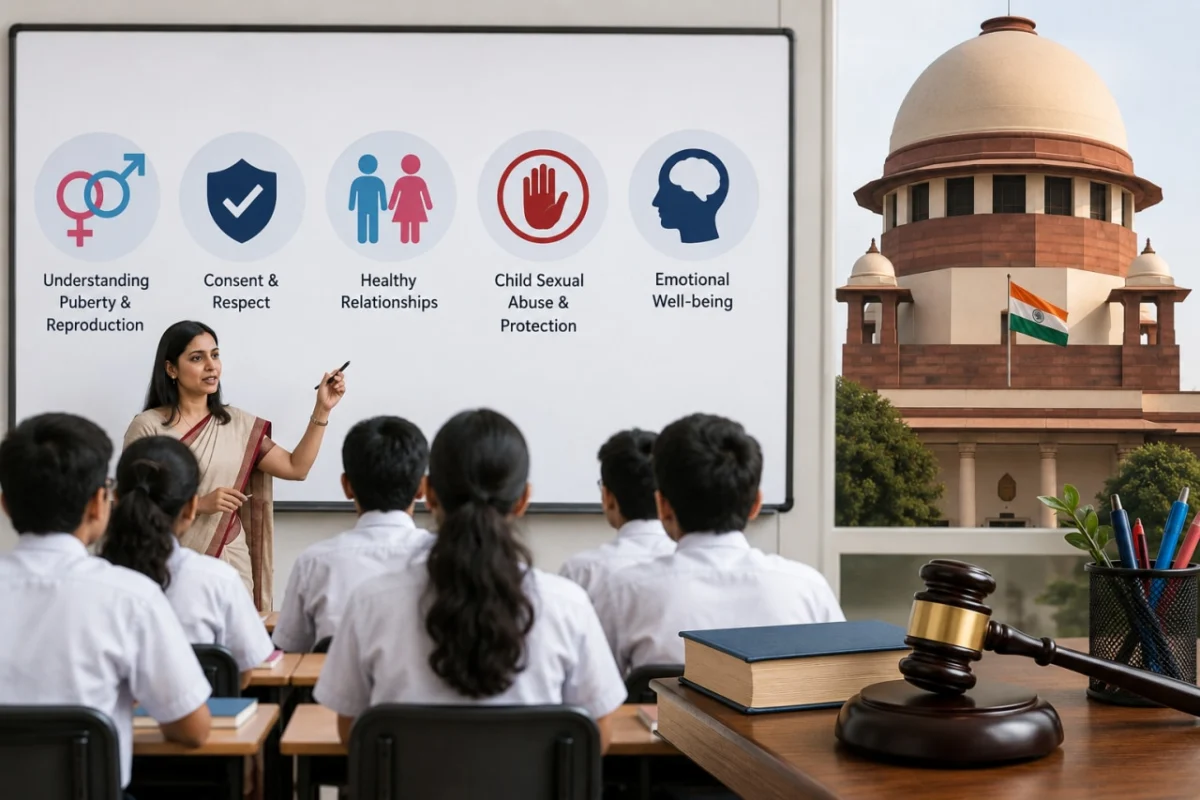
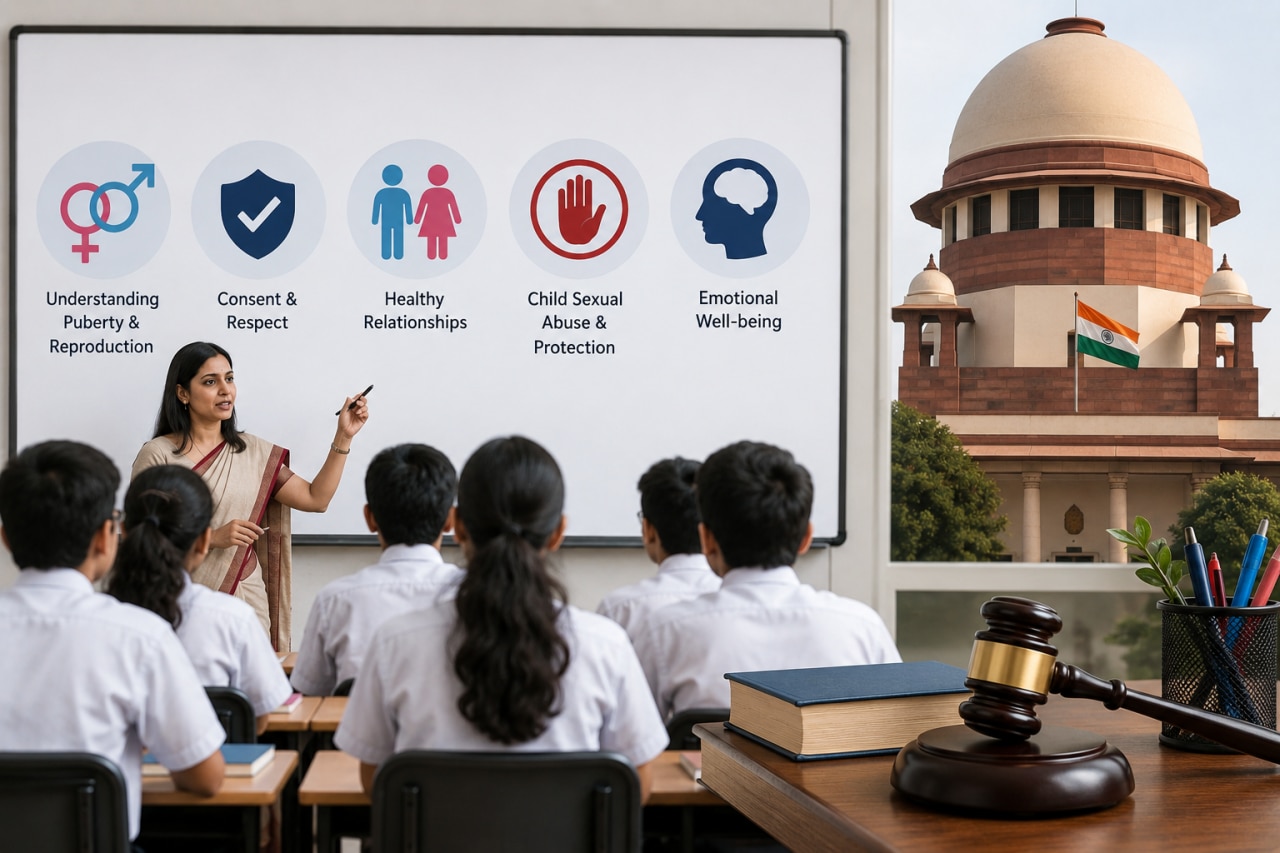
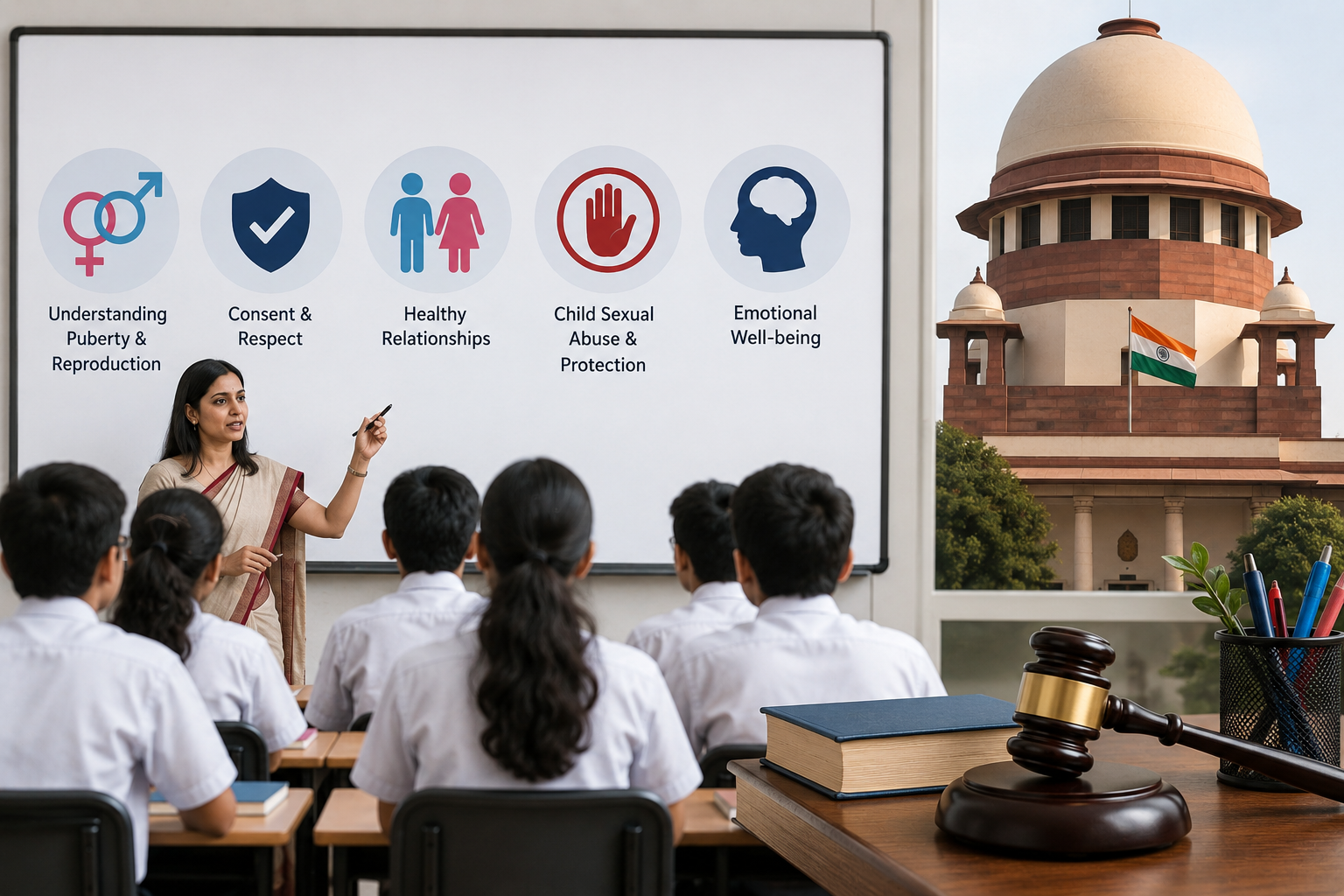
New Delhi, India – In a significant stride towards empowering its youth with crucial life skills and safety knowledge, the Central Government has announced its commitment to introduce comprehensive sex education in all educational institutions nationwide. This pivotal decision, conveyed to the Supreme Court of India on Tuesday, signifies a watershed moment in the country’s approach to adolescent health, safety, and well-being. The government’s acceptance of an expert committee’s recommendations, pending the apex court’s final approval, signals a proactive response to evolving societal needs and legal imperatives.
The announcement came during a hearing of a suo motu case, initiated by the Supreme Court itself, which delved into the complex intersection of adolescent consensual relationships and the stringent provisions of the Protection of Children from Sexual Offences (POCSO) Act. The case highlighted the growing concern over young individuals, often in mutually agreed-upon relationships, finding themselves inadvertently entangled in legal proceedings under POCSO, leading to potentially damaging consequences for their futures.
)
The Supreme Court’s Crucial Role in Driving Change
The Supreme Court, through its bench comprising Justices B.V. Nagarathna and R. Mahadevan, has been instrumental in pushing for a more nuanced and holistic approach to adolescent sexual health and relationships. The court’s proactive intervention, stemming from its suo motu cognizance, has catalyzed a governmental response that acknowledges the need for both education and a re-evaluation of how certain consensual adolescent interactions are treated under the law.

During the hearing, Additional Solicitor General Aishwarya Bhati informed the court that the Central Government had not only accepted the report of a specially constituted national expert committee but also agreed to implement its comprehensive recommendations across the country. This acceptance, however, is contingent upon the Supreme Court’s endorsement, underscoring the judiciary’s pivotal role in shaping this national policy.
)
The court’s directives went beyond just the introduction of sex education. It specifically urged the government to explore mechanisms for preventing relationship-related crimes and to ensure that mutually agreed-upon relationships between adolescents, as well as cases involving minor pregnancies, are not automatically construed as criminal offenses under the POCSO Act. This dual focus on education and legal interpretation reflects a growing understanding of the complexities surrounding adolescent sexuality and consent.
)
A Chronology of Action: From Court Directive to Policy Acceptance
The journey towards this landmark decision can be traced back to the Supreme Court’s recognition of the need for a structured and informed approach to adolescent sexual health. Faced with increasing instances of young individuals facing legal repercussions for consensual relationships, the court took suo motu cognizance of the issue.
)
Key Milestones:
)
- Supreme Court’s Suo Motu Cognizance: The apex court initiated a case to examine the impact of the POCSO Act on adolescent consensual relationships and to explore ways to prevent relationship-related crimes.
- Formation of the National Expert Committee: In response to the court’s concerns, the Central Government established a 26-member national expert committee. This committee was tasked with thoroughly examining how the POCSO Act affects adolescents in consensual relationships and how their right to privacy can be preserved.
- Committee’s Composition: The expert committee was a diverse body, chaired by an Additional Secretary from the Ministry of Women and Child Development. It comprised a wide range of stakeholders, including experts from the Tata Institute of Social Sciences (TISS), clinical psychologists, representatives from various central ministries, state governments, the National Commission for Protection of Child Rights (NCPCR), and the National Legal Services Authority (NALSA). This multi-disciplinary approach ensured a comprehensive review of the issue.
- Submission of Recommendations: The committee diligently deliberated and submitted its recommendations for a more effective and sensitive approach to adolescent sexual health and relationships.
- Government’s Acceptance of Recommendations: On Tuesday, the Central Government informed the Supreme Court that it has accepted the expert committee’s report and is prepared to implement its recommendations nationwide, pending judicial approval.
Supporting Data and the Committee’s Findings: The Rationale Behind Comprehensive Sex Education
The recommendations put forth by the expert committee are rooted in a deep understanding of the vulnerabilities and needs of adolescents in today’s complex world. The committee’s report, which the government has agreed to implement, emphasizes a multi-pronged approach that includes both education and awareness.
)
Key Recommendations of the Expert Committee:
)
- Integration into Core Curriculum: The most significant recommendation is the introduction of comprehensive sex education and child sexual abuse awareness as integral components of the core school curriculum. This aims to move away from ad-hoc or non-existent sex education towards a structured and age-appropriate learning experience.
- Foundational Education for Younger Children: The committee has advised that younger children, during their foundational years, should be made aware of age-appropriate concepts related to personal hygiene, body awareness, and the distinction between "good touch" and "bad touch." This early intervention is crucial for building a strong base of understanding and self-protection.
- Comprehensive Sexual Health Education for Adolescents: For older students, the curriculum should include a broader range of sex-related topics. This includes modules on child sexual abuse, awareness campaigns, protection strategies, the concept of consent, and age-appropriate sexual health education. The overarching goal is to equip children and adolescents with complete and accurate information, empowering them to identify potential abuse and make informed decisions about their health and relationships.
- Focus on Consent and Healthy Relationships: While not explicitly detailed in the excerpt, it can be inferred that a crucial aspect of this comprehensive education will be fostering an understanding of consent, healthy relationship dynamics, and the importance of mutual respect. This aligns with the court’s concern about consensual adolescent relationships.
- Awareness of Legal Protections: The education will also likely encompass an understanding of relevant laws, such as the POCSO Act, and the rights and protections afforded to individuals, particularly minors, in various circumstances.
The committee’s recommendations are not merely about imparting biological facts; they are about fostering responsible behavior, promoting mental and physical well-being, and safeguarding young individuals from exploitation and harm. The inclusion of child sexual abuse awareness is particularly critical, aiming to equip children with the knowledge to recognize, report, and prevent such abuse.
)
Official Responses and the Path Forward
The Central Government’s decision to accept the expert committee’s recommendations signifies a positive and progressive step. The Ministry of Women and Child Development, which chaired the expert committee, is expected to play a crucial role in the implementation process.
)
Government’s Stance:
)
- Commitment to Implementation: The government has unequivocally stated its agreement to implement the recommendations nationwide.
- Seeking Supreme Court’s Approval: The implementation is contingent upon the Supreme Court’s final nod, highlighting the collaborative approach being taken.
- Focus on Holistic Development: This move underscores the government’s recognition of the importance of holistic development for young citizens, which includes their sexual health and safety.
The Supreme Court’s role in this process cannot be overstated. By taking suo motu cognizance and actively engaging with the government and legal experts, the court has ensured that the issue receives the urgent attention it deserves. The ongoing dialogue between the judiciary and the executive branch is crucial for the successful and sensitive rollout of this new educational framework.
)
Implications and the Road Ahead: A Shift Towards a Safer and More Informed Future
The introduction of comprehensive sex education across India carries profound implications for individuals and society at large. This policy shift has the potential to transform the landscape of adolescent health, safety, and empowerment.
)
Potential Implications:
)
- Reduced Incidences of Unwanted Pregnancies and STIs: By providing accurate information about reproductive health and contraception, comprehensive sex education can contribute to a reduction in unintended pregnancies and the spread of sexually transmitted infections among adolescents.
- Empowerment and Prevention of Abuse: Educating young people about consent, boundaries, and the nature of abuse equips them with the knowledge and confidence to protect themselves and seek help when needed. This can lead to a significant decrease in instances of sexual abuse and exploitation.
- Challenging Societal Stigma: Open and honest conversations about sexuality can help dismantle the taboos and stigmas that often surround these topics, fostering a more accepting and understanding society.
- Improved Mental Health: Access to accurate information and support can alleviate anxiety and confusion related to sexual development and relationships, contributing to better mental health outcomes for adolescents.
- Informed Decision-Making: Comprehensive education empowers young individuals to make responsible and informed decisions about their sexual health, relationships, and overall well-being.
- Nuanced Legal Interpretation: The ongoing dialogue with the Supreme Court regarding the application of POCSO to consensual adolescent relationships suggests a potential for more sensitive and context-aware legal interpretations, ensuring that young people are not unduly penalized for exploring their relationships within legal and ethical boundaries.
- A Foundation for Healthy Relationships: Beyond safety, comprehensive sex education can lay the groundwork for fostering healthy, respectful, and consensual relationships throughout life, contributing to a more equitable and harmonious society.
While the government’s commitment is a significant step, the success of this initiative will depend on its effective implementation. This will require robust teacher training programs, the development of age-appropriate and culturally sensitive curriculum materials, and ongoing engagement with parents and communities to ensure widespread acceptance and understanding.
)
The Supreme Court’s intervention and the Central Government’s responsive action mark a pivotal moment in India’s journey towards prioritizing the holistic development and safety of its youth. As the nation awaits the Supreme Court’s final approval, the prospect of comprehensive sex education being integrated into the fabric of Indian education offers a beacon of hope for a future where young people are better informed, safer, and more empowered to navigate the complexities of life.