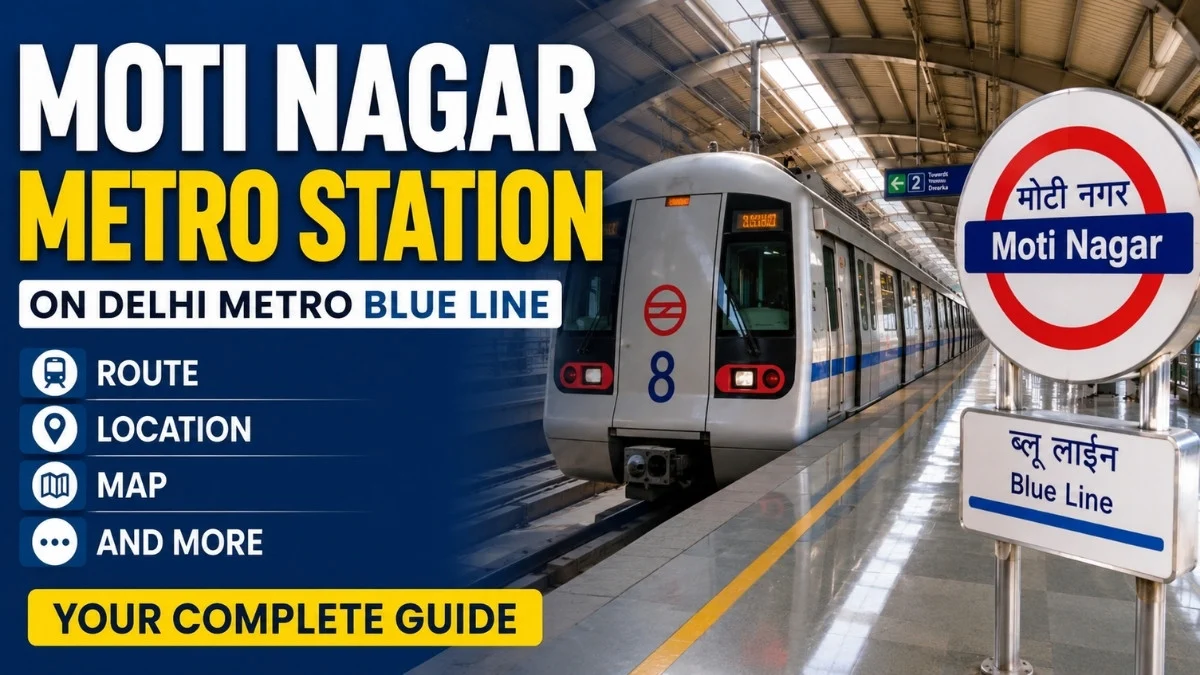
New Delhi – In the sprawling urban landscape of India’s capital, the Delhi Metro stands as the skeletal framework that holds the city’s commerce, culture, and daily life together. Among its most critical nodes is the Moti Nagar Metro Station. Situated on the high-traffic Blue Line, this station serves as more than just a transit point; it is a gateway that bridges the industrial heritage of West Delhi with the modern, high-speed connectivity of the National Capital Region (NCR).
This report provides an in-depth analysis of the Moti Nagar Metro Station, exploring its historical timeline, technical specifications, operational layout, and the profound socio-economic impact it has had on the surrounding real estate market over the last two decades.
1. Main Facts: An Overview of the Station
Moti Nagar Metro Station is an elevated, double-track facility located in the heart of West Delhi. Since its inception, it has been a cornerstone of the Delhi Metro Rail Corporation’s (DMRC) Blue Line (Line 3/4), which is arguably the most significant line in the network due to its massive length and the volume of commuters it carries from the western suburbs to the eastern fringes of Noida and Vaishali.
Key Technical and Operational Details:
| Feature | Details |
|---|---|
| Metro Line | Delhi Metro Blue Line (Line 3) |
| Station Type | Elevated |
| Structure | Double Track |
| Inauguration Date | December 31, 2005 |
| Station Code | MN / MGN |
| Parking | Available (Paid) |
| Accessibility | Fully Disabled Friendly |
| Coordinates | 28.6578° N, 77.1425° E |
The station serves as a vital link for residents of Moti Nagar, Kirti Nagar, Rajouri Garden, and Ramesh Nagar, providing them with a seamless transit route to Central Delhi’s Rajiv Chowk, the institutional hubs of Mandi House, and the commercial centers of Noida.
2. Chronology: The Evolution of Connectivity
The story of Moti Nagar Metro Station is intrinsically linked to Phase I of the Delhi Metro project. In the early 2000s, West Delhi faced chronic traffic congestion on Najafgarh Road, one of the city’s primary arterial routes.
- 2002–2004: Construction of the elevated corridor began under Phase I. The engineering challenge involved erecting massive piers along the busy Najafgarh Road without completely paralyzing the city’s surface transport.
- December 31, 2005: The station was officially inaugurated as part of the Dwarka to Barakhamba Road section. This opening was a landmark event, as it provided West Delhi residents with their first taste of world-class rapid transit.
- 2010–2012: With the extension of the Blue Line to Noida City Centre and Vaishali, Moti Nagar transitioned from a local station to a major waypoint for cross-city travel.
- Post-2020: The station underwent several digital upgrades, including the integration of QR-based ticketing and enhanced surveillance systems to manage the increasing footfall of the post-pandemic era.
3. Station Layout and Passenger Amenities
Designed for high-volume throughput, the Moti Nagar Metro Station follows a functional, multi-level architectural plan. The station is divided into three primary levels: Street, Concourse, and Platform.
The Concourse Level
The concourse serves as the nerve center of the station. It houses:
- Ticket Counters and TVMs: Automated Ticket Vending Machines (TVMs) and smart card recharge kiosks to reduce queuing times.
- Security Checkpoints: Managed by the Central Industrial Security Force (CISF), ensuring a high level of safety for commuters.
- Customer Care: A dedicated booth for passenger inquiries, lost and found services, and card-related issues.
- Retail Outlets: Small kiosks providing snacks, beverages, and daily essentials, catering to the "on-the-go" lifestyle of Delhi’s commuters.
The Platforms
Moti Nagar features two side platforms:
- Platform 1 (Eastbound): Towards Noida Electronic City / Vaishali. This platform sees heavy traffic during the morning peak hours as professionals head toward Central Delhi and the IT hubs of Noida.
- Platform 2 (Westbound): Towards Dwarka Sector 21. This platform is busiest in the evenings as residents return to the residential colonies of West Delhi and Dwarka.
Inclusivity and Accessibility
Adhering to international standards of inclusivity, the station is equipped with:
- Elevators and Escalators: Strategically placed to assist senior citizens and those with heavy luggage.
- Tactile Paths: Bright yellow textured tiles that guide visually impaired passengers from the entrance to the platforms.
- Ramps: Wide ramps at entry points for wheelchair access.
4. Strategic Entry and Exit Points
The station’s four gates are strategically positioned to serve different micro-markets and residential pockets. Understanding these exits is crucial for efficient navigation.
| Gate No. | Direction | Key Landmarks / Utility |
|---|---|---|
| Gate 1 | Moti Nagar Market | Access to local shopping hubs, retail stores, and traditional markets. |
| Gate 2 | Najafgarh Road | Main road access, bus stops, e-rickshaw stands, and nearby corporate offices. |
| Gate 3 | Leela Palace / Residences | Serves the premium residential complexes and luxury developments in the vicinity. |
| Gate 4 | Kirti Nagar | Direct route toward the Kirti Nagar industrial area and the famous furniture market. |
5. Supporting Data: Connectivity and Transit Times
Moti Nagar’s utility is best demonstrated through its connectivity metrics. As a central point in West Delhi, it offers competitive travel times compared to road transport, which is often hampered by the bottleneck at Punjabi Bagh and Raja Garden.
Frequently Traveled Routes:
- To Anand Vihar ISBT: 40–45 minutes (Direct). This is a vital route for passengers catching interstate buses to Uttar Pradesh and Uttarakhand.
- To Karol Bagh: 15–20 minutes (Direct). A short commute for students and shoppers heading to one of Delhi’s largest commercial districts.
- To Rajiv Chowk (Connaught Place): Approx. 25 minutes. This connects Moti Nagar directly to the heart of the city.
- To Shahdara: 45–55 minutes (Interchange at Rajiv Chowk/Kashmere Gate).
Last-Mile Connectivity
The station is a hub for multi-modal integration. Outside Gate 2, commuters have access to:
- DTC Bus Service: Multiple routes connecting to Dhaula Kuan, Tilak Nagar, and Rohini.
- E-Rickshaws: The primary mode of transport for short distances to inner colonies like Sudarshan Park or Basai Darapur.
- Feeder Services: Occasional DMRC feeder buses and a heavy presence of app-based bike taxis and cabs.
6. Official Context and Administrative Management
The Moti Nagar station operates under the strict protocols of the DMRC. In recent official communications, the DMRC has emphasized the "First Mile, Last Mile" connectivity project, which aims to make stations like Moti Nagar more accessible through better-organized parking and dedicated lanes for electric rickshaws.
Safety remains a top priority. The station is under 24/7 CCTV surveillance, and the "DMRC Travel" app provides real-time updates on train timings and platform information. Officials have also noted that Moti Nagar is part of the ongoing energy efficiency drive, with LED lighting and solar-assisted power systems being integrated into the Blue Line’s infrastructure.
7. Implications: Real Estate and Urban Transformation
Perhaps the most significant impact of the Moti Nagar Metro Station has been on the local real estate landscape. Before 2005, Moti Nagar was largely perceived as a semi-industrial zone, dominated by small factories and older residential "quarters."
The "Metro Effect" on Property Value
Since the station’s inauguration, the area has undergone a "gentrification" process. There has been a massive shift from independent houses to high-rise luxury apartments. According to market data, property prices in the Moti Nagar vicinity have surged by approximately 79.7% over the last decade.
Comparative Real Estate Pricing (Indicative):
| Area | Avg. Price per Sq. Ft. (INR) | Impact Level |
|---|---|---|
| Moti Nagar | 16,100 – 28,400 | High (Direct Access) |
| Kirti Nagar | 24,989 | High (Commercial/Industrial Hub) |
| Karol Bagh | 21,800 – 31,500 | Very High (Commercial Hub) |
| Rajouri Garden | 12,500 – 21,500 | High (Retail Hub) |
| Ramesh Nagar | 8,889 | Moderate (Residential) |
| Patel Nagar | 9,100 – 16,200 | Moderate (Residential) |
Commercial Growth
The presence of the metro has attracted premium brands and developers. The DLF Midtown project, located near Moti Nagar, is a prime example of how metro connectivity can spur multi-billion rupee residential and commercial investments. The proximity to the station makes these luxury developments viable for professionals working as far away as Noida or Gurgaon (via the Blue-Yellow line interchange).
8. Conclusion: A Legacy of Connectivity
The Moti Nagar Metro Station is a testament to the transformative power of urban infrastructure. What was once a congested transit point on Najafgarh Road has evolved into a sophisticated hub that supports the aspirations of thousands of daily commuters.
By providing a reliable, climate-controlled, and efficient alternative to Delhi’s notorious traffic, the station has not only improved the quality of life for West Delhi residents but has also rewritten the economic narrative of the region. As the Delhi Metro continues to expand into Phase IV and beyond, Moti Nagar remains a steadfast pillar of the Blue Line, embodying the spirit of a city that is always on the move.
For the modern commuter or the savvy real estate investor, Moti Nagar is more than just a station code on a map—it is a symbol of West Delhi’s integration into the globalized future of the National Capital.