

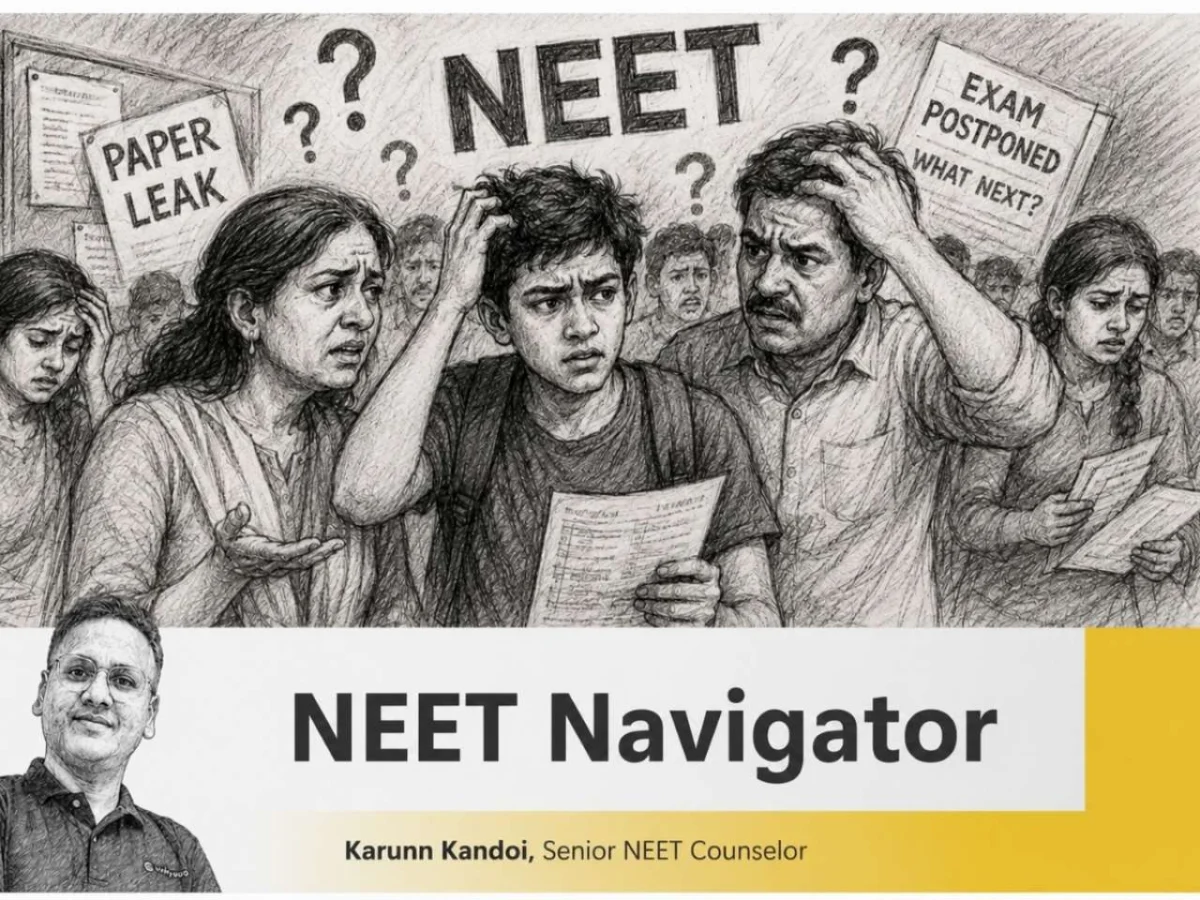
The recent days have underscored the immense national significance of the NEET UG examination, a gateway to medical education that captivates the attention of millions. As the nation awaits the official answer keys and scorecards for NEET UG 2026, a critical juncture approaches: the counselling process. For the lakhs of aspiring medical professionals, a thorough understanding of this complex procedure is paramount to avoid last-minute pitfalls and secure their place in esteemed medical institutions. This article delves deep into the intricacies of the NEET UG 2026 counselling, offering a comprehensive guide to help students navigate this vital phase with clarity and strategy.
The Dual Pillars of NEET UG Counselling: MCC and State Quotas
The NEET UG counselling process operates on two distinct yet interconnected platforms: the Medical Counselling Committee (MCC) Counselling and individual State Counselling authorities. This bifurcated system governs the allocation of seats in medical colleges across India, catering to different quotas and institutional types.
The All India Quota (AIQ) – MCC Counselling: A Pathway to National Institutions
The MCC is the nodal agency responsible for conducting counselling for the 15% All India Quota (AIQ) seats in government medical colleges nationwide. This quota represents a significant opportunity for high-ranking students to secure admission into premier medical institutions, including the prestigious All India Institutes of Medical Sciences (AIIMS) and Postgraduate Institute of Medical Education and Research (PGIMER) across the country.
The MCC counselling process is designed to offer a pan-India selection mechanism, allowing students to compete for seats in top-tier government medical colleges irrespective of their domicile state. This pathway is particularly attractive to candidates who have achieved exceptional ranks in the NEET UG examination, as it provides access to a highly competitive pool of seats in institutions renowned for their academic excellence and advanced infrastructure. The MCC counselling typically commences shortly after the declaration of NEET UG 2026 results, marking the first formal step in the admission process for many candidates.
)
State Counselling: Harnessing the 85% Domicile Quota
Complementing the AIQ, individual states conduct their own counselling sessions for the remaining 85% of seats in government medical colleges within their respective jurisdictions. These state-level counselling processes are managed by designated authorities, such as the Directorate General of Medical Education and Training (DGME) in Uttar Pradesh or the Directorate of Medical Education (DME) in Madhya Pradesh.
A crucial distinction for state counselling is the domicile requirement. Students are eligible to participate in the counselling of a particular state only if they are permanent residents of that state. This means a student from Madhya Pradesh cannot apply for state counselling in Maharashtra, for instance. This system ensures that a substantial portion of medical seats is reserved for students who have completed their schooling and hold domicile in that particular state, fostering regional representation in medical education.

Furthermore, state counselling processes also encompass the allocation of seats in private medical colleges within the state. These sessions are generally conducted in a more generalized manner, allowing a broader spectrum of students to apply based on their NEET UG ranks and eligibility criteria.
Demystifying the Counselling Journey: A Step-by-Step Chronology
Understanding the sequential nature of the counselling process is vital for proactive preparation. Here’s a breakdown of the typical steps involved in NEET UG 2026 counselling:
)
-
Declaration of NEET UG 2026 Results: The first official milestone is the announcement of the NEET UG 2026 results. This will include the All India Ranks (AIRs) and category-wise ranks for all candidates, which are the fundamental parameters for the subsequent counselling stages.
-
Registration and Fee Payment: Following the result declaration, both the MCC and the respective state counselling authorities will open their online portals for registration. Candidates must register on the portal(s) they wish to participate in. A non-refundable registration fee is typically required for each counselling session. It is imperative to complete this step within the stipulated deadlines.
)
-
Choice Filling and Locking: This is arguably the most critical phase where candidates meticulously select their preferred medical colleges and courses. Based on their rank, category, and understanding of the counselling structure, students must create a ranked list of their choices. This list should be prepared with strategic consideration, prioritizing absolute dream institutions at the top, followed by realistic high-quality backup options. After carefully arranging their preferences, candidates must "lock" their choices before the deadline. Failure to lock choices can result in the system automatically freezing whatever draft arrangement is saved at the time of the deadline.
-
Seat Allotment Process: The counselling software, utilizing algorithms, processes the locked choices based on the candidate’s rank, category, and the availability of seats in the selected institutions. The system scans the list from top to bottom. If a candidate’s rank meets the cutoff for their most preferred choice, a seat is allotted, and the system moves to the next candidate.
)
-
Provisional Seat Allotment and Grievance Redressal: After the initial allotment, a provisional seat allotment list is published. Candidates are given a specific window to report any technical glitches or discrepancies they might encounter with their allotment. This is a crucial period for ensuring the accuracy of the provisional results.
-
Decision on Allotted Seat: Freeze, Float, or Opt-Out: Upon confirmation of the provisional allotment, candidates are presented with three pivotal options:
)
- Freeze: This option signifies that the candidate is satisfied with the allotted seat and wishes to accept it. They will not be eligible for further rounds of counselling for that particular quota.
- Float: This option allows the candidate to accept the currently allotted seat while still being eligible for consideration in subsequent rounds of counselling for a potentially better choice from their list. If a better option becomes available, the current seat will be vacated.
- Opt-Out: In the first round of counselling, candidates have the option to withdraw from the counselling process without any penalty if they are not satisfied with the allotted seat. This option is generally not available in subsequent rounds without incurring forfeiture of the security deposit.
The Art and Science of Choice Filling: A Strategic Imperative
The choice-filling module is more than just a selection process; it’s a strategic exercise that can significantly impact a candidate’s future. As K.L. Mali, a NEET Academic Expert, wisely states, "Choice filling is not about selecting colleges you can get; it is about arranging colleges in the order you genuinely prefer. The software rewards strategy and preference, not fear."
Prioritizing Preferences: The Top-Down Logic
The online allotment system operates on a top-down priority logic. It meticulously evaluates the candidate’s list of choices from the very first entry. If a candidate’s rank falls within the cutoff for their most preferred college, a seat is immediately allocated, and the system bypasses all subsequent choices in their list for that particular round. Therefore, it is imperative to place your absolute dream institutes at the pinnacle of your preference list, followed by progressively realistic and high-quality backup options. This ensures that even if your top choices are not met, you still have strong alternatives in your subsequent selections.
)
Dynamic Modifiers: Fine-Tuning Your Preferences
The choice-filling interface typically incorporates dynamic modifiers that allow candidates to fine-tune their preference list. Single-click arrow buttons enable incremental adjustments, moving an institute up or down by one position. More advanced drag-and-drop functionality allows for instant swapping of college orders, providing flexibility. A multi-delete tool can also be utilized to efficiently remove multiple unwanted selections from the preference basket. These interactive features empower candidates to meticulously craft a list that accurately reflects their aspirations and strategic considerations.
The Finality of Locking: A Definitive Commitment
The act of "locking" choices signifies a definitive commitment to the selected preferences for the current counselling round. Before the session expires, candidates are usually required to re-enter their account password to officially lock their choices. If a candidate fails to lock their choices before the deadline, the system will automatically freeze whatever draft arrangement is saved in their basket at the precise moment the deadline hits. This underscores the importance of timely action and careful review of the preference list before the final lock.
)
The Crucial Role of Freeze and Float: Preventing Future Regrets
As Priyansh Sogani, a Senior Chemistry Faculty, emphasizes, "Students should understand the Freeze and Float options thoroughly. A single wrong decision during allotment can impact opportunities in future rounds."
-
Freeze: Opting to freeze a seat means the candidate has accepted the allotted seat and is no longer eligible for any further rounds of counselling for that specific quota. This is the decision to make if you are completely satisfied with the seat and wish to secure it.
)
-
Float: Choosing the float option means the candidate accepts the allotted seat but wishes to participate in subsequent rounds of counselling for a chance to upgrade to a higher preferred choice from their locked list. If a better option is secured in a subsequent round, the current seat will be vacated. However, if no better option is available, the candidate retains the originally allotted seat. It is crucial to understand that if you float a seat and a better option becomes available, you are obligated to take the new seat.
Document Verification: The Final Hurdle to Medical College Entry
Once a seat has been successfully allotted and accepted, the next critical step is physical verification of documents at the designated medical college. This process is rigorous, and any missing document or format error can lead to the immediate withdrawal of the allotment. To ensure a smooth transition, candidates are strongly advised to prepare a master folder containing originals and at least three self-attested photocopies of each of the following essential documents:
)
NEET Essentials:
- NEET UG 2026 Admit Card
- Official Scorecard displaying your All India Rank (AIR)
- Seat Allotment Letter (freshly downloaded)
Academic Proofs:
- Class 10 Certificate (serves as official age and Date of Birth verification)
- Class 12 Marksheet and Passing Certificate
Identity & Records:
- A valid Government Photo ID (Aadhaar Card, PAN Card, or Passport)
- 8 to 12 recent passport-size photographs (matching the application form)
- Medical Fitness Certificate (signed by a registered medical practitioner)
Quota Specifics (If Applicable):
- State Domicile Certificate: Essential for claiming seats under the 85% state quota.
- Transfer/Migration Certificate: Required if the candidate has changed educational boards.
- Category/EWS Certificate: Must be valid and issued within the current financial year for candidates applying under reserved categories (SC/ST/OBC/EWS).
Implications and Future Outlook
The NEET UG examination and its subsequent counselling process are not merely administrative procedures; they are reflections of the nation’s aspirations for its future healthcare workforce. The intense scrutiny and national interest surrounding the examination highlight its profound impact on the lives of millions of students and their families.
The current focus on the counselling process, particularly in light of recent conditions, underscores the need for transparency, fairness, and efficiency in the admission system. As the EdTech sector continues to evolve, platforms like Vidysea, founded by Karunn Kandoi, aim to bridge the information gap and empower students with the knowledge and strategies necessary to navigate these complex processes.
)
Understanding the system’s rules, meticulously preparing documents, and approaching the choice-filling and decision-making phases with strategic clarity are the cornerstones of success. By adhering to these principles, students can transform their hard-earned NEET UG scores into a tangible gateway to their medical careers, confidently stepping into the next phase of their healthcare journey. The journey ahead demands diligence, strategic planning, and a clear understanding of the opportunities and challenges that lie within the NEET UG counselling labyrinth.
