

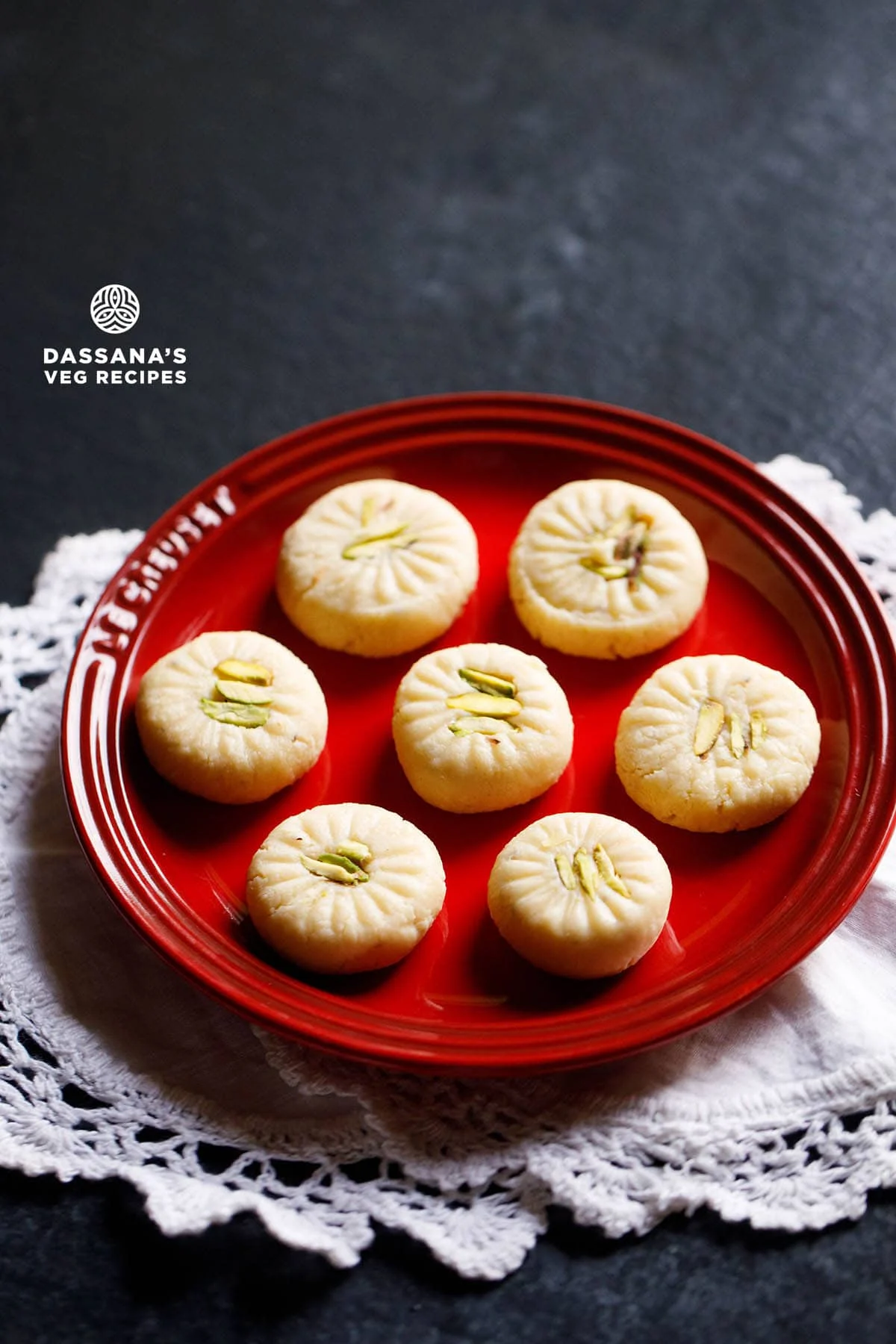
In the vast and intricate landscape of Indian confectionery, few items hold as much sentimental and ritualistic value as the Peda. A dense, fudge-like sweet traditionally crafted from milk solids, the Peda—specifically the Doodh Peda (Milk Peda)—serves as a cornerstone of celebratory gastronomy across the Indian subcontinent. From the narrow lanes of Mathura to the modern kitchens of the global diaspora, this sweet represents a centuries-old tradition of milk preservation and culinary artistry. Recent culinary trends have seen a shift toward "quick-method" recipes that maintain the integrity of traditional flavors while respecting the time constraints of the modern cook.

Main Facts: Defining the Doodh Peda
At its core, Milk Peda is a traditional Indian sweet characterized by its soft yet firm texture and a flavor profile dominated by caramelized milk and aromatic cardamom. The primary ingredient is khoya (also known as mawa), which is produced by slowly simmering milk in a large open iron pan (karahi) until the moisture evaporates, leaving behind concentrated milk solids.

While the traditional method of making Peda involves reducing fresh milk for several hours, contemporary culinary practices often utilize ready-made khoya to streamline the process. This "shortcut" has democratized the preparation of the sweet, allowing it to be made in as little as 15 minutes without sacrificing the rich, decadent mouthfeel that defines the dish. The resulting fudge is typically garnished with nuts—most commonly pistachios or almonds—and flavored with green cardamom powder, though saffron is a frequent addition in premium varieties.

The Peda’s versatility is one of its most defining features. It functions simultaneously as a daily treat, a "prasad" (devotional offering) in Hindu temples, and a high-status gift during major festivals such as Diwali, Ganesh Chaturthi, and Holi.

Chronology: From Raw Ingredients to Finished Confection
The preparation of Doodh Peda is a study in heat management and timing. The following chronology outlines the transformation of simple milk solids into a sophisticated festive sweet.

Phase I: Preparation and Integration
The process begins with the preparation of the khoya. Approximately 200 to 205 grams of khoya are grated to ensure a uniform texture, preventing lumps during the cooking phase. This yields roughly one tightly packed cup of solids. The grated khoya is placed into a heavy, thick-bottomed pan. The choice of cookware is critical; a heavy base prevents the milk solids from scorching or browning prematurely, which would impart a bitter note to the final product.

To this, half a cup (125 grams) of sugar and half a teaspoon of cardamom powder are added. Before the heat is applied, the ingredients are briefly integrated to ensure the sugar is distributed evenly through the dense khoya.

Phase II: The Thermal Transformation
The pan is placed over low heat. As the temperature rises, the sugar begins to melt, and the khoya softens. At this stage, two to three tablespoons of milk are introduced to the mixture. This small amount of liquid is essential; it facilitates the dissolution of the sugar crystals and creates a smooth, workable slurry.

As the mixture is stirred continuously—a non-negotiable step in the process—it undergoes a visible transformation. Initially, the mixture becomes liquid and bubbly. However, as the moisture evaporates, the proteins and sugars in the milk solids begin to concentrate. The mixture thickens, turning creamy and eventually reaching a stage where it begins to pull away from the sides of the pan. This transition indicates that the sugars have reached the appropriate stage of caramelization and the fats have been properly integrated.

Phase III: Cooling and Hand-Crating
Once the mixture has condensed into a cohesive mass, it is immediately transferred to a steel plate or tray to stop the cooking process. If left in the hot pan, the residual heat would overcook the mawa, leading to a chewy or rubbery texture.

The mixture is allowed to cool until it reaches a lukewarm temperature. Timing is essential here; if the mixture becomes too cold, it loses its plasticity and becomes difficult to shape. While still warm, small portions are rolled between the palms into smooth spheres. These are then flattened, either by hand or using a "Peda press"—a traditional wooden or plastic mold that imprints a decorative pattern (often a floral or geometric design) onto the sweet. A final garnish of slivered pistachios is pressed into the center before the sweets are left to set completely.

Supporting Data: Nutritional Profile and Regional Variations
While the Peda is an indulgent treat, its composition provides significant nutritional density compared to flour-based sweets. Based on a standard recipe yield of 12 pieces, the following data highlights the nutritional impact of a single serving:

- Caloric Content: Approximately 100 kcal per piece.
- Macronutrients: 3g of protein and 4g of fat (largely saturated fats from milk solids).
- Micronutrients: A single Peda provides roughly 118mg of calcium, contributing to the daily recommended intake.
- Sugar Content: 8g per serving.
Beyond the standard Doodh Peda, the Indian culinary landscape features several distinct regional varieties, each with unique characteristics:

- Mathura Peda: Hailing from the birthplace of Lord Krishna, these are cooked until the khoya reaches a deep brown color, resulting in a robust, caramelized flavor. They are often coated in powdered sugar.
- Dharwad Peda: A geographical indication (GI) tagged sweet from Karnataka, these are characterized by a darker, almost burnt-milk flavor and a coating of castor sugar.
- Kandi Peda: A specialty of Satara, Maharashtra, these are known for their extra-firm texture and high milk-solid density.
- Kesar Peda: Infused with saffron strands, these offer a vibrant yellow hue and a floral aroma, often served at weddings and high-end celebrations.
Official Responses: Culinary Expert Guidelines for Perfection
Culinary experts and traditional "Halwais" (confectioners) emphasize that while the recipe is simple, the execution requires precision. To ensure a professional-grade result, experts provide the following "official" guidelines:

- The Texture Balance: "The most common failure in Peda making is overcooking," notes one culinary analyst. "If the mixture is cooked until it is bone-dry in the pan, the resulting Peda will be crumbly and dry. It must be removed from the heat while it is still slightly soft and supple."
- Quality of Khoya: The quality of the final sweet is directly proportional to the quality of the khoya. Experts recommend using "Hariyali" or "Dhapa" khoya for its higher moisture content and smoothness, which results in a superior mouthfeel.
- The Role of Ghee: While many modern recipes omit ghee (clarified butter) to keep the process quick, traditionalists argue that a teaspoon of ghee added at the end of the cooking process enhances the shine and extends the shelf life of the sweet.
- Storage Best Practices: Due to the high milk-solid content, Peda is semi-perishable. Experts recommend storing them in an airtight container. While they can last 2-3 days at room temperature in cooler climates, refrigeration is mandatory for storage up to one week.
Implications: The "Mithai Economy" and Cultural Identity
The enduring popularity of the Peda has significant implications for the Indian "Mithai" (sweets) economy. Valued at billions of dollars, the organized and unorganized sweet industry in India experiences a massive surge during the "festive quarter" (September to December).

- Economic Impact on Dairy Farmers: The demand for khoya-based sweets like Peda provides a critical revenue stream for dairy farmers. The process of making khoya is a traditional method of value addition, allowing farmers to preserve milk solids during periods of surplus production.
- The Rise of Homemade Confectionery: There is a growing trend among urban consumers to move away from store-bought sweets due to concerns over adulteration (particularly the use of vegetable fats or starch in commercial khoya). This has led to a resurgence in homemade Peda recipes, fueled by digital culinary platforms.
- Cultural Continuity: For the Indian diaspora, making Peda at home is a means of maintaining cultural identity. In regions where traditional Indian sweet shops are unavailable, the ability to create "authentic" Doodh Peda using local ingredients serves as a bridge to ancestral traditions.
- Ritual Significance: The Peda remains the primary choice for "Prasad." Its durability makes it ideal for distribution in large temples, where it can be handled and transported by devotees without crumbling, unlike more delicate sweets like Rasgulla or Gulab Jamun.
In conclusion, the Milk Peda is far more than a simple combination of milk and sugar. It is a culinary artifact that encapsulates the history of Indian dairy science, the regional diversity of the subcontinent, and the evolving habits of the modern kitchen. Whether prepared in 15 minutes or 15 hours, it remains an essential expression of joy and devotion in the Indian cultural fabric.
