

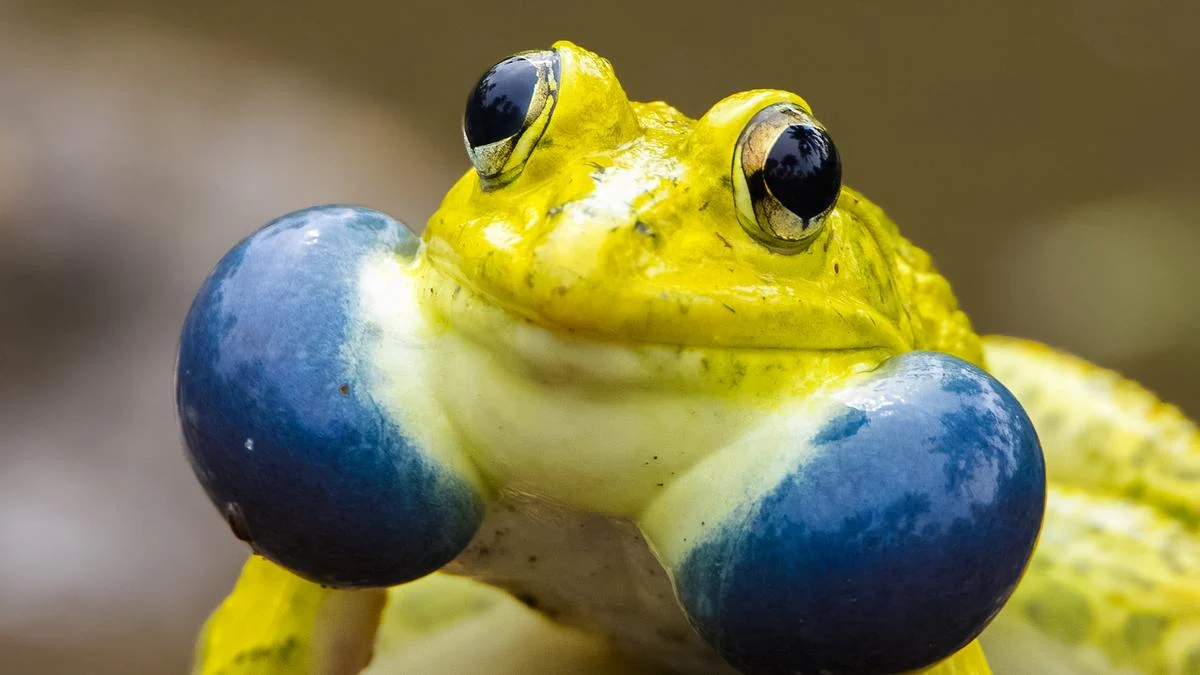
NEW DELHI — While the Indian Meteorological Department (IMD) monitors satellite imagery and pressure gradients to announce the arrival of the monsoon, nature has its own ancient set of barometers. Long before the first heavy downpour saturates the parched earth of the subcontinent, the landscape undergoes a profound, albeit subtle, metamorphosis. From the intricate architectural endeavors of the baya-weaver to the vibrant, neon-hued displays of the Indian bullfrog, the monsoon is less a weather event and more a biological conductor orchestrating a complex symphony of life.
The transition from the scorching heat of May to the humid embrace of June and July does not act as a simple "starting gun" for all species. Instead, it serves as a nuanced cue, triggering specific physiological and behavioral responses across diverse taxa. As the rains descend, the subcontinent’s biodiversity responds to a cocktail of environmental variables: fluctuating temperatures, soaring humidity, increased food availability, and the sudden appearance of ephemeral water bodies.
Main Facts: The Biological Indicators of the Monsoon
The arrival of the rains initiates a series of visible transformations in the Indian wilderness that serve as reliable indicators of the season’s progression.
The Indian Bullfrog’s Technicolor Transformation
One of the most striking visual cues of the monsoon is the emergence of the Indian bullfrog (Hoplobatrachus tigerinus). For most of the year, these large amphibians are olive-green and blend seamlessly into the mud and vegetation. However, with the first significant rains, the males undergo a radical hormonal shift. Their skin turns a brilliant, almost fluorescent lemon-yellow, and their dual vocal sacs inflate into a vivid, pulsating blue. This dramatic display is not merely for show; it is a high-stakes advertisement to females in the newly formed breeding pools, signaling fitness and readiness to mate amidst the cacophony of the rains.
The Architectural Marvels of the Baya Weaver
Simultaneously, the skies and trees become the stage for the Baya weaver (Ploceus philippinus). Known for their intricate, retort-shaped hanging nests, these birds begin their breeding season in tandem with the monsoon. The timing is strategic: the rains ensure a steady supply of insects and tender grass, providing both the building materials for their nests and the protein-rich diet required for their chicks. A half-built nest hanging from a thorny acacia or a palm frond is a definitive sign that the seasonal rains have taken hold.
The Hidden Kingdom: Fungal Emergence
Beneath the soil and within the decaying logs of India’s forests, a hidden network of mycelium responds to the moisture. Fungi that have remained dormant for months suddenly produce fruiting bodies—mushrooms—that can appear overnight. These fungi play a critical role in the ecosystem’s nutrient cycle, breaking down organic matter that has accumulated during the dry season and returning it to the soil to support the rapid growth of monsoon flora.
Chronology: The Three Phases of the Monsoon Pulse
The biological response to the monsoon is not instantaneous; it unfolds in a predictable chronological sequence as the moisture levels rise.
Phase I: The Pre-Monsoon Stirring (May to Early June)
Before the clouds break, certain species begin to prepare. Insects like cicadas increase their activity, and some tree species, such as the Laburnum (Cassia fistula), reach the end of their flowering cycle, signaling the impending shift. During this phase, barometric pressure drops, a change that many animals sense well before humans do.
Phase II: The Initial Deluge (Late June to July)
The first heavy showers trigger the most dramatic "emergence" events. This is when the Indian bullfrogs emerge from estivation (a state of dormancy similar to hibernation) to congregate in monsoon ponds. It is also the time when winged termites, or alates, take to the air in massive swarms. This "nuptial flight" provides a seasonal feast for everything from lizards and birds to spiders, creating a sudden spike in the local food web.
Phase III: The Peak and Stabilization (August to September)
As the rains become a daily occurrence, the landscape stabilizes into a lush, green state. This is the peak of the breeding season for many birds and mammals. The Baya weavers complete their nests, and the forest floor becomes a carpet of mosses and ferns. The behavior of year-round residents changes; animals like the Indian Gaur or various deer species move to higher ground to avoid flooded lowlands, making them more visible to observers and researchers.
Supporting Data: The Science of Phenology
Phenology—the study of periodic plant and animal life cycle events—is the scientific backbone of understanding these monsoon shifts. Data from the Wildlife Institute of India (WII) and various citizen science initiatives like ‘FrogWatch’ and ‘SeasonWatch’ provide a quantitative look at these patterns.

- Amphibian Activity: Research indicates that Hoplobatrachus tigerinus can lay up to several thousand eggs in a single clutch. The survival of these tadpoles is directly correlated with the duration of the monsoon; a "short" monsoon often leads to the drying of pools before the tadpoles can metamorphose, leading to a population crash.
- Insect Biomass: Studies have shown that insect biomass in tropical deciduous forests can increase by over 400% within the first month of the monsoon. This massive influx of protein is what drives the breeding cycles of insectivorous birds and small mammals.
- Humidity Thresholds: Many fungi require a sustained humidity level of over 80% to trigger the development of fruiting bodies. In many parts of central India, this threshold is met only during the 60 to 90 days of the active monsoon.
Official Responses: Conservation and Monitoring
Government bodies and environmental NGOs have increasingly recognized the importance of these biological markers for assessing the health of India’s ecosystems.
The Ministry of Environment, Forest and Climate Change (MoEFCC) has integrated phenological monitoring into its long-term ecological research sites. Officials note that observing changes in the timing of the Baya weaver’s nesting or the bullfrog’s chorus can provide "early warning signals" for broader environmental shifts.
"The monsoon is the heartbeat of Indian ecology," says Dr. Arati Singh, a senior researcher at the Bombay Natural History Society (BNHS). "We are encouraging the public to participate in citizen science projects. When a farmer in Kerala reports the first sighting of a blue-throated bullfrog, or a student in Assam notes the first weaver nest, they are providing us with data points that satellites simply cannot capture."
Furthermore, state forest departments have begun implementing "monsoon closures" in several National Parks. This is not just due to difficult terrain but to allow species the privacy and safety required for their high-intensity breeding season, which is triggered by the rains.
Implications: The Shadow of Climate Change
While the monsoon’s biological triggers are a testament to nature’s resilience, they also highlight a growing vulnerability. Climate change is beginning to decouple the delicate synchronization between weather and biology.
Ecological Mismatch
The primary concern for ecologists is "ecological mismatch." If the rains arrive late or become more erratic, the timing of the "biological starting gun" may shift. For instance, if the Baya weaver begins nesting based on day length (photoperiod) but the monsoon rains—and thus the insects—are delayed, the chicks may hatch when food is scarce.
Urbanization and Habitat Loss
The Indian bullfrog, despite its dramatic appearance, faces significant threats from the disappearance of seasonal wetlands. Urban expansion often involves filling in the very "low-lying areas" that these amphibians rely on for breeding. When the monsoon arrives in a concrete jungle, there are no pools for the bullfrogs, leading to a silent season where there should be a chorus.
Human-Wildlife Conflict
As the monsoon changes the behavior of larger mammals, leading them to migrate or seek higher ground, the likelihood of human-wildlife conflict increases. Understanding the chronology of these movements is essential for local governments to mitigate risks to both human communities and wildlife populations.
Conclusion: A Call for Observation
The Indian monsoon is far more than a source of irrigation or a relief from the heat; it is a profound biological renewal. The neon yellow of a bullfrog and the intricate weaving of a bird are reminders of a complex, interconnected world that responds to the rhythm of the rain.
As we move further into the 21st century, protecting these "first signs" of the monsoon becomes a matter of national importance. By observing and documenting these changes, we do more than just appreciate nature; we monitor the health of the very systems that sustain life on the subcontinent. The next time the sky darkens and the first scent of petrichor fills the air, look not to the clouds, but to the trees and the puddles—the true messengers of the monsoon are already at work.
