

The Indian automotive landscape has undergone a seismic shift over the last decade, transitioning from a market obsessed solely with fuel economy to one that prioritizes safety, technology, and aesthetic sophistication. At the heart of this transformation is Tata Motors, and perhaps no vehicle in their stable represents this journey better than the Tiago. The latest iteration of the Tiago range—spanning Petrol, CNG, and Electric powertrains—marks a significant milestone in the brand’s "New Forever" philosophy. With prices ranging from INR 4.69 lakh to 8.55 lakh, the Tiago is no longer just an entry-level hatchback; it is a statement on the democratization of premium automotive features.
Main Facts: The Triple-Threat Strategy
The new Tata Tiago arrives not as a singular product, but as a multi-fuel platform designed to cater to a diverse demographic. The core update focuses on "premiumization"—elevating the vehicle’s perceived value through design tweaks and high-end technological integration.
Aesthetic Refinement
The exterior design retains the familiar, "impact-designed" silhouette but introduces a "Lux Beam" LED headlamp setup that provides a sharper, more focused gaze. This is complemented by a revised grille and bumper that widen the car’s visual stance. The most striking update, however, is at the rear, where the "Halo Lightbar" connected tail lamps provide a light signature typically reserved for vehicles two segments higher.
The Cabin Experience
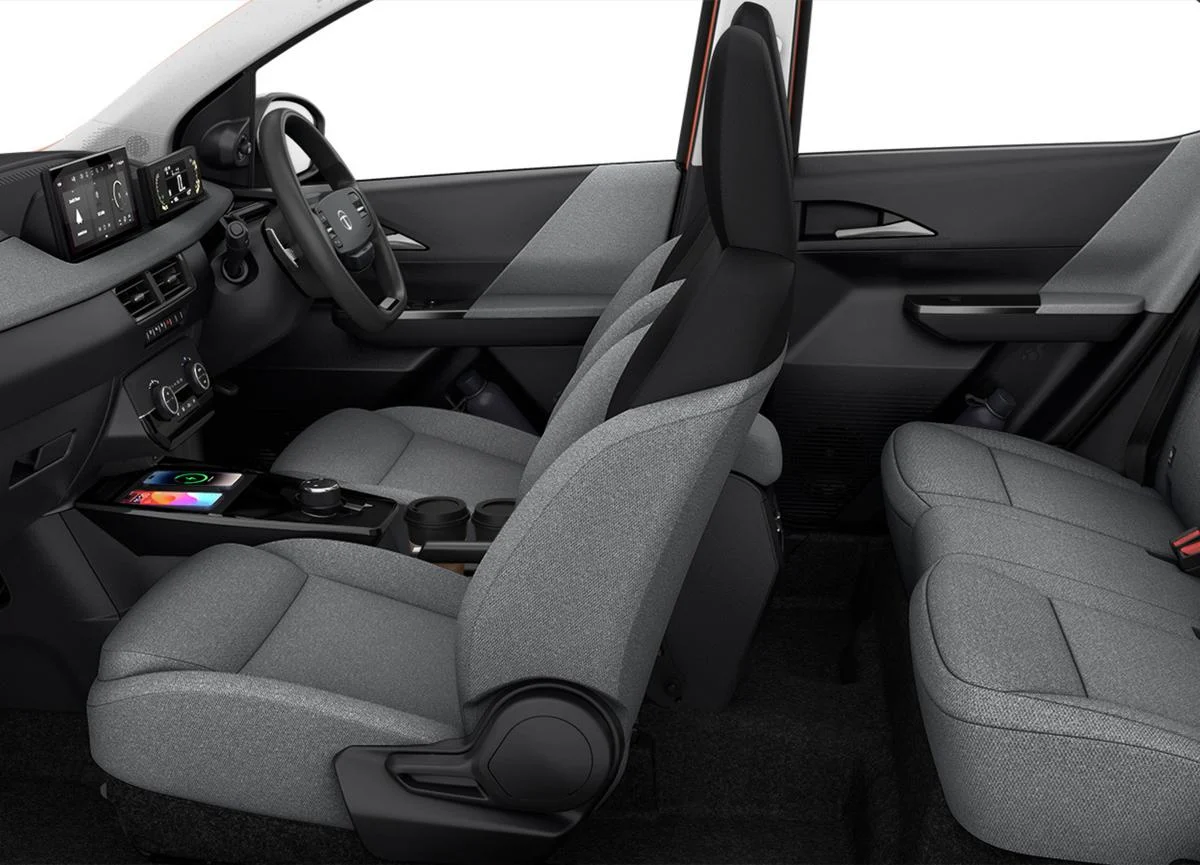
Inside, Tata has moved away from the utilitarian plastics of the past. The introduction of the "Fabricia Luxe" dashboard brings a layered, textured finish that absorbs light better and feels more substantial to the touch. The centerpiece is a 26.03 cm (10.25-inch) HD touchscreen infotainment system, paired with a "Digital Island" instrument cluster. This dual-screen setup brings the Tiago’s cockpit into the modern era, offering wireless smartphone integration and high-fidelity graphics.
The Power of Choice
The Tiago range is unique in the Indian market for offering three distinct "personalities":

- Petrol: The refined 1.2-litre Revotron engine for traditional buyers.
- CNG: Utilizing Tata’s patented twin-cylinder technology to offer fuel efficiency without sacrificing luggage space.
- Electric (Tiago.ev): A pioneer in the mass-market EV space, offering two battery sizes and instant torque.
Chronology: From Zica to a Multi-Fuel Icon
To understand the significance of the new Tiago, one must look at its evolutionary timeline, which mirrors Tata Motors’ own resurgence in the passenger vehicle segment.
- 2016 – The Genesis: Originally intended to be launched as the "Zica," the car was renamed "Tiago" due to the Zika virus outbreak. It launched as a replacement for the aging Indica/Bolt, focusing on a youthful design and a robust build.
- 2018-2019 – Performance and Features: Tata introduced the Tiago NRG (cross-hatch) and the JTP (performance version), signaling that the platform was versatile enough for enthusiasts and adventure-seekers alike.
- 2020 – The BS6 Facelift: Coinciding with the transition to Bharat Stage VI emission norms, the Tiago received its first major facelift, adopting the "Impact 2.0" design language and securing a 4-star Global NCAP safety rating.
- 2022 – The CNG and EV Revolution: This was a pivotal year. Tata introduced the iCNG range, followed by the Tiago.ev. The latter became India’s most accessible electric car, effectively kickstarting the country’s mass-market EV adoption.
- 2024 – The Mature Update: The current refresh focuses on high-end tech (360-degree cameras, 6 airbags standard, and premium interiors), positioning the Tiago as a "mature" hatchback that competes on features rather than just price.
Supporting Data: Technical Specifications and Performance
The Tiago’s ability to serve different masters is backed by impressive engineering data across its three variants.
1. The Petrol Powertrain
The 1.2-litre, 3-cylinder Revotron engine remains the workhorse of the range.
- Output: 86 PS @ 6000 rpm and 113 Nm of torque @ 3300 rpm.
- Driveability: Optimized for urban stop-and-go traffic, the engine features a "City" and "Eco" mode to balance performance and frugality.
- Transmission: Available with both a 5-speed manual and a 5-speed AMT (Automated Manual Transmission).
2. The iCNG Innovation
Tata’s twin-cylinder technology is a game-changer for the segment. By splitting the traditional large CNG tank into two smaller 30-liter (water capacity) cylinders and placing them beneath the luggage floor, the Tiago retains a usable boot.
- Output in CNG Mode: 73.5 PS and 95 Nm.
- Key Feature: The "Direct Start" in CNG mode allows the car to start directly using gas, a feature most competitors lack, requiring a petrol start-up.
3. The Tiago.ev Dynamics
The electric variant is offered in two battery configurations:

- Medium Range: 19.2 kWh battery, offering an estimated real-world range of 160–170 km.
- Long Range: 24 kWh battery, offering 205–215 km of real-world range.
- Performance: The 24 kWh version produces 114 Nm of instant torque, propelling the car from 0 to 60 km/h in just 5.7 seconds.
- Charging: Under optimal DC fast-charging conditions, the Tiago.ev can recoup 100 km of range in approximately 18 minutes.
4. Safety Metrics
In a segment-first move, Tata has standardized several high-end safety features:
- Airbags: 6 airbags are now standard across all trims.
- Technology: 360-degree HD Surround View Camera and Blind View Monitor.
- Protection: The EV components (battery and motor) carry an IP67 rating, ensuring water and dust resistance.
Official Responses: Tata Motors’ Strategic Vision
While official press statements often focus on sales figures, Tata Motors’ leadership has consistently emphasized a "democratization of technology" strategy. According to internal communiqués and recent product briefings, the company’s focus for the Tiago range was three-fold:
Safety as a Non-Negotiable: "Our goal is to ensure that safety is not a luxury. By making six airbags and ESP (Electronic Stability Program) standard, we are setting a new benchmark for the entry-level segment in India," a company spokesperson noted during the launch event.
The Power of Choice: Tata’s engineering team highlighted that the Tiago is one of the few platforms globally designed to handle Petrol, CNG, and Electric drivetrains without significant compromises to passenger comfort or structural integrity. This "Multi-Energy" strategy allows the brand to hedge against fluctuating fuel prices and varying levels of EV infrastructure across India.
Premiumization of the ‘Small Car’: Marketing leads at Tata Motors have shifted the Tiago’s positioning from a "budget car" to a "smart car." The inclusion of the iRA.ev connected car suite—which allows for remote AC pre-cooling and vehicle health monitoring—is a direct response to the tech-savvy Gen Z and Millennial buyer base.

Implications: Reshaping the Indian Hatchback Market
The updates to the Tiago range have profound implications for the Indian automotive industry and the consumer experience.
1. The End of the "Basic" Hatchback
The Tiago’s move to include a 360-degree camera and premium interiors puts immense pressure on competitors like Maruti Suzuki and Hyundai. It signals to the market that even first-time car buyers now expect a high level of digital sophistication and safety. The "basic" hatchback is effectively dead; the "premium compact" is the new baseline.
2. Validating the CNG-AMT Combination
For years, CNG buyers had to sacrifice the convenience of an automatic transmission. By offering an AMT with the iCNG Tiago, Tata has tapped into a growing demographic of urban commuters who want the low running costs of gas but the ease of an automatic in heavy traffic. This is likely to force other manufacturers to follow suit.
3. EV Normalization
The Tiago.ev remains the most critical tool in normalizing electric mobility in India. By keeping the design "understated" and similar to the petrol version, Tata is making the transition to electric less intimidating for conservative buyers. The real-world range of over 200 km for the larger battery makes it a viable primary car for many urban households.
4. Safety Ratings as a Sales Driver
Tata’s insistence on high safety standards has changed consumer behavior. Buyers in the sub-10 lakh segment now actively inquire about GNCAP ratings and airbag counts. The Tiago’s robust build quality has become a cornerstone of its brand equity, often outweighing the slightly higher fuel efficiency of its lighter competitors.

Verdict: A Mature Contender
The new Tata Tiago range proves that a small car does not need to feel small. By refining the ride quality to absorb the harshness of Indian roads and packing the cabin with segment-leading technology, Tata has created a vehicle that punches far above its weight. Whether it is the eager response of the Tiago.ev, the practicality of the twin-cylinder iCNG, or the balanced performance of the Revotron petrol, the Tiago offers a cohesive, mature ownership experience. It is no longer just a stepping stone to a larger car; for many, it is all the car they will ever need.
