

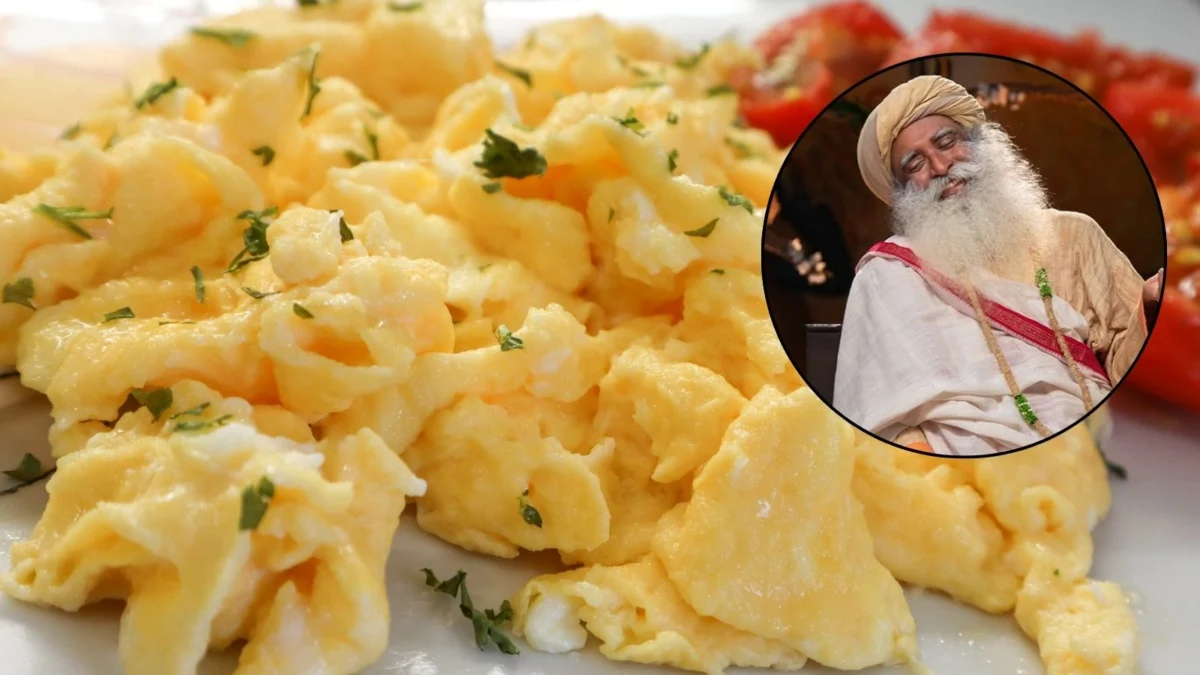
In an era where dietary choices are increasingly influenced by social media personalities and spiritual leaders as much as by medical professionals, a recent viral video by Sadhguru has reignited a fierce debate over the consumption of eggs, the efficacy of vegetarianism, and the validity of traditional eating habits. While spiritual and cultural perspectives often emphasize the energetic qualities of food, modern nutritional science frequently offers a different, data-driven narrative.
This article examines the claims made by Sadhguru regarding the "dangers" of daily egg consumption, the role of traditional South Indian fermented foods in providing Vitamin B12, and the broader implications of these statements on public health and nutritional literacy.
Main Facts: The Core of the Controversy
The controversy began following an Instagram video posted by Sadhguru, the founder of the Isha Foundation. In the clip, he made several categorical statements regarding food habits, specifically targeting eggs as a dietary staple. His primary assertions included:
- The "Worst" Food: Sadhguru claimed that eggs are "the worst thing you can consume on a daily basis," suggesting they have a negative impact on the human system when eaten frequently.
- Seasonal Lethargy in Women: He linked the period following the equinox to a natural dip in energy levels, particularly in women, and suggested that modern diets (like bread and eggs) exacerbate this lethargy.
- Traditional Alternatives: He advocated for traditional South Indian preparations like Lakshmi Charu (Andhra Pradesh), Palaisadam (Tamil Nadu), and Kool (Karnataka), asserting they are rich in Vitamin B12.
- The Protein Myth: He dismissed the necessity of animal protein for muscle building, citing that the "most muscular animals are herbivores" and pointing to elite athletes like Novak Djokovic, Virat Kohli, Lionel Messi, and Tom Brady as examples of successful vegetarians (though it should be noted that some of these athletes follow plant-based or pescatarian diets rather than strict traditional vegetarianism).
To provide a balanced perspective, these claims must be weighed against established nutritional science. Experts argue that while traditional wisdom has value, labeling a nutrient-dense whole food like an egg as the "worst" can be misleading and potentially harmful to populations struggling with protein and micronutrient deficiencies.
Chronology: From Viral Video to Scientific Rebuttal
The trajectory of this debate follows a pattern common in the digital age, where spiritual discourse intersects with health science.
- The Catalyst: In late 2024, leading up to the autumnal equinox, Sadhguru released a video discourse focusing on "Pranic" food and the energetic impact of diet. The video quickly gained millions of views across Instagram and YouTube, tapping into the growing global interest in holistic wellness.
- The Social Media Surge: The comments section became a battlefield between followers who swear by the "sattvic" (pure) diet and fitness enthusiasts who rely on eggs as an affordable, high-quality protein source.
- The Scientific Response: Within days, nutritionists and dietitians began issuing counter-statements. Professionals like Kanikka Malhotra, a Consultant Dietitian and Diabetes Educator, were sought out by media outlets to provide a clinical breakdown of the claims.
- The Nuance Phase: As the debate matured, the focus shifted from a simple "eggs: good vs. bad" argument to a more complex discussion about food quality, synthetic eggs in the market, and the actual bioavailability of B12 in fermented plant-based foods.
Supporting Data: Deconstructing the Nutritional Profile of Eggs
To understand why nutritionists disagree with the "worst food" label, one must look at the data. For decades, eggs were unfairly maligned due to their cholesterol content. However, modern research has largely vindicated them.
1. Nutrient Density
An egg is often referred to as "nature’s multivitamin." A single large egg contains:
- Protein: 6 grams of high-biological-value protein containing all nine essential amino acids.
- Choline: Essential for brain health and neurotransmitter synthesis.
- Vitamins: Significant amounts of Vitamin D, B12, A, and Riboflavin.
- Antioxidants: Lutein and Zeaxanthin, which are critical for eye health.
2. The Cholesterol Context
According to Kanikka Malhotra, "Large-scale research has consistently found that moderate egg consumption, up to one per day, does not meaningfully raise cardiovascular risk in healthy individuals." The liver actually regulates cholesterol production based on dietary intake; for most people, dietary cholesterol has a minimal impact on blood cholesterol levels compared to saturated and trans fats.
3. The Bioavailability of Vitamin B12
One of the most contentious points is the source of Vitamin B12. B12 is essential for nerve function and the production of DNA and red blood cells.
- Animal Sources: Eggs, dairy, meat, and fish are reliable sources where B12 is highly bioavailable.
- Fermented Foods: While Sadhguru mentioned traditional fermented foods like Kool or Palaisadam, science suggests caution. While fermentation can produce B12, the levels are often inconsistent and may contain B12 analogues that the human body cannot actually absorb. Relying solely on these for B12 can lead to severe deficiencies, particularly in the Indian population, where B12 deficiency is already endemic.
Official Responses: Expert Analysis on Lethargy and Performance
In response to the claims about seasonal lethargy and athletic performance, medical experts provide a more physiological explanation than a spiritual one.
Addressing Women’s Health and Energy
Kanikka Malhotra notes that the lethargy many women feel is a documented public health issue in India, but it is rarely tied to the equinox. "B12, iron, and protein are the three core pillars of sustained energy," she explains. "Indian women are disproportionately deficient in all three."
The "dip" in energy is more likely a result of:
- Iron Deficiency Anemia: Affecting over 50% of women in India.
- Protein-Energy Malnutrition: A diet high in refined carbohydrates (white rice and sugar) and low in quality protein.
- Vitamin D Deficiency: Which can mimic symptoms of seasonal affective disorder or general fatigue.
The "Muscular Herbivore" Argument
Sadhguru’s comparison to herbivores (like elephants or bulls) is a common trope in vegetarian advocacy. However, biologists point out that herbivores have specialized digestive systems (like multiple stomach compartments or elongated guts) designed to ferment cellulose and extract nutrients from plants in a way humans cannot.
Regarding the athletes mentioned—Djokovic, Kohli, and others—Malhotra agrees that a vegetarian diet can support elite performance, but with a major caveat: "The keyword is planned. These athletes have world-class nutritionists ensuring they get 1.2 to 1.6 grams of protein per kilogram of body weight, often utilizing high-quality supplements and isolated plant proteins."
Implications: Public Health and Food Safety
The debate carries significant implications for how the general public views nutrition and food safety.
1. The Danger of Absolute Terms
When a high-profile figure calls a staple food "the worst," it can lead to "orthorexia"—an unhealthy obsession with eating "pure" food. For a person in a low-income bracket, an egg might be the only affordable source of complete protein. Discouraging its consumption without providing a viable, high-protein alternative can have negative nutritional outcomes.
2. The Real Threat: Adulteration and Synthetic Eggs
Interestingly, there may be a middle ground where spiritual caution and science meet. Malhotra points out that "Where legitimate concern does exist is in the quality of eggs available in the market today."
Reports of "synthetic eggs" made from calcium carbonate, starch, and resin have surfaced in various markets. If the critique is aimed at industrial farming practices, the use of antibiotics in poultry, or the rise of adulterated food, then the scientific community largely agrees that sourcing matters. "Choosing eggs from verified, trusted sources matters," Malhotra adds.
3. Cultural Identity vs. Scientific Evidence
The promotion of traditional foods like Lakshmi Charu is a positive step toward reviving culinary heritage. These foods are excellent for gut health due to probiotics. However, the implication that they can replace eggs or meat as a primary B12 source is where the danger lies. A synthesis of both—valuing traditional fermented foods for gut health while acknowledging the necessity of proven B12 sources—is the recommended path for modern consumers.
Conclusion: Seeking a Balanced Plate
Nutrition is rarely a matter of "all or nothing." While Sadhguru’s perspective emphasizes the subtle "energetic" impact of food on the body, nutritional science focuses on the biochemical requirements for survival and performance.
The expert consensus is clear: Eggs are not a dietary villain. They are a complex, nutrient-dense tool that, when sourced responsibly and prepared healthily (boiled or poached rather than deep-fried), provide immense benefits. For those who choose a vegetarian path for spiritual or ethical reasons, the science supports them—provided they are diligent about B12, iron, and protein intake through careful planning and supplementation.
Ultimately, reducing an entire food group to a single negative verdict ignores the nuances of individual health history, activity levels, and socioeconomic realities. As Kanikka Malhotra concludes, "A daily diet of white rice and processed snacks is technically vegetarian but nutritionally inadequate. Variety, deliberate food pairing, and targeted supplementation are what separate a diet that nourishes from one that merely avoids meat."
DISCLAIMER: This article is based on information from the public domain and expert interviews. Nutritional needs vary significantly based on age, gender, and medical history. Always consult your health practitioner or a registered dietitian before making significant changes to your diet or starting a new supplement routine.
