

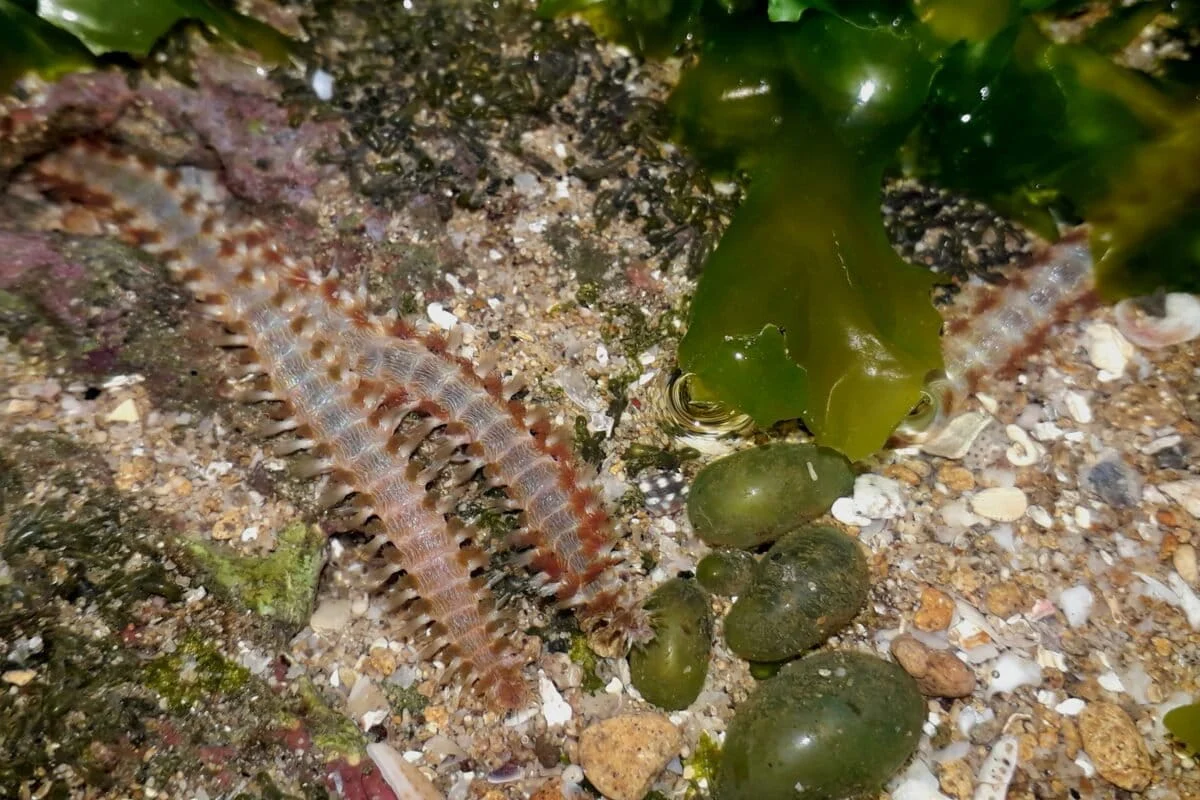
Beneath the rhythmic ebb and flow of India’s vast 7,500-kilometer coastline lies a world of vibrant, bristly, and largely misunderstood architects. Polychaete worms, commonly known as "bristle worms," are among the most diverse marine invertebrates on the planet. Despite their often-minute size, these creatures are the linchpins of marine ecosystems, serving as vital links in the food chain, engineers of the seabed, and bioindicators of environmental health.
However, as India’s blue economy expands, these worms have found themselves at the center of a complex intersection between ecological necessity and commercial exploitation. From the muddy flats of the Gulf of Khambhat to the coral-rich waters of the Tamil Nadu coast, the story of the polychaete is one of hidden brilliance, scientific neglect, and an urgent need for sustainable management.
Main Facts: The "Much-Haired" Wonders of the Deep
The term Polychaeta is derived from the Greek words for "having much hair," a reference to the chitinous bristles, or setae, that sprout from fleshy, leg-like protrusions called parapodia. These appendages allow them to crawl, swim, and burrow through nearly every conceivable marine environment.
Global and National Diversity
According to the World Register of Marine Species (WoRMS), there are currently 13,148 recognized species of polychaetes globally. Some researchers predict this number will swell to over 16,700 by the turn of the century as deep-sea exploration and molecular barcoding techniques advance.
In India, the diversity is equally staggering but significantly under-documented. "They occur in almost all marine habitats, from estuaries, mangroves, sandy shores, coral reefs, and seagrass beds to the continental shelf and deeper waters," explains Sanitha Sivadas, a marine benthic ecology expert and Scientist E at the National Centre for Coastal Research (NCCR). While most are marine, a resilient few have adapted to low-salinity estuaries and even inland freshwater systems.
Physical and Behavioral Variance
Bristle worms are a study in biological extremes. They range in size from microscopic filaments just a few millimeters long to giants exceeding one meter. Their palettes are equally varied, featuring dull, camouflaging browns alongside neon yellows, iridescent blues, and fiery orange-reds.

Beyond their appearance, their feeding strategies define their ecological niches:
- Deposit Feeders: They ingest sediment, extracting nutrients from decaying organic matter, effectively "cleaning" the seabed.
- Filter Feeders: Using fan-like structures, they strain plankton and nutrients from the water column.
- Predators: Armed with powerful jaws, some species hunt live prey with surprising speed.
- Grazers: Others feed on algae and plant matter, maintaining the balance of coastal vegetation.
Chronology: A History of Polychaetology in India
The scientific understanding of India’s polychaetes has been characterized by long periods of stagnation punctuated by brief bursts of discovery.
The Foundation (1953)
The bedrock of Indian polychaete research was laid by the French taxonomist Pierre Fauvel. His seminal 1953 work, The Fauna of India, including Pakistan, Ceylon, Burma and Malaya, described 304 species across the subcontinent. For decades, this remained the primary reference for researchers in the region.
The Stagnation Period (2001–2019)
Following the mid-20th-century boom, progress slowed. Between 2001 and 2019, only eight new polychaete records were reported from Indian waters. This gap was not due to a lack of biodiversity, but rather a decline in taxonomic expertise and funding for "non-charismatic" megafauna.
The Modern Renaissance (2020–Present)
In 2020, a major effort to consolidate Indian polychaete knowledge was led by Sanitha Sivadas and Russell Carvalho. Their comprehensive checklist compiled 727 marine annelid species reported from India. However, the study revealed a troubling reality: nearly 25% (183 species) of these records were considered "questionable" due to outdated nomenclature or misidentification.
The momentum continued into 2025, when a team from the NCCR discovered a new species of the genus Armandia in the sandy sediments off the Tamil Nadu coast. This discovery underscored a vital point in marine biology: even "well-studied" areas still harbor secrets.

Supporting Data: The Economic Engine of the East Coast
While scientists view polychaetes through the lens of biodiversity, a burgeoning industry views them as "pink gold." The rapid expansion of India’s shrimp aquaculture industry has created a massive, unregulated market for wild-harvested bristle worms.
The Demand for "Live Feed"
Shrimp hatcheries, particularly those producing Litopenaeus vannamei (Pacific white shrimp), rely heavily on polychaetes as a maturation feed.
- Nutritional Superiority: Polychaetes are rich in Polyunsaturated Fatty Acids (PUFAs). Scientific studies have proven that a diet of live polychaetes significantly increases the spawning rate and the quality of larvae in mother shrimps.
- The Scale of Harvesting: On the east coast of India alone, there are over 200 registered shrimp hatcheries. Perumal Murugesan, an associate professor at Annamalai University, estimates that an average hatchery requires approximately two kilograms of worms per day. This translates to a staggering daily demand of 400 kilograms of wild-caught polychaetes.
The Economics of Exploitation
The supply chain for these worms reveals a stark socio-economic disparity. The primary collectors are often members of the Irular tribal community in Tamil Nadu, who hand-pick the worms from intertidal mudflats.
- Collector’s Share: Fishermen receive between ₹500 and ₹800 per kilogram.
- Market Price: By the time these worms reach the hatcheries through middlemen and distributors, the price skyrockets to between ₹3,500 and ₹4,000 per kilogram.
Official Responses and Ecological Warnings
Experts are sounding the alarm on the dual threats of over-harvesting and habitat degradation. The consensus among the scientific community is that the current rate of wild harvesting is unsustainable.
The Bioindicator Argument
Sanitha Sivadas emphasizes that polychaetes are "the pulse of the ocean." Because they live in intimate contact with sediments, changes in their community composition are the first signs of environmental stress. "Their high ecological adaptability and sensitivity to environmental stresses make them great bioindicators," she says. When polychaete populations collapse, it often signals a broader collapse in sediment health and oxygen transport.
Adaptability vs. Extinction
Moumita Bhowmik, a PhD scholar at the CSIR-Central Salt & Marine Chemicals Research Institute, is currently studying the resilience of nereidids (a specific polychaete family) in the highly polluted Gulf of Khambhat. Her research suggests that while some species can adapt to hypoxic (low oxygen) conditions and even degrade harmful chemicals, they are not invincible. "Areas with high habitat disturbances, such as heavy dredging or industrial runoff, eventually show no traces of polychaete worms at all," Bhowmik warns.

The Push for Aquaculture
To mitigate the pressure on wild stocks, researchers like Murugesan have developed and patented technology for the controlled aquaculture of native species like Perinereis nuntia. The goal is to provide hatcheries with a sustainable, pathogen-free alternative to wild-caught worms, creating a "win-win" for both the industry and the environment.
Implications: The Future of India’s Marine Biodiversity
The plight of the polychaete worm is a microcosm of the challenges facing marine conservation in the 21st century. As India looks toward the sea for economic growth, the "invisible" species that hold the ecosystem together are at risk of being overlooked.
The Crisis in Taxonomy
One of the most significant implications of this study is the "taxonomic impediment." Sivadas notes that fewer young researchers are choosing taxonomy as a career. Without trained experts who can identify species at a morphological and molecular level, India cannot effectively protect its biodiversity. You cannot conserve what you cannot name.
Climate Change and Habitat Loss
The distribution of polychaetes is not dictated by geography alone but by a delicate balance of sediment grain size, tidal exposure, and oceanographic currents. Climate change, which brings rising sea levels and shifting currents, threatens to alter these niches permanently. Furthermore, human-led changes to the shoreline, such as the destruction of mangroves for shrimp ponds, remove the very nurseries where these worms thrive.
A Call for Regional Databases
Future research is now pivoting toward localized efforts. Moumita Bhowmik, recently funded by the Ocean Census Species Discovery Committee, aims to create a regional database for the Gulf of Khambhat and the Gulf of Kachchh. Such databases are essential for tracking how species respond to industrialization and warming seas.
Conclusion: Protecting the Foundation
The bristle worm may lack the charismatic appeal of a sea turtle or a dolphin, but its role in the planetary machinery is no less vital. From sequestering carbon in the seabed to fueling the multi-billion-dollar shrimp industry, these worms are the silent laborers of the Indian coast.

The path forward requires a three-pronged approach:
- Investment in Taxonomy: Encouraging young scientists to return to the fundamental work of species identification and museum curation.
- Regulation of Harvesting: Implementing strict quotas on wild harvesting and formalizing the supply chain to ensure tribal communities receive fair wages.
- Sustainable Alternatives: Scaling up polychaete aquaculture to decouple the shrimp industry from the destruction of wild ecosystems.
As Sanitha Sivadas aptly puts it, the goal is not just to add names to a list, but to understand how these creatures respond to a changing world. Only then can India ensure that its "much-haired" wonders continue to anchor the health of its seas for generations to come.
