

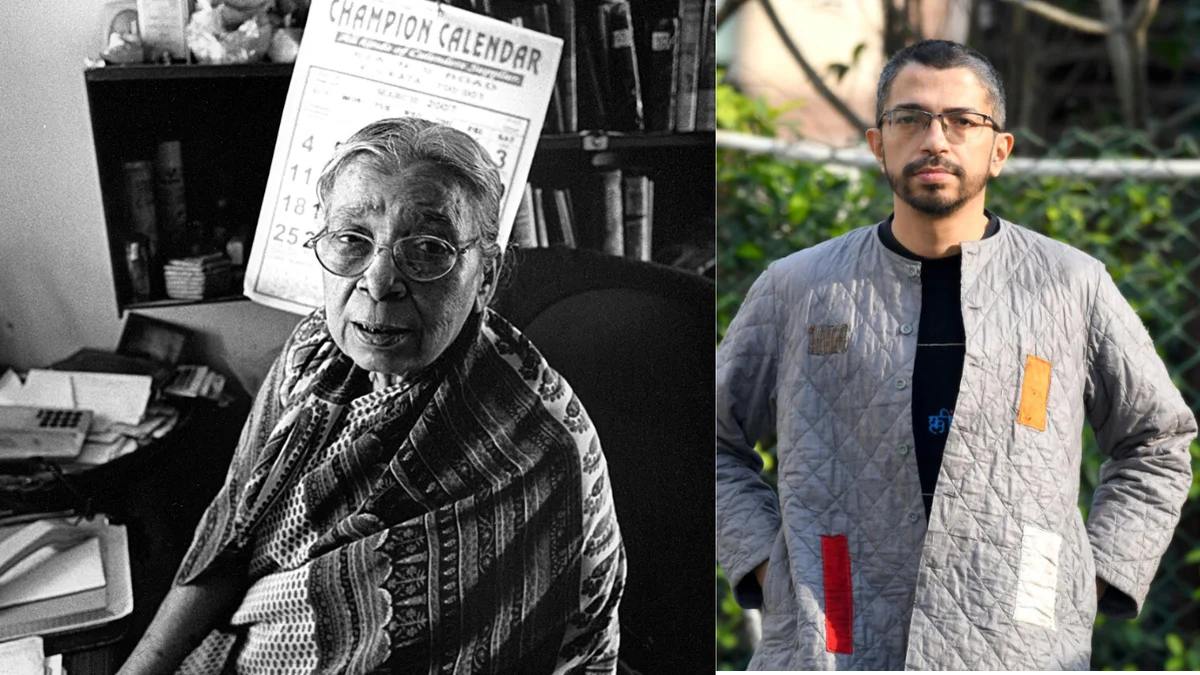
In a quiet, post-lunch conversation that now resonates with the weight of literary history, the late Mahasweta Devi—one of India’s most formidable writers and activists—confided in her grandson, Tathagata Bhattacharya. "I am appreciated for the wrong reasons," she remarked. For a woman whose mantle was crowded with the Jnanpith, the Ramon Magsaysay Award, and the Padma Vibhushan, such a statement might seem paradoxical. However, for those who knew "Bui"—as she was fondly called within her family—it was a poignant critique of how the mainstream literary establishment often prioritizes palatable narratives over the raw, jagged truths of her most profound works.
As the literary world approaches the centenary of her birth, the task of re-evaluating Mahasweta Devi’s bibliography becomes urgent. It is not merely about celebrating her fame, but about "righting the wrong" by shifting the spotlight toward the works she believed truly defined her vision of an equitable society.

The Main Facts: A Voice for the Dispossessed
Mahasweta Devi (1926–2016) was more than a novelist; she was a chronicler of the subaltern experience. Her work bridged the gap between rigorous historical research and visceral activism. While she is globally recognized for works like Hazar Churasir Maa (Mother of 1084), which humanized the Naxalbari movement through the lens of a grieving mother, her broader body of work delves deeper into the structural violence of caste, feudalism, and the post-colonial state.
The central thesis of her grandson’s recollection is that her most celebrated works often overshadowed more nuanced masterpieces. These "neglected" texts—ranging from historical fiction and children’s satire to harrowing critiques of the commodification of the female body—offer a more comprehensive map of her intellectual landscape. Her legacy is inextricably tied to the Adivasi (tribal) movements of West Bengal, Bihar, and Jharkhand, where she didn’t just write about the marginalized; she lived among them, fighting for their land rights and legal recognition.
A Chronology of Subversion (1956–1977)
To understand the evolution of Mahasweta Devi is to trace a timeline of radicalization and meticulous documentation.

1956: The Genesis of a Historian
Her debut novel, Jhansir Rani (The Queen of Jhansi), set the template for her future work. Eschewing the comfort of libraries, Devi traveled through the rugged terrain of Bundelkhand. She collected oral histories, folk songs, and family reminiscences to reconstruct the life of Lakshmibai. This was not just a biography; it was an act of reclamation, turning a historical icon into a living, breathing symbol of resistance against the British East India Company.
1977: The Year of the Dual Masterpieces
Two decades later, Devi published two of her most significant works: Stonodayini (Breast-Giver) and Aronyer Adhikar (Rights of the Forest). This period marked her transition into a writer who used the Bengali language to dismantle both colonial myths and indigenous social hierarchies. While Stonodayini interrogated the exploitation of the female body, Aronyer Adhikar provided a definitive account of the Munda rebellion (Ulgulan) led by Birsa Munda.
The Later Decades: Satire and Identity
In her later years, Devi’s writing took on varied forms, including the hilarious but pointed children’s classic Golper Goru Nyadosh (Our Non-Veg Cow) and the tragic exploration of caste in Kobi Bondhoghoti Gnaier Jibon o Mrityu (The Life and Death of Poet Bondhoghoti Gnai). These works demonstrated her range—from the whimsical to the devastatingly somber.

Supporting Data: Analyzing the Five Pillars of Devi’s "True" Legacy
Based on the insights provided by Tathagata Bhattacharya, five specific works stand as the pillars of her literary achievement, each addressing a different facet of the human condition.
1. Breast-Giver (Stonodayini): The Body as a Tool of Labor
In this 1977 novella, Devi deconstructs the "sacred" aura of motherhood. The protagonist, Jashoda, is a poor Brahmin woman who becomes a professional wet nurse for the wealthy Haldar family. In a world of "quasi-feudal and quasi-capitalist" values, Jashoda’s breasts are not symbols of nurturing, but tools of production. To keep producing milk, she must remain perpetually pregnant, leading to a cycle of physical exhaustion and the neglect of her own biological children. Her eventual death from breast cancer, followed by her family’s refusal to touch her "corrupt" body, serves as a blistering critique of a society that consumes the laborer and discards the remains.
2. The Queen of Jhansi (Jhansir Rani): The Compass for Research
As her first novel, this work established Devi’s "bottom-up" approach to history. By recording local songs and oral renditions, she bypassed the sanitized versions of history written by the victors. For modern authors of historical fiction, this text remains a "compass," demonstrating that true narrative power lies in the meticulous gathering of "small" voices that mainstream history often ignores.

3. Our Non-Veg Cow (Golper Goru Nyadosh): Satire as Social Commentary
Devi’s work for children is often overlooked by academics, yet Our Non-Veg Cow showcases her subversive wit. The story of Nyadosh, a cow who drinks alcohol and tosses British policemen into rivers, was written at a time when the cow was viewed as a "domesticated farm animal" rather than a political or religious deity. Through humor, Devi introduced young readers to the absurdities of colonial authority and the joy of non-conformity.
4. Rights of the Forest (Aronyer Adhikar): The Visual Epic of Resistance
This novel is perhaps the most significant literary contribution to the Adivasi cause in India. It chronicles the struggle of the Mundas of the Chota Nagpur plateau against the British Raj, zamindars, and moneylenders. Devi’s prose is described as "visual," painting the forest not as a backdrop, but as a living entity that the Adivasis were being systematically severed from. The reclamation of the forest by Birsa Munda remains a foundational text for environmental and indigenous rights movements.
5. The Life and Death of Poet Bondhoghoti Gnai: The Tragedy of Caste
Perhaps the most personal favorite of her grandson, this novel tells the story of Kalhan, a Chuar tribal youth with a genius for poetry. To find acceptance in a casteist society, Kalhan assumes a Brahmin identity to compose the Abhayamangal. His eventual exposure and execution by the king serve as a "stark reminder" of the systemic undervaluation of tribal intellect. This work, soon to be released in a new translation by Seagull Books, highlights Devi’s lifelong obsession with how the "civilized" world erases the cultural contributions of the "primitive."

Official Responses and Cultural Impact
The official recognition of Mahasweta Devi’s work has often focused on her role as a bridge between the literary elite and the grassroots. Upon her passing in 2016, then-President Pranab Mukherjee noted that India had lost a "creative genius" who gave a voice to the marginalized.
However, the "official" response from the communities she served—the Sabars, the Mundas, and the Lodhas—was far more profound. In many tribal hamlets, she was known as "The Mother of the Sabars." Her work with the Denotified Tribes Rights Action Group (DTRAG) led to actual policy shifts in how the Indian state viewed "criminal tribes"—a colonial-era classification she fought to abolish.
International literary figures, including Gayatri Chakravorty Spivak, who translated Breast-Giver and Imaginary Maps, have praised Devi for her ability to "theorize" the subaltern experience through fiction. Spivak’s translations brought Devi’s critiques of global capital and patriarchy to a Western audience, cementing her status as a global intellectual.

Implications: The Relevance of Mahasweta Devi Today
In the current socio-political climate, Mahasweta Devi’s "wrongly appreciated" works are more relevant than ever. Her explorations of land rights, the commodification of the female body, and the erasure of indigenous identity speak directly to contemporary crises.
- Environmental Justice: Rights of the Forest serves as a precursor to modern debates over the Forest Rights Act and the displacement of Adivasis for mining projects.
- Caste and Identity: The Life and Death of Poet Bondhoghoti Gnai resonates with the ongoing struggles of Dalit and Adivasi scholars and artists who face institutional barriers in modern India.
- Feminist Economics: Breast-Giver remains a vital text for understanding the "care economy" and how women’s reproductive labor is exploited by capital.
As Tathagata Bhattacharya suggests, the best way to honor Mahasweta Devi is to move beyond the "celebrated" titles and engage with the works that made her uncomfortable—and, by extension, make the reader uncomfortable. By revisiting these texts, we do not just celebrate a writer; we engage with a radical philosophy that demands we look at the world from the perspective of those who have been pushed to its very edges.
In the end, Mahasweta Devi’s legacy is not found in the trophies on her shelf, but in the "non-veg cows" that defy authority, the "breast-givers" who expose the rot of feudalism, and the "poets" who, despite their tragic ends, refuse to be silenced by the weight of a name. "Bui" may have felt she was appreciated for the wrong reasons, but through the efforts of those who remember her true voice, the "right reasons" are finally coming to light.
