

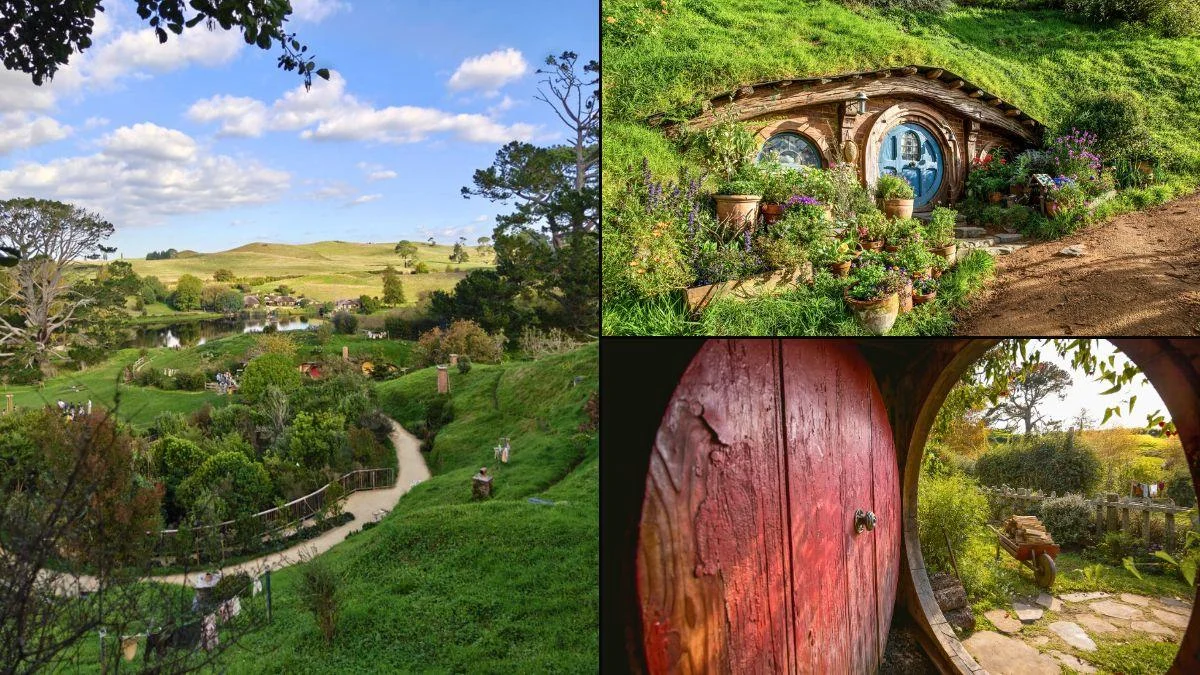
For many, the distinction between cinematic fiction and lived experience is a rigid boundary. However, for a generation raised on the industrial miracle of Peter Jackson’s film adaptations and the seminal high fantasy of J.R.R. Tolkien, the rolling hills of Waikato, New Zealand, represent something far more profound than a mere movie set. They represent a cultural inheritance.
The Hobbiton Movie Set, located on a private sheep farm near Matamata, has evolved from a temporary filming location into a permanent monument to craftsmanship and storytelling. It stands as the physical manifestation of "The Shire," the pastoral idyll where both The Hobbit and The Lord of the Rings began. For those who grew up with the rattle of Gandalf’s cart and the serene image of Frodo reading under a tree, a visit to this 1,250-acre spread is not just tourism; it is the realization of a lifelong "half-reality."

The Chronology of a Cinematic Landmark
The transformation of the Alexander family farm into the world’s most famous village was neither swift nor accidental. The history of Hobbiton is a testament to the meticulous, often obsessive, nature of modern filmmaking and the unexpected power of "screen tourism."
1998: The Search for the Untouched
In 1998, director Peter Jackson and his location scouts conducted an aerial survey of the North Island. They were searching for a landscape that felt untouched by the 20th century—a place that mirrored Tolkien’s descriptions of the English Midlands. When a helicopter landed on the Alexander farm, the team found exactly what they were looking for: rolling green hills, a majestic Monterey pine overlooking a lake, and a complete absence of power lines or modern roads.

Legend dictates that location scout David Comer interrupted an important rugby match to pitch the project to the farm’s owner, Ian Alexander. The conversation was successful, and by 1999, the site was transformed into a hive of activity.
1999–2011: From Temporary Facades to Permanent Reality
The initial construction of the Shire for The Lord of the Rings trilogy was a massive logistical undertaking involving the New Zealand Army. Soldiers were drafted to cut 1.5 kilometers of roads and move vast quantities of earth to create the foundations for Hobbit-holes. These original structures were made of temporary materials—untreated timber, ply, and polystyrene—designed to be demolished once filming wrapped.

However, a twist of fate altered the site’s destiny. When filming concluded, a period of heavy rain delayed the scheduled demolition. During this window, the public began to express interest in visiting the "remnants" of the Shire. By 2002, the Alexander family began conducting guided tours of the skeletal set.
The true turning point occurred in 2009 when Jackson returned to film The Hobbit trilogy. This time, a decision was made to rebuild the set using permanent materials: stone, brick, and timber. The goal was to ensure the site would never have to be "faked" again, resulting in a level of detail that could withstand the elements for decades.

Supporting Data: The Anatomy of the Shire
Today, Hobbiton is a marvel of architectural and horticultural detail. Spanning approximately 12 acres of the larger farm, the site features 44 individual Hobbit-holes, each with a unique personality and backstory.
Proportions and Perspectives
The set utilizes "forced perspective," a cinematic technique used to manipulate the perceived size of the actors. To make the Hobbits (played by average-sized actors) look small, some holes were built at 60% or 70% scale. Conversely, to make Gandalf appear towering, smaller doors and props were used in scenes where he interacted with the environment.

Horticultural Obsession
The Shire is a "working" village. The gardens are not merely for show; they are tended by a dedicated team of gardeners who ensure that seasonal vegetables, flowers, and orchards are always in bloom. This adherence to Tolkien’s vision—that the Shire be a place of agricultural abundance—is central to the site’s authenticity.
The Iconic Bag End
At the highest point of the village sits Bag End, the home of Bilbo and Frodo Baggins. Framed by a green door and the famous "No admittance except on party business" sign, it offers a bird’s-eye view of the entire Shire. Above the home sits a massive oak tree; notably, this tree is artificial. In the films, it was constructed from steel and silicon, with 200,000 hand-painted plastic leaves imported from Taiwan. It remains one of the most complex props in cinematic history.

Official Responses and the Visitor Experience
Tourism New Zealand and the Hobbiton Movie Set organizers have structured the experience to be immersive rather than transactional. The journey begins at "The Shire’s Rest," where visitors are transported via green buses into the heart of the Waikato hills.
The "Little Fellowship" Tour
Guides like Paul, who lead groups through the narrow paths, act as narrators for the landscape. They bridge the gap between the films and the physical space, pointing out the exact spot where Frodo greeted Gandalf or where the "eleventy-first" birthday party took place.

According to site officials, a significant portion of visitors have never seen the films or read the books. They arrive drawn by the reputation of the landscape itself. The site’s design is such that even without the context of Middle-earth, the craftsmanship of the round doors, deep-set windows, and artisanal letterboxes provides a satisfying aesthetic experience.
The New Frontier: Fully Realized Interiors
For years, Hobbiton was primarily a collection of exterior facades, with all interior scenes filmed on soundstages in Auckland or Wellington. However, in a major expansion of the visitor experience, two Hobbit-holes on Bagshot Row—including the "Proudfoot" residence—have been developed with fully realized, 360-degree interiors.

These spaces are built directly into the hillside, featuring:
- The Tunnels: Tube-shaped halls with wood-paneled walls and tiled floors.
- The Living Spaces: Bedrooms with four-poster beds, copper tubs in the bathrooms, and kitchens stocked with jars of preserves and hanging copper pots.
- The Study: Small nooks crowded with ledgers, ink bottles, and hand-drawn maps, reflecting the scholarly nature of the Baggins and their kin.
Everything in these interiors is scaled to "Hobbit proportions," encouraging visitors to interact with the environment. This move toward tactile, permanent interiors represents a shift in how movie sets are preserved, moving away from "look-but-don’t-touch" museum styles toward lived-in environments.

The Cultural and Emotional Implications
The enduring appeal of Hobbiton suggests that the Shire is more than a filming location; it is a symbol of "home" and the "simple life" that Tolkien championed. The site serves as a physical anchor for a global community of fans.
The "Green Dragon" and Community
The tour concludes at the Green Dragon Inn, a working tavern that serves exclusive house-brewed ales, cider, and ginger beer. The inn, with its heavy timber beams and roaring fireplace, serves as the social heart of the tour. It reinforces the idea that the Shire is a place of community and comfort—a "safe haven" before the characters (and the audience) embark on more perilous journeys.

The "Adventure" and the Return
There is a profound melancholia inherent in leaving the Shire. For the author, visiting from the sweltering heat of a record-breaking Delhi summer, the contrast between the lush, cool orchards of Waikato and the harsh reality of the outside world was stark.
This mirrors the central theme of Tolkien’s work: the bittersweet nature of the journey. In The Return of the King, Samwise Gamgee returns home, shuts his yellow door, and says, "Well, I’m back." But as the author notes, once a person has seen what lies beyond the familiar—once they have walked the paths of their childhood dreams—they are never truly the same.

Economic and Industry Impact
From a journalistic perspective, Hobbiton is the crown jewel of New Zealand’s "Screen Tourism" industry. It has contributed significantly to the country’s GDP and has set a global standard for how film sets can be repurposed as sustainable tourism assets. It has paved the way for other nations to recognize the long-term value of preserving cinematic heritage.
Conclusion: A Dream Realized
Hobbiton stands as a rare bridge between the ephemeral world of cinema and the tangible world of stone and soil. It is a place where the "half-realities" of childhood imagination are given weight and texture.

As visitors sit at a wooden table in a Hobbit-hole or look out through a round window at the Party Tree, the distance between the viewer and the story vanishes. In an era of digital effects and green screens, the physical reality of the Shire is a reminder that some stories are too big to be contained by a screen—they require a hillside, a garden, and a green door to truly come home.
For those who have made the pilgrimage, the memory of the Shire remains a "bittersweet melancholia"—a reminder that while we must eventually return to our own worlds, Middle-earth is always there, waiting just beyond the next rolling hill in Matamata.
