

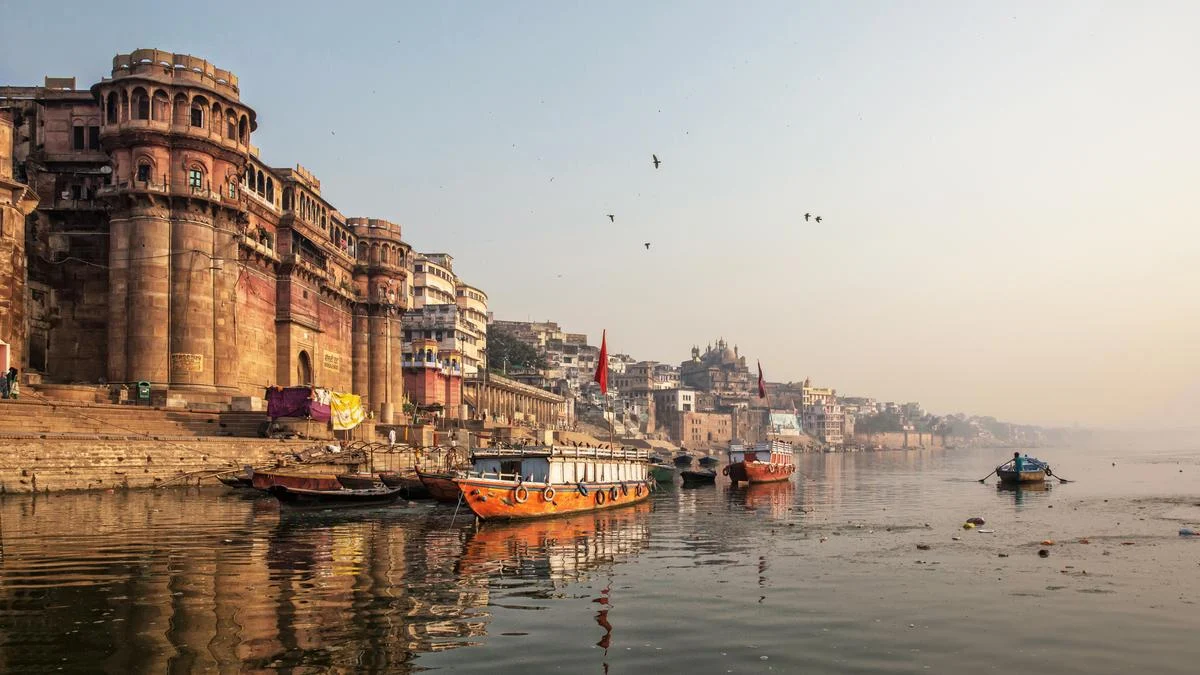
VARANASI — In the labyrinthine heart of Varanasi, a city that Mark Twain once described as "older than history, older than tradition, older even than legend," a quiet revolution is taking place. It is a transformation that bridges the gap between the ancient, soot-stained ghats and the sophisticated demands of 21st-century luxury travel. At the center of this evolution is a 214-year-old fort-turned-palace, BrijRama Palace, which has recently unveiled a culinary experiment that seeks to translate the city’s chaotic, spiritual energy into a ten-course vegetarian tasting menu.
Varanasi, also known as Kashi or Benares, has long been a destination for pilgrims and backpackers. However, as India’s infrastructure evolves and global interest in heritage tourism peaks, the city is redefining its hospitality landscape. From the "tamatar chaat" weather of the humid summer months to the meticulously plated "heritage radish bricks" at fine-dining establishments, the city is proving that it can honor its past while catering to a new generation of travelers.

Main Facts: A Gastronomic and Architectural Rebirth
The primary catalyst for this renewed interest in Varanasi’s luxury sector is the successful restoration and positioning of BrijRama Palace at Darbhanga Ghat. Originally constructed in 1812, the property has transitioned through various identities—from a defensive fort to a royal residence, and finally, after an arduous 18-year restoration project, into a 32-room luxury hotel.
The hotel’s flagship restaurant, Aangan, has introduced a ten-course vegetarian tasting menu designed by Chef Devansh Seth. This menu represents a significant shift in the local culinary scene, moving away from traditional buffet-style "thalis" toward an experimental, technique-driven approach. The menu utilizes locally sourced produce, such as radish and cauliflower, and reimagines them through the lens of contemporary plating and molecular gastronomy, all while adhering to the city’s strict "no meat, no alcohol" religious codes.

Beyond the palace walls, the city’s traditional "akhara" (wrestling) culture and street food traditions remain vibrant. The juxtaposition of high-concept dining at Aangan with the gritty, authentic experience of the Swaminath Akhara provides a comprehensive look at a city that refuses to be pigeonholed.
Chronology: From the Chaos of the Gullies to the Calm of the Palace
The experience of Varanasi typically begins with the sensory overload of its street life. During the peak of summer, when temperatures regularly soar to 45°C, the city’s "tamatar chaat"—a soupy, savory blend of tomatoes and potatoes simmered in ghee—becomes a staple. At Kashi Chaat Bandar, one of the city’s most famous institutions, the heat of the food matches the humidity of the environment, forcing visitors to seek refuge in the cool "dahi bhalla" (lentil dumplings in yogurt) and the "asthmatic puffs" of aged air-conditioning units.

As evening falls, the focus shifts to the river. At Alka Hotel, a multi-generational establishment, the sunset marks the beginning of the Ganga Aarti at Dashashwamedh Ghat. This ritual, involving rhythmic flaming lamps and chanting, is the spiritual heartbeat of the city. Ashutosh Choudhary, whose family has managed the hotel for decades, notes that the city’s appeal lies in its ability to bring together a diverse tapestry of scholars, artists, and tourists.
The transition to luxury begins the following day at Namo Ghat, the city’s newest and most modern entry point. From here, guests are transported by boat past the burning pyres of Manikarnika Ghat—where the cycle of life and death is on constant display—to the private docks of BrijRama Palace.

The stay at the palace is defined by a series of curated experiences:
- The Arrival: Marked by the sound of a conch shell and the presence of staff under gold-fringed umbrellas.
- The Culinary Journey: A lunch of the "Benares Thali," featuring local favorites like khatta meeta kaddu (tamarind-jaggery pumpkin) and dimona (peas and cumin).
- The Tasting Menu: An evening at Aangan, where "theatre" meets tradition through dishes like cauliflower croquettes served in savory smoke and malaiyo (saffron-flavored milk froth) reimagined as an airy dessert cloud.
- Physical Heritage: A morning visit to the 450-year-old Swaminath Akhara at Tulsi Ghat, where visitors are taught the ancient art of swinging the Hanuman gada (mace) by local wrestlers.
Supporting Data: The Logistics of Heritage Preservation
The restoration of BrijRama Palace is a case study in the challenges of heritage conservation in a UNESCO-protected environment. According to hotel management, the project was a "labor of love" that prioritized historical accuracy over immediate economic returns.

- Restoration Timeline: The property was acquired in 1994 by Brijrama Hospitality. Due to the city’s narrow gullies (alleys) and the palace’s location on the riverbank, the restoration took 18 years to complete.
- Material Logistics: Construction materials, including 90-kilogram sandstone pillars, could not be transported by truck. Instead, they were brought in via small boats or hand-carried through alleys where vehicles are prohibited.
- Architectural Features: The palace utilizes Mirzapur sandstone and Makrana marble. It also features a historical oddity: Asia’s first elevator, a hand-pulled contraption installed in 1915 by King Rameshwar Singh Bahadur of Darbhanga to avoid the steep climb from the river.
- Room Variety: Because the building was originally a fort, the 32 rooms are irregular in size. The "Varuna Burj," a converted cannon room, offers a unique 180-degree view of the Ganga, illustrating how military architecture has been repurposed for tourism.
Official Responses: Navigating the Future of Kashi
The management of these heritage properties views their role as both hospitality providers and cultural stewards. Manish Singh, General Manager of BrijRama Palace, emphasizes that the hotel’s mission is to encourage guests to view Varanasi as an immersive experience rather than a spectacle to be viewed from a distance.
"This is a UNESCO-protected site," Singh stated. "We have a responsibility to balance contemporary luxury with the history of the property. Our new menu and our curated tours are designed to show that Varanasi is a living city, not a museum."

Chef Devansh Seth echoed this sentiment, noting the creative challenge of the ten-course vegetarian menu. "By removing meat and alcohol, we are forced to be more creative with textures and flavors. We use things like tender coconut, betel leaf, and fermented buttermilk to create a profile that is uniquely ‘Benares’ but presented with international flair."
Local figures, such as Gyanshankul Singh, a certified strength coach and poet at the Swaminath Akhara, see the influx of high-end tourism as an opportunity to preserve local traditions. "When visitors come to swing the gada or learn about our mud-wrestling, it keeps these traditions alive for the next generation of locals as well," he observed.

Implications: The Shift Toward Luxury Heritage Tourism
The evolution of Varanasi’s hospitality sector has several long-term implications for the region’s economy and cultural identity:
1. Economic Diversification: By moving toward high-end, "slow" tourism, the city is attracting a demographic that stays longer and spends more on curated experiences, benefiting local artisans, boatmen, and small-scale vendors like the painters from Benares Hindu University.

2. Modernization vs. Tradition: The development of Namo Ghat and the introduction of tasting menus suggest a city that is modernizing its infrastructure. However, the persistence of the akharas and the traditional street food stalls ensures that the "soul" of Varanasi is not lost to gentrification.
3. Culinary Innovation: Aangan’s success with a high-end vegetarian menu sets a precedent for other holy cities in India (such as Haridwar or Rishikesh). It proves that religious dietary restrictions are not a barrier to world-class fine dining, but rather a unique selling point.

4. Global Positioning: As international travelers seek "authentic" yet comfortable heritage experiences, Varanasi is positioning itself alongside cities like Kyoto or Rome—places where the weight of history is balanced by modern amenities.
In conclusion, Varanasi remains a city of contradictions. It is a place where one can struggle through a sweaty, crowded bench for a bowl of tamatar chaat in the afternoon and sit for a meticulously choreographed 10-course meal in a cannon room by evening. As the city continues to answer the "call" of travelers from around the world, its ability to weave these disparate threads together—the smoke of the pyres and the smoke of the cauliflower croquettes—will define its future as a global heritage destination.
