

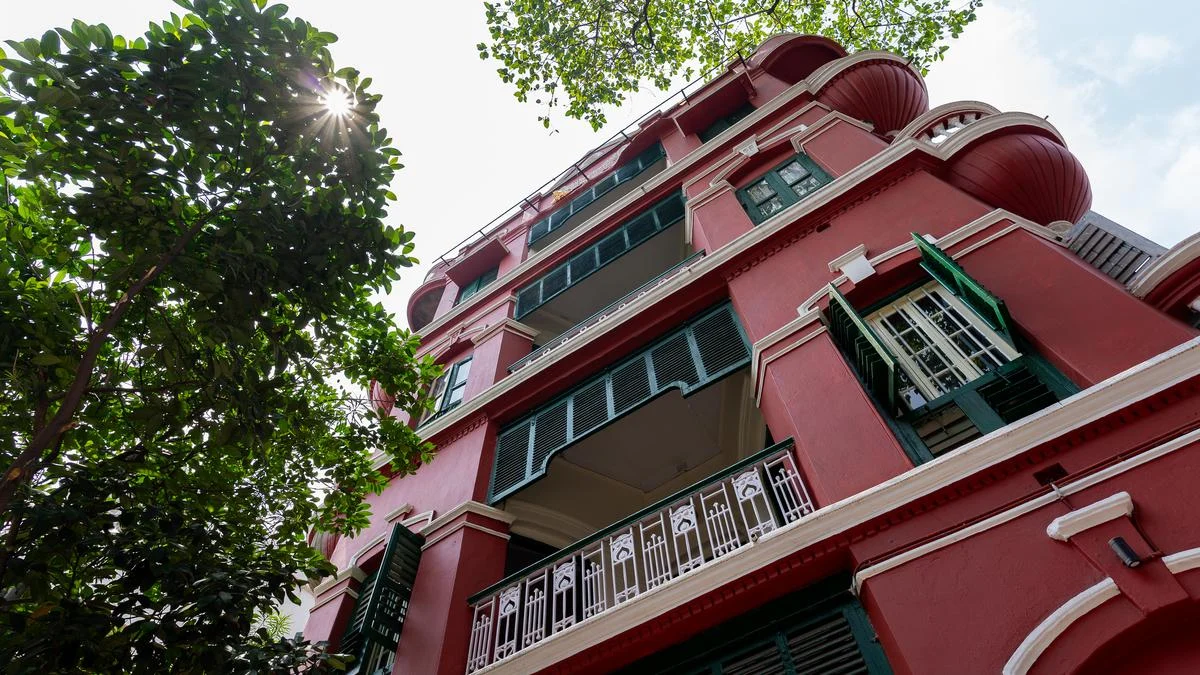
KOLKATA — The historic skyline of Kolkata, often described as a sprawling museum of colonial and indigenous architecture, is undergoing a quiet but profound metamorphosis. For decades, the city’s heritage buildings—sturdy and weathered like the chords of an ancient chamber organ—seemed destined for a slow decline into bureaucratic obscurity or the wrecking ball of modernization. However, a new wave of conservationists, entrepreneurs, and artists is reimagining these "architectural reeds," turning them into vibrant hubs of culture, commerce, and performance.
By blending the rigor of structural restoration with the creativity of experiential tourism, stakeholders are proving that the survival of Kolkata’s past depends not on freezing it in time, but on making it an active participant in the city’s future.

I. Main Facts: The Neon Revival of Dalhousie Square
The epicenter of this movement was recently spotlighted at the 109-year-old Royal Insurance Building in Dalhousie Square (B.B.D. Bagh). On March 27, this Edwardian-Classical landmark, which faces the stately General Post Office (GPO), shed its skin of bureaucratic routine. In a transformation orchestrated by the initiative Kolkata Unforgettable, the building’s creaking stairwells were bathed in neon pink and blue lights, serving as a stage for high-heeled flamenco dancers and immersive storytelling.
This event is part of a broader trend of "adaptive reuse"—a conservation strategy that repurposes old structures for modern functions while preserving their historic character. Led by Shailaja Mundra and her daughter Vasudha Pachisia, Kolkata Unforgettable treats heritage buildings as "pre-made backdrops" for cultural experiences. The goal is twofold: to generate public interest in forgotten spaces and to create a revenue stream that supports the staggering costs of maintaining century-old masonry.

Beyond the Royal Insurance Building, other landmarks are finding new rhythms:
- Skinny Mo’s Jazz Bar: A 109-year-old late-colonial building on Manoharpukur Road, now a premier venue for live music and vinyl culture.
- The Red Bari: A 90-year-old traditional Bengali urban mansion in Kalighat, repurposed as a cafe and boutique event space.
- St. John’s Church: Utilizing its rarely-heard pipe organ for contemporary concerts to engage a younger demographic.
II. Chronology: From Colonial Commercialism to Modern Decay and Rebirth
The timeline of Kolkata’s architectural evolution reveals a cycle of grandeur, neglect, and current intervention.

The Era of Construction (1900–1930s)
Most of the buildings currently under the spotlight were constructed during the height of the British Raj’s commercial boom. The Royal Insurance Building (1915) and the various rajbaris of North Kolkata represented a fusion of European styles—Classical, Edwardian, and Art Deco—with local sensibilities.
The Decades of Bureaucracy and Decay (1950s–2010s)
Following Independence, many of these structures were absorbed into government use or became entangled in complex tenancy laws. The Dalhousie Square area, while architecturally rich, became a "dead zone" on weekends, occupied only by files and shadows. Financial incentives for private owners to maintain these properties dwindled, leading to widespread damp, structural instability, and the "folding" of these buildings into the city’s background noise.

The Return of the Diaspora (2017–2019)
The current revival gained momentum around 2017. Munir Mohanty, after years in the United States, returned to Kolkata with a vision to create a space for jazz and vinyl. In 2019, he acquired the Manoharpukur Road property, beginning a year-long "brick shell" restoration. Simultaneously, architect Aishwarya Tipnis began advocating for "Jugaadopolis," an open-source restoration toolbox to empower local owners.
The Rise of Immersive Tourism (2022–Present)
In October 2022, Avantika Jalan and John Grams acquired "The Red Bari," beginning a meticulous restoration process that balanced fire safety regulations with heritage preservation. By early 2024, the "Kolkata Unforgettable" project hit its stride, moving from church concerts to theatrical productions inside the GPO and culminating in the high-profile flamenco performance in March.

III. Supporting Data: The Economics and Mechanics of Restoration
Restoring a heritage building in Kolkata is a Herculean task that defies standard construction logic. The technical and financial data behind these projects highlight the commitment required.
Structural Overhauls
At Skinny Mo’s, owner Munir Mohanty reported that the building had to be stripped down to its "brick shell." The process included:

- Desalinization and Damp Proofing: Essential for Kolkata’s humid climate.
- Soundproofing: Utilizing aluminum windows instead of glass to maintain acoustic integrity for jazz performances while blocking street noise.
- Material Sourcing: Traditional red oxide flooring was retained, and specific tiles were sourced from Bikaner, one of the few places still producing materials compatible with early 20th-century aesthetics.
Adaptive Challenges at The Red Bari
The Red Bari in Kalighat exemplifies the constraints of the "traditional Bengali urban mansion."
- Structural Integrity: The walls serve as the main support; thus, no internal walls could be moved, resulting in rooms with "thick bones" that dictate the layout.
- Modern Infrastructure: To comply with fire and food safety standards, the owners built a fire escape and a lift as external structures to ensure the load did not fall on the original 90-year-old walls.
- Maintenance: Owners reported that old drains must be cleaned four times more frequently than in modern establishments to prevent blockages.
The Revenue Model
The "Kolkata Unforgettable" model operates on a fortnightly curation basis. By transforming a building into a temporary performance venue, the organizers generate ticket sales and sponsorship interest. A portion of this revenue is earmarked for the building’s upkeep, providing a sustainable alternative to government grants which are often slow to materialize.

IV. Official Responses: The Debate Over Conservation vs. Development
While individual success stories are emerging, the official stance on heritage protection remains a point of contention.
GM Kapur, General Council Member and Convenor of INTACH (Indian National Trust for Art and Cultural Heritage) West Bengal, emphasizes that regulation alone is insufficient. INTACH is currently developing a platform to bridge the gap between heritage property owners and potential buyers who are committed to restoration. "Instead of flattening the building, we are creating a platform where buyers and sellers can meet and assess whether their requirements align," Kapur stated.

However, INTACH has also been forced to take a more confrontational stance. The organization filed a petition before the Calcutta High Court expressing grave concerns over the weakening of heritage protections. The petition cited several alarming losses:
- The demolition of the residence of legendary filmmaker Pramathesh Barua.
- The uncertain future of the Roxy Cinema.
- Vulnerability of landmark institutional sites like the Alipore and Presidency jails.
Conservationists argue that redevelopment pressures and neglect are being used as excuses to de-list protected structures, making adaptive reuse not just a creative choice, but a defensive necessity.

V. Implications: Continuity Over Nostalgia
The shift from "museumification" to "adaptive reuse" has significant implications for Kolkata’s urban identity and its economic future.
1. Reclaiming the Night Economy
By activating areas like Dalhousie Square on weekends, these initiatives are reclaiming the city’s central business district. What was once a ghost town after 6:00 PM is becoming a destination for experiential tourism, attracting a demographic that might otherwise frequent sterile shopping malls.

2. The "Circular Economy" of Heritage
Projects like Jugaadopolis by Aishwarya Tipnis and Hinna Devi Singh promote a circular economy. By teaching owners how to restore their own buildings using local materials and traditional techniques, they reduce the carbon footprint associated with new construction and keep traditional craftsmanship alive.
3. Cultural Continuity
The true value of these projects lies in their ability to bridge generations. When a flamenco troupe performs on a 100-year-old staircase, or a choir sings alongside a restored pipe organ, the building ceases to be a relic. It becomes a living entity. As Vasudha Pachisia noted, "These are not auditoriums. We have to go wild with our imagination and reimagine every venue as a stage."

4. A Template for Other Cities
Kolkata’s model—combining private entrepreneurship, artistic curation, and legal advocacy—serves as a potential blueprint for other Indian cities like Mumbai, Ahmedabad, and Lucknow, which face similar pressures between preservation and high-rise development.
In conclusion, the restoration of Kolkata’s heritage is moving beyond the realm of mere nostalgia. It is an act of continuity. By inviting neon lights, jazz melodies, and modern crowds into these ancient halls, the city is ensuring that its "ancient chamber organ" continues to play a music that is both old and entirely new.
