

Introduction
In the glittering firmament of Indian cinema, few stars have burned with a light as steady, versatile, and enigmatic as Sanjeev Kumar. Born Harihar Jethalal Jariwala in Surat, the actor who would eventually be known to millions as "Haribhai" or Sanjeev Kumar, remains a cornerstone of what critics often call the "Golden Age" of Hindi cinema. Despite his passing in 1985 at the premature age of 47, his influence persists, transcending generations.
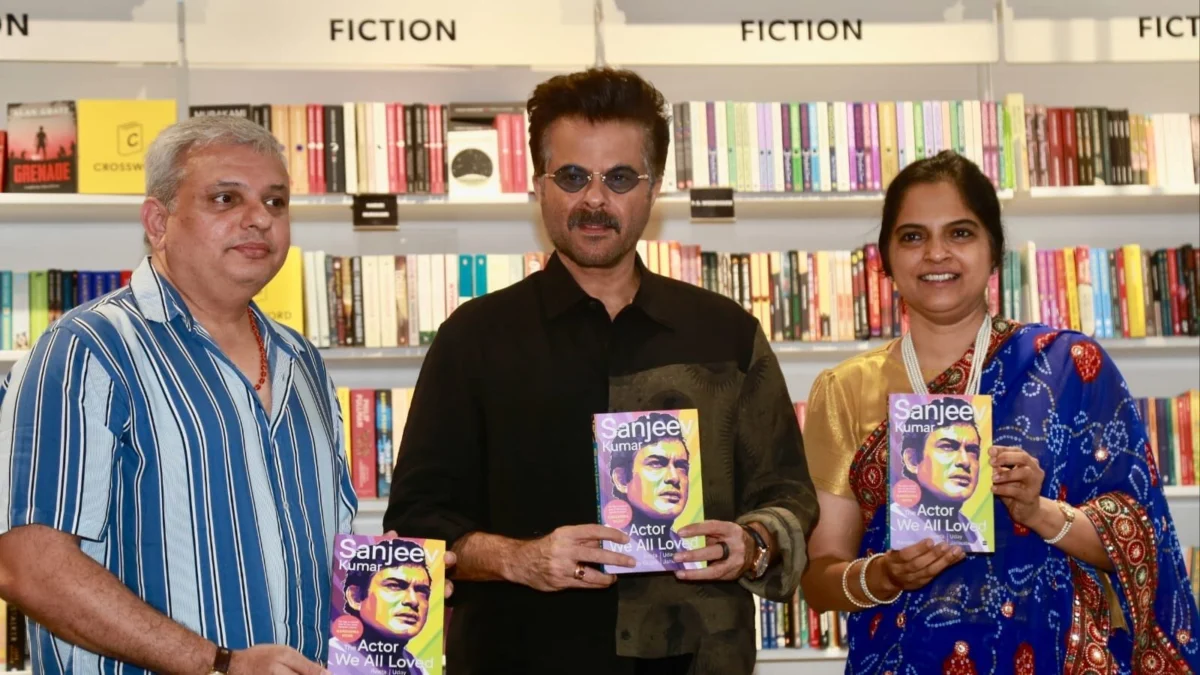
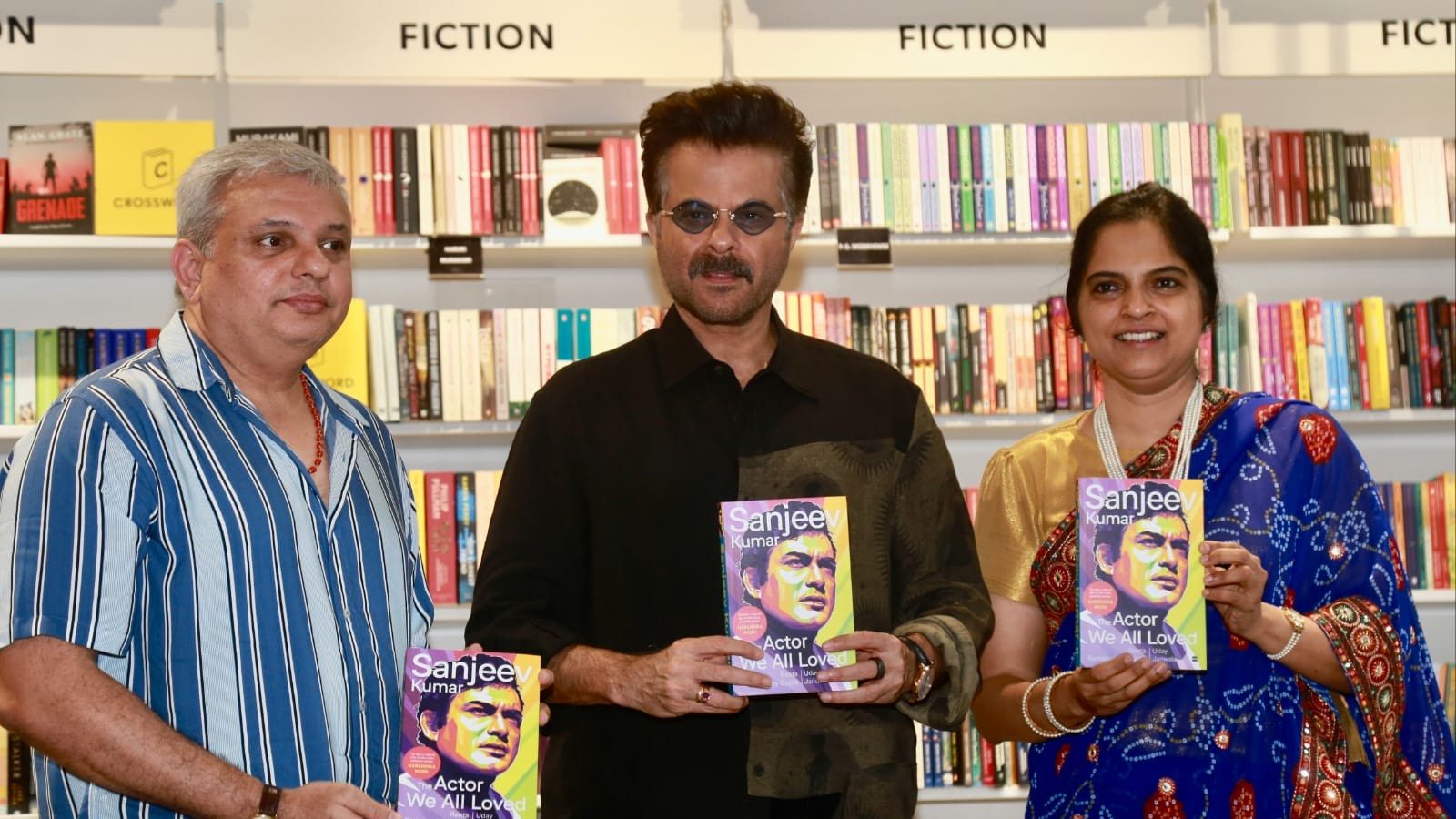
On July 9, 2022, a significant milestone in the preservation of Indian cinematic history was reached with the launch of his official biography, titled Sanjeev Kumar: The Actor We All Loved. Co-authored by his nephew, Uday Jariwala, and noted biographer Reeta Ramamurthy Gupta, the book was unveiled in Mumbai by superstar Anil Kapoor. The publication serves as more than just a collection of anecdotes; it is a meticulous attempt to decode the craft and the character of a man who was often misunderstood by the tabloid press of his era.
I. Main Facts: The Genesis of the Biography
The biography Sanjeev Kumar: The Actor We All Loved is the culmination of a four-year journey that began in 2018. The project was born out of a realization by Reeta Ramamurthy Gupta that despite Sanjeev Kumar’s monumental contribution to the arts, no comprehensive literary record of his life existed.
The book launch event featured prominent figures from the industry, most notably Anil Kapoor, who has long cited Sanjeev Kumar as a primary influence on his own acting style. The primary objective of the biography is two-fold: first, to provide a scholarly analysis of his filmography, which includes masterpieces like Shatranj Ke Khiladi and Koshish; and second, to humanize the superstar, stripping away the layers of "rumor mill" gossip that often clouded his personal life.
The biography highlights Kumar’s unique ability to play characters far beyond his actual age—most famously his portrayal of the elderly Thakur Baldev Singh in Sholay (1975) when he was only in his mid-30s. It also explores his collaborations with legendary directors such as Gulzar, Satyajit Ray, and Hrishikesh Mukherjee.
II. Chronology: From Surat to the Heights of Stardom
To understand the biography, one must understand the timeline of the man it chronicles. The life of Sanjeev Kumar can be divided into several pivotal eras that the book meticulously details.
1. The Formative Years and Theatre (1938–1960s):
Born in 1938 into a Gujarati family in Surat, Kumar’s family eventually moved to Mumbai. His journey didn’t begin on the silver screen but on the stage. He was a stalwart of the Indian People’s Theatre Association (IPTA) and the Indian National Theatre. The biography notes that his theatrical background was the crucible in which his "method acting" style was forged, long before the term became a buzzword in Bollywood.
2. The Struggle and the Breakthrough (1960–1970):
Unlike many of his contemporaries who were launched as "chocolate heroes," Kumar’s path was arduous. He took on diverse roles, often in B-movies, before his talent became undeniable. A turning point mentioned in the book is the 1968 film Sunghursh, where he shared the screen with the legendary Dilip Kumar. It was here that the industry realized a new titan had arrived—one who could hold his own against the greatest actor of the time.
3. The Golden Decade (1970–1980):
The 1970s saw Sanjeev Kumar becoming the "actor’s actor." This period was marked by his legendary collaboration with filmmaker Gulzar. Films like Parichay, Koshish (where he played a deaf-mute character), Aandhi, and Mausam redefined the protagonist in Hindi cinema. He wasn’t just a hero; he was a character. Concurrently, he achieved mainstream immortality with Sholay and showcased his impeccable comic timing in Seeta Aur Geeta and Angoor.
4. The Final Act and Legacy (1981–1985):
Despite suffering from a congenital heart condition, Kumar continued to work at a feverish pace. His performance in Satyajit Ray’s Shatranj Ke Khiladi (1977) remains a high-water mark for Indian acting internationally. His death in 1985 left a void that many critics argue has never truly been filled.
III. Supporting Data: An Artistic Analysis
The biography provides critical data points that justify Sanjeev Kumar’s standing in global cinema. One of the most compelling arguments made by Reeta Ramamurthy Gupta involves the film Shatranj Ke Khiladi (The Chess Players).
The film is featured on Martin Scorsese’s prestigious list of "40 films you must watch before you die." This international recognition underscores that Kumar’s talent was not merely local but world-class. The book also delves into the "Sanjeev Kumar School of Acting," which emphasized vocal modulation and the use of silence—techniques that were revolutionary in an era dominated by melodramatic performances.
Furthermore, the biography addresses the "everyman" appeal. Data from his filmography shows a startling range: he played nine different roles in Naya Din Nai Raat (1974), a feat that demonstrated a chameleonic ability rarely seen in any film industry.
IV. Official Responses and Testimonials
The launch of the biography provided a platform for those who knew him best to offer their "official" perspectives, countering decades of tabloid speculation.
Anil Kapoor’s Tribute:
Anil Kapoor’s presence at the launch was a testament to Kumar’s enduring influence. Kapoor recounted a pivotal moment in his youth: "I remember heading to a theatre to watch Sunghursh. The film starred the great Dilip Kumar Sahab. By the time I came out, I was thinking, ‘Who was this other actor in the film?’ I then came to know it was Sanjeev Kumar sahib. I have been a fan of his ever since." Kapoor’s response highlights a sentiment shared by many actors: that Sanjeev Kumar was the ultimate benchmark for performance.
Uday Jariwala’s Perspective:
For Uday Jariwala, the book is a corrective measure. He noted that the family wanted to bring the "real" Sanjeev Kumar to the public. "I just wanted that people should know what kind of person he was in real-life. There are a lot of gossips and rumours about him… He was a superstar, but he was very down to earth and very simple. He never had any hangups." Jariwala shared intimate memories of the actor taking his nephews to see Charlie Chaplin films and driving them around without the entourage typical of modern stars.
Reeta Ramamurthy Gupta’s Motivation:
Gupta explained that her motivation was rooted in the shock that such a giant of cinema lacked a formal biography. She cited her childhood memories—hearing her father sing "Thande Thande Pani Se Nahana Chahiye" (from the film Pati Patni Aur Woh)—as the emotional anchor that led her to research his life.
V. Implications: Preserving the History of Indian Cinema
The publication of Sanjeev Kumar: The Actor We All Loved has several significant implications for the Indian film industry and its historiography.
1. Documentation of the "Middle Cinema":
Sanjeev Kumar was the face of "Middle Cinema"—films that were neither purely commercial nor strictly art-house. By documenting his life, the authors have provided a roadmap for understanding this crucial movement in Indian culture that balanced entertainment with social relevance.
2. Challenging the Star System:
The biography implies a challenge to the traditional "star system." Kumar’s success proved that an actor did not need a conventional "heroic" physique or a consistent type-cast image to become a legend. This provides a historical precedent for the "content-driven" cinema and "character-lead" roles that are currently popular in the streaming era.
3. Intellectual Property and Legacy Management:
The involvement of Uday Jariwala suggests a shift toward professional legacy management in Bollywood. By releasing an authorized biography, the family ensures that the narrative surrounding the actor is rooted in fact rather than conjecture, setting a standard for how the estates of other late legends might handle their histories.
4. Educational Value:
For students of cinema, the book serves as a textbook on versatility. The analysis of his roles—ranging from the romantic to the tragic to the absurdly comic—offers a masterclass in the evolution of acting styles in South Asia.
Conclusion
Sanjeev Kumar remains a towering figure whose work continues to resonate because it was grounded in a deep, fundamental humanity. As the biography Sanjeev Kumar: The Actor We All Loved makes its way into the hands of readers, it does more than just recount the life of a famous man; it restores the dignity of an artist who gave everything to his craft. Through the eyes of his family, his peers like Anil Kapoor, and dedicated biographers, the "enigma" of Sanjeev Kumar is finally being decoded, ensuring that his contribution to the world of art is never forgotten.
