

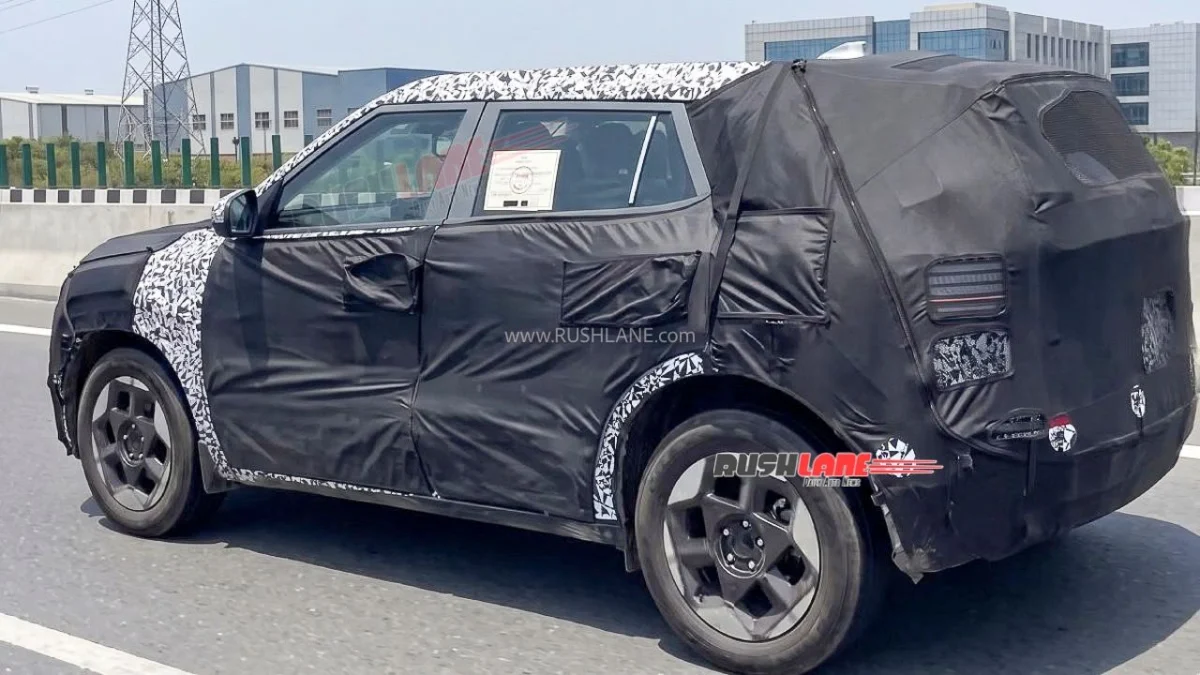
The Indian automotive landscape is bracing for a significant shift in the sub-compact SUV segment as Kia India begins the rigorous road-testing phase for the next-generation Sonet. Internally codenamed QY2E, the 2027 Kia Sonet represents a total generational overhaul of one of the brand’s most consistent best-sellers. Since its debut in 2020, the Sonet has been a cornerstone of Kia’s success in India, blending premium features with aggressive styling. However, with the competition intensifying from both domestic giants and new European entrants, Kia is looking to reset the benchmark once again.
Recent spy shots captured on Indian roads have provided the first clear glimpse into the design philosophy and structural changes Kia is implementing. While the vehicle remains under heavy camouflage, the visible details suggest a more mature, technologically advanced, and safety-conscious vehicle designed to dominate the sub-4-meter category for the next decade.
1. Main Facts: The Core Pillars of the 2027 Kia Sonet
The transition from the current facelifted Sonet to the next-generation QY2E is not merely cosmetic; it is a fundamental re-engineering of the vehicle. Several key facts have emerged from the latest sightings and industry reports:

- Internal Codename: QY2E.
- Platform Migration: The new Sonet will move to the advanced K1 platform, which it will share with the upcoming Kia Syros (also known as the Clavis).
- Design Language: A shift toward a more "upright and boxy" silhouette, drawing inspiration from Kia’s larger global SUVs like the Telluride and the EV9.
- Safety Priority: Targeting a full 5-star rating in the Bharat NCAP (BNCAP) crash tests.
- Launch Timeline: Expected to hit showrooms in the first half of 2027.
- Hybrid Integration: While launch engines will be traditional Internal Combustion Engines (ICE), a strong hybrid powertrain is slated for a 2028–2029 introduction.
2. Chronology: The Evolution of a Segment Leader
To understand the importance of the 2027 model, one must look at the timeline of the Sonet’s lifecycle in the Indian market.
- August 2020: Kia launches the Sonet in India. It was the first vehicle in its segment to offer a wide variety of engine-transmission combinations, including the innovative iMT (intelligent Manual Transmission) and a proper torque converter diesel automatic.
- 2021–2022: Periodic updates introduced the new Kia logo and added features like four airbags as standard across all variants, reinforcing the brand’s premium positioning.
- January 2024: The first major facelift of the Sonet was launched. This update brought Level 1 ADAS (Advanced Driver Assistance Systems), a revised LED lighting signature, and a more digitalized cabin to keep it competitive against the Tata Nexon and Maruti Brezza.
- Late 2024: First rumors of the "QY2E" project surface within the vendor ecosystem, suggesting a move to a new platform to accommodate future electrification and stricter safety norms.
- May 2025: The first camouflaged test mules of the 2027 Sonet are spotted on the outskirts of Chennai and near Kia’s Anantapur plant, revealing a significantly larger and more upright stance.
- 2027 (Planned): Global debut and commercial launch in India, followed by exports to other emerging markets.
3. Supporting Data: Design, Engineering, and Powertrain Details
The 2027 Kia Sonet is being built to address the few criticisms of the current model—specifically rear-seat legroom and safety perception—while doubling down on its strengths in design and technology.
A. Exterior Redesign: The "Mini-Telluride" Aesthetic
The spy shots reveal a departure from the "curvy and aggressive" look of the first generation toward a "solid and sophisticated" presence.

- The Front Fascia: The "Tiger Nose" grille is expected to be wider and more integrated with the lighting units. New "eyebrow-style" LED DRLs sit atop the primary LED headlamp cluster, creating a stacked vertical look similar to the Kia Seltos facelift and the international EV9.
- The Profile: The most notable change is the roofline. It appears flatter and higher, which suggests Kia is prioritizing headroom. The alloy wheels on the test mule feature a new geometric, multi-spoke diamond-cut design that fills the arches more effectively.
- The Rear: The rear section is more squared-off. The tail lamps appear to follow the "Star Map" signature seen in recent Kia models, likely connected by a full-width LED light bar to emphasize the vehicle’s width.
B. The K1 Platform and Safety Architecture
The shift to the K1 platform is a strategic masterstroke. This platform is engineered to be more rigid and modular.
- Structural Integrity: By using a higher percentage of Ultra-High-Tensile Steel (UHTS), Kia aims to achieve a 5-star Bharat NCAP rating. This is a direct response to competitors like the Tata Nexon and Mahindra XUV 3XO, which have made safety their primary marketing pillar.
- Space Optimization: The K1 platform allows for a slightly longer wheelbase within the 4-meter limit. This is expected to solve the current Sonet’s "cramped rear seat" issue, providing better knee room for three passengers.
C. Powertrain Options: From Diesel to Hybrid
Kia remains one of the few manufacturers committed to offering a diverse range of engines.
- 1.2L Naturally Aspirated Petrol: For the entry-level, price-conscious buyer (approx. 83 PS / 115 Nm).
- 1.0L Turbo Petrol: The enthusiast’s choice, likely paired with 6-speed iMT and 7-speed DCT (approx. 120 PS / 172 Nm).
- 1.5L CRDi Diesel: Kia will continue to cater to long-distance drivers with its refined diesel engine (approx. 116 PS / 250 Nm).
- The Hybrid Future: By 2028, the Sonet is expected to feature a 1.2L or 1.5L Strong Hybrid system. This would allow it to compete with the high-efficiency ratings of Maruti and Toyota’s upcoming small hybrids, potentially delivering over 25-28 km/l.
4. Official Responses and Strategic Positioning
While Kia India officials have not commented on specific "QY2E" leaks, their broader corporate strategy aligns perfectly with these sightings. In recent investor summits, Kia has emphasized its "South Asia 2.0" strategy, which focuses on:

- Premiumization: Moving the brand away from "budget" perceptions toward a "tech-luxury" experience in every segment.
- Safety Leadership: Kia has publicly stated its intent to have its entire Indian portfolio tested by Bharat NCAP, with a goal of achieving top-tier ratings across the board.
- The "Syros" Connection: Kia has confirmed the development of a "new breed of SUV" (the Syros/Clavis) that sits between the Sonet and the Seltos. By moving the Sonet to the Syros’s K1 platform, Kia achieves significant economies of scale and component sharing, allowing for higher-quality interior materials without a massive price hike.
5. Implications: What This Means for the Market
The arrival of the next-gen Sonet in 2027 will have ripple effects across the Indian automotive industry.
I. Impact on Competitors
The sub-4m SUV segment is currently a battlefield. The Tata Nexon leads with safety, the Maruti Brezza with reliability/efficiency, and the Mahindra XUV 3XO with performance and features. The 2027 Sonet aims to be the "all-rounder" that matches the Nexon’s safety, exceeds the 3XO’s features, and rivals the Brezza’s future hybrid efficiency. This will force competitors to accelerate their own generational updates.
II. Technological Democratization
With the QY2E, features previously reserved for the luxury segment are expected to trickle down. We are likely to see:

- Level 2 ADAS: Including adaptive cruise control and lane-keeping assist as standard on higher trims.
- Dual-Screen Layout: A seamless 10.25-inch infotainment and 10.25-inch digital cluster.
- Panoramic Sunroof: There is strong speculation that the new platform will finally allow for a panoramic sunroof, a feature currently missing in the Sonet but present in the XUV 3XO.
III. The End of the "Small Car" Compromise
For years, buying a sub-4m SUV meant compromising on rear-seat comfort or boot space. The 2027 Sonet, through its boxier design and better packaging, aims to offer a "big car" feel within a compact footprint. This could potentially cannibalize sales from the mid-size SUV segment (Seltos/Creta) as buyers realize they can get 90% of the utility for 70% of the price.
IV. Resale and Brand Loyalty
Kia has already established high resale values for the Sonet. By introducing a significantly improved generational update, Kia ensures that current owners have a clear and aspirational upgrade path within the same brand, strengthening long-term customer retention.
Conclusion
The 2027 Kia Sonet (QY2E) is more than just a new car; it is a statement of intent. It showcases a brand that is listening to consumer feedback regarding safety and space while refusing to let go of its reputation for cutting-edge design. As the test mules continue to clock thousands of kilometers across India’s diverse terrain, the anticipation will only grow. For the Indian car buyer, the next two years will be a wait for a vehicle that promises to bridge the gap between compact convenience and premium SUV luxury.
