

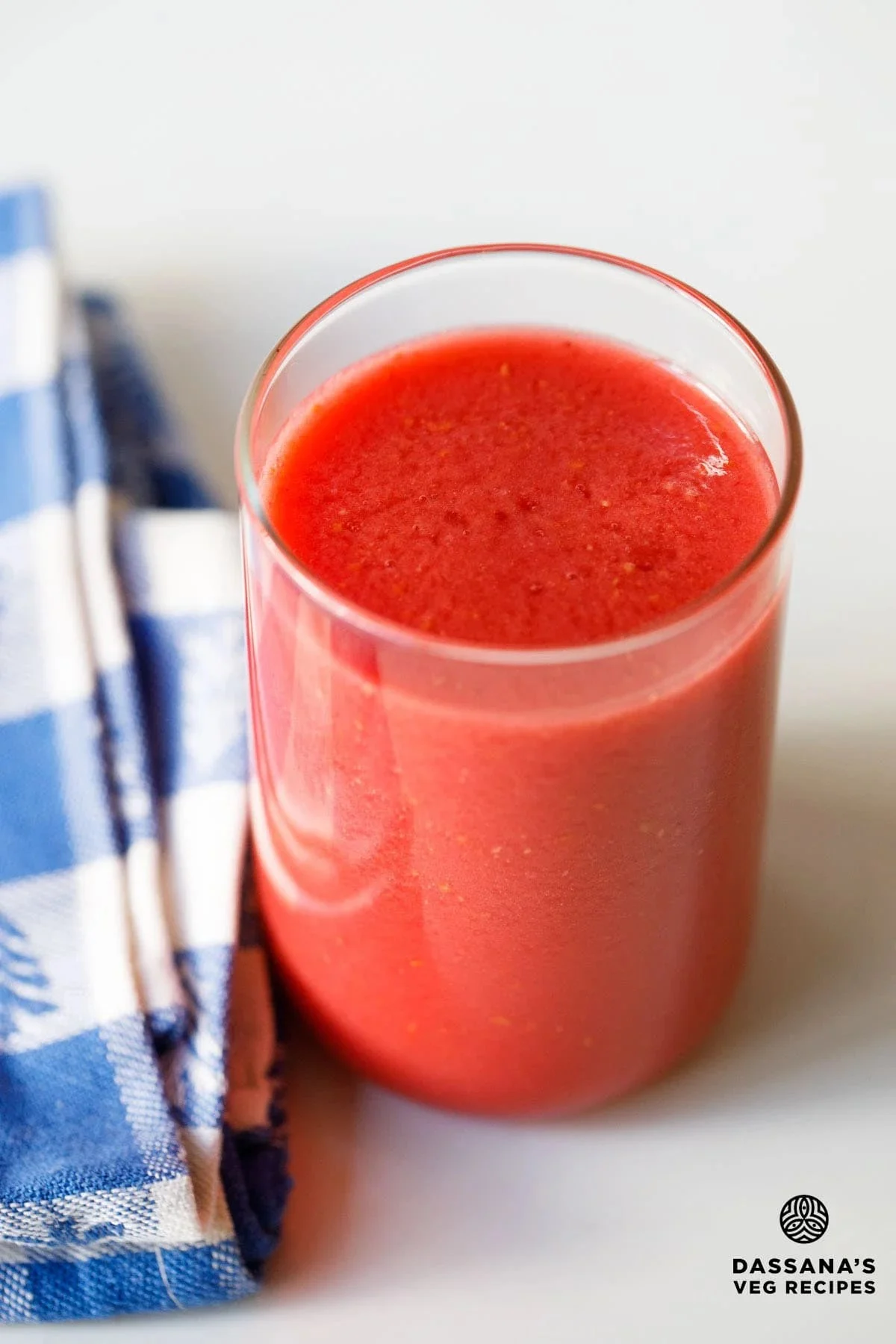
In an era increasingly defined by "clean label" eating and a shift away from ultra-processed refreshments, the resurgence of home-prepared fruit juices represents a significant intersection of culinary tradition and modern wellness. Among these, raspberry juice has emerged as a focal point for nutritionists and chefs alike. Recently highlighted by culinary expert and Le Cordon Bleu-trained chef Dassana Amit, the preparation of fresh raspberry juice—a blend of fresh berries, water, and minimal sweeteners—serves as a case study in how simple, whole-food ingredients can outperform commercial alternatives in both flavor profile and nutrient density.
Main Facts: The Anatomy of a Superfood Beverage
Raspberry juice is fundamentally characterized by its vibrant ruby-red hue and its complex sweet-tart flavor profile. Unlike commercial juices that often rely on high-fructose corn syrup and artificial colorants, the homemade variety is a three-ingredient preparation: fresh or frozen raspberries, filtered water, and a variable amount of sugar or alternative sweetener.
The chemical composition of the raspberry (genus Rubus) is what dictates the juice’s sensory appeal. The berries contain organic acids, primarily citric acid, which provides the characteristic tartness, while natural sugars (fructose and glucose) provide the base sweetness. According to culinary data, the standard ratio for a balanced beverage involves approximately 250 grams of fruit to 1.5 cups of water. This ratio ensures a "medium-thick" consistency that retains the "fuller raspberry flavor" without becoming overly diluted.

Key Characteristics:
- Color: Deep crimson, derived from high concentrations of anthocyanins.
- Texture: Naturally pulpy or gritty due to seeds, though frequently strained for a "velvety" mouthfeel.
- Versatility: Capable of being served as a standalone refresher or used as a base for sophisticated mocktails and culinary glazes.
Chronology: From Harvest to Glass
The transition of a raspberry from a delicate field fruit to a refined beverage involves a specific chronological sequence designed to preserve its volatile aromatic compounds and nutritional integrity.
Phase 1: Procurement and Preparation
The process begins with the selection of the fruit. In the Indian market, as noted by Chef Amit, fresh raspberries are often characterized by a more pronounced tartness compared to their Western counterparts. This requires an immediate assessment of ripeness. Once procured, the berries must be rinsed thoroughly in cold water to remove environmental debris and then drained using a colander. Because raspberries are highly perishable and prone to bruising, this stage must be handled with significant care.
Phase 2: Mechanical Processing (The Blending Stage)
The rinsed berries are transferred to a high-speed blender. At this juncture, the "balancing agents" are added. For a standard 250-gram batch, 4 to 5 tablespoons of sugar are typically introduced to counteract the natural acidity. Water is then added—chilled water is preferred if the juice is intended for immediate consumption. The blending process is brief but intensive, aiming for a smooth, homogenous mixture where the fruit solids are fully suspended in the liquid.

Phase 3: Refinement (Straining and Adjustment)
Post-blending, the juice presents a decision for the preparer: to strain or not to strain. The seeds of the raspberry provide a "gritty" texture that may be undesirable for certain demographics, specifically young children or elderly consumers. Straining through a fine-mesh sieve yields a "smoother, more professional" texture. During this final phase, flavor adjustments are made; if the berries lack sufficient acidity, a small amount (approximately 0.5 teaspoons) of lemon juice may be added to brighten the palate.
Phase 4: Service and Storage
The final product is ideally served immediately to prevent the oxidation of Vitamin C. If storage is required, the juice must be refrigerated in a sealed glass container. However, experts note that natural separation will occur within hours, requiring the juice to be stirred vigorously before service.
Supporting Data: The Nutritional Profile
The argument for homemade raspberry juice is most potently supported by its nutritional data. A standard serving (approximately half of a 250g-berry batch) provides a dense array of micronutrients with a relatively controlled caloric load.

Macronutrient Breakdown (Per Serving):
- Calories: 157 kcal
- Carbohydrates: 39g
- Dietary Fiber: 8g (Note: Fiber content is significantly reduced if the juice is strained)
- Protein: 2g
- Fat: 1g
Micronutrient Highlights:
The juice is an exceptional source of Vitamin C, providing approximately 33mg per serving. Vitamin C is a powerful antioxidant that supports immune function and collagen synthesis. Furthermore, the juice contains:
- Potassium: 189mg (Essential for heart health and fluid balance)
- Vitamin K: 10µg (Crucial for bone metabolism)
- Folate (B9): 26µg (Vital for DNA synthesis and repair)
- Manganese and Magnesium: Trace minerals that support enzymatic reactions and bone health.
The presence of 8 grams of fiber is particularly noteworthy. While most juices are criticized for lacking fiber, the "un-strained" version of raspberry juice retains the fruit’s structural carbohydrates, which can help mitigate the glycemic response to the added sugar.
Official Responses: The Expert Perspective
Dassana Amit, a vegetarian chef with over 16 years of experience and a certification from Le Cordon Bleu in plant-based patisserie, emphasizes that the "honesty" of the ingredients is what defines the quality of the drink.

In her professional assessment, Amit suggests that the simplicity of the recipe is its greatest strength. "Fresh raspberries available in India are often slightly tart," Amit observes. "A little sugar helps balance the flavor and enhances the natural fruitiness." Her approach bridges the gap between traditional Indian home cooking and high-level French technique, advocating for "soulful vegetarian cooking" that prioritizes technique without sacrificing the raw essence of the fruit.
Chef Amit also addresses the utility of frozen raspberries, noting that they work "equally well" and can actually provide a "thicker and slightly slushy" texture that is highly desirable in warmer climates. This expert endorsement of frozen produce highlights a practical solution for consumers in regions where fresh berries are seasonally limited or prohibitively expensive.
Implications: Health, Economy, and Sustainability
The move toward DIY raspberry juice has several broader implications for public health and the beverage industry.

1. Public Health and Sugar Control
By preparing juice at home, consumers exercise total sovereignty over the glycemic index of their beverages. The ability to swap refined sugar for honey, stevia, or agave, or to rely solely on the fruit’s natural sweetness, is a vital tool in the global fight against metabolic syndrome and Type 2 diabetes.
2. The "Clean Label" Economy
The beverage industry is currently undergoing a "premiumization" phase where consumers are willing to pay more for products with fewer ingredients. Homemade raspberry juice represents the pinnacle of this trend. As more consumers realize that a high-quality juice can be produced in under five minutes with three ingredients, the market share of "juice-flavored" sodas and concentrates may continue to decline.
3. Sustainability and Waste Reduction
Commercial juice production involves significant carbon footprints related to pasteurization, plastic packaging, and long-distance logistics. Making juice at home from locally sourced berries (where possible) or buying frozen berries in bulk significantly reduces single-use plastic waste. Furthermore, the leftover pulp from the straining process can be repurposed into compost or used in baking (such as in muffins or fruit leathers), aligning with "zero-waste" culinary practices.

4. Culinary Education
The popularity of recipes from experts like Dassana Amit suggests a growing appetite for culinary literacy. Understanding the ratio of fruit to water and the role of acidity (lemon juice) in flavor balancing empowers home cooks to experiment with other drupelets and berries, such as blackberries or mulberries, fostering a more creative and self-reliant food culture.
Conclusion
Raspberry juice is more than a cooling summer beverage; it is a testament to the power of minimalist gastronomy. By combining the rigorous standards of professional pastry training with the accessibility of home kitchen tools, figures like Dassana Amit are redefining the standard for what a "refreshing drink" should be. With its high Vitamin C content, rich antioxidant profile, and the absence of industrial additives, fresh raspberry juice stands as a benchmark for the future of functional, homemade nutrition. As the global palate continues to evolve toward "honest" flavors, the humble raspberry—blended, strained, and chilled—remains a timeless icon of culinary purity.
