

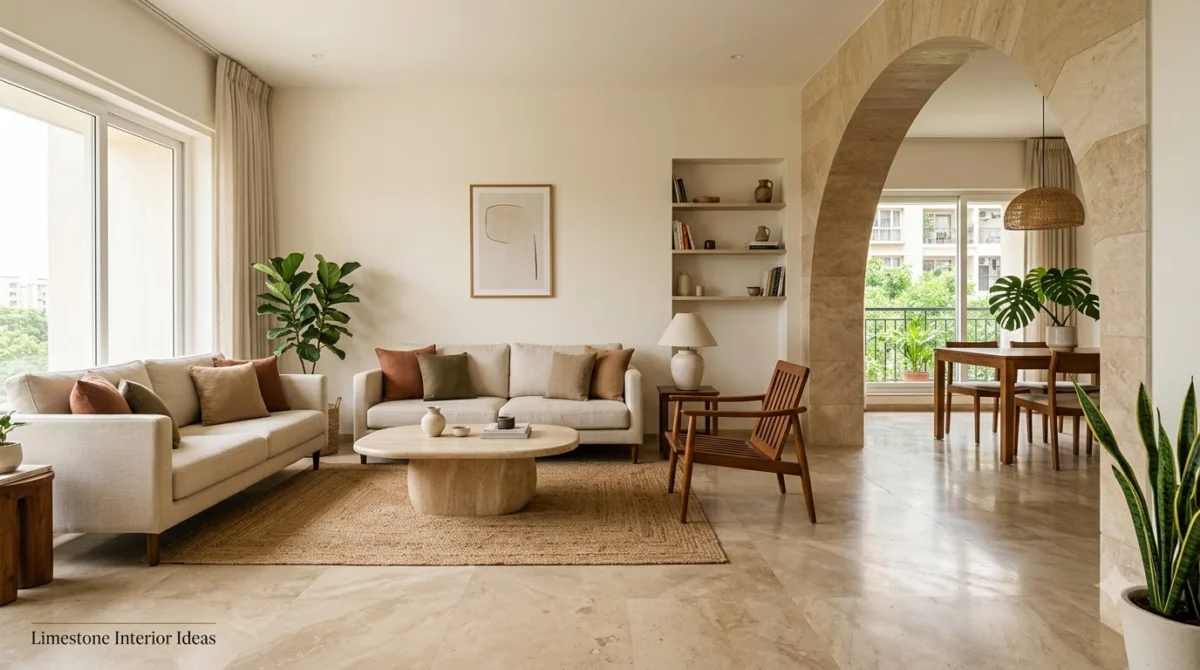
The Indian interior design landscape is undergoing a significant paradigm shift as we approach 2025. Moving away from the high-gloss, reflective surfaces of polished marble and vitrified tiles that dominated the early 2000s, homeowners and architects are increasingly gravitating toward "organic luxury." At the heart of this movement is limestone—a sedimentary rock that has transitioned from a humble exterior cladding material to a premier choice for sophisticated indoor spaces.
Once relegated to boundary walls and porch areas, limestone is now being celebrated for its soft matte aesthetics, thermal properties, and its ability to harmonize with the diverse climatic conditions of the Indian subcontinent. This report explores the multifaceted applications of limestone in contemporary Indian homes, its historical evolution, and the technical reasons behind its growing dominance in the real estate sector.
Main Facts: The Physical and Aesthetic Appeal of Limestone
Limestone is primarily composed of calcium carbonate and forms over millions of years through the accumulation of shell, coral, and algal debris. In the context of Indian interiors, its appeal lies in three core pillars:
- Thermal Regulation: India’s tropical climate demands materials that do not trap heat. Limestone has high thermal inertia, meaning it stays cool in the blistering summers of North and Central India, providing natural air conditioning for the feet.
- Muted Aesthetics: Unlike the "loud" veins of marble, limestone offers a sophisticated palette of beige, cream, off-white, and charcoal grey. This fits perfectly with the rising "Quiet Luxury" and "Japandi" (Japanese-Scandinavian) design trends.
- Versatility of Finish: Limestone can be processed into various textures—honed (smooth matte), tumbled (aged), flamed (rough), or brushed—making it suitable for everything from bathroom floors to decorative wall art.
Chronology: From Ancient Forts to 2025 Luxury Flats
The use of limestone in India is not new, but its application has evolved through distinct historical phases:
- The Heritage Era (12th – 19th Century): Limestone and its derivatives (like lime plaster or chuna) were the backbone of Indian architecture. The golden-hued limestone of Jaisalmer and the sturdy slabs of Kota stone were used in forts, palaces, and stepwells for their durability against the elements.
- The Industrial Post-Independence Phase (1950s – 1990s): With the rise of concrete, limestone (specifically Kota and Shahabad stone) became a "budget" option for government buildings, railway stations, and middle-class courtyards. It was valued for utility rather than beauty.
- The Marble Obsession (2000s – 2015): As the Indian economy boomed, imported Italian marble became the ultimate status symbol. Limestone was pushed outdoors, used mainly for landscaping and exterior facades.
- The Naturalism Revival (2020 – Present): Post-pandemic, a desire for "wellness-centric" homes led to a rejection of synthetic materials. Architects began bringing limestone back indoors, treating it as a premium, sustainable alternative to processed tiles. By 2025, it is projected to be among the top three most requested natural stones in high-end Indian residential projects.
9 Innovative Applications of Limestone in Modern Interiors
1. Advanced Limestone Flooring
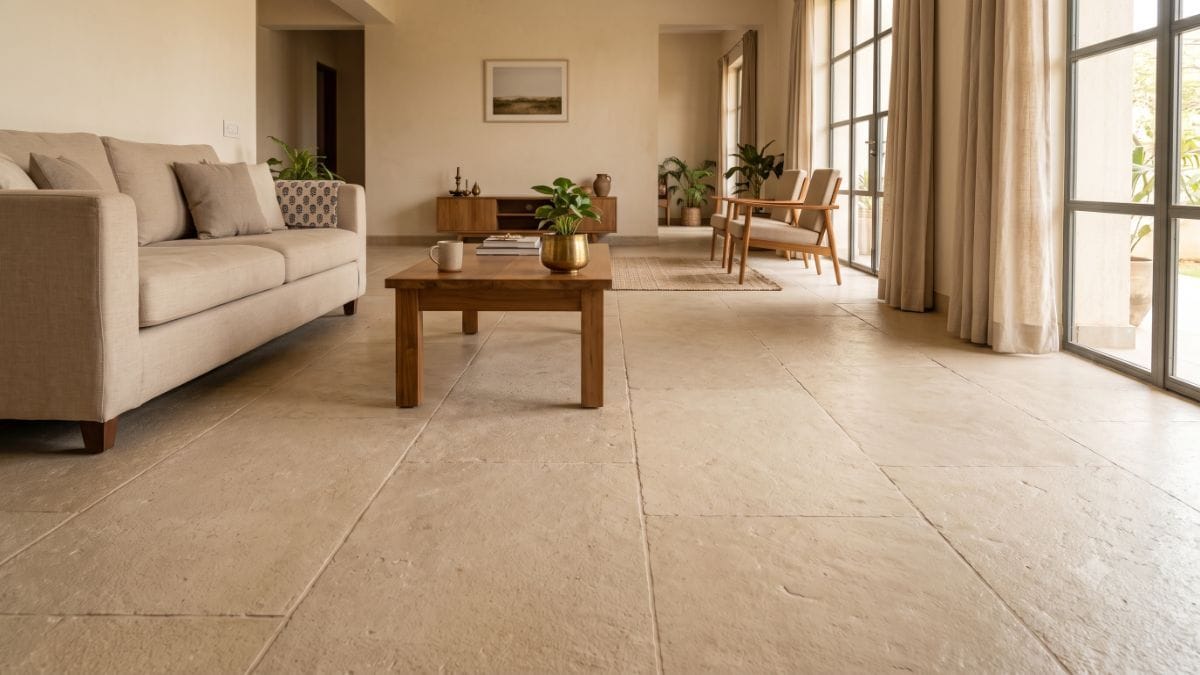
In cities like Delhi, Hyderabad, and Ahmedabad, where temperatures frequently cross 40°C, limestone flooring is a functional necessity. Modern installations use large-format slabs with minimal grouting to create a seamless, expansive look. Unlike marble, which can be dangerously slippery when wet, limestone’s naturally high coefficient of friction (especially in honed finishes) makes it safer for households with elderly residents and children.
2. The Textural Feature Wall
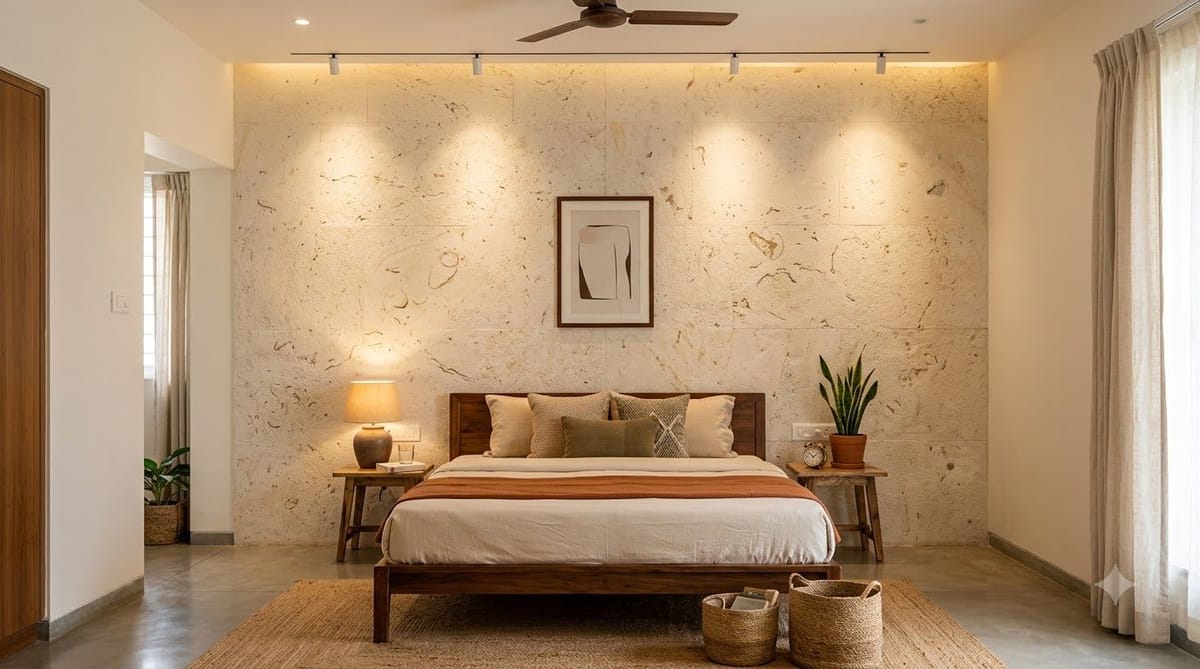
The "Feature Wall" has evolved. Instead of wallpaper or paint, designers are using "split-face" limestone or large brushed panels to create depth. When illuminated by warm LED spotlights, the natural fossil imprints and calcite veins create a living gallery of geological history. This application is particularly popular in bedrooms to evoke a sense of calm and groundedness.
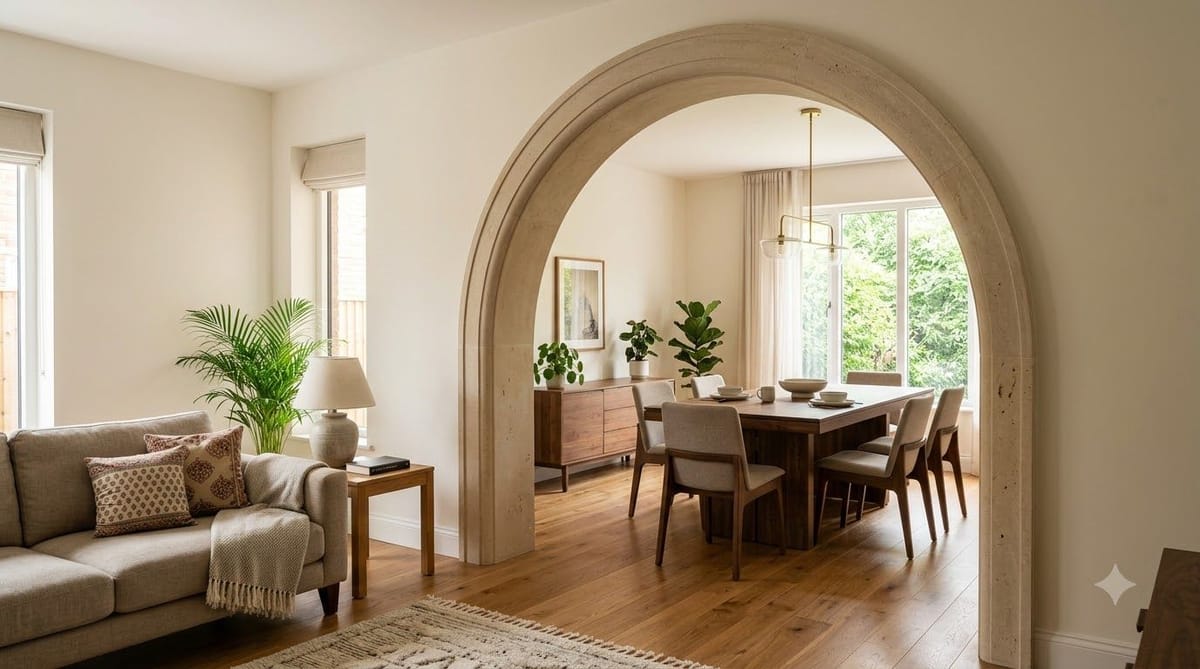
3. Structural and Decorative Archways
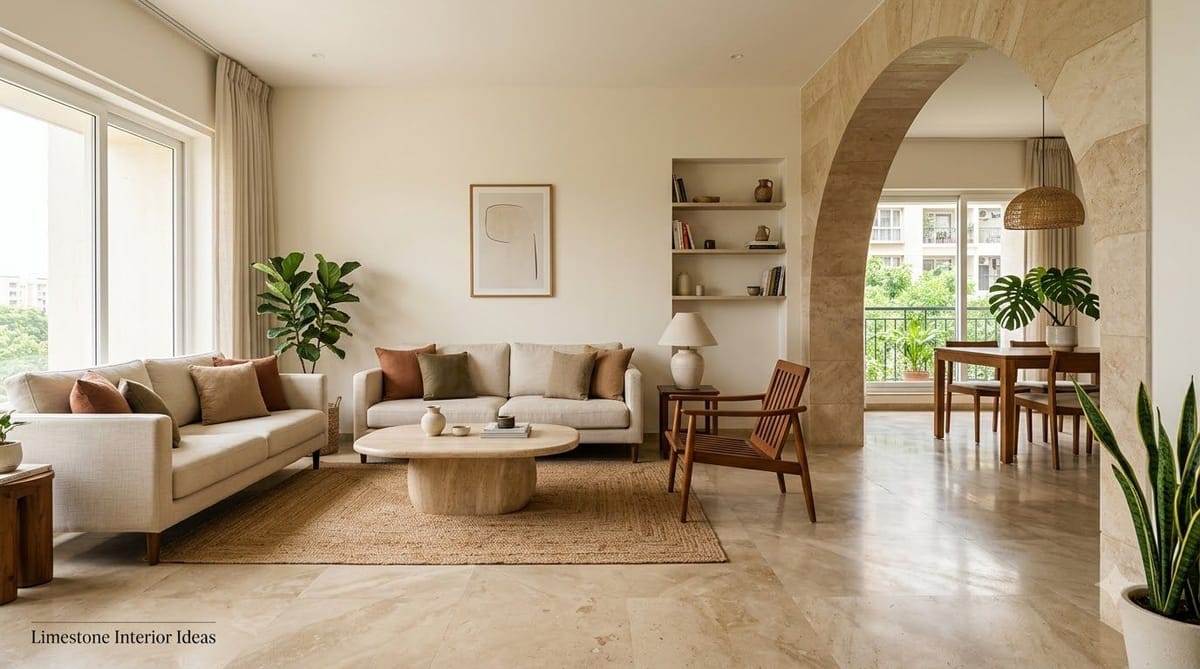
As Indian homeowners move away from the "boxy" layout of standard apartments, the archway has returned. Limestone is softer than granite, allowing stonemasons to carve intricate, smooth curves. A limestone-clad arch between a living and dining room adds a sense of "Old World" weight and architectural significance to a modern space.
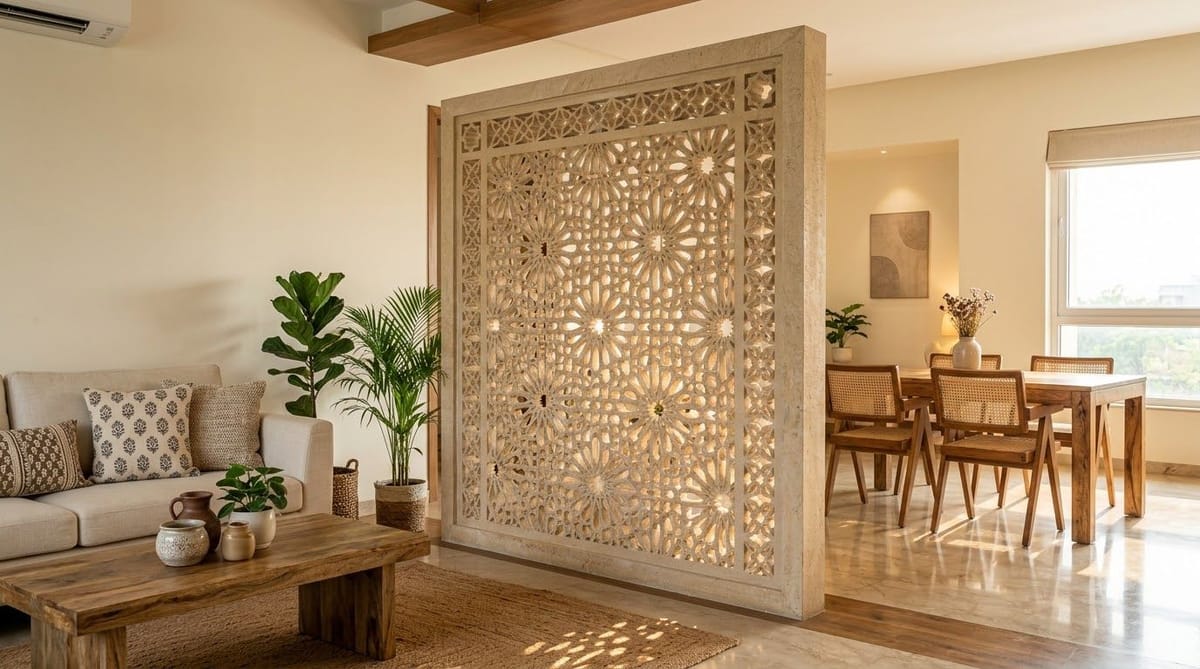
4. Perforated Room Dividers (Modern Jalis)
Taking inspiration from the traditional Jali work of Rajasthan, limestone is now being water-jet cut into intricate geometric patterns. These stone screens act as semi-permeable room dividers that allow for cross-ventilation and the play of light and shadow (Chiaroscuro), which is essential in compact urban apartments.
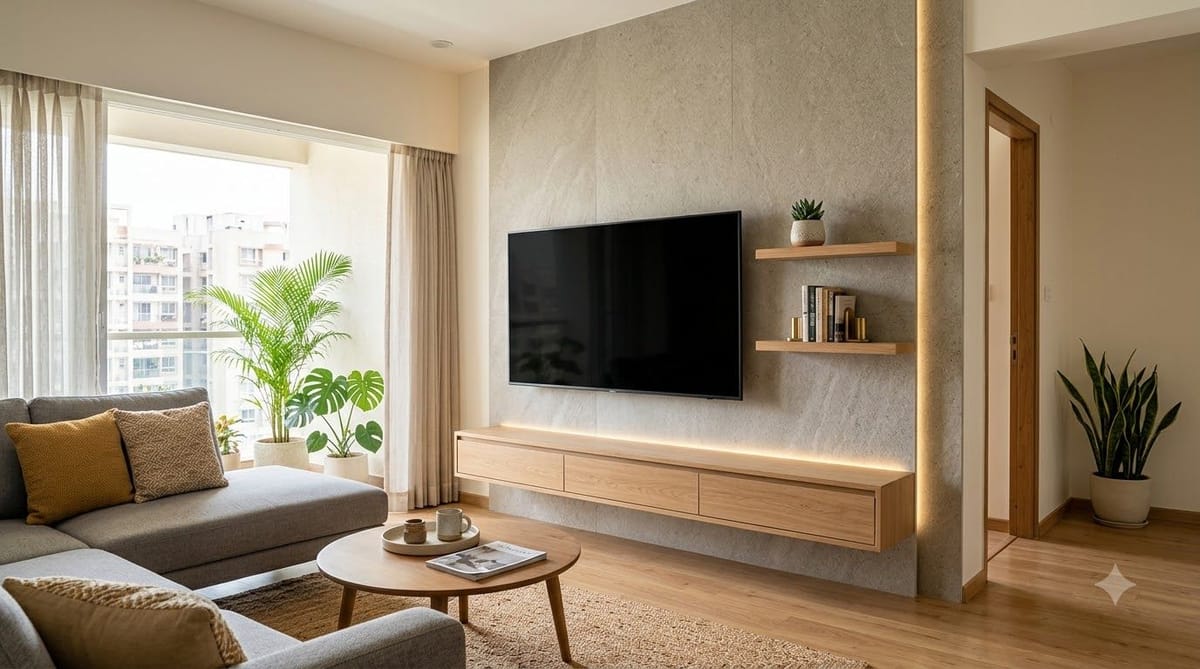
5. Non-Reflective TV Unit Backdrops
The living room is often the hub of digital entertainment. High-gloss backdrops can create annoying glares on high-definition screens. A honed limestone backdrop absorbs light rather than reflecting it, providing a neutral, textured surface that enhances the viewing experience while hiding unsightly cables behind its thick slabs.
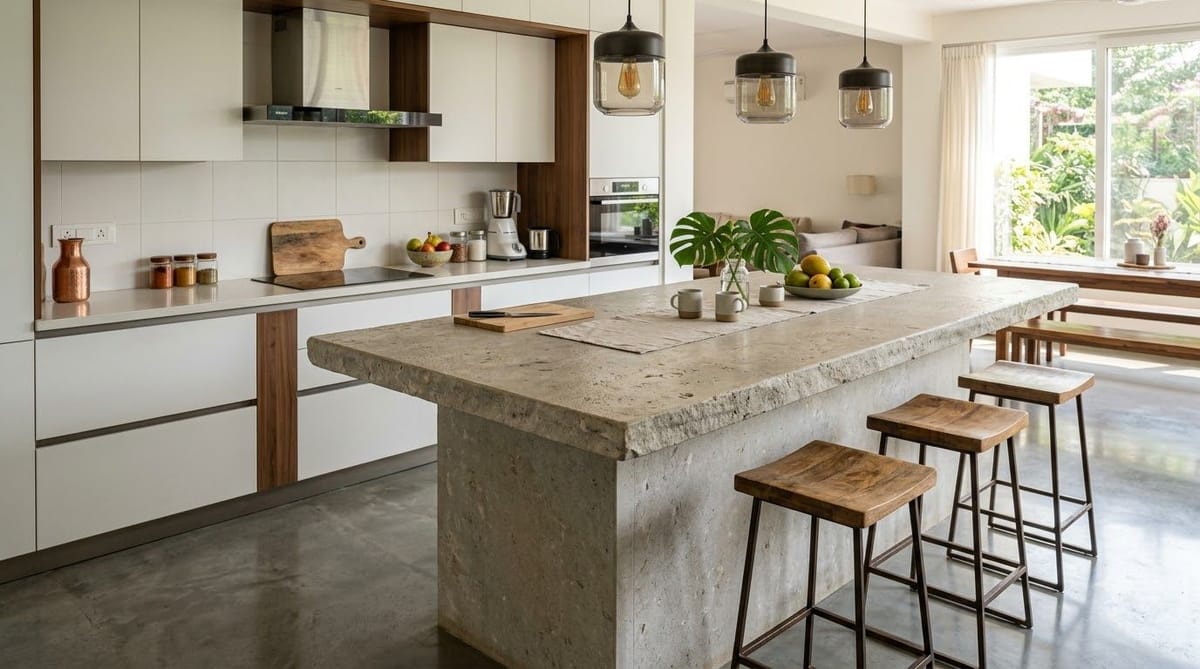
6. The Monolithic Kitchen Island
In open-plan "lifestyle kitchens," the island is the centerpiece. A limestone-wrapped island—where the stone extends from the countertop down the sides (waterfall edge)—creates a monolithic, sculptural look. While it requires sealing to prevent stains from acidic Indian spices (like turmeric), its heat-resistant properties make it an ideal prep surface.
7. Sculptural Wash Basins and Vanities
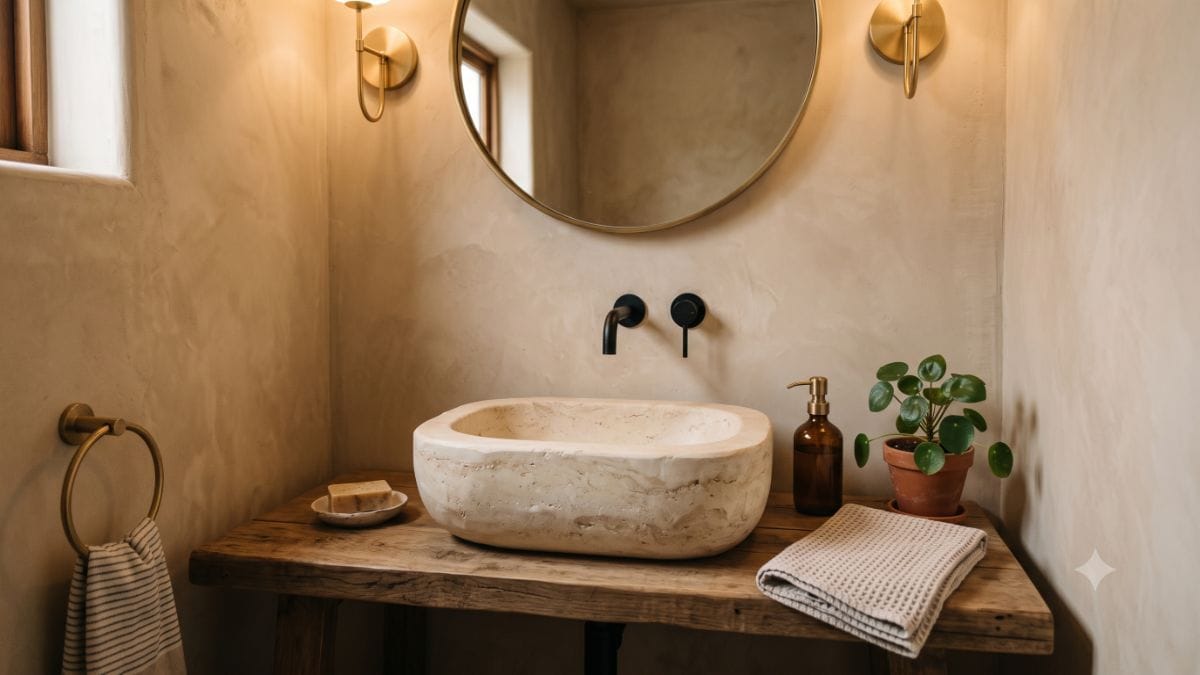
The "Spa-at-home" trend has turned bathrooms into sanctuaries. Carved limestone basins, often made from a single block of stone, provide a tactile, earthy experience. These are becoming staples in powder rooms where the goal is to impress guests with unique, non-standard fixtures.
8. Acoustic-Friendly Staircases
Granite staircases can be noisy and echo in large duplexes. Limestone, being slightly more porous, has better acoustic absorption. When used for both treads and risers with a "bullnose" finish, it creates a soft, safe, and quiet transition between floors.
9. Bespoke Limestone Furniture
The rise of "Japandi" and "Wabi-Sabi" aesthetics in India has birthed a market for stone furniture. Limestone coffee tables, consoles, and benches are prized for their uniqueness. Since no two slabs are identical, each piece of furniture is effectively a functional sculpture.
Supporting Data: Technical Performance and Market Value
To understand why limestone is replacing other materials, we must look at the comparative data:
| Feature | Limestone | Italian Marble | Vitrified Tiles |
|---|---|---|---|
| Porosity | Medium (Requires sealing) | Low to Medium | Very Low |
| Thermal Conductivity | Low (Stays cool) | Medium | High (Gets hot/cold) |
| Mohs Hardness | 3 to 4 | 3 to 5 | 6 to 7 |
| Maintenance | Annual Sealing | Regular Polishing | Low |
| Sustainability | High (Natural/Recyclable) | High (Natural) | Low (Energy-intensive) |
Cost Implications: While local Indian limestone (like Kota) starts at an accessible ₹40-₹60 per sq. ft., premium interior-grade limestone (like Cream Mocha or Grey Honed) can range from ₹250 to ₹600 per sq. ft. Real estate experts suggest that homes featuring natural stone interiors see a 10-15% higher resale value compared to those with standard tiled floors, as natural stone is viewed as a permanent, appreciating asset.
Official Responses and Expert Insights
Leading Indian architects emphasize that the shift to limestone is part of a broader "Biophilic" design movement—connecting humans with nature.
- Architectural Perspective: "We are seeing a move toward ‘Honest Materials,’" says a Mumbai-based luxury interior designer. "Limestone doesn’t pretend to be something else. Its imperfections—the tiny fossils, the color variations—are what make it luxury. In a world of mass-produced plastic and laminates, stone feels real."
- Sustainability Reports: Industry bodies like the Council of Architecture have noted that using locally sourced stones like limestone significantly reduces the carbon footprint of a project compared to importing processed tiles from overseas or high-carbon-intensity marble.
Implications: The Future of Indian Living Spaces
The integration of limestone into Indian interiors signifies a maturing market. Homeowners are no longer just looking for "shine"; they are looking for "substance."
- Sustainability: As climate change increases urban heat island effects in Indian metros, the demand for "cool" flooring like limestone will likely become a building standard rather than a luxury choice.
- Maintenance Culture: The rise of limestone will necessitate a growth in the stone-care industry. Specialized sealants and pH-neutral cleaners will become standard household items, moving away from harsh acids that were traditionally used to clean Indian floors.
- Regional Economy: The demand for premium interior-grade limestone is providing a boost to quarries in Rajasthan, Karnataka, and Andhra Pradesh, encouraging them to invest in better processing technology to meet international aesthetic standards.
Conclusion
Limestone’s journey from the rugged walls of Rajasthan’s forts to the minimalist living rooms of Mumbai’s skyscrapers is a testament to its timeless appeal. By offering a rare combination of thermal comfort, acoustic benefits, and understated elegance, limestone has secured its place as the definitive material for the 2025 interior design era. For the discerning Indian homeowner, it offers a way to build a home that is not just beautiful to look at, but also a sanctuary of coolness and calm in an increasingly frantic world.
