

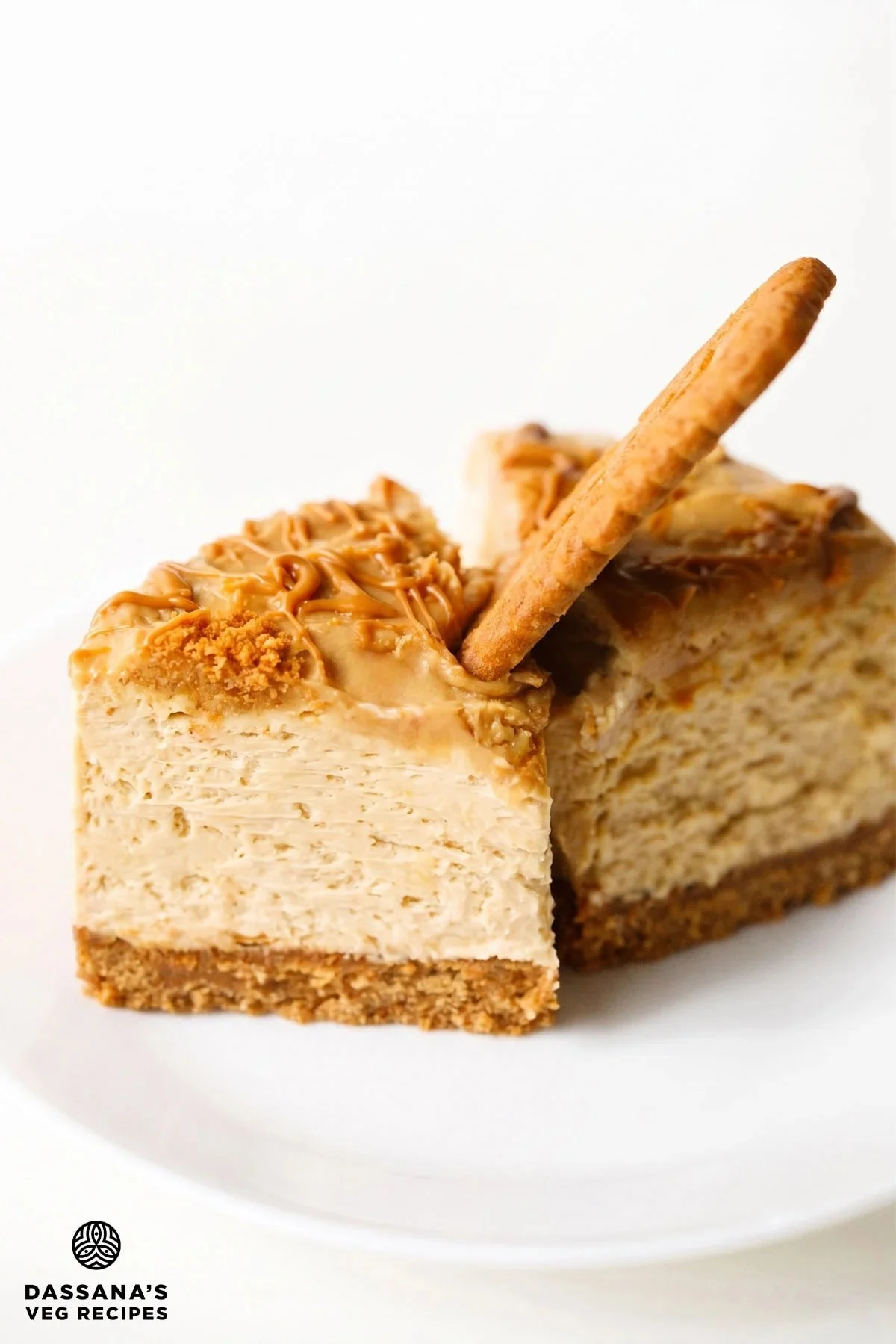
The landscape of contemporary home confectionery is undergoing a significant transformation, marked by a shift toward high-yield, low-complexity desserts that bridge the gap between amateur baking and professional pastry arts. At the forefront of this movement is the "No-Bake Biscoff Cheesecake," a dessert that has transitioned from a niche internet trend to a staple of modern celebratory dining. By utilizing the distinct caramelized profile of Lotus Biscoff biscuits and spread, this recipe offers a case study in how specific flavor profiles and simplified techniques are redefining the "make-ahead" dessert category.

Main Facts: The Anatomy of a Modern Dessert Classic
The No-Bake Biscoff Cheesecake is defined by its structural integrity and its reliance on the unique chemical properties of its ingredients rather than traditional oven-based coagulation. Unlike its New York-style counterpart, which requires eggs and precise heat management to set, the no-bake version relies on the stabilization of dairy fats and the inclusion of cookie-based emulsifiers.

The dessert is composed of three primary architectural layers:

- The Compressed Crust: A foundation of pulverized Lotus Biscoff biscuits bound by anhydrous milk fat (melted butter).
- The Aerated Filling: A composite of softened cream cheese, powdered sugar, and high-fat whipping cream, infused with the spiced, speculoos-flavored Biscoff spread.
- The Decorative Finish: A high-viscosity layer of melted Biscoff spread, often garnished with biscuit shards to provide textural contrast.
A key differentiator in this specific formulation is the absence of setting agents such as gelatin or agar-agar. The recipe achieves a "smooth, stable" finish through a specific ratio of cream cheese to whipped cream, ensuring the dessert remains firm enough for "neat slices" while maintaining a melt-in-the-mouth texture. This makes the recipe particularly accessible to vegetarian populations and those looking to avoid processed thickeners.

Chronology: The Lifecycle of Preparation
The production of a Biscoff cheesecake is a multi-stage process that prioritizes temperature control and structural timing. According to culinary guidelines provided by recipe developer Dassana, the workflow is divided into four critical phases:

Phase I: Foundational Engineering (0–60 Minutes)
The process begins with the mechanical breakdown of 125 grams of Lotus Biscoff biscuits. These are processed into fine crumbs to ensure a uniform density in the crust. Once mixed with 40 grams of melted butter, the mixture is compressed into a 5-inch detachable pan. This "biscuit base" must be refrigerated for a minimum of 20 to 30 minutes. This chilling period is non-negotiable, as it allows the butter to solidify, creating a moisture barrier that prevents the filling from making the crust soggy.

Phase II: Emulsification and Aeration (30–90 Minutes)
The core of the cheesecake involves two distinct mixing processes. First, 200 grams of cream cheese is beaten with powdered sugar and vanilla until a smooth emulsion is formed. Simultaneously, 150 ml of cold whipping cream (minimum 35% fat) is whipped to stiff peaks. The chronological "folding" of these two mixtures is the most delicate stage; over-mixing at this point would lead to the deflation of air bubbles, resulting in a dense, heavy filling rather than a light, creamy one.

Phase III: The Stabilization Period (2–12 Hours)
Once the filling is assembled and smoothed over the base, the cheesecake enters a mandatory refrigeration cycle. While a minimum of 5 to 6 hours is required for the fats to stabilize, experts recommend an overnight chill. This extended period allows the flavors of the cinnamon and caramel from the Biscoff spread to permeate the dairy, while the structure reaches peak firmness.

Phase IV: Final Detailing and Presentation (Post-Stabilization)
The final stage involves the application of a Biscoff "mirror glaze." By gently heating the Biscoff spread until pourable, the baker creates a professional-grade finish. The cheesecake is then carefully unmolded—a task made easier by the use of parchment paper lining—and garnished with whole biscuits and fine crumbs to signal the flavor profile to the consumer.

Supporting Data: Nutritional and Structural Metrics
A quantitative analysis of the Biscoff Cheesecake reveals a profile designed for indulgence and satiety. The recipe, scaled for approximately six servings, carries the following nutritional weight per portion:

- Caloric Load: 482 kcal
- Total Fat Content: 37g (of which 19g are saturated)
- Carbohydrates: 34g (including 22g of sugars)
- Protein: 5g
- Sodium: 254mg
The high fat content, primarily derived from the cream cheese and 35% fat whipping cream, is the primary driver of the dessert’s stability. From a structural standpoint, the "5-inch pan" specification suggests a high-profile, deep-dish aesthetic, which has become popular in "Instagrammable" food culture. The use of a detachable base or springform pan is a technical requirement to maintain the integrity of the vertical edges during the unmolding process.

Official Responses: Perspectives from the Test Kitchen
The developer of this recipe, Dassana, emphasizes that the success of the no-bake method hinges on the quality of the cream cheese and the temperature of the cream. In notes accompanying the recipe, she states, "The balance of cream cheese, whipped cream, and Biscoff spread is what makes this recipe work. I use a higher proportion of cream cheese than whipped cream to give the cheesecake a stable yet creamy texture."

Furthermore, culinary experts suggest that the "Biscoff layer" technique—adding a layer of melted spread halfway through the setting process—is a strategic move to enhance the flavor density. "I chose to do it a little differently," Dassana notes regarding the optional middle-layer. "After the cheesecake had partially set for 4 hours, I added a layer of melted Biscoff spread… I like this method because it gives the cheesecake another layer of Biscoff flavor."

This response highlights a growing trend in home baking: the "optimization" of recipes where standard procedures are tweaked to maximize the sensory experience, specifically targeting the "rich caramelized cookie flavor" that has made the Lotus brand a global household name.

Implications: The Democratization of the Patisserie
The rise of the No-Bake Biscoff Cheesecake has broader implications for the food industry and domestic labor.

1. The "Branded Ingredient" Trend:
This recipe is part of a larger commercial shift where specific grocery products (like Lotus Biscoff, Nutella, or Oreo) become the primary marketing hook for recipes. This creates a symbiotic relationship between content creators and food manufacturers, where the recipe serves as an advertisement for the ingredient, and the ingredient’s popularity ensures the recipe’s virality.

2. Accessibility and the "No-Oven" Lifestyle:
As urban living spaces become smaller and the "slow food" movement competes with busy professional schedules, no-bake desserts offer a solution. They remove the barriers of entry—such as owning a high-end oven or mastering the temperamental "water bath" technique required for baked cheesecakes. This democratizes the ability to produce "celebration-grade" desserts.

3. The Professionalization of the Amateur:
With the inclusion of "pro-tips" like using offset spatulas, parchment lining, and "stiff peak" monitoring, these recipes provide a technical education to home cooks. The result is a more informed consumer base that understands the importance of fat ratios and temperature control in food science.

4. Storage and Sustainability:
The make-ahead nature of the cheesecake (stable for up to 4 days in the refrigerator or 1 month in the freezer) aligns with modern meal-prepping habits. It reduces the stress of hosting by allowing the "heavy lifting" of dessert preparation to be completed days in advance, a factor that is increasingly prioritized in the "entertaining-at-home" sector.

Conclusion
The No-Bake Biscoff Cheesecake is more than a simple dessert; it is a manifestation of modern culinary values: efficiency, brand-loyalty, and visual appeal. By deconstructing the traditional cheesecake and rebuilding it with stabilized dairy and speculoos-flavored biscuits, the recipe offers a reliable, high-quality result that requires minimal specialized equipment. As the trend toward "no-bake" convenience continues to grow, the Biscoff Cheesecake remains a gold standard for how flavor and simplicity can coexist in the contemporary kitchen.
