Mumbai, India – A fundamental philosophical battle is unfolding at the heart of India’s most revered conglomerate, the Tata Group. Noel Tata, Chairman of Tata Trusts, has emerged as a vocal critic against the proposed public listing of Tata Sons, the group’s primary holding company. His fervent opposition stems from a profound concern that introducing thousands of public shareholders could irrevocably alter the group’s century-and-a-half-old ethos, shifting its focus from a unique model of "charity owning commerce" to one driven predominantly by short-term profits. This potential transformation, he warns, threatens to dismantle the very "Tata way" of operating, a distinctive blend of industrial enterprise and nation-building philanthropy that has defined the conglomerate for generations.
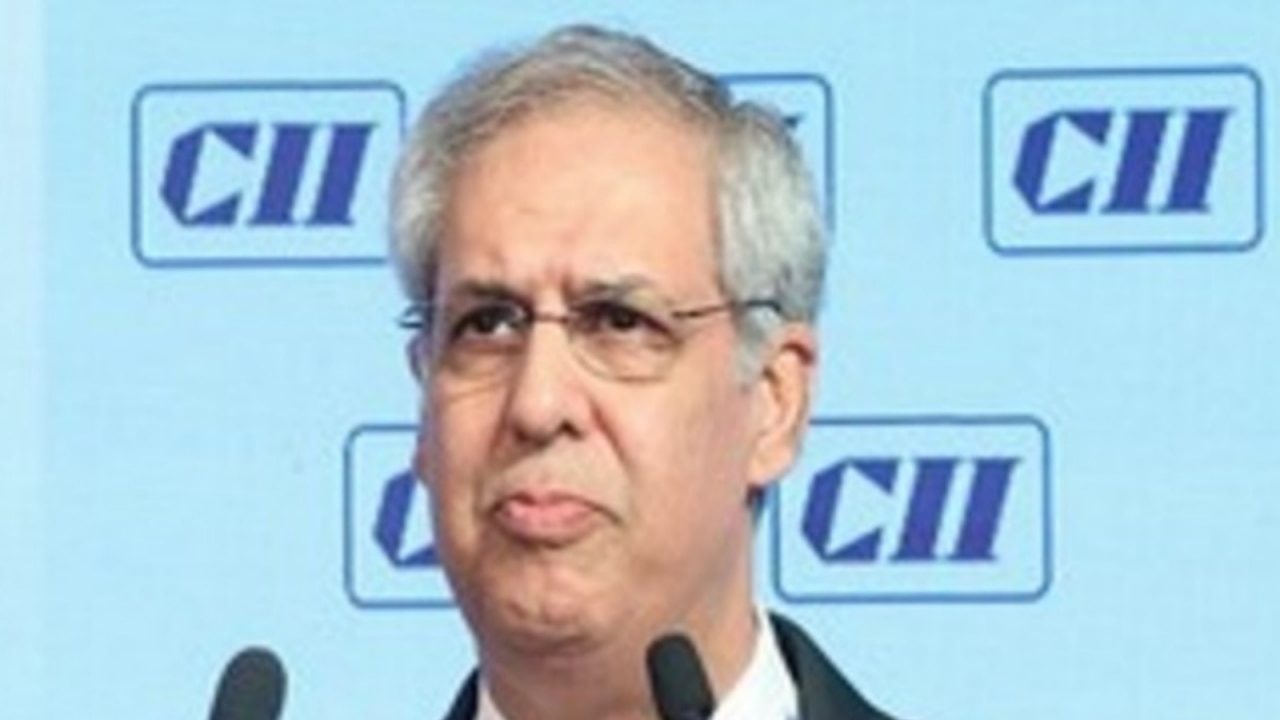
Speaking candidly at the recent HT Leadership Summit, Noel Tata articulated his fears that a public listing could inadvertently prioritize commercial interests over the group’s foundational philanthropic objectives. He painted a stark picture of a future where the pressures of a public market might compel Tata Sons to abandon its role as a perpetual backstop for struggling group companies and its commitment to long-gestation, nation-building projects, in favour of maximizing shareholder returns. This stance has ignited a crucial debate within corporate India, questioning the future trajectory of one of the nation’s most iconic business empires at a pivotal moment of regulatory change.
Unpacking the Core Conflict: Philanthropy vs. Profit
At the crux of Noel Tata’s resistance lies the unique ownership structure and operating philosophy of the Tata Group. Unlike typical corporations, a significant majority (approximately 66%) of Tata Sons is held by philanthropic trusts – the Sir Dorabji Tata Trust and the Sir Ratan Tata Trust. This structure, established by the group’s founders, means that the ultimate beneficiaries of Tata Group’s commercial success are not individual shareholders but charitable causes across India.
Noel Tata passionately articulated this principle: "Charity precedes commerce. Charity owns commerce. It’s not the other way around." This statement encapsulates a business model where the profits generated by the diverse portfolio of Tata companies are ultimately channeled through the Trusts. These dividends, rather than being distributed to private shareholders for personal gain, are reinvested into a wide array of public welfare initiatives – establishing hospitals, funding educational institutions, providing disaster relief, and supporting countless community development projects. This symbiotic relationship, where business success directly fuels social good, is what Noel Tata identifies as the "Tata way."
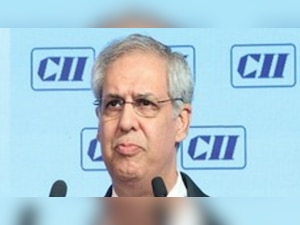
He argues that this institutional ownership provides an unparalleled continuity and stability. "In this particular case, the owner cannot die. The owner cannot be bought. And the owner cannot retire. So there is a continuity in the Tata way," he remarked, emphasizing the perpetual nature of the Trusts as owners. This continuity, he believes, safeguards the group’s long-term vision and its commitment to national development, often involving projects with extended gestation periods and lower immediate returns, which might otherwise be unpalatable to public investors.
The fear, therefore, is that a public listing would introduce a new class of shareholders – numbering in the tens of thousands – who, quite legitimately, would demand a focus on quarterly earnings, share price appreciation, and dividend payouts. This shift, Noel Tata contends, would inevitably pit profit motives against philanthropic imperatives, potentially eroding the group’s foundational identity and redirecting capital away from its social mission.

A Timeline of Growing Contention
The debate over Tata Sons’ listing is not entirely new but has gained significant momentum and urgency due to recent regulatory developments and internal discussions.
September 2023: RBI’s Mandate and the Listing Imperative
The immediate catalyst for the current contention arose in September 2023 when the Reserve Bank of India (RBI) rejected Tata Sons’ application to surrender its registration as a non-banking financial company (NBFC). For some time, Tata Sons had explored avenues to shed its NBFC status, which would have exempted it from certain regulatory requirements, including a crucial one: public listing.

The RBI’s decision effectively closed this path, firmly categorizing Tata Sons under the regulatory framework applicable to "upper-layer NBFCs." This classification mandates that such entities, due to their size and systemic importance, must publicly list their shares within a specified timeframe. This regulatory directive transformed what was once an internal strategic discussion into an unavoidable compliance requirement, significantly intensifying the internal debate.
September 2023: Boardroom Dissent
Following the RBI’s ruling, the Tata Sons board convened on September 17. Among the key decisions made was the approval of a fresh five-year term for executive chairman N. Chandrasekaran, signaling continuity in leadership. Crucially, the board also decided to proceed with the public listing, acknowledging the RBI’s mandate rather than challenging it further. It was at this critical juncture that Noel Tata reportedly emerged as the sole director to vote against both decisions, highlighting his deep-seated reservations and a significant divergence of opinion at the highest echelons of the group. His dissent underscores the gravity of the issue and the potential paradigm shift it represents for the Tata Group.

Long-Standing Advocacy: The Shapoorji Pallonji Group
It is also important to note that the idea of listing Tata Sons is not new and has been consistently advocated by another significant shareholder: the Shapoorji Pallonji (SP) Group. The SP Group, which holds an 18.38% stake in Tata Sons, has historically championed a public listing. Their rationale typically centers on unlocking shareholder value, providing liquidity, and enhancing transparency, arguments often made by minority shareholders in large, privately held entities. This long-standing advocacy from a key stakeholder adds another layer of complexity to the current debate, suggesting that pressures for listing predate the recent RBI mandate.
Supporting Data: The "Tata Way" Under Threat
Noel Tata’s arguments are not merely theoretical; they are rooted in a deep understanding of the Tata Group’s operational realities and its historical role in India’s economic and social fabric.

The Backstop Function and Group Cohesion
One of Noel Tata’s most significant concerns revolves around the potential erosion of Tata Sons’ ability to act as a "backstop" for group companies facing financial difficulties. In its current private structure, Tata Sons has historically served as a stabilizing force, providing crucial financial support and strategic guidance to various Tata entities, especially during challenging times or when incubating new, risky ventures. This unique inter-company support mechanism, funded by the overall group’s strength, is a critical "glue which keeps the entire group together," as Noel Tata described it.
He fears that a public listing would fundamentally undermine this capability. Public shareholders, driven by fiduciary duties and the expectation of optimal capital allocation, would inevitably question investments in struggling businesses that do not promise immediate or high returns. "The moment you have a separate set of investors in Tata Sons from a separate set of investors in a company that requires funding, they’re quite right to ask, why do we want to make investments here? You should only be making investments in what will deliver and allocating capital to the most profitable ventures. And therefore the nature of the group is going to change," he elaborated. This pressure could force Tata Sons to divest from or cease supporting less profitable but strategically important businesses, potentially fragmenting the conglomerate.

Nation-Building Projects and Long-Term Vision
The Tata Group has a long and distinguished history of embarking on large-scale, capital-intensive projects that align with India’s national development goals, even if they involve long gestation periods and significant risks. Noel Tata highlighted several such contemporary initiatives: the ambitious semiconductor project, the electric vehicle battery plant, and mobile phone assembly operations for exports. These are ventures that require substantial upfront investment, patient capital, and a willingness to absorb losses for an extended period before they become profitable.
Under the current trust-owned model, Tata Sons has the latitude to champion such projects, viewing them as contributions to national development rather than purely profit-driven enterprises. A public listing, Noel Tata cautions, could make it exceedingly difficult to justify such long-term, high-risk investments to a shareholder base focused on short-term returns. The need for stronger execution discipline and careful capital allocation for these projects was acknowledged, but the underlying concern remained about the viability of pursuing them under public scrutiny.

The 150-Year Legacy: Why Tinker?
Noel Tata’s rhetorical question, "Why tinker with something that has delivered such value for 150 years? Why do we want to change that?" resonates deeply with the group’s legacy. For over a century and a half, the Tata Group has operated successfully under its unique structure, evolving from a trading firm into a global conglomerate spanning steel, automobiles, software, consumer goods, hospitality, and more. Its contribution to India’s industrialization, economic growth, and social development is unparalleled. This track record, he implies, is a testament to the effectiveness and resilience of the "Tata way," making any fundamental alteration a high-stakes gamble.
Official Responses and Divergent Perspectives
The current situation presents a complex tapestry of official stances and implied positions from various stakeholders.

Noel Tata’s Constructive Opposition
While unequivocally opposing the listing, Noel Tata clarified that his concerns were not about the overall strategic direction of the Tata Group. He reaffirmed his support for the group’s dual objectives of "philanthropy on one hand, nation building on the other hand," emphasizing that this "is embedded in the DNA of the group." His dissent, therefore, is not a challenge to the vision but rather to the proposed means of achieving it, particularly regarding "the delivery of what we’re doing" and the financial discipline involved in executing large projects.
He also expressed a willingness for constructive engagement: "Tata Trusts would engage constructively with regulators and other stakeholders to find a solution that preserves the group’s existing model." This indicates an openness to exploring alternatives or modifications to the listing process that might mitigate the perceived risks to the group’s ethos.

The Tata Sons Board and N. Chandrasekaran
The decision by the Tata Sons board to proceed with the public listing, despite Noel Tata’s reported dissent, signifies a prevailing view that compliance with RBI regulations is paramount. While Executive Chairman N. Chandrasekaran has not directly addressed Noel Tata’s specific concerns in public statements on this matter, the board’s collective decision implies a belief that the group can navigate the complexities of a public listing while preserving its core values. The strategic direction under Chandrasekaran has been characterized by consolidation, streamlining, and a focus on future-ready businesses, suggesting a pragmatic approach to growth and financial strength. The board’s decision reflects a commitment to regulatory adherence and perhaps a conviction that a listed Tata Sons could still uphold its values through robust corporate governance and transparent reporting.
The Reserve Bank of India (RBI)
The RBI’s stance is purely regulatory. Its classification of Tata Sons as an upper-layer NBFC and the subsequent mandate for public listing are driven by broader objectives of financial stability, transparency, and investor protection within the Indian financial system. The RBI’s role is not to weigh in on the philosophical implications for the Tata Group’s ethos but to ensure that systematically important financial entities adhere to prudential norms. From a regulatory perspective, a public listing increases scrutiny, enhances market discipline, and provides a clearer picture of the financial health of such a crucial entity.

The Shapoorji Pallonji (SP) Group
The SP Group’s consistent advocacy for a public listing stems from a different set of considerations, primarily related to shareholder value and liquidity. As a significant minority shareholder in a privately held behemoth, the SP Group has long sought a mechanism to unlock the value of its stake, which a public listing would readily provide. Their perspective represents the typical demands of financial investors who prioritize market-driven valuations and exit opportunities.
Implications: A Crossroads for Indian Corporate Governance
The outcome of this debate and the eventual path taken by Tata Sons hold significant implications, not just for the conglomerate itself but for the broader landscape of Indian corporate governance, philanthropy, and business models.

Reshaping Tata’s Ethos
The most profound implication is the potential reshaping of the Tata Group’s very ethos. Should Tata Sons go public, the immediate pressure from shareholders to maximize returns could indeed shift capital allocation priorities. Projects that are vital for national development but less profitable might face greater scrutiny or even be deprioritized. The long-term, patient capital approach, so characteristic of Tata, could be challenged by the short-term demands of the market. This could fundamentally alter the perception of Tata as a benevolent industrialist to one driven by conventional market forces, potentially diminishing its unique identity.
Financial and Strategic Ramifications
Financially, a listing would bring increased transparency and potentially unlock substantial value. However, it also introduces market volatility and external pressures on strategic decision-making. The ability of Tata Sons to act as a "backstop" for struggling group companies might indeed be curtailed, forcing these entities to rely more heavily on external capital markets or risk being divested. This could lead to a more financially disciplined but potentially less cohesive conglomerate. The group’s strategy for incubating new, high-risk ventures, such as those in semiconductors or EV batteries, might need to be re-evaluated to align with public investor expectations.

A Precedent for Indian Conglomerates
The Tata Sons listing saga could set a significant precedent for other large, privately held Indian conglomerates, especially those with complex ownership structures or strong philanthropic leanings. It forces a national conversation about the balance between traditional, often family or trust-led, business models and the demands of modern corporate governance, transparency, and shareholder value. The outcome could influence how regulators approach other large, systemically important entities and how such groups choose to evolve in a rapidly changing economic environment.
The Future of Corporate Philanthropy in India
If the "charity owns commerce" model at Tata Sons is indeed diluted, it raises questions about the future of large-scale corporate philanthropy in India. While CSR mandates exist, the Tata model goes far beyond mere compliance, embedding philanthropy at its core. Any perceived weakening of this model could spark a broader discussion about how Indian businesses balance profit generation with social responsibility, especially for entities with a long history of public service.

Potential Resolutions
Noel Tata’s call for constructive engagement suggests that a complete rejection of the listing might not be the only desired outcome. Solutions could involve exploring specific listing structures that safeguard the Trusts’ majority control and their philanthropic mandate, perhaps through differential voting rights or specific charter clauses. Alternatively, the group might seek regulatory exemptions or a phased approach to listing that allows for a gradual adaptation. However, given the RBI’s firm stance, the room for maneuver might be limited.
In conclusion, the debate over the Tata Sons listing transcends a mere corporate transaction; it is a profound discussion about identity, legacy, and the future direction of India’s most iconic business house. Noel Tata’s opposition forces a critical introspection into what truly constitutes the "Tata way" and whether this unique blend of commercial prowess and selfless philanthropy can endure the relentless pressures of the public market. The decisions made in the coming months will not only chart the course for the Tata Group but will also offer valuable lessons for corporate governance and social responsibility across India.