

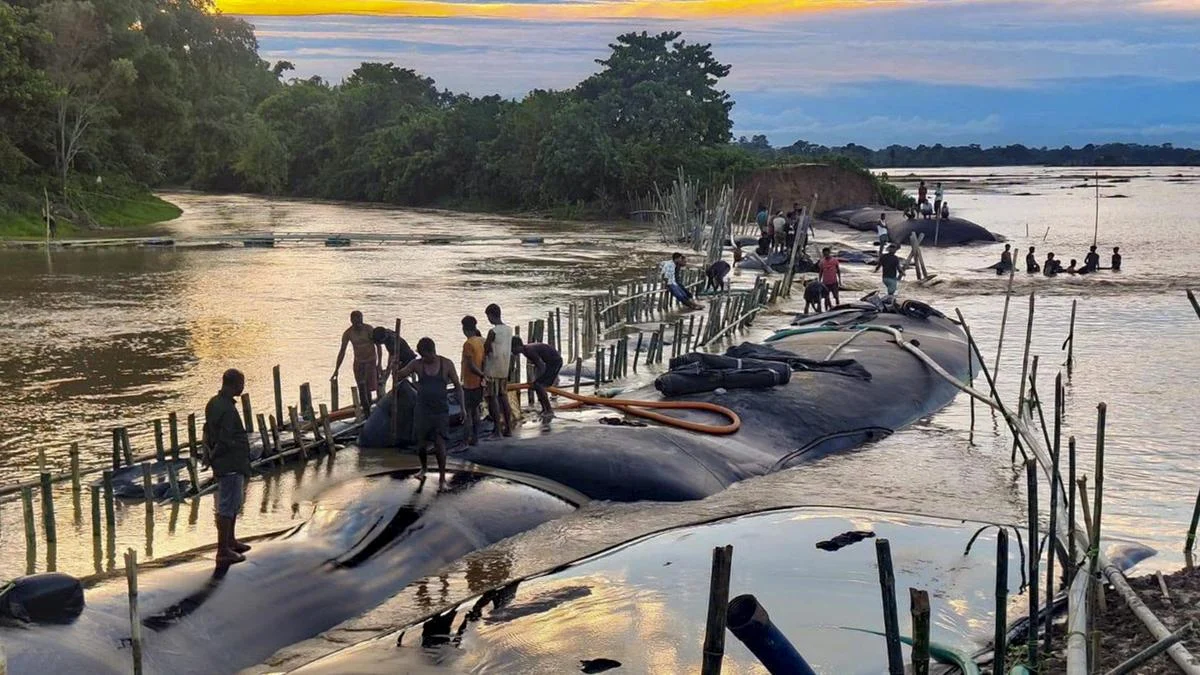
“As the floodwaters roared and raged all around, they swept away my village, my happy home. In the blink of an eye, the cattle were washed away. In a single moment, I’ve lost everything.”
These haunting lyrics, translated from the Assamese song “Keufale gujori gumori baan” by the iconic Zubeen Garg, serve as a visceral anthem for a state that remains perpetually underwater. For the people of Assam, the arrival of the monsoon is not merely a seasonal change; it is a recurring existential threat. As the rest of the nation views the annual headlines with a sense of detached familiarity, the reality on the ground remains a harrowing cycle of loss, displacement, and a desperate, stubborn resilience.
Main Facts: The Current State of the Deluge
The 2024 monsoon season has once again proven catastrophic for the Northeast. Official reports indicate that more than 100 people have lost their lives this year due to flood-related incidents. As of the latest assessment, over 1.26 lakh residents continue to reel from the aftermath, their homes submerged and their livelihoods—primarily cattle and agriculture—obliterated.
While the Brahmaputra is the primary protagonist in this tragedy, this year’s devastation has been significantly exacerbated by the Dikhow river, a major tributary. The flooding of the Dikhow has brought a new dimension to the crisis: the inundation of areas previously considered safe or non-prone to flooding. Residents of the affected districts, supported by local officials, have pointed to a specific catalyst for this shift: illegal coal mining across the border in Nagaland. The runoff from these mining operations, coupled with the lack of environmental regulation, has altered the river’s behavior, sending surges of mud-laden water into the plains of Assam.
The crisis is not merely a product of excessive rainfall. It is the result of a complex interplay between Assam’s unique geography—shaped by the surrounding hills and its rich, fragile flora—and a series of increasingly aggressive human interventions that have disrupted the natural order of the river systems.

Chronology: A History Shaped by Seismic and Colonial Shifts
To understand the current state of Assam’s rivers, one must look back at the geological and historical milestones that defined the landscape. Historian Arupjyoti Saikia, in his landmark work The Unquiet River: A Biography of the Brahmaputra, argues that the river must be viewed as a living entity with its own biography.
1. The Pre-Colonial and Colonial Era:
For centuries, the Brahmaputra was a wild, shifting force that dictated settlement patterns. However, the advent of British colonial rule marked a turning point. The expansion of tea plantations, the construction of railways, and the carving out of roads required the "taming" of the river. The British introduced early embankment systems and sought to harness the river for trade and timber extraction, beginning a century-long struggle to control a water body that inherently resists confinement.
2. The Great Earthquake of 1950:
Perhaps no single event in modern history has altered the Brahmaputra more than the 1950 Assam-Tibet earthquake. Registering a magnitude of 8.6, the quake caused massive landslides in the Himalayas, dumping millions of tons of debris into the river. As journalist Sanjoy Hazarika notes in River Traveller, the earthquake caused the riverbed to rise significantly and forced the Brahmaputra to alter its course, carving out new channels and creating fresh river islands (chars). This event fundamentally changed the river’s hydraulics, making it more prone to bank erosion and unpredictable flooding.
3. The Modern Infrastructure Boom:
Post-Independence, the focus shifted toward massive engineering projects. The construction of thousands of kilometers of embankments became the primary strategy for flood control. However, as decades of data now show, these embankments often fail, leading to catastrophic "breach floods" that are far more destructive than the gradual rise of water.
Supporting Data: The Anthropogenic Drivers of Disaster
The current crisis is frequently labeled a "natural disaster," but academic research and environmental experts argue that much of the devastation is man-made. Sanjoy Hazarika identifies several key factors that have turned the Brahmaputra’s "dual nature"—its ability to both give life and take it away—into a lopsided cycle of destruction.
- Deforestation and Siltation: The hills surrounding the Brahmaputra valley have seen massive deforestation. Without the root systems of trees to hold the soil, monsoon rains wash immense quantities of silt and rocks into the river. This siltation raises the riverbed, reducing its carrying capacity. When the river can no longer hold the volume of water, it spills over with "phenomenal energy," creating a wall of water and mud.
- Drainage Congestion: The construction of roads and highways without adequate culverts or drainage channels has blocked the natural flow of water. In many areas, the river’s natural "spillways"—the wetlands and rivulets that historically absorbed excess water—have been filled in for construction or clogged with urban waste.
- Illegal Mining and Extraction: The extraction of rocks and soil from riverbanks for construction materials has weakened the natural buffers of the river. Furthermore, as seen with the Dikhow river, illegal mining in neighboring states creates toxic, sediment-heavy runoff that destroys the river’s ecology and increases the volume of the floodwaters.
Official Responses and the "Monster Dam" Debate
The response from authorities has historically been reactive rather than proactive. The primary tool of the state remains the repair and reinforcement of embankments, a strategy that many experts believe is outdated.

A major point of contention in recent years has been the geopolitical "dam race." With China constructing a massive dam project on the Yarlung Tsangpo (the upper reaches of the Brahmaputra in Tibet), there is mounting pressure on the Indian government to respond with its own mega-hydroelectric projects.
However, voices like Hazarika’s caution against this approach. “Just because China is building this monster dam doesn’t mean we have to respond by building one of our own,” he argues. The fear is that such dams in a seismically active zone could lead to "dam-induced seismicity" or catastrophic failure during an earthquake, potentially wiping out the valley below.
Current official responses have also been criticized for failing to address the trans-border nature of the crisis. The flooding of the Dikhow due to mining in Nagaland highlights the need for a coordinated, inter-state environmental policy that treats the river basin as a single ecological unit rather than a series of political jurisdictions.
Implications: Learning to Live with the River
Despite the annual heartbreak, the people of the Brahmaputra and Barak valleys exhibit a unique form of "hydro-resilience." In the anthology Riverside Stories: Writings from Assam, editor Banamallika notes that for those living in low-lying areas, the flood is a force around which the calendar itself is organized.
1. Cultural Integration:
The floods have permeated the very fabric of life. In Rashida Tapadar’s story Manowara’s Library, the character of the phurna mashtor (old teacher) embodies the complex relationship with the water. He prays for floods to extend his vacation so he can be with his family, yet spends that time building a floating library on a boat to ensure the children’s education isn’t swept away. This "floating life" is a necessity for the thousands who live on the chars (river islands).
2. The Economic Paradox:
The river’s dual nature remains its most enduring legacy. While the floods destroy homes, they also deposit nutrient-rich silt that makes the Brahmaputra valley one of the most fertile regions in the world. The challenge for the future is how to retain the "gift" of the silt while mitigating the "fury" of the water.

3. A Call for Humility:
The overarching implication of the current crisis is the need for a shift in philosophy. For a century, the goal has been to "tame" the river through hard engineering. Experts now suggest a move toward "room for the river" policies—strategies that involve restoring wetlands, preventing construction in floodplains, and respecting the river’s natural boundaries.
As Sanjoy Hazarika suggests, the solution begins with a sense of humility. “These are greater entities than us,” he says. “We must be a bit humbler and more respectful towards nature.”
Conclusion
The tragedy of Assam is not that the rivers flood; it is that the human response has consistently failed to account for the river’s character. As the death toll rises and more families find their "happy homes" swept away, the stories of the phurna mashtor and the songs of Zubeen Garg serve as a reminder that the river is not just a body of water—it is the soul of a civilization.
To break the cycle of devastation, the authorities and the public must move beyond the headlines. This requires addressing the root causes: the illegal mining, the rampant deforestation, and the hubris of thinking a river like the Brahmaputra can be fully controlled. Until then, the people of Assam will continue to do what they have done for generations: weather the loss, wait for the waters to recede, and rebuild their lives on the shifting sands of the unquiet river.
