

The global climate battle will be won or lost in cities. Occupying less than 3% of the Earth’s land surface, urban centers are the engines of the global economy, yet they are responsible for more than 70% of global greenhouse gas (GHG) emissions. Today, more than half of humanity calls a city home, a figure expected to rise to nearly 70% by 2050. This concentration of human activity makes cities both the primary drivers of global warming and the most vulnerable victims of its consequences.
In India, the urban-climate nexus is particularly precarious. As the nation undergoes one of the fastest urban transitions in history, its cities are increasingly besieged by extreme weather events, chronic water scarcity, and deteriorating air quality. While the Indian government has introduced ambitious frameworks to measure and mitigate these risks, recent evidence suggests that the momentum for urban climate action has stalled, leaving a critical gap in accountability and implementation.
Main Facts: The Vulnerability of India’s Urban Frontiers
Indian cities are on the frontlines of a multi-pronged environmental crisis. The impact of climate change is not a distant threat but a current reality that exacerbates existing social and economic disparities.
1. The Water Crisis and Groundwater Depletion
One of the most alarming trends is the rapid exhaustion of natural resources. According to data from NITI Aayog, 21 major Indian cities—including economic hubs like Delhi, Bengaluru, and Hyderabad—are hurtling toward "Day Zero," where groundwater levels could be completely depleted. This crisis directly threatens the livelihoods and health of over 100 million people.
2. Flooding and Coastal Exposure
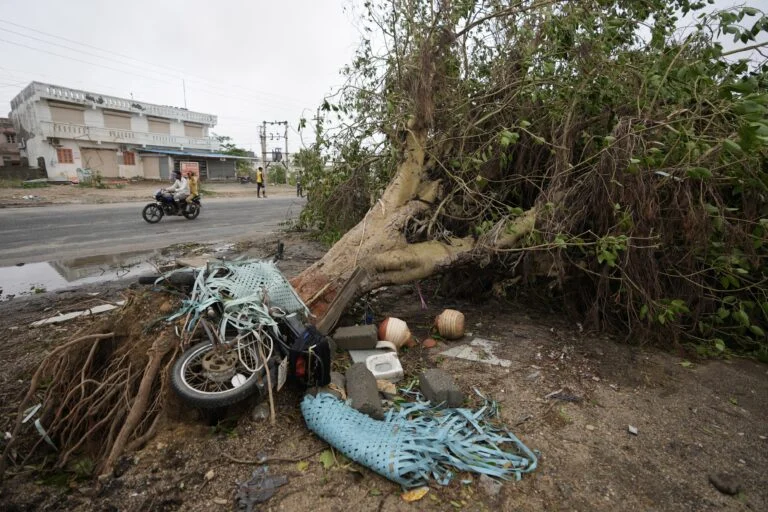
Flooding has emerged as the most widespread hazard for Indian settlements. A report by the Indian Institute for Human Settlements (IIHS) for the Fifteenth Finance Commission indicates that the plains of the Ganga and Brahmaputra are inundated annually, disrupting millions of lives. Furthermore, India’s 7,500-kilometer coastline is a zone of high risk; approximately 5,700 km is exposed to frequent cyclones and storm surges. With 40% of the population living within 100 km of the coast, the potential for catastrophic displacement is immense.
![India started measuring climate readiness of cities, then stalled [Commentary]](https://imgs.mongabay.com/wp-content/uploads/sites/30/2026/08/21132802/AP23168434501284-1200x800.jpg)
3. The Economic Toll of Inaction
The cost of poor urban planning is staggering. Research indicates that inadequate urban management and climate-unfriendly development could cost Indian cities between $2.6 billion and $13 billion annually. Conversely, the potential for green growth is equally significant. The Coalition for Urban Transitions projects that low-carbon measures in buildings, transport, and waste could reduce urban emissions by 89% by 2050, potentially saving 1,784 million tonnes of CO2 equivalent.
Chronology: From Policy Formulation to Implementation Gaps
The evolution of India’s urban climate policy reflects a transition from high-level national missions to localized assessment frameworks.
- 2008: The Foundation. India launched the National Action Plan on Climate Change (NAPCC). Among its eight core missions, the National Mission on Sustainable Habitat (NMSH) was specifically designed to address urban resilience and sustainability.
- 2015: The Paris Agreement and NDCs. India’s Nationally Determined Contributions (NDCs) identified cities as key sub-national actors. Commitments were made to increase energy efficiency in buildings, develop sustainable transport, and reform waste management.
- 2015–2020: Mission-Led Development. Schemes such as the Smart Cities Mission, AMRUT (Atal Mission for Rejuvenation and Urban Transformation), and the Swachh Bharat Mission began funneling funds into climate-relevant infrastructure, including solar power, wastewater treatment, and electric mobility.
- 2019: The Launch of CSCAF. Recognizing that "what gets measured gets managed," the Ministry of Housing and Urban Affairs (MoHUA) launched the Climate Smart Cities Assessment Framework (CSCAF) 1.0. This was the first systematic attempt to benchmark 96 cities across climate indicators.
- 2020: Institutionalizing Action. The Climate Centre for Cities (C-Cube) was established within the National Institute of Urban Affairs (NIUA) to act as a one-stop shop for climate-informed urban development.
- 2021–2023: Progress and Stagnation. CSCAF 2.0 (2021) and CSCAF 3.0 (2023) expanded the scope to 126 and 226 cities, respectively. However, following the 2023 report, the anticipated fourth round (CSCAF 4.0) has yet to be initiated, leading to concerns about a loss of momentum.
Supporting Data: Measuring the "Readiness" Gap
The Climate Smart Cities Assessment Framework (CSCAF) evaluates cities across five thematic areas: Urban Planning, Green Cover, and Biodiversity; Energy and Green Buildings; Mobility and Air Quality; Water Management; and Waste Management. The data from the last three years reveals a sobering reality regarding urban India’s preparedness.
The 34% Plateau
In 2021, the national average climate readiness across 126 assessed cities was a mere 30%. By the 2023 report, which covered 226 cities, this figure had only marginally improved to 34%. This suggests that while more cities are being monitored, the depth and effectiveness of their climate strategies remain shallow.
The Star-Rating Disparity
The CSCAF uses a five-star rating system (1 star for 0–20% readiness; 5 stars for 80–100% readiness). The 2023 assessment showed that:
![India started measuring climate readiness of cities, then stalled [Commentary]](https://imgs.mongabay.com/wp-content/uploads/sites/30/2026/08/21133620/pexels-siddique-sk-274855415-18228801-768x512.jpg)
- Only Surat managed to reach the five-star category in the overall assessment.
- While some cities showed improvement in specific sectors—such as four cities moving to five stars in "Urban Planning and Green Cover"—the vast majority of Indian municipalities remain in the 1-to-3-star range.
- The lack of significant upward movement across the board indicates that climate action is not yet "mainstreamed" into daily municipal operations.
Official Initiatives and the Role of C-Cube
The government’s strategy relies heavily on the National Institute of Urban Affairs (NIUA) and its Climate Centre for Cities (C-Cube). These bodies are tasked with bridging the gap between national policy and local execution.
Funding and Infrastructure
Through the Smart Cities Mission and AMRUT, the Government of India has provided substantial capital for:
- Sustainable Mobility: Investing in cycling tracks, pedestrian-friendly walkways, and electric bus fleets.
- Renewable Energy: Incentivizing solar rooftop installations on government buildings and energy-efficient LED streetlighting.
- WASH (Water, Sanitation, and Hygiene): Prioritizing decentralized wastewater treatment and scientific solid waste management to reduce methane emissions from landfills.
The Transparency Mechanism
The CSCAF was intended to be a transparent, competitive tool. By ranking cities, the government hoped to foster a "race to the top," similar to the Swachh Survekshan (cleanliness survey). The public disclosure of these results was a hallmark of the first three phases, providing civil society and investors with a clear picture of which cities were climate-ready.
Implications: The High Cost of Data Silence
The apparent halting of the CSCAF cycle (Phase 4.0) carries significant implications for India’s climate goals and urban future.
1. The Accountability Void
Without annual assessments, there is no factual basis to determine if the billions of rupees invested in "Smart Cities" are actually yielding climate resilience. Measurement is the only way to move from assumptions to evidence-based policy. If the carbon footprint of a city is not tracked, local leaders cannot be held accountable for rising emissions or failing infrastructure.
![India started measuring climate readiness of cities, then stalled [Commentary]](https://imgs.mongabay.com/wp-content/uploads/sites/30/2026/08/21134211/pexels-vgbingi-21832812-768x512.jpg)
2. Missing "Climate Budgeting"
A major gap identified by experts is the lack of consolidated information on "Climate Budgeting." While C-Cube reportedly works with 75 partners, there is no public repository showing which cities have adopted climate-smart capital investment plans or how many have successfully implemented their City Climate Action Plans (CCAPs). This fragmentation prevents the scaling of successful local models to a national level.
3. Investor Uncertainty
Global climate finance is increasingly tied to transparent data. International investors looking to fund green urban infrastructure require reliable metrics to assess risk. The absence of updated CSCAF data makes Indian cities less attractive for international green bonds and climate resilience funds.
4. The Scale of the Challenge
India has approximately 4,800 cities and towns. Of these, 500 have populations exceeding 100,000. Currently, the CSCAF has only reached 226 cities. To truly address the climate crisis, the framework needs not only to be regular but also to expand its reach to Tier-2 and Tier-3 cities, which are often the sites of the most rapid, unregulated growth.
Conclusion: A Call for Sustained Urban Governance
The journey toward climate-resilient cities in India is at a crossroads. The initial phases of the Climate Smart Cities Assessment Framework proved that Indian cities can be benchmarked and that there is a hunger for improvement. However, climate action is not a one-time project; it is a continuous process of measurement, implementation, and recalibration.
To regain momentum, the Ministry of Housing and Urban Affairs must institutionalize the CSCAF as an annual mandate. Furthermore, there is an urgent need for a "one-stop public disclosure portal" where the progress of every City Climate Action Plan, every rupee of climate budgeting, and the specific outcomes of partner initiatives are visible to the public.
![India started measuring climate readiness of cities, then stalled [Commentary]](https://imgs.mongabay.com/wp-content/uploads/sites/30/2026/08/21134813/Eco_park-2-new_town_smart_city-kolkata-India-768x512.jpg)
Only through radical transparency and consistent measurement can India transform its cities from climate-vulnerable hubs into resilient, low-carbon leaders of the 21st century. The cost of inaction is too high, and the window for effective urban intervention is closing fast.
