

New Delhi, [Current Date] – In an increasingly complex financial landscape, understanding one’s personal savings philosophy is paramount to achieving long-term fiscal stability and independence. A groundbreaking framework from financial intelligence firm Kwala Intel suggests that individuals can be categorized into three distinct "saver types" – Aggressive, Moderate, and Lifestyle-Focused – each with a recommended savings rate designed to align with their unique financial aspirations and risk tolerance. This classification offers a personalized roadmap for wealth creation, moving beyond generic advice to provide actionable insights for every income earner.
The core premise, as articulated by Kwala Intel, is that a one-size-fits-all approach to saving is inherently flawed. Instead, a tailored strategy, informed by an individual’s primary financial goals and comfort level with risk, is far more effective. Whether one dreams of early retirement, aims to hit significant life milestones, or prioritizes present comfort, identifying with one of these saver archetypes can illuminate the path to optimal financial health.
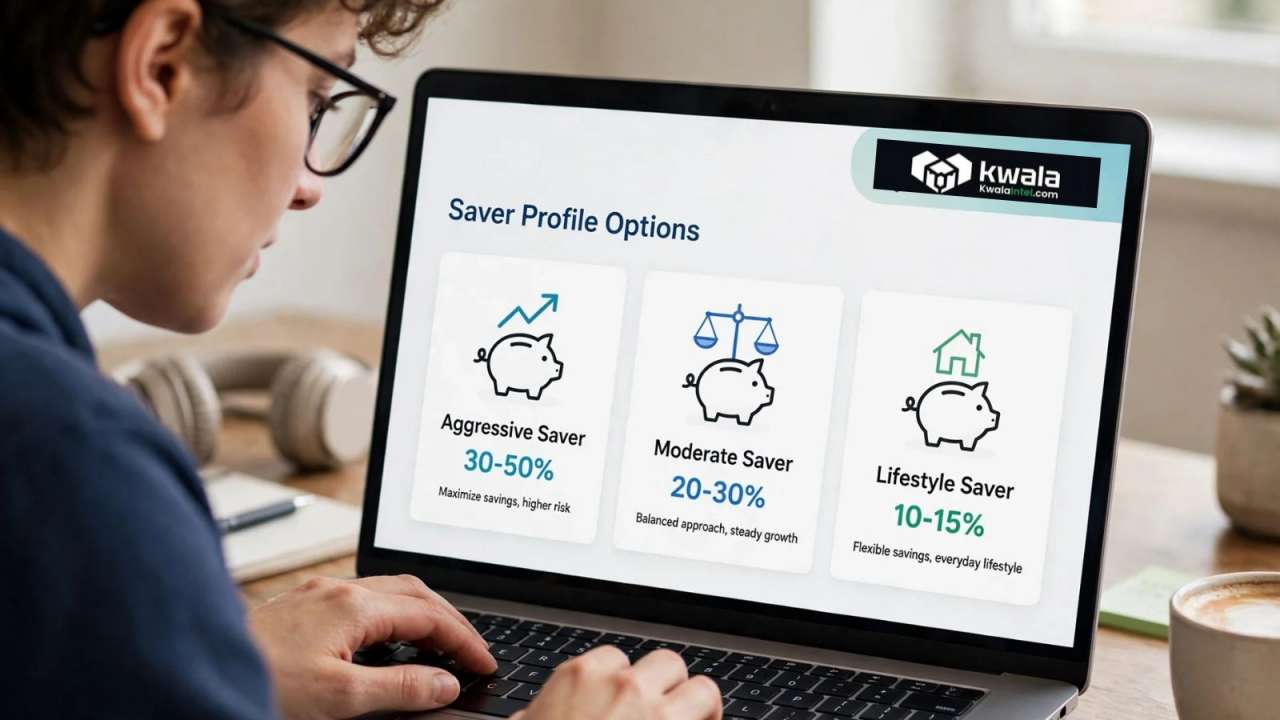
Defining the Archetypes: Kwala Intel’s Saver Profiles
Kwala Intel’s framework posits that individuals naturally gravitate towards one of three saving philosophies, each dictating a specific approach to income allocation and investment. Understanding these profiles is the first step towards crafting a truly effective financial plan.
The Aggressive Saver: Architect of Early Independence
At the forefront of financial discipline stands the Aggressive Saver. These individuals are characterized by an unwavering commitment to achieving early financial independence, often encapsulated by the "FIRE" (Financial Independence, Retire Early) movement. Their primary objective is to build substantial wealth rapidly, enabling them to step away from traditional employment well before standard retirement age or to pursue passion projects without financial constraint. Kwala Intel recommends that Aggressive Savers aim to set aside a significant portion of their income, typically 30-50%.

This ambitious savings rate is not merely a number; it reflects a conscious lifestyle choice. Aggressive Savers often adopt stringent budgeting practices, meticulously tracking every expense and actively seeking ways to reduce discretionary spending. They might eschew lavish purchases, opt for minimalist living, or actively pursue additional income streams through side hustles to accelerate their wealth accumulation. Their investment strategy is typically geared towards high-growth assets, such as equities and other potentially volatile but high-return instruments, demonstrating a higher tolerance for market fluctuations. While the path demands considerable sacrifice in the short term, the long-term implication is a dramatically shortened working life and unparalleled financial freedom. However, this intensity also carries risks, including potential burnout and the emotional toll of market downturns on a heavily invested portfolio.
The Moderate Saver: Balancing Today and Tomorrow
The Moderate Saver represents a pragmatic middle ground, seeking to strike a harmonious balance between enjoying the present and securing a comfortable future. Unlike their aggressive counterparts, their goals are typically centered around achieving specific, mid-term life milestones rather than outright early retirement. These might include purchasing a home, funding a child’s education, saving for a comfortable retirement at a conventional age, or building a robust safety net. Kwala Intel advises Moderate Savers to allocate 20-30% of their income towards savings.

This group values stability and predictable progress. Their budgeting approach is disciplined but allows for reasonable discretionary spending, ensuring they can enjoy current experiences without derailing future plans. Investment strategies for Moderate Savers often involve a diversified portfolio, blending growth-oriented assets with more stable, income-generating investments. They are comfortable with a certain level of market risk but generally prioritize a balanced approach that mitigates extreme volatility. The implications of this strategy are a steady accumulation of wealth, the realization of significant life goals, and a reduced likelihood of financial stress, provided they maintain consistency. The challenge lies in resisting the temptation to overspend during periods of economic prosperity, which could undermine their carefully planned trajectory.
The Lifestyle-Focused Saver: Prioritizing Present Comfort
At the other end of the spectrum is the Lifestyle-Focused Saver, an individual who places a premium on current experiences, immediate gratification, and maintaining a desired standard of living. For this group, the idea of significant present sacrifice for distant future gains holds less appeal. While they acknowledge the importance of saving, their primary motivation is to ensure present comfort and enjoyment, often without drastically altering daily spending habits. Kwala Intel suggests a savings rate of 10-15% for Lifestyle-Focused Savers.

This percentage typically covers essential emergency funds, perhaps some short-term savings goals like a vacation, and a minimal contribution towards retirement. Their approach to budgeting is less restrictive, allowing for frequent discretionary spending on dining out, travel, entertainment, and other lifestyle enhancers. Investment choices tend to be lower risk and more liquid, prioritizing accessibility over aggressive growth. While this approach ensures present happiness, the long-term implications can be significant. Lifestyle-Focused Savers may find themselves with insufficient funds for retirement, vulnerable to unexpected financial shocks, and severely impacted by the erosive power of inflation. The key challenge for this group is ensuring that even a modest savings rate is consistently maintained and strategically invested to avoid future financial hardship.
Unveiling Your Financial Persona: How to Identify Your Saver Profile
Determining which saver profile best aligns with your financial identity is a critical self-assessment that goes beyond simply looking at your current savings rate. Kwala Intel emphasizes a holistic evaluation of your aspirations, temperament, and financial realities.

Beyond the Percentages: A Self-Assessment Guide
The first step in identifying your saver type involves a deep introspection into your primary financial goals. Are you driven by an intense desire for early financial freedom, envisioning a life where work is optional by your 40s or 50s? If so, the aggressive profile might resonate most strongly. This ambition often requires a significant re-evaluation of current consumption patterns and a willingness to embrace a more frugal existence for a defined period.
Alternatively, are your ambitions more centered around specific mid-term objectives, such as saving a substantial down payment for a house within five years, funding a child’s university education, or ensuring a comfortable, but not necessarily early, retirement? These practical, milestone-driven goals are hallmarks of the moderate saver. They seek a balance, understanding that some sacrifices are necessary but not at the expense of all present enjoyment.

Finally, if your main priority is to maintain your current lifestyle, enjoy experiences, and avoid significant cuts to your daily spending, then you likely fall into the lifestyle-focused category. While this approach offers immediate comfort, it necessitates a realistic understanding of its potential long-term financial consequences. This group might prioritize a new car or an annual vacation over maximizing retirement contributions.
Assessing Risk Tolerance: The Emotional Side of Investing
Alongside your primary goals, an honest appraisal of your risk tolerance is indispensable. Risk tolerance refers to your psychological comfort level with potential losses in your investments. Are you able to sleep soundly at night knowing that your portfolio might fluctuate significantly in value, or does the mere thought of a market downturn cause considerable anxiety?

Aggressive savers typically possess a high-risk tolerance, understanding that higher potential returns often come with greater volatility. They view market dips as opportunities rather than disasters. Moderate savers have a balanced risk tolerance, willing to take calculated risks for growth but also seeking to protect their capital. Lifestyle-focused savers, conversely, often exhibit a low-risk tolerance, preferring the safety of guaranteed returns, even if they are modest, over the uncertainty of higher-growth investments. Kwala Intel advises exploring various self-assessment tools and even consulting with financial advisors to accurately gauge this crucial aspect of your financial personality. Misaligning your investment strategy with your true risk tolerance can lead to panic selling during downturns or missed opportunities during bull markets.
The Role of Income and Expenses
While not a direct determinant of your type, your current income and fixed expenses are crucial factors in the feasibility of adopting a particular saving strategy. A high-income earner might find it easier to achieve an aggressive saving rate without significant lifestyle changes, whereas a lower-income individual might need to implement extreme frugality to meet even moderate savings targets. Understanding your cash flow through meticulous budgeting is foundational. It reveals how much disposable income you genuinely have available for savings after covering all essential expenditures, thereby grounding your chosen saver profile in practical reality.

The Strategic Roadmap: Asset Allocation and Battling Inflation
Once your saver profile is identified, the next critical step is to implement a robust financial strategy that encompasses smart asset allocation and a proactive defense against the silent threat of inflation.
Foundation First: Debt and Emergency Funds
Regardless of your saver type, Kwala Intel, along with virtually all financial experts, strongly advocates for two non-negotiable preparatory steps: eliminating high-interest debt and establishing a fully funded emergency reserve. High-interest debts, such as credit card balances or personal loans, act as a significant drain on your financial resources, often carrying interest rates that far outpace any potential investment returns. Prioritizing their repayment frees up capital that can then be strategically deployed towards your savings goals.

Simultaneously, an emergency fund is your financial bedrock. This typically comprises three to six months’ worth of essential living expenses, held in highly liquid and easily accessible accounts, such as a high-yield savings account. This fund serves as a crucial buffer against unexpected life events—job loss, medical emergencies, or unforeseen home repairs—preventing you from having to dip into long-term investments or incur new debt, thereby protecting your progress towards your financial objectives.
Time Horizon as the Guiding Principle
With the foundational elements in place, asset allocation becomes the strategic deployment of your capital across various investment vehicles. The guiding principle here is your "time horizon"—the length of time until you anticipate needing access to your invested funds.

Equity’s Long-Term Power vs. Short-Term Volatility
For funds with a long time horizon, such as retirement savings that are decades away, equities (stocks) are generally considered beneficial. Historically, equities have demonstrated the capacity to outpace inflation significantly over extended periods, offering substantial growth potential through capital appreciation and dividends. This long-term performance is crucial for wealth creation.
However, Kwala Intel cautions that for funds needed in the short term—say, a down payment for a house within the next few years, or a child’s university tuition next semester—equities can be dangerously volatile. Stock markets are subject to unpredictable fluctuations, and a sudden downturn could erode a substantial portion of your capital precisely when you need it most. Therefore, funds with a shorter time horizon should be invested in safer, more liquid choices such as high-yield savings accounts, money market funds, or short-term bonds, where capital preservation is prioritized over aggressive growth. This careful alignment of asset class with time horizon is a cornerstone of prudent financial planning.

The Silent Erosion: Inflation’s Impact on Savings
Inflation, often referred to as a "silent tax," is a pervasive economic force that steadily erodes the purchasing power of money over time. Kwala Intel highlights its insidious effect: what $100 can buy today will require more than $100 in the future. Over a period of 15 years, even seemingly substantial cash savings or fixed-income investments can see their real value significantly diminished.
This phenomenon has particularly dire implications for different saver types. A lifestyle-focused saver, who might have a significant portion of their assets in low-return fixed income or even debt (as alluded to in the original article, "70% in debt"), faces low or even negative real returns once inflation is factored in. Their accumulated wealth might appear substantial in nominal terms but will buy considerably less in the future. Conversely, an aggressive saver, with a strategic allocation of perhaps "80% in equity," has a far better chance of beating inflation. Equities, with their historical growth trajectory, provide a robust defense against rising prices, ensuring that their wealth not only grows but also maintains its purchasing power over the long haul.

Dynamic Portfolio Management: The Art of Rebalancing
Finally, Kwala Intel emphasizes that asset allocation is not a set-it-and-forget-it endeavor. Regular portfolio rebalancing is essential to maintain your desired risk level and stay aligned with your evolving time horizon and financial goals. Rebalancing involves adjusting your portfolio back to its target allocation after market movements have caused it to drift. For example, if equities have performed exceptionally well, they might now represent a larger percentage of your portfolio than initially intended, increasing your overall risk. Rebalancing would involve selling some of those appreciated equities and reinvesting in underperforming assets to restore your original target allocation.
This practice is crucial for all saver types. For an aggressive saver, it helps manage risk creep. For a moderate saver, it ensures consistency towards milestones. For a lifestyle-focused saver, it ensures their modest savings aren’t overly exposed to risks they are uncomfortable with. As you approach significant financial goals, such as retirement, your asset allocation should also gradually shift from higher-risk, higher-growth assets to more conservative, capital-preserving investments, thereby de-risking your portfolio as your time horizon shortens.

Implications and Broader Context
The Kwala Intel framework transcends mere financial advice; it offers a lens through which individuals can gain profound clarity about their financial identity and, in turn, exert greater control over their economic destiny.
The Socio-Economic Impact of Saving Habits
On an individual level, adopting a saver profile and adhering to its recommended strategies carries immense implications. It translates into reduced financial stress, greater confidence in future planning, and the tangible achievement of deeply personal goals—be it the freedom of early retirement, the joy of homeownership, or the peace of mind that comes with a robust emergency fund. This personal financial security contributes significantly to overall well-being and life satisfaction.

From a broader socio-economic perspective, a population that understands and actively manages its savings contributes to a more stable economy. Higher personal savings rates can lead to greater capital formation, which can be channeled into productive investments, fostering economic growth. Conversely, widespread financial illiteracy and insufficient savings can exacerbate economic downturns and increase reliance on social safety nets. The Kwala Intel framework, therefore, implicitly encourages a more financially literate and self-sufficient populace.
Beyond Kwala Intel: Universal Principles of Financial Planning
While Kwala Intel provides an excellent categorization, it is important to remember that these archetypes are guides, not rigid boxes. Individuals can and often do evolve through these saver types over their lifetime. A young professional might start as an aggressive saver, shift to moderate as family responsibilities grow, and then become more conservative as retirement approaches. The underlying principles, however, remain universal: consistency, discipline, continuous financial education, and a willingness to adapt one’s strategy to changing life circumstances.

Furthermore, seeking professional financial advice can be invaluable, especially for those navigating complex investment landscapes or significant life transitions. A qualified advisor can help tailor the Kwala Intel framework to an individual’s specific situation, accounting for unique income structures, family dynamics, and regional economic factors.
Conclusion
The journey towards financial independence and security is deeply personal, yet it often begins with a shared question: "Am I saving enough?" Kwala Intel’s innovative framework offers a powerful answer by empowering individuals to first understand who they are as savers. By classifying individuals into Aggressive, Moderate, or Lifestyle-Focused profiles, and providing corresponding savings percentages, the firm has demystified the often-intimidating world of personal finance.

From the meticulous budgeting of the aggressive saver striving for early freedom, to the balanced approach of the moderate saver building towards life’s milestones, and the present-focused strategy of the lifestyle saver, each path is valid when aligned with genuine aspirations and a realistic understanding of its implications. Coupled with strategic asset allocation, diligent debt management, emergency fund creation, and a proactive defense against inflation, identifying your saver profile becomes the cornerstone of a truly effective and personalized financial plan. In an era where financial well-being is increasingly critical, understanding your saving identity is not just smart; it is essential.