

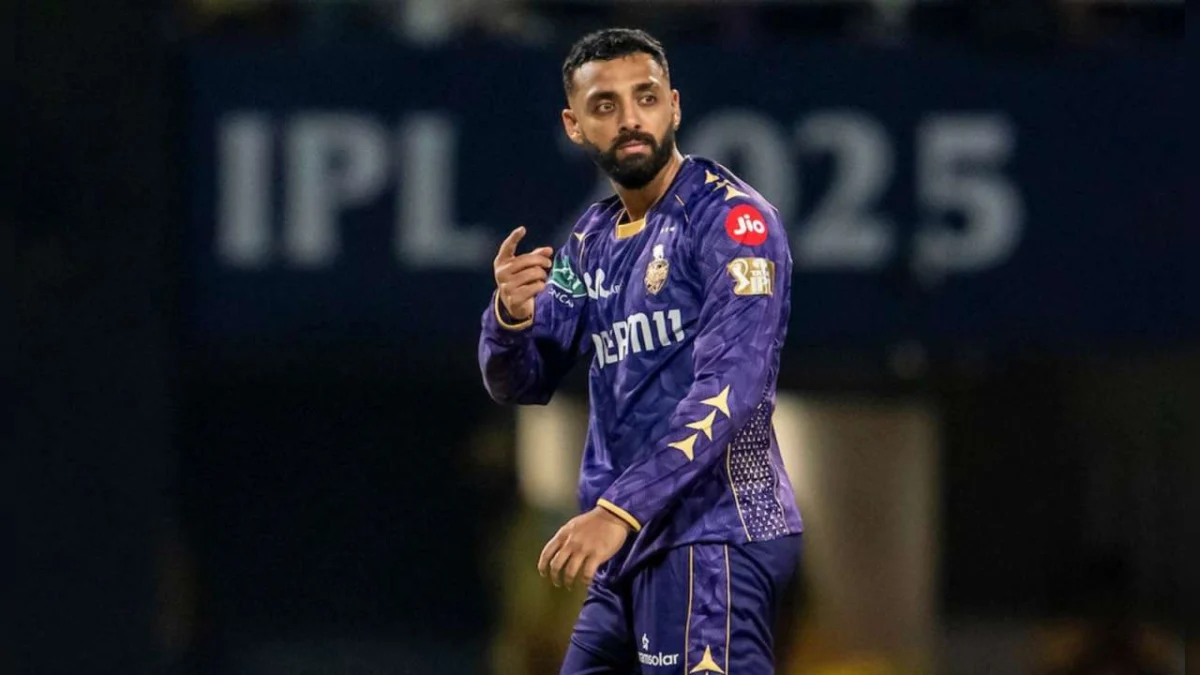
New Delhi, India – In the high-stakes, result-driven world of T20 cricket, where every ball can swing the momentum and define a player’s career, Varun Chakaravarthy offers a refreshing, almost stoic, perspective. Following a stellar performance in India’s emphatic seven-wicket victory over Afghanistan in the first T20 International at the Arun Jaitley Stadium, the enigmatic spinner has opened up about a bowling philosophy rooted in process, not outcome. This mindset, he suggests, is the bedrock of his recent resurgence, guiding him through a tumultuous period of struggle and ultimately, back into the national spotlight.
Chakaravarthy, who registered impressive figures of 1 wicket for just 16 runs from his four overs, articulated a profound detachment from the immediate highs and lows of the game. "I cannot go by results," the Kolkata Knight Riders spinner stated unequivocally. "If I go by results, I will start reacting to each and everything. If it goes my way, I will start being very happy. If it doesn’t go my way, I will become very sad." This declaration is more than just a soundbite; it’s a window into the mental fortitude required to thrive, or merely survive, in a format that offers little quarter to the faint-hearted. His ability to embrace a "good ball hit for a six" while critically analyzing a "bad ball for a wicket" highlights a nuanced approach to self-assessment that many professional athletes strive for but few truly master.
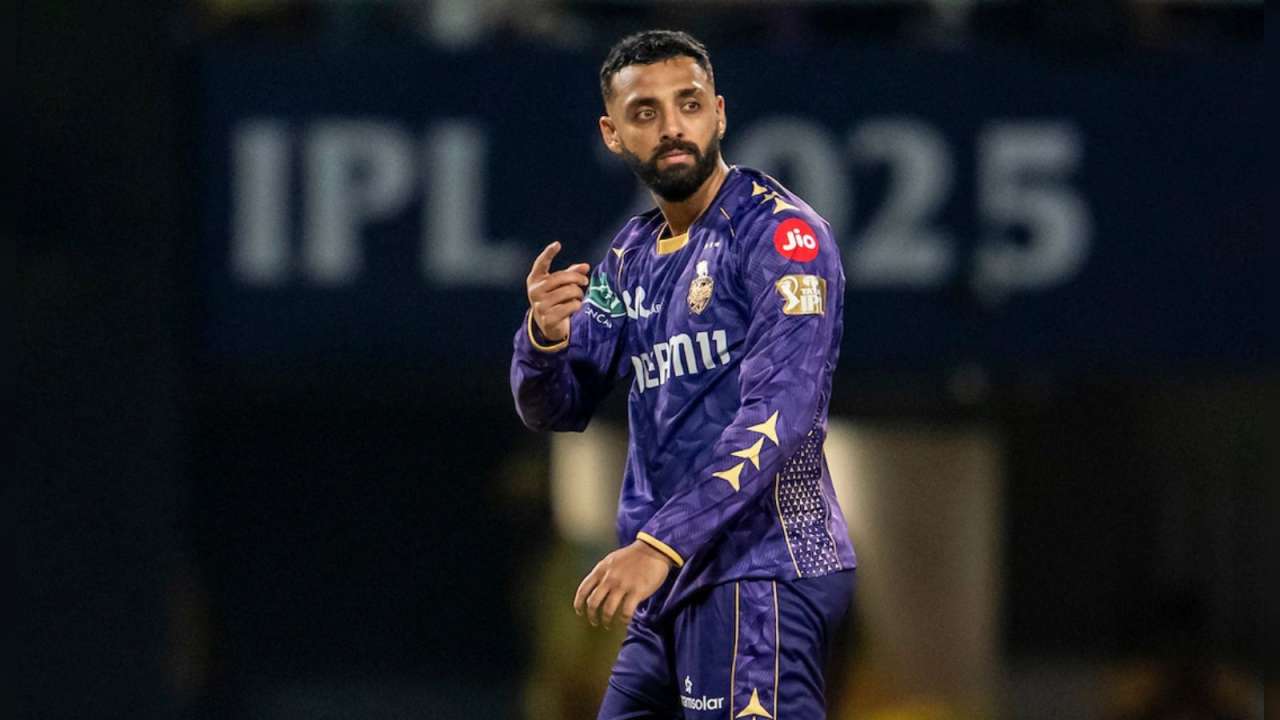
The Unpacking of a Philosophy: Process Over Results
Varun Chakaravarthy’s "process over results" mantra is a compelling counter-narrative to the prevailing sentiment in modern T20 cricket, which often prioritizes immediate impact and statistical returns. For a bowler, especially a spinner, this philosophy is particularly crucial in a format designed to favor batsmen. It implies a focus on execution, strategy, and continuous learning, rather than allowing the scorebook to dictate one’s self-worth or future approach.
Understanding "Process Over Results" in T20 Cricket
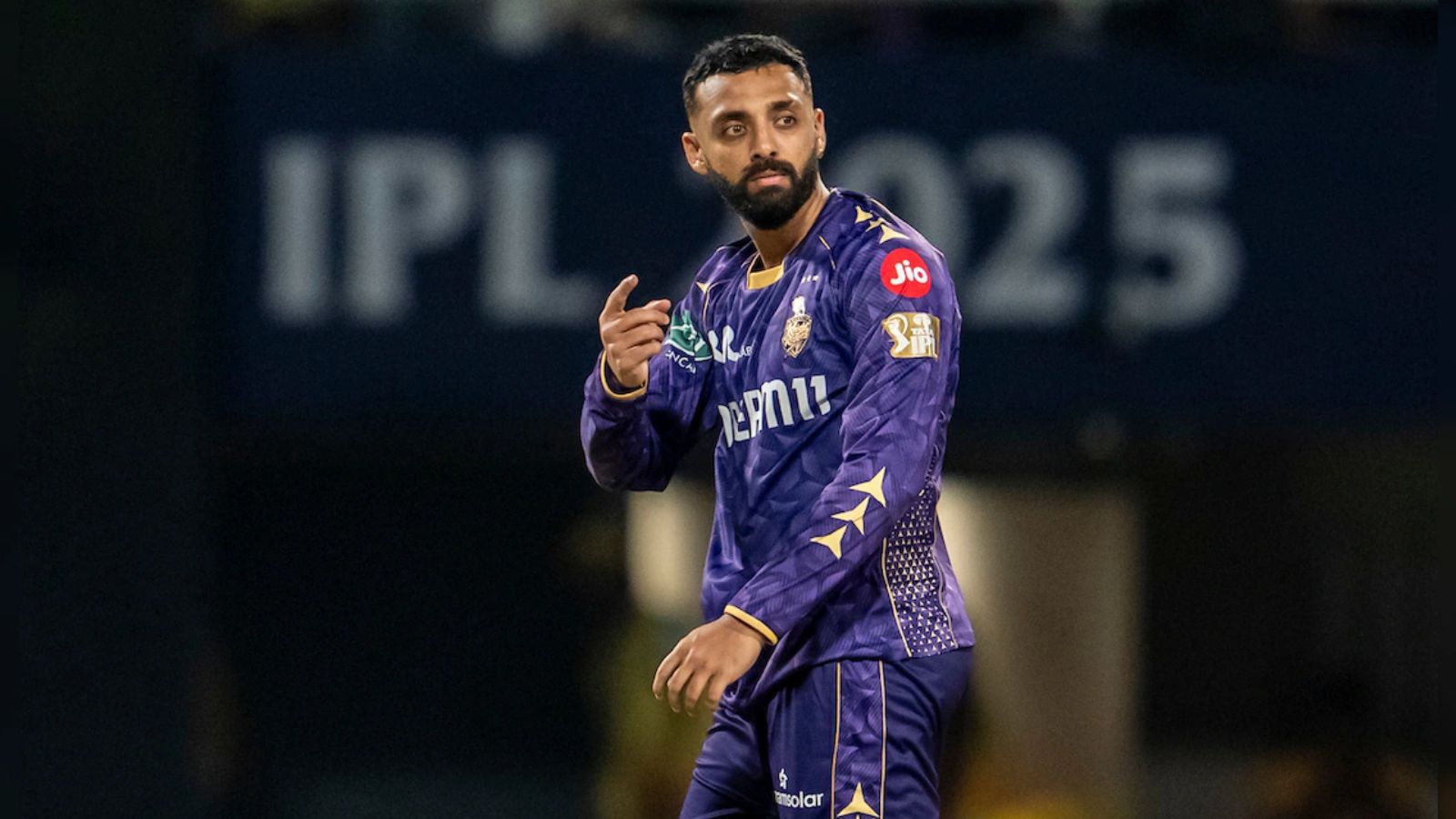
In the frantic pace of T20, where a single over can drastically alter the game’s complexion, bowlers are under immense pressure to deliver wickets and contain runs. A result-oriented mindset can lead to panic, deviation from game plans, and a reluctance to experiment. Chakaravarthy’s approach, however, suggests a deliberate focus on the controllables: the grip, the wrist position, the release point, the line, and the length. By concentrating on these elements, a bowler can maintain composure even when boundaries are flowing. It transforms cricket from a series of individual outcomes into a continuous learning cycle. For Chakaravarthy, a well-executed delivery, even if it yields a boundary, is a sign of success in the process, whereas a poorly executed delivery, even if it results in a wicket, signals an area for improvement. This distinction is vital for long-term consistency and mental resilience.
)
The Nuance of a "Good Ball Hit for Six"
The phrase "If it is a good ball and if it is hit for a six, I will always take it" might sound counter-intuitive to casual observers. However, for a spinner, especially one who relies on deception and variations like Chakaravarthy, it speaks volumes. A "good ball" in T20 cricket might mean a delivery that lands in the intended area, challenges the batsman’s technique, or executes a specific tactical plan. If a world-class batsman still manages to hit such a delivery for a six, it often implies exceptional skill from the batter, rather than a flaw in the bowler’s execution. Accepting this reality prevents self-doubt and encourages the bowler to stick to their strengths and plans. It acknowledges the inherent unpredictability of the game and the high skill level of opposition batsmen.
Self-Correction and Growth: The "Bad Ball for a Wicket" Paradox
Conversely, Chakaravarthy’s assertion, "But if it is a bad ball and it is a wicket, I have to go and work on it again," underscores his commitment to genuine improvement. It’s a testament to his analytical approach. Many bowlers might feel a sense of relief or even accomplishment after taking a wicket, regardless of the quality of the delivery. However, Chakaravarthy recognizes that a wicket off a poor ball can be a dangerous anomaly, masking underlying technical or tactical deficiencies. This self-awareness is critical for long-term success. It ensures that he doesn’t become complacent with fortuitous outcomes and continually strives to refine his craft, minimizing the margin for error and maximizing the impact of his genuine variations. This rigorous self-assessment, detached from the immediate gratification of a wicket, is what defines his growth mindset.

A Journey of Peaks and Troughs: The Enigma’s Trajectory
Varun Chakaravarthy’s career has been a rollercoaster of exhilarating highs and challenging lows, mirroring the unpredictable nature of his own bowling. His recent performance against Afghanistan, far from being an isolated incident, marks a significant turning point after a period that tested his resolve and physical endurance.
The Ascent: India’s Premier T20I Spinner
Before his recent struggles, Chakaravarthy had firmly established himself as one of India’s most exciting and effective T20I bowlers. For 18 months leading into the 2026 T20 World Cup, he was arguably India’s best spinner in the shortest format. His unique brand of ‘mystery spin’, characterized by a range of variations including the carrom ball, flipper, and slider, delivered with subtle changes in wrist action, made him incredibly difficult to pick. Batters often found themselves second-guessing, leading to false shots, dot balls, and crucial wickets. His control in the powerplay and death overs, combined with his wicket-taking ability in the middle overs, made him an invaluable asset for the national team. He was seen as a crucial component of India’s T20 World Cup aspirations, a bowler capable of stifling opposition scoring and providing breakthroughs when needed.
)
The Crucible of Struggle: 2026 T20 World Cup and IPL Ordeal
However, the latter half of 2026 proved to be a harsh reality check. The business end of the T20 World Cup saw a noticeable dip in his form. Whether it was the pressure of the big stage, opposition analysts deciphering his variations, or simply a patch of poor execution, Chakaravarthy struggled to maintain his earlier dominance. Batters seemed to be reading him better, and his economy rate, once a hallmark of his bowling, began to inflate. The confidence that had propelled him to the top seemed to waver.
This lean phase bled into the subsequent IPL season, which presented an even more daunting challenge. In his first three games for the Kolkata Knight Riders, Chakaravarthy endured a torrid time, conceding a staggering 105 runs across nine overs without picking up a single wicket. His mystery, once impenetrable, appeared to be fading, and his deliveries were being dispatched with relative ease. To compound his woes, a hairline fracture in his left foot added a physical dimension to his mental struggles. Injuries are often the silent destroyers of form, breaking rhythm and confidence. The combination of poor performance and a physical ailment created a perfect storm, pushing the 35-year-old spinner to the brink. The questions began to mount: Had batsmen finally figured him out? Was his body letting him down? Could he ever reclaim his past glory?
)
Resilience and Recovery: Navigating the Storm
Navigating such a challenging period demands immense resilience, both physical and mental. For Chakaravarthy, recovery likely involved not just medical rehabilitation for his foot but also a rigorous mental reset. This would have entailed working closely with coaches, analyzing footage, identifying technical flaws, and perhaps most importantly, reaffirming his core bowling philosophy. The decision to focus on the "process" rather than the "results" was likely a conscious choice made during this difficult phase. It provided a framework for consistent effort and improvement, insulating him from the debilitating effects of poor outcomes. It allowed him to strip away the external pressures and concentrate solely on mastering his craft, one delivery at a time. This period of introspection and hard work, away from the immediate glare of competition, was undoubtedly pivotal in forging the mindset that he now articulates so clearly.
The Afghanistan Comeback: A Statement Performance
The first T20I against Afghanistan served as the perfect platform for Varun Chakaravarthy to demonstrate the fruits of his labor and the efficacy of his process-driven philosophy. His performance was not just a statistical success; it was a powerful statement of intent and a testament to his unwavering belief.
)
Match Context and Significance
The series opener against Afghanistan was a crucial fixture for India, aiming to start their international calendar with a dominant display. For Chakaravarthy, it was an opportunity to stake his claim for a regular spot in the squad after his recent struggles. The Arun Jaitley Stadium pitch, often known for assisting spinners as the game progresses, offered a conducive environment, but the pressure of making a comeback on home soil remained immense. India, chasing a modest target, had the luxury of setting the tone, but individual performances under scrutiny often carry their own weight.
Dissecting the Spell: 4-0-16-1
Chakaravarthy’s figures of 4 overs, 0 maidens, 16 runs, and 1 wicket were exemplary in the context of T20 cricket, especially given the aggressive nature of Afghanistan’s batting lineup. His spell was characterized by impeccable control, subtle variations, and a clear game plan. He bowled tight lines, primarily targeting the stumps and limiting scoring opportunities. The slower pace on a slightly gripping surface allowed his variations to become more effective. He showcased his full repertoire, mixing his carrom ball with conventional off-breaks, rarely allowing batsmen to settle. His economy rate of 4.00 was outstanding, proving his ability to stifle scoring and build pressure, which ultimately led to a crucial breakthrough. This performance wasn’t about extravagant wickets; it was about relentless accuracy and tactical discipline, perfectly aligning with his "process" philosophy.
)
Impact on Team Dynamics
This commanding performance has significant implications for Varun Chakaravarthy’s standing within the Indian team. It not only provides him with a much-needed confidence boost but also reassures the team management of his capabilities. In a format where finding reliable wicket-taking and economical spin options is paramount, Chakaravarthy’s return to form offers a valuable asset. It complicates the selection choices, in a positive way, as India looks to finalize its squad compositions for upcoming major tournaments. His ability to perform under pressure, after a period of significant adversity, speaks volumes about his character and potential long-term value.
The Spinners’ Predicament: Varun’s Empathy
Beyond his own performance, Varun Chakaravarthy offered a moment of genuine empathy for the Afghanistan spinners, who struggled considerably against India’s formidable batting lineup. His remarks highlighted a shared understanding of the immense challenges faced by slow bowlers in the modern T20 era.
)
The Modern T20 Batting Onslaught
T20 cricket has fundamentally altered the dynamics between bat and ball. With flatter pitches, smaller boundaries, heavier bats, and a fearless generation of batsmen, bowlers, particularly spinners, are often on the back foot. Indian batsmen, known for their aggressive intent and ability to play spin exceptionally well, pose a unique threat. They are adept at using their feet, sweeping, reverse-sweeping, and hitting through the line, making it incredibly difficult for spinners to settle into a rhythm or execute their plans effectively. The margin for error is razor-thin; a slight misjudgment in line or length is often punished severely.
Afghanistan’s Spinners: A Case Study
Against the likes of Ishan Kishan and Abhishek Sharma, Afghanistan’s spinners found themselves in an unenviable position. While the specific names of Afghanistan’s struggling spinners weren’t mentioned, the general observation holds true. They were unable to contain the flow of runs, nor could they pick up crucial wickets, contributing to India’s comfortable victory. Chakaravarthy’s observation, "I was just telling someone in the dressing room that you can’t bowl spin against our batting lineup. They are just going to smack left, right and centre," underscores the sheer power and skill of India’s top order. It’s a candid admission from a fellow spinner who understands the mental and physical toll of being on the receiving end of such an onslaught.
)
A Shared Experience
Chakaravarthy’s sympathy stems from personal experience. "I’ve bowled against them myself. I know how hard it is," he remarked. This shared understanding fosters a sense of camaraderie among bowlers, recognizing the collective challenges they face in a format increasingly dominated by batsmen. It also lends credibility to his analysis, as he speaks from a position of direct knowledge, having battled against the very same aggressive batsmen in various domestic and international settings. This empathy highlights a maturity beyond mere competition, acknowledging the inherent difficulties of the craft in contemporary cricket.
Looking Ahead: Implications and Challenges
Varun Chakaravarthy’s comeback and his philosophical stance carry significant implications, not just for his own career but for India’s strategic planning and the broader narrative of mental resilience in elite sports.
)
Solidifying a Spot: The Road Ahead
For Chakaravarthy, the journey is far from over. One exceptional performance, while crucial, does not guarantee a permanent spot in the competitive Indian setup. The challenge now lies in maintaining consistency, replicating his form across different conditions, and continuing to evolve his craft. His philosophy of focusing on the process will be vital in navigating the inevitable ups and downs that lie ahead. Consistent performances will be key to solidifying his position and ensuring he remains a go-to option for the national selectors. This series against Afghanistan, with the second T20I looming, presents an immediate opportunity to build on his momentum.
India’s Fifth-Bowler Conundrum
The mention of India’s "fifth-bowler dilemma" in the upcoming second Twenty20 International points to a recurring challenge for the team. In T20 cricket, having a balanced bowling attack, including a reliable fifth bowler, is paramount. This role often falls to all-rounders or part-time options, but their effectiveness can vary. Chakaravarthy’s performance potentially eases this conundrum, offering a specialist spin option who can bowl his full quota of overs economically and with wicket-taking intent. His inclusion could free up other bowlers or allow for greater flexibility in team composition, depending on the conditions and opposition. The team management will closely observe how he performs under varying circumstances to assess his long-term viability in this crucial role.
)
The Evolving Role of Spin in T20s
Chakaravarthy’s journey also reflects the evolving role of spin in T20 cricket. Once considered primarily defensive options, spinners are now expected to be aggressors, taking wickets in all phases of the game. However, they must also possess the mental toughness to absorb pressure and deliver under duress. Mystery spinners like Chakaravarthy burst onto the scene with great success, but the constant analysis by opposition teams means they must continuously adapt and refine their skills. His "process over results" philosophy is a psychological tool that enables this continuous adaptation, allowing him to focus on perfecting his craft rather than chasing immediate, sometimes fleeting, outcomes.
Psychological Edge in Elite Sports
Beyond the boundaries of the cricket field, Chakaravarthy’s philosophy offers a compelling case study in sports psychology. In any high-pressure environment, the ability to compartmentalize performance, focus on controllable aspects, and detach from outcome-based anxieties is a hallmark of elite athletes. His approach provides a mental framework for resilience, continuous improvement, and sustained performance, making him an inspiring figure for aspiring athletes grappling with the demands of professional sport. It underscores the idea that true mastery often lies not just in physical prowess but in mental fortitude and a deep understanding of one’s own game.
)
Conclusion
Varun Chakaravarthy’s reflective insights after India’s win against Afghanistan have peeled back the layers of a cricketer who is as much a student of the game’s psychology as he is a master of its craft. His return to form, punctuated by a commanding performance, is a testament to his resilience and his unwavering belief in a process-driven approach. From the dizzying heights of being India’s premier T20I spinner to the depths of injury and loss of form, Chakaravarthy has navigated a challenging path with introspection and determination.
His philosophy — accepting a good ball hit for six, yet rigorously analyzing a bad ball that yields a wicket — encapsulates a profound understanding of self-improvement and mental discipline in the unforgiving arena of T20 cricket. As India looks to consolidate its strengths and resolve lingering team dilemmas, Chakaravarthy’s resurgence offers a timely boost. His journey serves as a powerful reminder that in the volatile world of professional sport, true success is often forged not in the fleeting triumphs, but in the unwavering commitment to the process, the relentless pursuit of perfection, and the quiet strength to learn from every experience, good or bad. The road ahead will undoubtedly present new challenges, but with his clear-eyed philosophy, Varun Chakaravarthy appears well-equipped to face them head-on, seeking not just results, but enduring mastery.
