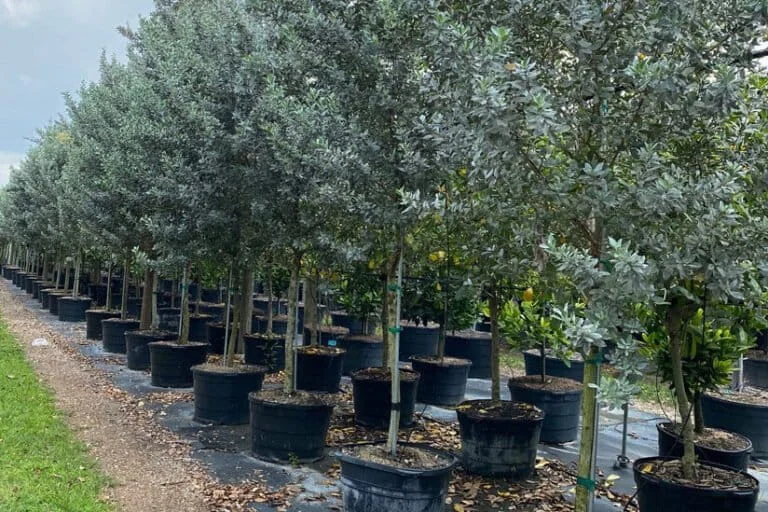
The landscape of urban India is currently undergoing a radical transformation, not through the addition of new greenery, but through the systematic removal of a species once hailed as a miracle of modern landscaping. In March 2024, the Karnataka High Court issued a significant directive to the Greater Bengaluru Authority (GBA), ordering a formal review of a Public Interest Litigation (PIL) that seeks the total eradication of Conocarpus trees from the city’s limits. This judicial intervention follows a wave of prohibitory orders across India, signaling the end of a decade-long fascination with a non-native species that has proven to be an ecological and public health liability.
Main Facts: The Botanical "Misfit" in the Indian Landscape
Conocarpus, a genus comprising primarily two species—Conocarpus erectus (buttonwood) and Conocarpus lancifolius (damask)—was introduced to India from the Gulf region. Known for its remarkable resilience, rapid growth, and aesthetic uniformity, it became the default choice for municipal authorities and private developers looking to achieve "instant" green cover.
However, the very traits that made Conocarpus attractive have led to its downfall. In August 2025, acting on a comprehensive report by the Central Empowered Committee (CEC), the Government of India issued a national advisory to all states and union territories. This advisory mandated an immediate halt to the plantation of both C. erectus and C. lancifolius. The CEC report drew startling parallels between Conocarpus and notorious invasive species like Lantana camara and Parthenium hysteroporus, categorizing it as a threat to native biodiversity and public infrastructure.
Chronology: From Miracle Tree to Environmental Outcast
The Gulf Connection (2010–2015)
The journey of Conocarpus into India began with the observation of its success in the arid, hyper-arid, and saline environments of the Middle East. Landscapers in the Gulf had utilized the tree extensively for urban greening because it could survive extreme heat and required minimal irrigation once established. Indian planners, seeking a solution for rapidly expanding urban heat islands, imported the species, assuming its hardiness would translate well to the Indian climate.
The "Haritha Haram" and Mass Proliferation (2015–2020)
The species found its strongest foothold in Telangana and Gujarat. In July 2015, the Telangana government launched Telangana Ku Haritha Haram, a flagship afforestation program aimed at increasing the state’s green cover from 24% to 33%. Under pressure to meet ambitious survival and growth targets, local municipalities and panchayats turned to Conocarpus.
![Why is Conocarpus being banned across states? [Explainer]](https://imgs.mongabay.com/wp-content/uploads/sites/30/2026/07/18120118/51866377640_3033476cd1_o-825x800.jpg)
Because the tree grew "straight and tall" and demanded little maintenance, it became a "people’s movement." While not officially raised in many government nurseries initially, the species spread through private trade and local enthusiasm. By 2016, ecologists in Ahmedabad, such as Dipani Sutaria, began noticing the trees replacing native flora in the city’s dry, arid outskirts. By 2020, Conocarpus had become a dominant monoculture in newly developed urban zones across Gujarat and Telangana.
The Tide Turns (2023–2025)
The ecological consequences became impossible to ignore by late 2023. Gujarat became the first state to officially ban the planting of Conocarpus in September 2023. This was followed by similar prohibitory orders in Telangana, Andhra Pradesh, and Tamil Nadu. The culmination of this resistance was the 2025 national advisory from the Government of India, which effectively blacklisted the species on a federal level.
Supporting Data: The Ecological and Public Health Cost
The backlash against Conocarpus is rooted in three primary areas of concern: biodiversity loss, public health risks, and infrastructure damage.
1. The "Green Desert" Effect
Ecologists refer to Conocarpus stands as "green deserts." This is due to the presence of allelochemicals—compounds such as tannins found in high concentrations in the tree’s leaves. When these leaves fall and decay, they alter the soil chemistry, inhibiting the germination and growth of surrounding vegetation.
In Ahmedabad, researchers noted the systematic displacement of vital native species, including:
![Why is Conocarpus being banned across states? [Explainer]](https://imgs.mongabay.com/wp-content/uploads/sites/30/2026/07/18121510/Conocarpus_Ahmedabad-768x512.jpeg)
- Salvadora persica (Jhar)
- Salvadora oleoides
- Manilkara hexandra (Palai)
- Albizia lebbeck (Siris tree)
These native trees provide food and habitat for local fauna, whereas Conocarpus offers negligible support to Indian avian or insect populations.
2. Public Health and Allergenic Pollen
A major point of contention is the tree’s pollen. International studies, particularly from Iran and Pakistan, have flagged Conocarpus pollen as a significant respiratory irritant. One study in southwestern Iran found a 58.6% reactivity rate among patients already suffering from asthma and allergic rhinitis.
While some Indian experts, such as A.B. Singh (formerly of the CSIR Institute of Genomics and Integrative Biology), note that specific Indian data is still lacking, the precautionary principle has taken over. The potential for the tree to exacerbate urban asthma rates, especially during flowering seasons, has made it a liability for city health departments.
3. Infrastructure and the "Hydrotropism" Problem
The root system of the Conocarpus is unusually aggressive, an evolutionary adaptation to the low-nutrient, brackish coastal soils of its native range in the Red Sea and tropical Americas. In an urban setting, these roots exhibit extreme hydrotropism—they "seek out" water with surgical precision. This frequently leads to:
- Penetration and blockage of underground sewer and water pipes.
- Cracking of telecommunication ducting.
- Damage to the foundations of boundary walls and pavements.
Biologists compare its destructive potential to that of the Peepal tree (Ficus religiosa), but with a faster growth rate that accelerates the timeline of damage.
![Why is Conocarpus being banned across states? [Explainer]](https://imgs.mongabay.com/wp-content/uploads/sites/30/2026/07/18122447/conocarpus-collage-768x512.jpg)
Official Responses: A Fragmented Regulatory Landscape
The response from Indian authorities has evolved from enthusiastic adoption to cautious regulation and, finally, to outright prohibition.
- Gujarat & Telangana: These states have been the most proactive. After the 2023 ban in Gujarat, the state began active removal programs in cities like Ahmedabad. In Telangana, Mohan Pargaien, a retired Principal Chief Conservator of Forests (PCCF), noted that while the ban has been effective in stopping new plantations, the existing trees remain a challenge to manage.
- Karnataka: The Greater Bengaluru Authority (GBA) has historically used Conocarpus for median greening and vertical walls. Following the High Court’s intervention in March 2024, the GBA has reportedly halted new plantings. However, the Karnataka Forest Department, led by PCCF B.P. Ravi, has clarified that they never officially advocated for the species, placing the responsibility on civic bodies and private nurseries.
- Central Government: The August 2025 national advisory remains the strongest legal instrument against the species. By comparing it to invasive weeds like Parthenium, the government has cleared the way for states to use disaster management or environmental protection funds to eradicate the species.
Implications: The Future of Urban Greening in India
The Conocarpus crisis serves as a cautionary tale for the "industrialization of greening." As landscaping expert Dipani Sutaria points out, the tree was a "perfect product"—it followed strict design orders, grew uniformly, and looked good in architectural renders. However, urban planning that prioritizes aesthetics over ecology is increasingly viewed as unsustainable.
The Shift to Native Restoration
The primary implication of the Conocarpus ban is a renewed focus on native "Miyawaki" forests and traditional arboriculture. Experts are calling for a return to hardy native species that can withstand the Indian climate without the negative externalities of invasive exotics.
The Challenge of Eradication
While planting has been banned, millions of Conocarpus trees already line Indian highways and residential complexes. Removing them poses a logistical and financial challenge. Furthermore, there is the risk of "greenwashing" by private nurseries that may still stock the species under different names to exhaust their inventory.
Conclusion: A Lesson in Ecological Humility
The Karnataka High Court’s directive and the subsequent national ban represent a maturing of India’s environmental policy. It marks a shift from simply counting the "number of saplings planted" to evaluating the "quality of the ecosystem created." As cities like Bengaluru and Ahmedabad begin the arduous process of weeding out the "green desert," the focus must remain on scientific risk assessment.
![Why is Conocarpus being banned across states? [Explainer]](https://imgs.mongabay.com/wp-content/uploads/sites/30/2026/07/18124527/Screenshot-2026-07-18-123656-768x512.jpg)
As plant biologist Achyut Banerjee suggests, the "emerging invader" status of Conocarpus should serve as a blueprint for how India treats other ornamental imports. In the race to green our concrete jungles, the Conocarpus saga proves that the fastest-growing solution is rarely the most sustainable one. The future of India’s urban canopy now depends on reclaiming the space once held by the Siris, the Jhar, and the Palai—trees that belong to the soil, rather than those merely passing through it.