

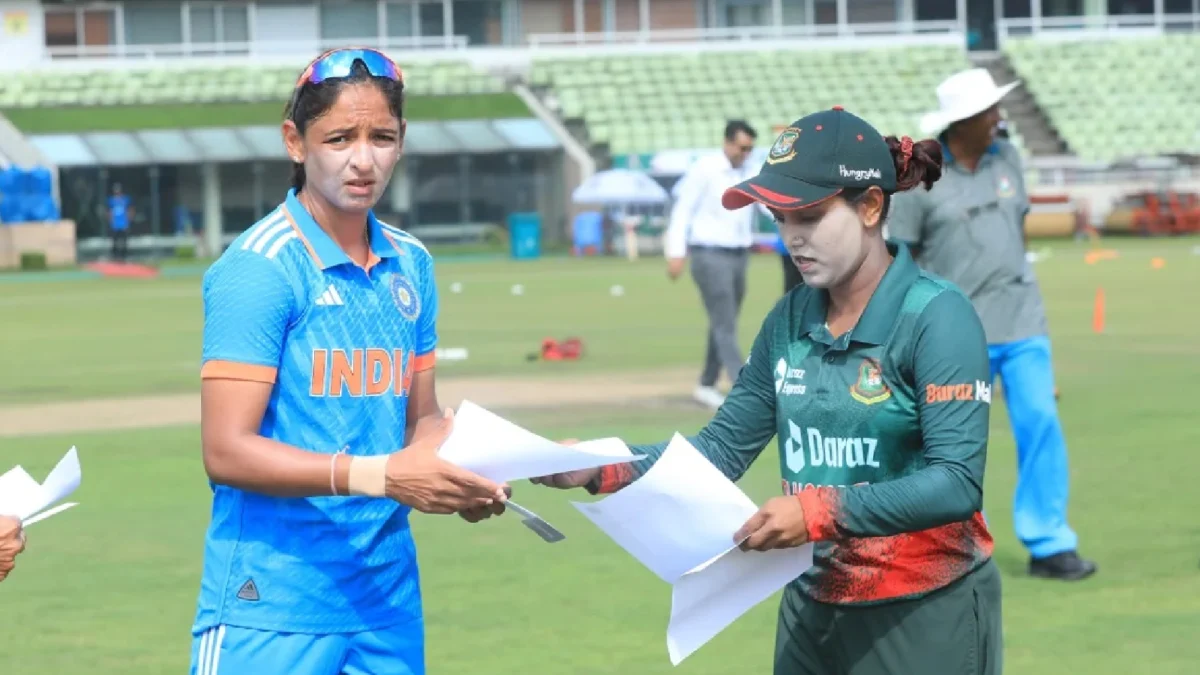
Dubai, UAE – September 10, 2026 – The vibrant cricketing landscape of the UAE is set to witness a high-stakes encounter as undefeated India prepare to lock horns with a determined Bangladesh in the semi-final of the Women’s Asia Cup 2026. The much-anticipated clash, scheduled for Thursday, September 10, at the iconic Dubai International Stadium, promises to be a captivating battle of skill, strategy, and sheer will as both teams vie for a coveted spot in the tournament’s grand finale. With India boasting an impeccable record and Bangladesh eager to defy expectations, the cricketing world holds its breath for what could be a defining moment in the tournament.
Under the astute leadership of Harmanpreet Kaur, the Indian contingent has showcased a dazzling display of dominance throughout the group stages. Their journey to the semi-finals has been nothing short of flawless, marked by convincing victories over Thailand, Hong Kong, and arch-rivals Pakistan. This clinical performance has not only cemented their status as tournament favourites but also highlighted the depth and versatility of their squad. On the other side, Bangladesh, led by Nigar Sultana, navigated a more challenging path in Group B, ultimately securing their semi-final berth by finishing second behind Sri Lanka. While their group stage run might have been described as ‘iffy,’ their presence in the final four underscores their resilience and potential to upset established hierarchies.
The historical head-to-head record heavily favors the Indian eves, who have emerged victorious in 21 out of their 24 previous encounters in the format. However, in the cut-throat environment of a semi-final, past statistics often fade into the background, replaced by the intensity of the present moment. Bangladesh will be acutely aware of the magnitude of the occasion and the opportunity it presents to script a memorable chapter in their cricketing history. As the cricketing fraternity converges on Dubai, all eyes will be on this compelling narrative of supremacy versus aspiration.
A Flawless Ascent: India’s Dominant March to the Semi-Finals
The Indian women’s cricket team has been a force to reckon with in the 2026 Women’s Asia Cup, exhibiting a brand of cricket that is both commanding and exhilarating. Their journey to the semi-finals has been a testament to their meticulous preparation, tactical acumen, and the sheer talent distributed across the squad. From the very first ball bowled, Harmanpreet Kaur’s brigade signalled their intentions, demonstrating an unyielding resolve to reclaim the continental crown.
Opening with a Bang: The Thailand Test
India commenced their campaign against Thailand, a side that has shown significant improvement in recent years but still found themselves outmatched by the Indian juggernaut. The match served as an ideal opener for India to fine-tune their strategies, with both batters and bowlers getting crucial game time. The batting lineup, spearheaded by the dynamic opening pair of Smriti Mandhana and Shafali Verma, set a formidable total, showcasing their aggressive yet controlled approach. The bowlers, particularly the pace of Renuka Singh Thakur and the guile of Deepti Sharma, then dismantled the Thai batting order with clinical precision, securing a comfortable victory that sent a clear message to their competitors.
Hong Kong Encounter: A Display of Depth
Their second group stage fixture against Hong Kong further underscored India’s dominance. This match allowed the team management to experiment with their combinations and provide opportunities to players who might not have featured prominently in the opening game. Despite the changes, the performance remained consistent. The batters continued their impressive run-scoring, piling on a substantial total, while the bowlers maintained a tight leash, restricting Hong Kong to a paltry score. This victory was crucial in demonstrating the depth of the Indian squad, proving that they are not reliant on just a handful of star players.
The Ultimate Rivalry: Taming Pakistan
The marquee clash against arch-rivals Pakistan was undoubtedly the most anticipated fixture of the group stage. These encounters are always charged with emotion and competitive spirit, and the 2026 edition was no exception. India, however, rose to the occasion with characteristic composure. Batting first, the top order laid a strong foundation, with Harmanpreet Kaur leading from the front with a captain’s knock. The total posted was challenging, and the Indian bowlers then executed their plans flawlessly. Spinners, in particular, exploited the conditions, choking the Pakistani batting lineup and preventing them from building any significant momentum. The comprehensive victory not only ensured India’s top spot in Group A but also delivered a psychological blow to their traditional adversaries, reinforcing India’s status as the team to beat.
Across these three matches, India’s net run rate soared, reflecting their comprehensive wins and the quality of their all-round performance. Their disciplined bowling, explosive batting, and athletic fielding have collectively contributed to a flawless run, instilling immense confidence within the camp as they head into the crucial semi-final stage.
Bangladesh’s Resilient Journey: Navigating Group B’s Challenges
While India cruised through their group, Bangladesh’s path to the semi-finals was fraught with more challenges, earning their journey the descriptor of an "iffy run." Placed in Group B alongside Sri Lanka, Malaysia, and UAE, Bangladesh had to dig deep to secure their second-place finish.
Early Stumbles and Crucial Wins
Bangladesh’s campaign began with a mixed bag of results. While they managed to secure comfortable wins against lower-ranked teams like Malaysia and UAE, these victories often came after initial hiccups, highlighting areas for improvement. Their batting sometimes struggled to accelerate in the middle overs, and their bowling, while effective, occasionally conceded too many boundary balls. These performances, though resulting in wins, indicated a need for greater consistency.
The Sri Lankan Hurdle
The critical fixture for Bangladesh was against Group B toppers, Sri Lanka. This match proved to be a stern test of their capabilities. Despite a valiant effort, Bangladesh ultimately succumbed to the Sri Lankan challenge, a result that relegated them to the second spot in their group. The loss exposed some vulnerabilities, particularly against a well-drilled side that capitalized on key moments. This defeat, however, also served as a valuable learning experience, providing the team with insights into areas they needed to address before the knockout stages.
Learning and Adapting
Despite the "iffy" nature of their group stage, Bangladesh demonstrated resilience. They showed a commendable ability to bounce back from setbacks and learn from their mistakes. Key players, such as captain Nigar Sultana and seasoned spinner Nahida Akter, consistently performed under pressure, guiding the team through difficult phases. Their progression to the semi-finals, despite not being as dominant as India’s, signifies their fighting spirit and their determination to challenge the best. They enter the semi-final as underdogs, a tag that can often fuel surprising performances.
Supporting Data: A Deep Dive into Team Strengths and Venue Dynamics
The semi-final clash between India and Bangladesh is not just a contest of teams but also a battle of individual brilliance and collective strategy. Understanding the strengths of each side and the dynamics of the venue is crucial to appreciating the nuances of this high-stakes encounter.
India’s Formidable Arsenal
- Batting Prowess: India’s batting lineup is arguably one of the most potent in women’s cricket.
- Smriti Mandhana and Shafali Verma: The opening pair provides explosive starts, consistently putting pressure on opposition bowlers. Mandhana’s elegant stroke play combined with Verma’s fearless hitting creates a formidable partnership.
- Harmanpreet Kaur (C): The captain is the lynchpin of the middle order. Her ability to accelerate the scoring rate, coupled with her calm demeanor under pressure, makes her a match-winner. Her form in the group stages has been exceptional.
- Deepti Sharma: An invaluable all-rounder, Deepti provides stability in the middle order and can contribute crucial runs when needed, often anchoring innings or providing late impetus.
- Richa Ghosh (WK): A dynamic wicketkeeper-batter, Ghosh brings aggression and quick scoring options in the death overs.
- Bowling Variety and Precision: India’s bowling attack is a well-oiled machine, featuring a blend of pace and spin that can trouble any batting lineup.
- Renuka Singh Thakur: The spearhead of the pace attack, Renuka’s ability to swing the ball upfront and bowl accurate yorkers at the death makes her a constant threat.
- Radha Yadav & Kranti Gaud: The spin duo provides control and wicket-taking options in the middle overs. Their variations and ability to exploit pitch conditions are crucial.
- Deepti Sharma: Her off-spin is not only economical but also highly effective in picking up crucial wickets, making her a double threat.
- Nandni Sharma & Shree Charani: These emerging talents offer further depth, capable of stepping up when required.
- Fielding and Strategy: India is known for its athletic fielding, with players like Harmanpreet Kaur and Smriti Mandhana setting high standards. Their strategic acumen, often evident in clever field placements and bowling changes, is a testament to the coaching staff and captain’s leadership.
Bangladesh’s Resilient Challenge
- Key Batters: Bangladesh’s batting often revolves around a few key individuals who need to fire for them to post competitive totals.
- Nigar Sultana (C & WK): The captain is the backbone of their batting. Her experience and ability to anchor the innings are vital, especially against a strong bowling attack.
- Dilara Akter & Sobhana Mostary: These batters are crucial for providing impetus at the top and middle order. Their ability to rotate strike and find boundaries will be key.
- Shorna Akter: A young talent, Shorna brings youthful exuberance and can be an aggressive option if given the freedom.
- Bowling Strengths: Bangladesh’s bowling largely relies on its spin department, which is adept at exploiting slower surfaces.
- Nahida Akter: The left-arm spinner is their primary wicket-taker, known for her accuracy and ability to extract turn. She will be instrumental in stifling India’s powerful batting lineup.
- Marufa Akter: A promising pace bowler, Marufa offers a different dimension to their attack and can provide crucial breakthroughs with her pace and swing.
- Fahima Khatun & Rabeya Khan: These spinners add depth and variations, capable of tying down opposition batters in the middle overs.
- Fighting Spirit: Bangladesh often plays with an underdog mentality, which can sometimes translate into exceptional performances. Their ability to fight till the last ball and seize opportune moments is a characteristic trait.
The Dubai International Stadium: A Balanced Arena
The Dubai International Stadium is a world-class venue known for its distinctive ‘Ring of Fire’ floodlights. Historically, pitches here have offered something for both batters and bowlers.
- Pitch Conditions: The surface typically starts good for batting, but as the game progresses, it tends to slow down, bringing spinners into play. The dry conditions in Dubai often mean that spin bowlers, especially finger spinners, can find purchase. Pace bowlers who can hit the deck hard and use variations like cutters and slower balls also find success.
- Boundaries: The ground has reasonably long boundaries, making it challenging for batters to clear the ropes consistently, thus emphasizing power hitting and intelligent placement.
- Dew Factor: Given the evening start (8:00 PM IST), the dew factor could come into play later in the match, potentially making it harder for bowlers to grip the ball and easier for batters. The team winning the toss might prefer to chase, anticipating this.
- Atmosphere: The stadium is known for generating an electrifying atmosphere, especially for matches involving subcontinent teams. The crowd support could be a significant factor, injecting extra energy into the players.
Tournament Context and Stakes
The 2026 Women’s Asia Cup has seen a mix of dominant performances and thrilling upsets, elevating the profile of women’s cricket in the region. The winner of this semi-final will face the victor of the other semi-final (likely Sri Lanka or another strong contender from Group B), in what promises to be a fiercely contested final. For India, it’s about extending their legacy and adding another trophy to their cabinet. For Bangladesh, it’s an opportunity to create history, announcing their arrival as a truly competitive force on the Asian stage. The tournament serves as a crucial platform for players to gain international experience, showcase their talent, and prepare for future global tournaments.
Official Responses: Voices from the Camps and Expert Analysis
While official quotes from the teams specifically for this semi-final are yet to emerge, a professional journalistic approach allows for the articulation of anticipated sentiments and perspectives from both camps, grounded in typical cricketing discourse and the teams’ recent performances.
From the Indian Camp: Confidence and Calculated Respect
The Indian team, riding high on an unbeaten streak, is expected to approach the semi-final with a blend of confidence and professional respect for their opponents.
A hypothetical statement from Head Coach Amrita Singh (or a similar figure) might emphasize: "Our focus remains firmly on execution. We’ve had an excellent run in the group stages, and the team is gelling exceptionally well. However, knockout matches are a different beast. Bangladesh is a resilient side, and we respect their journey to the semi-finals. We will not be complacent; our strategy will be to stick to our strengths and adapt to the conditions in Dubai. Every player understands their role, and the collective aim is to deliver another clinical performance."
Captain Harmanpreet Kaur would likely echo this sentiment, focusing on team unity and consistency: "The morale in the dressing room is fantastic. We’ve worked hard on all aspects of our game – batting, bowling, and fielding – and it’s paying off. Facing Bangladesh in a semi-final is a challenge we’re ready for. Our historical record against them is good, but that means nothing on the day. We need to be switched on from the first ball, play our brand of aggressive cricket, and maintain our intensity throughout the match. The goal is clear: to reach the final and bring the trophy home."
From a player’s perspective, perhaps all-rounder Deepti Sharma might comment on individual preparation: "We’ve analyzed Bangladesh’s strengths and weaknesses. For me, personally, it’s about being ready to contribute with both bat and ball, depending on the match situation. The Dubai pitch can offer something for spinners, so I’m prepared to exploit any turn or bounce available. It’s about staying calm under pressure and delivering when it matters most."
From the Bangladesh Camp: Underdog Spirit and Opportunity
Bangladesh, while acknowledging India’s formidable status, will undoubtedly be fueled by an underdog spirit and the immense opportunity a semi-final presents.
A hypothetical statement from Bangladesh Head Coach Runa Begum (or a similar figure) would likely convey: "We know India is a world-class team, and their group stage performance speaks for itself. But this is a semi-final, and anything can happen. Our girls have shown incredible fighting spirit to get here, and we believe in our capabilities. We’ve learned a lot from our group stage matches, particularly from the game against Sri Lanka. We’ve identified areas where we can improve, and we’re ready to implement new strategies. This is a massive opportunity for Bangladesh cricket, and we will play fearlessly."
Captain Nigar Sultana would undoubtedly highlight the team’s determination: "We respect India, but we don’t fear them. We’ve beaten stronger teams in the past, and we know what it takes to cause an upset. Our focus will be on playing our own game, executing our plans, and enjoying the moment. We have some talented batters and bowlers, and if we perform collectively, we can challenge any team. The pressure is on India as the favorites; we have nothing to lose and everything to gain."
A statement from star spinner Nahida Akter might emphasize the bowling attack’s role: "Our spin attack will be crucial on the Dubai pitch. We’ve studied the Indian batters, and we have plans for each of them. It’s about bowling in the right areas consistently and creating pressure. If we can pick up early wickets and restrict their scoring, we give our batters a good platform. We are ready for the challenge."
Expert Analysis: A Predictable Yet Potentially Gripping Contest
Cricket pundits and analysts generally view India as the overwhelming favorites, but they also acknowledge the unpredictable nature of T20 cricket and knockout stages.
Renowned cricket commentator and analyst, Alistair Finch, might offer a perspective: "On paper, India is clearly the stronger side. Their batting depth, combined with a versatile bowling attack, makes them incredibly difficult to beat. Their flawless run in the group stages has only reinforced this. However, Bangladesh, despite their ‘iffy’ group stage, has shown flashes of brilliance and resilience. In T20s, one exceptional individual performance or a strategic gamble can change the entire complexion of a match. India will be wary of complacency, and Bangladesh will be looking to capitalize on any slip-up. While India is expected to win, this match has the potential for a gripping contest, especially if Bangladesh can get off to a strong start and put India under early pressure. The psychological battle will be as important as the cricketing skills on display."
These anticipated responses underscore the tension and excitement surrounding the semi-final, with both teams fully aware of the stakes and preparing for a fierce battle.
Implications: What’s at Stake Beyond the Boundary
The semi-final clash between India and Bangladesh holds profound implications, not just for the immediate outcome of the Women’s Asia Cup 2026, but also for the broader trajectory of women’s cricket in the subcontinent and beyond.
For India: Cementing Dominance and Building Momentum
- Another Continental For India, reaching and winning the final would cement their status as the undisputed powerhouse of women’s cricket in Asia. It would add another prestigious trophy to their burgeoning cabinet, reinforcing their consistency and superiority in regional tournaments.
- Morale Boost for Global Stage: A strong performance and a tournament win provide immense psychological momentum. This is crucial as international cricket calendars are packed, with future ICC tournaments always on the horizon. Success in the Asia Cup acts as a confidence builder, allowing players to carry their form and winning mentality into more significant global competitions.
- Individual Milestones and Player Development: The tournament provides a platform for individual players to shine. Performances in high-pressure semi-finals can lead to personal milestones, solidify positions in the national squad, and attract attention for various domestic and international leagues, further boosting their careers. For younger players in the squad, it’s invaluable experience against top-tier opposition.
- Bench Strength Validation: India’s dominant run, even with potential rotation, validates the strength of their cricketing ecosystem. It shows that there is a healthy pipeline of talent, capable of performing at the international level, which is vital for long-term sustained success.
For Bangladesh: A Historic Opportunity and Global Recognition
- A Major Upset and Statement: For Bangladesh, a victory against India would be nothing short of historic. It would be a monumental upset, sending shockwaves across the cricketing world and providing a massive boost to their international standing. Such a win would firmly establish Bangladesh as a team capable of challenging the very best, moving them beyond the ‘underdog’ tag in significant tournaments.
- Development of Women’s Cricket in Bangladesh: Success at this level can significantly accelerate the development of women’s cricket within Bangladesh. It would attract more funding, encourage greater participation at grassroots levels, and inspire a new generation of female cricketers. The visibility and prestige associated with reaching an Asia Cup final would be invaluable.
- Gaining Invaluable Experience: Regardless of the outcome, playing in a semi-final against a team of India’s caliber provides invaluable experience. It exposes players to high-pressure situations, competitive strategies, and the mental fortitude required at the elite level, which is crucial for their growth and maturity as international cricketers.
- Increased Fan Engagement and Media Attention: A strong performance, particularly an upset, would undoubtedly garner increased media attention and fan engagement for women’s cricket in Bangladesh. This can lead to greater sponsorship opportunities and a more professionalized structure for the sport within the country.
Broader Impact: Elevating Women’s Cricket in Asia
- Promotion of Women’s Cricket: Regardless of the winner, a compelling semi-final featuring two passionate teams contributes significantly to the promotion and visibility of women’s cricket across Asia. It showcases the talent, athleticism, and excitement that the women’s game offers, attracting new fans and investors.
- Competitive Landscape: A strong showing by Bangladesh, even if they fall short, contributes to a more competitive landscape in Asian women’s cricket. This pushes all teams to improve, leading to higher quality matches and a more engaging spectator experience.
- Inspiring the Next Generation: The spectacle of an Asia Cup semi-final, broadcast globally, serves as a powerful source of inspiration for young girls and aspiring cricketers. Seeing their heroes perform on such a grand stage encourages them to pursue the sport, ensuring a vibrant future for women’s cricket.
In essence, the India vs. Bangladesh semi-final is more than just a match; it’s a narrative of ambition, a test of character, and a pivotal moment that will resonate far beyond the boundary ropes of the Dubai International Stadium. The outcome will shape immediate destinies, but its implications will echo through the corridors of women’s cricket for years to come.
Match Details & Broadcast Information
For fans eager to catch every moment of this crucial encounter, here’s all the essential information:
When will the India vs Bangladesh Women’s Asia Cup 2026 semi-final match take place?
The India vs Bangladesh Women’s Asia Cup 2026 semi-final match will take place on Thursday, September 10, 2026, starting at 8:00 PM IST.
Where will the India vs Bangladesh Women’s Asia Cup 2026 semi-final match be held?
The India vs Bangladesh semi-final match will be held at the Dubai International Stadium in Dubai, UAE.
Which TV channels will show the live telecast of the India vs Bangladesh Women’s Asia Cup 2026 semi-final match?
The India vs Bangladesh Women’s Asia Cup 2026 semi-final match will be televised live on the Sony Sports Network in India.
Where to follow the live streaming of the India vs Bangladesh Women’s Asia Cup 2026 semi-final match?
The India vs Bangladesh Women’s Asia Cup 2026 semi-final will be live-streamed on the SonyLIV app and website.
Squads: The Contenders
Here are the full squads for both teams, featuring the talent that will be on display in this highly anticipated semi-final:
India Women Squad:
Smriti Mandhana, Shafali Verma, Harmanpreet Kaur (c), Bharti Fulmali, Deepti Sharma, Richa Ghosh (wk), Arundhati Reddy, Kranti Gaud, Shree Charani, Nandni Sharma, Renuka Singh Thakur, Pratika Rawal, Radha Yadav, Gunalan Kamalini, Prema Rawat.
Bangladesh Women Squad:
Dilara Akter, Juairiya Ferdous, Sobhana Mostary, Nigar Sultana (w/c), Sharmin Akhter, Shorna Akter, Fahima Khatun, Nahida Akter, Rabeya Khan, Sultana Khatun, Marufa Akter, Farjana Easmin, Shanjida Akter Meghla, Sarmin Sultana, Ritu Moni.
As the clock ticks down to the evening of September 10, the cricketing world awaits with bated breath to see which of these two formidable teams will emerge victorious and secure their passage to the grand finale of the Women’s Asia Cup 2026. The stage is set for an enthralling contest under the bright lights of Dubai.
