

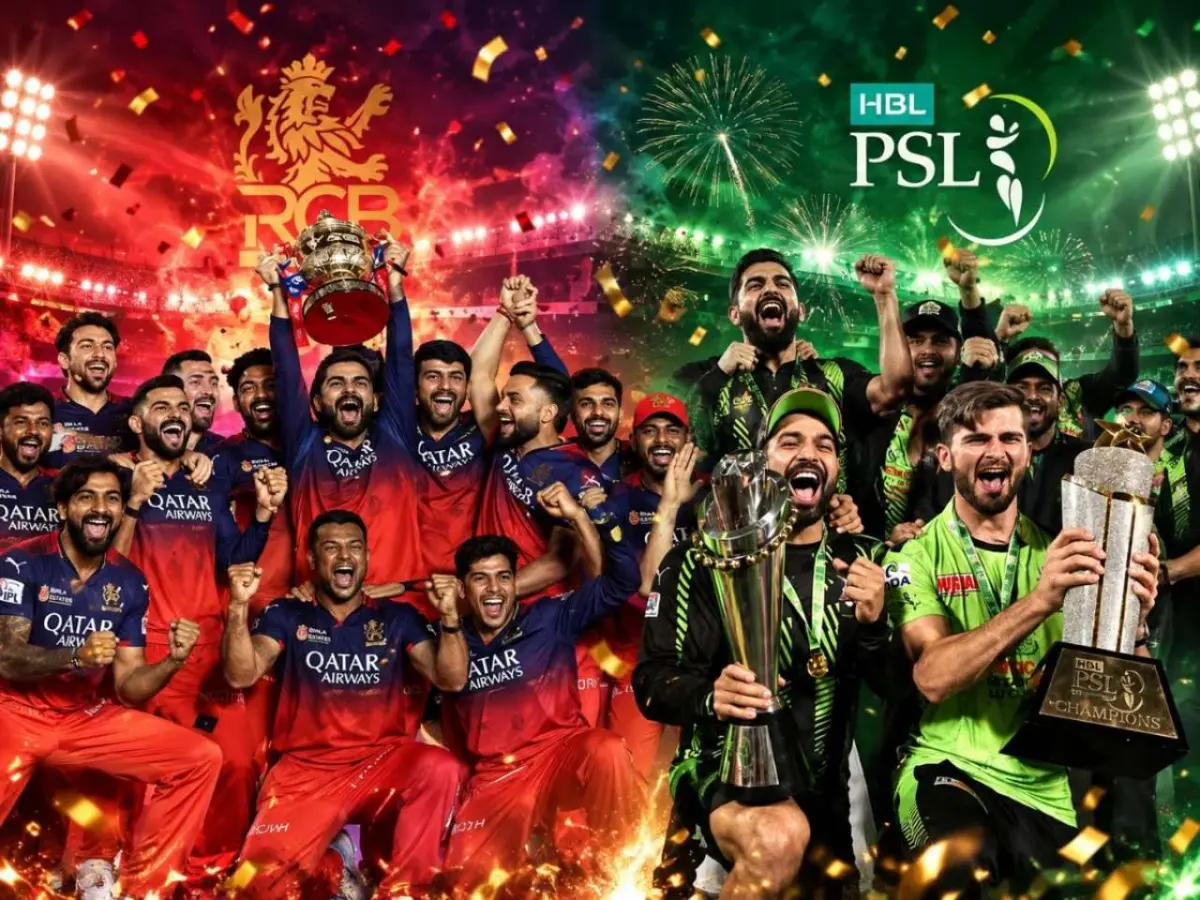
Lahore, Pakistan – October 8, 2026 – The cricketing world is bracing for another high-stakes showdown, not just on the field, but in the highly competitive realm of franchise league scheduling. The Pakistan Cricket Board (PCB) has officially confirmed the dates for the 12th edition of the HBL Pakistan Super League (PSL), slated to run from March 18 to May 2, 2027. This decision, following extensive deliberations, sets the stage for a direct and significant overlap with the Indian Premier League (IPL), a scenario that has become an annual fixture since 2025 and poses a formidable dilemma for a host of global cricketing superstars.
The confirmed schedule reignites the perennial debate among players, agents, and national boards: which league takes precedence when two of the most lucrative and popular T20 tournaments vie for the same pool of elite talent? For many overseas professionals, the choice between the financially dominant IPL and the rapidly growing, passion-fueled PSL will be a career-defining decision, impacting not only their wallets but also their international commitments and personal brand. The impending clash underscores the intensifying global scramble for cricketing talent and viewership, as T20 leagues proliferate worldwide, each striving to establish its unique footprint in a crowded calendar.
Main Facts: The Imminent Collision
The 12th edition of the Pakistan Super League, one of the premier T20 leagues globally, has been meticulously planned to commence on March 18, 2027, and conclude on May 2, 2027. This announcement, made by the Pakistan Cricket Board, follows a series of strategic meetings and consultations with key stakeholders, including franchise owners and their representatives. The specified window firmly places PSL 12 in direct competition with the Indian Premier League, which traditionally occupies the April-May slot in the international cricketing calendar. While the IPL’s exact 2027 dates are yet to be officially declared, its established operational window virtually guarantees a substantial period of overlap with the PSL.
This scheduling conflict is not merely a logistical inconvenience; it represents a significant economic and strategic challenge for both leagues. For the PSL, it means competing for crucial advertising revenue during a period when corporate marketing budgets might already be heavily allocated towards the IPL. More critically, the overlap forces a stark choice upon the cream of international cricketing talent. Players such as Rashid Khan, David Warner, Trent Boult, and other sought-after T20 specialists, who are vital to the competitive balance and star power of both tournaments, will be compelled to commit exclusively to one league for the duration of the overlap. The financial disparities between the IPL, known for its astronomical player contracts, and other T20 leagues, albeit rapidly closing, often tilt the scales in favour of India’s flagship tournament, creating a challenging environment for the PSL to secure top-tier foreign talent for its entire duration.
The decision to maintain this March-May window, despite earlier discussions about shifting the PSL to January, signifies a calculated risk by the PCB. It underscores their confidence in the PSL’s growing brand appeal and its ability to attract significant talent and viewership, even in the face of direct competition. The 12th season promises to build on the successes of its predecessors, particularly the expanded 11th edition, which saw the introduction of new franchises and a heightened level of competition.
Chronology: The Road to the 2027 Overlap
The confirmation of PSL 12’s dates is the culmination of a detailed planning process by the Pakistan Cricket Board, reflecting both strategic intent and practical considerations within the global cricket landscape.
)
The Decision-Making Process: London Deliberations
The crucial decision regarding the PSL 12 schedule was solidified during the PSL Governing Council meeting held in London on September 1, 2026. This high-level gathering brought together all key stakeholders, including the PCB leadership, representatives from each of the eight franchises, and other relevant officials. The choice of London as the venue for this pivotal meeting highlights the international aspirations and reach of the PSL, facilitating discussions with globally dispersed stakeholders.
During these extensive talks, a multitude of factors were weighed. The primary objective was to identify a window that would maximize the league’s commercial viability, player availability, and fan engagement. Franchise owners, keen to secure the best possible talent and advertising revenue, actively participated in shaping the final decision. The consensus reached affirmed the March 18 to May 2, 2027, slot, signaling a commitment to a calendar that has, by necessity, become accustomed to navigating the behemoth that is the IPL.
Historical Context of the Clash: A New Normal Since 2025
The scheduling overlap between the PSL and IPL is not a novel phenomenon but has, as the PCB noted, "become standard since 2025." This trend is a direct consequence of the explosive growth of franchise T20 cricket worldwide. Over the past decade, the IPL’s unparalleled success has inspired numerous other nations to launch their own domestic T20 leagues, each aiming to replicate its commercial model and cricketing spectacle. Leagues such as Australia’s Big Bash League (BBL), South Africa’s SA20, the UAE’s ILT20, and the Caribbean Premier League (CPL) have all emerged, creating an increasingly congested global calendar.

The IPL, being the oldest, most established, and by far the wealthiest of these leagues, effectively dictates a significant portion of the international cricket calendar. Its traditional April-May window is a prime slot, coinciding with favourable weather conditions in India and a period of high commercial activity. As other leagues have sought to find their own optimal windows, clashes have become inevitable. The PSL, while striving to carve out its unique identity and attract top talent, has found itself in a situation where its preferred window often intersects with the IPL’s established dates. This ‘new normal’ reflects the complex challenges national boards face in balancing domestic league ambitions with the realities of a globalized cricket economy dominated by a few powerful entities.
Previous Considerations: The January Dilemma
Before the final confirmation, there were considerable discussions within the PCB and among stakeholders about potentially shifting the PSL to an earlier slot, specifically January. The primary motivation behind this proposed move was to circumvent the direct clash with the IPL and, crucially, to avoid the post-Ramazan advertising slump. Pakistan, being a predominantly Muslim nation, experiences a significant shift in consumer behaviour and advertising expenditure during and immediately after the holy month of Ramazan. Advertisers typically allocate a substantial portion of their marketing budgets around religious festivals and public holidays, often leaving less available for large-scale sporting events in April and May.
Moving the PSL to January would have offered several advantages:
)
- Reduced Competition for Talent: A January window would have minimized the overlap with the IPL, theoretically making it easier to secure a wider pool of top international players for the entire tournament.
- Optimized Advertising Revenue: By avoiding the post-Ramazan period, the league could have potentially attracted a larger share of corporate advertising budgets, boosting its financial returns.
- Unique Calendar Slot: A January slot would have given the PSL a relatively unique position in the global T20 calendar, potentially reducing competition for viewership from other major leagues.
However, the idea of a January shift ultimately did not materialize. The reasons for this decision were multifaceted. It’s likely that logistical complexities, potential clashes with other existing leagues (such as the BBL or SA20, which also run in January), and the established rhythm of the Pakistani cricketing calendar played a role. Furthermore, the PCB’s eventual choice to stick with the March-May window suggests a strategic confidence in the PSL’s ability to thrive even in a competitive environment, relying on its growing brand strength and dedicated fan base. This decision reflects a long-term vision where the PSL aims to firmly establish its preferred operational window, rather than constantly adjusting to avoid overlaps.
Supporting Data: The Broader T20 Ecosystem
The scheduling clash between the PSL and IPL is a microcosm of the larger, increasingly complex global T20 cricket ecosystem. Understanding the dynamics of this environment provides crucial context for the decisions made by the PCB.
The Global T20 Landscape: A Proliferation of Leagues
The last decade has witnessed an unprecedented proliferation of T20 franchise leagues across the globe. What began with the IPL in 2008 has expanded into a global network, including the Big Bash League (Australia), Caribbean Premier League (West Indies), Bangladesh Premier League, SA20 (South Africa), ILT20 (UAE), Major League Cricket (USA), and various other regional competitions. Each league offers a unique flavour, different playing conditions, and varying levels of financial incentives.
)
This expansion has created an insatiable demand for top-tier T20 specialists – players who can consistently perform under pressure, deliver explosive hitting, execute clever bowling variations, and provide dynamic fielding. The limited pool of truly elite, internationally recognized talent means that multiple leagues are often vying for the services of the same individuals. This competitive landscape puts immense pressure on players, agents, and national boards to navigate complex contracts, no-objection certificates (NOCs), and increasingly tight travel schedules. The result is a player-centric market where a select few can command multi-league contracts worth millions, while lesser-known players still find opportunities to play professional cricket year-round.
Player Economics and Loyalty: The IPL’s Magnetic Pull
At the heart of the PSL-IPL clash lies the dilemma for players. The Indian Premier League stands as the undisputed financial powerhouse of T20 cricket. Its massive broadcasting deals, robust sponsorship, and immense viewership translate into player salaries that are significantly higher than those offered by most other leagues. A top international player can earn several million US dollars for a single IPL season, dwarfing the remuneration from other tournaments.
This financial disparity creates a powerful magnetic pull. For many players, especially those nearing the end of their international careers or those not centrally contracted by their national boards, the IPL offers unparalleled financial security. While players often express a love for the game and an enjoyment of various leagues, economic realities frequently dictate their choices. Loyalty to a particular league, or even a specific franchise, can be tested when faced with a multi-million dollar offer from the IPL versus a smaller, albeit still substantial, contract from another league like the PSL.
)
The PCB’s challenge is to ensure the PSL remains attractive enough to secure a critical mass of these star players. The league’s reputation for competitive cricket, passionate crowds, and its unique cultural experience are significant draws, but they must continuously contend with the sheer financial might of the IPL. This ongoing tug-of-war for talent shapes the competitive balance and commercial appeal of both tournaments.
Broadcasting Rights and Sponsorship: The Battle for Eyeballs and Ad Spend
The overlap has profound implications for broadcasting rights and sponsorship revenues. Both the PSL and IPL generate substantial income from selling television and digital streaming rights, as well as from corporate sponsorships. When the two leagues run concurrently, they are directly competing for the same pool of advertisers and, crucially, for viewer attention.
For broadcasters, the simultaneous airing of two major T20 leagues can be a double-edged sword. While it provides more content, it can also dilute viewership for individual matches. Advertisers, with finite budgets, must decide where to invest for maximum reach and impact. The IPL, with its larger domestic market and global reach, often commands premium advertising rates. The PSL, while growing rapidly in viewership, especially within Pakistan and among the Pakistani diaspora, faces an uphill battle to capture a comparable share of global ad spend during a direct clash.
)
The PCB’s strategy, therefore, must focus on differentiating the PSL experience, highlighting its unique selling points, and demonstrating compelling return on investment for sponsors, even in a competitive environment. The success of PSL 11, which saw "record-breaking broadcasts," provides a strong foundation, but sustaining and growing this momentum during a clash requires innovative marketing and content strategies.
PSL’s Growth Trajectory: From Strength to Strength
Despite the scheduling challenges, the Pakistan Super League has demonstrated remarkable growth and resilience since its inception. The 11th edition, held in the immediate past, marked a significant milestone, expanding the league to eight teams. This expansion saw the introduction of two new franchises, the Hyderabad Kingsmen and the Rawalpindiz, joining the established powerhouses of Islamabad United, Karachi Kings, Lahore Qalandars, Multan Sultans, Peshawar Zalmi, and Quetta Gladiators. The increased number of teams not only provided more opportunities for domestic and international players but also broadened the league’s geographical reach and fan base within Pakistan.
PSL 11 was hailed as a resounding success, delivering "unforgettable games, packed stadiums, record-breaking broadcasts." The tournament culminated in a thrilling final where Peshawar Zalmi secured their second title, defeating the newcomers Hyderabad Kingsmen in a closely contested encounter. This growth trajectory is crucial for the PCB, as it validates the league’s commercial model and its ability to consistently deliver high-quality cricketing entertainment. The PSL’s increasing global footprint, driven by its competitive matches and the passionate support of its fans, positions it as a significant player in the T20 landscape, even as it navigates the complexities of international scheduling.
)
IPL’s Dominance: The Benchmark of T20 Cricket
Conversely, the Indian Premier League continues to be the undisputed benchmark for T20 franchise cricket globally. Its colossal financial might, unparalleled viewership, and ability to attract the world’s absolute top talent make it a formidable force. The IPL’s established brand, deep pockets, and strategic partnerships allow it to operate with a degree of autonomy in scheduling, knowing that most players will prioritize its contracts. The league’s success has not only transformed Indian cricket but has also had a profound impact on the global game, influencing playing styles, player development, and the commercialization of the sport. While the PSL aims to challenge and grow, it operates in the shadow of the IPL’s immense gravitational pull, a reality that informs every strategic decision made by the PCB regarding its premier T20 product.
Official Responses: Confidence Amidst Competition
The PCB leadership has expressed a clear sense of optimism and determination, acknowledging the competitive landscape while focusing on the PSL’s inherent strengths and future potential. Their statements reflect a strategic approach to navigate the challenges posed by the overlapping schedule.
PCB Chairman Mohsin Naqvi’s Vision: Pushing Boundaries
PCB Chairman Mohsin Naqvi exuded confidence in the future of the league, emphasizing the intent to build on past successes. "HBL PSL 11 proved to everyone what this league can do – unforgettable games, packed stadiums, record-breaking broadcasts," Naqvi stated. His remarks highlighted the tangible achievements of the previous season, setting a high bar for the upcoming 12th edition.
)
Looking ahead, Naqvi promised, "PSL 12 is going to push things even further." This statement implies a commitment to continuous improvement, not just in cricketing quality but also in terms of fan experience, broadcast innovation, and commercial appeal. The chairman’s vision suggests an ambition to solidify the PSL’s position as a world-class sporting event, capable of standing its ground against any competition. "We’re on track for another outstanding season and can’t wait to see all eight franchises go head-to-head again," he added, underscoring the competitive excitement and team rivalries that are central to the PSL’s appeal. His words project an image of a confident board, fully invested in the league’s potential, despite the external challenges.
PSL CEO Salman Naseer’s Strategic Outlook: A New Era
PSL CEO Salman Naseer echoed the chairman’s sentiments, providing a more granular insight into the league’s immediate strategic moves. "Last season completely changed what people expect from the PSL, and we plan to exceed those expectations in 2027," Naseer affirmed, setting an ambitious tone for the upcoming season. He positioned the schedule confirmation as merely "step one" in a series of crucial pre-tournament activities.
Naseer outlined the forthcoming phases that will keep fans engaged and the league’s machinery in motion: "direct signings, player retentions, trades, and the auction are all going to keep things moving and keep fans buzzing." These processes are vital for team building, roster management, and generating pre-season hype. They are also critical junctures where the availability of overseas stars, impacted by the IPL overlap, will become a central theme. The CEO’s focus on these operational details demonstrates a proactive approach to managing the league’s pipeline of talent and fan interest.
)
He concluded with an impassioned declaration, encapsulating the spirit of the PSL: "Eight teams, eight lineups ready to outdo each other, and millions of fans in Pakistan and around the world already counting down the days. Naye Daur ka Aghaaz ho chuka hai. The new era is here." This phrase, meaning "The dawn of a new era has begun," speaks to the league’s ongoing evolution, its growing stature, and its aspiration to redefine expectations for T20 cricket in Pakistan and beyond. It’s a statement of intent, signaling that the PSL is not just surviving but thriving and setting its sights on a transformative future.
Implied IPL Stance: Business as Usual
While the original article provides no direct statement from the Indian Premier League or the BCCI regarding the PSL’s confirmed dates, the IPL’s operational history and market position offer a clear implied stance. The IPL, as the dominant force in T20 franchise cricket, operates on its own established calendar and strategic imperatives. Its April-May window is sacrosanct, having been meticulously cultivated over more than a decade to maximize viewership, sponsorship, and player availability.
From the IPL’s perspective, other leagues adjusting to its schedule, or facing an overlap, is an inherent consequence of its market leadership. The league is unlikely to alter its long-standing operational window to accommodate other tournaments. Its focus remains on maintaining its pre-eminent status, attracting the best global talent, and delivering a high-quality product to its vast audience. Therefore, the PCB’s decision to maintain its March-May slot, despite the overlap, is a move made within a framework where the IPL’s schedule is largely a fixed variable for other T20 leagues.
)
Implications: Navigating a Congested Future
The confirmed PSL 12 dates and the resultant clash with the IPL carry significant implications across various facets of the cricketing world, from player welfare to the future structure of the sport.
Player Management Challenges: Burnout and Choices
For the players, particularly the highly sought-after international T20 specialists, the overlap presents an unenviable challenge. They face the difficult decision of choosing between potentially lucrative contracts, often from competing leagues that demand full commitment for their respective durations. This choice is not merely financial; it can impact their relationships with franchises, their national team commitments, and their physical and mental well-being.
Playing year-round in multiple T20 leagues, interspersed with international duties, leads to an increasingly congested schedule. The physical toll of constant travel, adapting to different conditions, and the mental pressure of high-stakes games can contribute to player burnout. National boards and player associations are increasingly concerned about managing player workloads and ensuring their top athletes remain fit and fresh for international assignments. The PSL-IPL clash intensifies this challenge, forcing players and their agents to make strategic decisions about their availability, potentially leading to missed opportunities or strained relationships.
)
Fan Engagement and Viewing Habits: A Divided Attention
The simultaneous operation of two major T20 leagues also impacts fan engagement. Cricket enthusiasts, especially those who follow both Pakistani and Indian cricket, or simply love high-quality T20 action, will find their attention divided. While digital streaming platforms offer the flexibility to watch multiple matches, the immediacy and shared experience of live viewing for marquee games can be diluted.
Broadcasters and digital platforms will compete fiercely for viewership metrics. This competition can drive innovation in content delivery, pre- and post-match analysis, and fan interaction. However, it also means that neither league might achieve its full potential viewership during the overlapping period, as fans split their time or prioritize one over the other based on team loyalty, player preferences, or perceived quality of competition.
Future of T20 Cricket: Towards a Global Calendar?
The recurring clashes between major T20 leagues underscore a larger, systemic issue in international cricket: the absence of a truly coordinated global calendar. Unlike football, which has a more structured international schedule, cricket’s calendar is fragmented, with national boards and private leagues often operating independently.
)
This situation raises questions about the long-term sustainability of the current model. Will T20 cricket eventually consolidate around a few dominant leagues, or will the proliferation continue? There is a growing call from players, administrators, and fans for a more harmonized schedule that allows for distinct windows for international cricket and major T20 leagues, minimizing overlaps and player conflicts. The PSL-IPL clash serves as a potent reminder of the urgent need for a unified approach to scheduling that respects the integrity of both international and franchise cricket, potentially under the aegis of the International Cricket Council (ICC).
The rise of ‘franchise cricket specialists’ – players who prioritize T20 league commitments over international representation – is another implication. While this offers new career paths, it also poses a threat to the traditional structure of international cricket, potentially diminishing the quality and appeal of bilateral series.
Impact on Pakistan Cricket: Sustaining Momentum
For Pakistan cricket, the PSL’s success, even amidst these challenges, is vital. The league provides a crucial platform for domestic talent development, exposes young Pakistani cricketers to international standards, and injects significant revenue into the national cricketing ecosystem. By consistently delivering a high-quality product, the PCB aims to elevate the profile of Pakistani cricket globally and foster a vibrant domestic circuit.
)
The decision to maintain the March-May window, despite the IPL overlap, reflects a strategic resolve to establish the PSL as a permanent fixture in the global calendar, on its own terms. This confidence, bolstered by the success of PSL 11, suggests a long-term vision for the league’s growth and its central role in the future of Pakistan cricket. The ongoing challenge will be to balance this ambition with the practical realities of player availability and commercial competition.
Economic Impact: The Battle for Sponsorship and Investment
Finally, the economic implications extend beyond just player salaries and broadcasting rights. The overlap intensifies the battle for corporate sponsorship and foreign investment. Companies looking to associate with cricket’s global appeal will be weighing their options carefully. The PSL’s ability to attract and retain major sponsors, especially international brands, will be crucial for its continued financial health and growth. In a competitive market, strong domestic viewership, innovative marketing, and consistent on-field excellence become even more critical factors in securing investment.
As the countdown to March 18, 2027, begins, the cricketing world watches with bated breath. The 12th edition of the Pakistan Super League promises not only exhilarating cricket but also another chapter in the evolving saga of T20 global dominance, where choices for players and strategies for boards are becoming increasingly complex.
