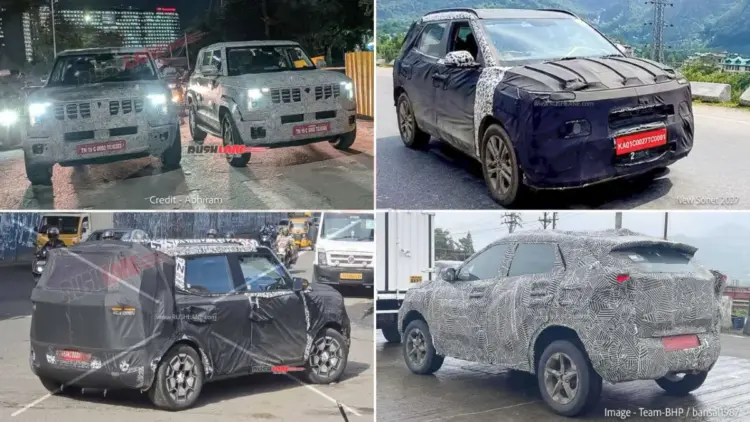
The Indian automotive landscape is currently undergoing a seismic shift, driven primarily by the B-segment—specifically, the sub-4-meter (sub-4m) SUV category. This segment, carved out by unique tax regulations that incentivize compact footprints without compromising ground clearance or "SUV-lite" aesthetics, has become the primary battleground for market share. As we look toward the 2027–2028 horizon, the competition is set to intensify to unprecedented levels.
With a flurry of new generation models, strategic facelifts, and the entry of global disruptors, the sub-4m space is no longer just about affordability; it is about the democratization of luxury, safety, and multi-energy powertrains. The following report provides an in-depth analysis of the ten most anticipated sub-4m SUVs slated for release by early 2028.
1. The Domestic Titans: Mahindra and Tata’s Strategic Revisions
Mahindra Vision S (The "Scorpio Sport" Speculation)
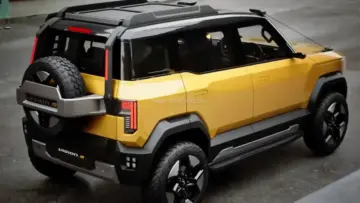
Mahindra & Mahindra, a brand synonymous with rugged SUVs, is preparing to fill a critical gap in its portfolio with a project currently known as the Vision S. Speculated to be branded as the Scorpio S or Scorpio Sport, this vehicle represents a departure from Mahindra’s traditional ladder-frame architecture in this segment.
Built on the sophisticated NU_IQ platform, the Vision S will be a monocoque SUV designed to offer car-like handling with the "butch" styling the Scorpio brand is famous for. Technical insiders suggest this will be a "multi-energy" vehicle, capable of housing petrol, diesel, and fully electric (EV) drivetrains. This flexibility is crucial as India transitions toward stricter emission norms. The interior is expected to debut a new cabin philosophy for Mahindra’s compact range, featuring high-resolution twin screens and a more premium material palette to rival the likes of the Tata Nexon.
Tata Nexon: The Next-Generation Evolution
Tata Motors currently leads the sub-4m segment, but with the Next-Gen Nexon slated for 2027, the company aims to redefine the benchmark. While the 2023 facelift brought significant cosmetic changes, the 2027 model is expected to be a "ground-up" revision.

Engineers are reportedly focusing on structural optimizations to address one of the few criticisms of the current model: rear-seat packaging. By altering the roofline and pillar structures, Tata aims to provide significantly more headroom and a more airy cabin feel. Drawing inspiration from recent design studies like the Aeris, the new Nexon will likely feature a more minimalist, tech-heavy dashboard. It will continue to be a pillar of Tata’s "Power of Choice" strategy, offering ICE, EV, and potentially CNG options from day one.
2. The Market Leaders: Maruti Suzuki and Toyota’s Incremental Excellence
Maruti Suzuki Fronx Facelift
Maruti Suzuki’s Fronx has been a runaway success, successfully blending the premium appeal of the Baleno with SUV styling. By 2027, the vehicle will receive its first major Facelift.
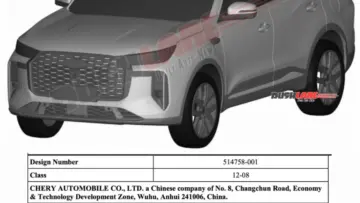
Spy shots of test mules indicate that the aesthetic changes will be concentrated on the front fascia—featuring a revised grille and updated LED signatures. However, the real story lies in the equipment list. To counter the rising feature-richness of Korean rivals, Maruti is expected to introduce Level-2 ADAS (Advanced Driver Assistance Systems), blind-spot monitoring, and ventilated front seats. These additions are aimed at maintaining the Fronx’s position as a premium yet value-driven alternative to traditional boxy SUVs.
Toyota Taisor Facelift
Following the successful partnership between Suzuki and Toyota, the Toyota Urban Cruiser Taisor will mirror the updates seen on the Fronx. As a badge-engineered sibling, the Taisor facelift will focus on Toyota-specific styling cues—likely inspired by the global Yaris Cross—while adopting the same technological upgrades, such as the ADAS suite and enhanced safety features. This ensures that Toyota maintains its footprint in the high-volume sub-4m segment without the massive R&D costs of a bespoke platform.
3. The Korean Sophistication: Kia and Hyundai’s Tech Offensive
Kia Sonet: The New Generation
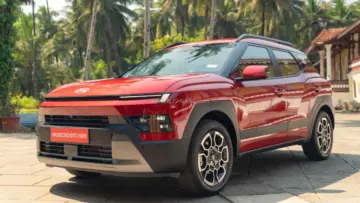
After a successful facelift in 2024, the Kia Sonet is preparing for its second generation. Historically, Kia has used the Sonet to introduce "segment-first" features, and the 2027-2028 model is expected to continue this trend.

The next-gen Sonet will likely adopt an even more aggressive "Opposites United" design language. Structural updates are expected to improve crash safety ratings to meet evolving Bharat NCAP standards. Inside, consumers can expect a "wraparound" cockpit feel with dual 10.25-inch or larger screens, augmented reality navigation, and a more sophisticated ADAS implementation than the current camera-based system.
Hyundai Ioniq P: The Dedicated Electric Disruptor
Hyundai is taking a radical approach by introducing the Ioniq P. Unlike the Venue or the Exter, the Ioniq P is not an electrified version of an existing ICE car. It is a dedicated sub-4m EV.
Part of Hyundai’s global push toward electrification, the Ioniq P (name speculative) will feature a unique "Parametric Pixel" design language. By utilizing a dedicated EV platform, Hyundai can push the wheels to the corners, offering interior space comparable to vehicles in a segment above. This vehicle is positioned to be a flagship for the sub-4m EV space, focusing on long-range capabilities and ultra-fast charging—a direct challenge to the Tata Nexon EV.
4. The Global Contenders: European and Japanese Expansion
Honda’s Long-Awaited Entry
For years, Honda’s absence in the sub-4m SUV space has been a point of contention for brand loyalists. The company has finally confirmed a bespoke sub-4m SUV for the Indian market.
While Honda traditionally tests its vehicles in Japan or Thailand first, rumors suggest that Indian road testing has already commenced under heavy camouflage. This SUV is expected to leverage the platform of the Amaze but with a significantly reinforced suspension and a high-set seating position. Given Honda’s recent focus, a strong hybrid (e:HEV) variant could be the "X-factor" that sets this vehicle apart from its turbocharged rivals.

Renault Bridger: The Kiger’s Rugged Sibling
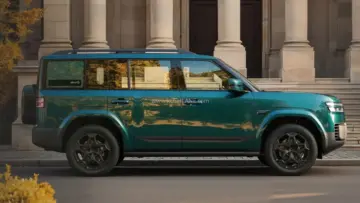
Renault India is set to expand its portfolio with the Bridger, a production version of the Bridger Concept. Positioned above the Kiger, the Bridger will be built on the RGMP platform—the same architecture that underpins the upcoming new-gen Duster.
The Bridger is designed for those who find the Kiger too "crossover-like." It will feature more traditional, upright SUV proportions, higher ground clearance, and a more robust AWD-mimicking traction control system. This move allows Renault to play in the premium end of the sub-4m segment while keeping the Kiger as the entry-level volume driver.
Volkswagen’s MQB A0 IN Play
Following the launch of the Skoda Kylaq, Volkswagen is poised to introduce its own version of a sub-4m SUV. Utilizing the heavily localized MQB A0 IN platform, the VW version is expected to prioritize "German Build Quality" and driving dynamics.
There is internal debate within VW whether to simply rebadge the Kylaq or bring in the VW Tera (a model sold in South American markets). Regardless of the nomenclature, the VW offering will likely feature the 1.0L TSI engine, known for its performance, and a cleaner, more understated aesthetic compared to the more flamboyant designs of its competitors.
5. The Wildcard: VinFast’s Vietnamese Ambition
VinFast VF5 (2nd Gen / India-Spec)
The most intriguing entry comes from Vietnam. VinFast has committed billions to an Indian manufacturing plant in Tamil Nadu, and the VF5 is their spearhead.

Recent sightings of a heavily revised VF5 on Indian soil suggest either a second-generation model or an India-specific overhaul. The VF5 will be a pure electric play, aimed squarely at the Tata Punch EV and MG Windsor. With a completely redesigned interior and a focus on "smart city" features, VinFast aims to use the VF5 to establish itself as a high-tech, premium EV alternative before moving into larger segments.
Supporting Data and Market Landscape
The drive toward these ten models is supported by several key market indicators:
- Sales Volume: The sub-4m SUV segment currently accounts for nearly 25% of total passenger vehicle sales in India. By 2027, this is projected to grow to 30% as first-time car buyers skip hatchbacks entirely.
- Taxation: The 12% GST bracket for sub-4m cars (with specific engine sizes) compared to the 28% (plus cess) for larger SUVs remains the primary driver for manufacturer investment in this specific footprint.
- Safety Regulations: The 2027 timeline aligns with the expected implementation of stricter safety norms and potential mandates for six airbags and electronic stability control (ESC) across all trims, explaining why many of these models are "next-gen" rather than simple facelifts.
Official Responses and Industry Outlook
While many manufacturers remain tight-lipped about specific launch dates, official statements from Honda Cars India and VinFast have confirmed that the sub-4m segment is their highest priority for 2027. Tata Motors executives have hinted that the "Nexon brand will continue to evolve to meet the aspirations of a digital-first generation," reinforcing the shift toward the tech-heavy interiors expected in the next generation.
Industry Analysts suggest that the 2027–2028 period will mark the "Great Consolidation." Brands that fail to offer a multi-energy platform (ICE + EV) or fail to integrate Level-2 ADAS will likely see a rapid decline in market share as consumer expectations in India have decoupled from price points, moving instead toward "value-per-feature."
Implications for the Consumer
For the Indian car buyer, the 2027–2028 window represents a golden era of choice. The arrival of these ten models means:

- Better Safety: Standardized 5-star safety aspirations across brands.
- Premium Interiors: Features once reserved for 30-lakh SUVs (ventilated seats, 360-degree cameras, ADAS) becoming standard in the 10–15 lakh bracket.
- Energy Diversity: A shift away from a "petrol-only" mindset toward sophisticated hybrids and dedicated EVs.
The sub-4m SUV is no longer just a "small car made to look big." By 2028, it will be the primary vehicle for the Indian middle class, packed with global-standard technology and engineering.