

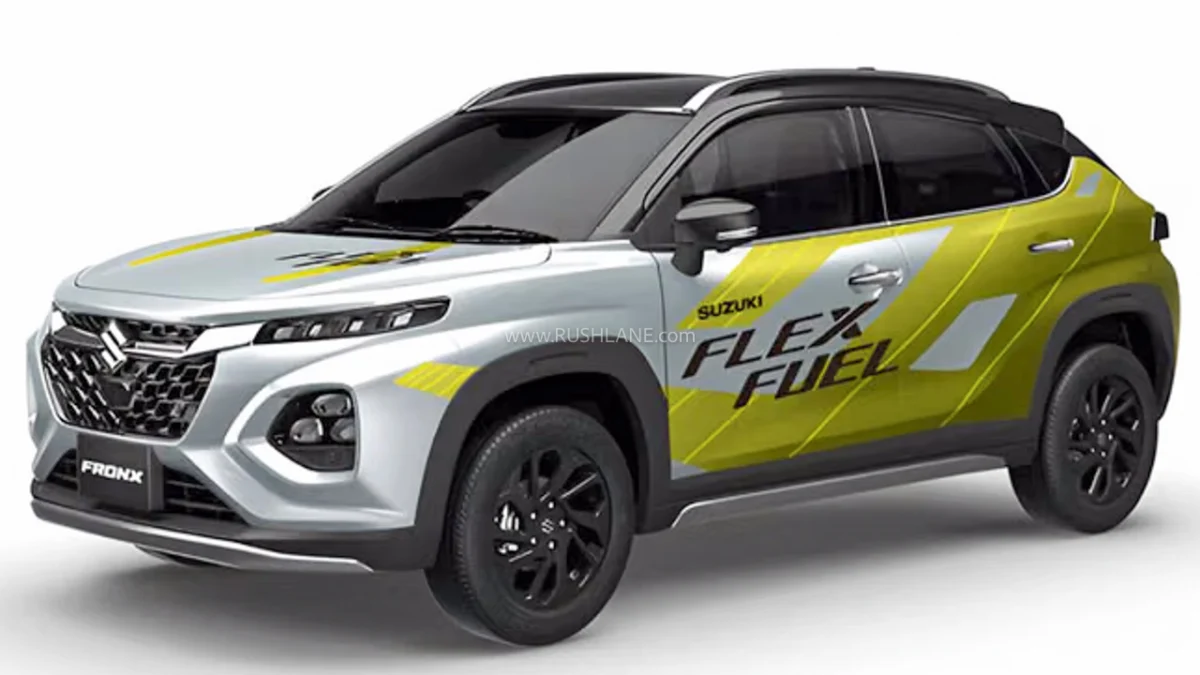
In a move that signals a seismic shift in India’s automotive landscape, Union Minister for Road Transport and Highways, Nitin Gadkari, has officially announced that Maruti Suzuki will launch its first Flex-Fuel capable four-wheeler on World Environment Day, June 5th, 2026. This announcement, made during a high-profile address in Nagpur, positions Maruti Suzuki as the first manufacturer in the Indian market to offer a mass-market passenger vehicle capable of running on high-concentration ethanol blends, potentially up to E100 (100% Ethanol).
As India grapples with the dual challenges of rising crude oil import bills and urban pollution, the introduction of Flex-Fuel Vehicles (FFVs) represents a cornerstone of the government’s "Aatmanirbhar Bharat" (Self-Reliant India) initiative. The upcoming launch is expected to be more than just a product reveal; it is a proof-of-concept for a nation-wide transition toward indigenous, crop-based fuels.
Main Facts: The Transition to E100
The core of the announcement centers on the technical capability of the new Maruti Suzuki vehicle. Unlike standard petrol engines that are currently optimized for E10 (10% ethanol) or the recently introduced E20 (20% ethanol) blends, a Flex-Fuel vehicle is designed to operate on a wide range of ethanol-petrol mixes.
The upcoming Maruti Suzuki model is expected to handle E100, a pure ethanol fuel. This requires a complete overhaul of the internal combustion engine’s (ICE) peripheral systems. Ethanol, while being a high-octane fuel that can improve engine performance, is also hygroscopic—meaning it absorbs moisture from the atmosphere—and is more corrosive than traditional gasoline.
To accommodate E100, Maruti Suzuki engineers have reportedly modified:
- Fuel Storage: Tanks must be made of corrosion-resistant materials to prevent degradation over time.
- Fuel Delivery: Fuel pumps, injectors, and lines are redesigned to handle the chemical properties of high ethanol concentrations.
- Ignition and ECU: The Engine Control Unit (ECU) must be programmed with sophisticated sensors to detect the ethanol-to-petrol ratio in real-time, adjusting ignition timing and fuel injection duration accordingly.
Chronology: The Road to Flex-Fuel Dominance
The journey toward the June 2026 launch has been a multi-year effort involving policy shifts and international collaborations.
- December 2022: The Indian government advanced its target for 20% ethanol blending (E20) in petrol from 2030 to 2025.
- October 2023: At the Japan Mobility Show in Tokyo, Suzuki Motor Corporation showcased a prototype of the "Fronx Flex-Fuel." This version was specifically designed for the Indian market, capable of running on E85 (85% ethanol).
- Early 2024: The Bureau of Indian Standards (BIS) issued specifications for higher blends, including E22, E25, E27, and E30, providing a regulatory framework for manufacturers.
- May 2026: Minister Nitin Gadkari confirms the Environment Day launch, hinting that the technology has evolved from the E85 prototype to a full E100-capable production model.
While the Fronx was the initial face of Maruti’s flex-fuel ambitions, industry insiders suggest the E100 technology might debut in one of the brand’s highest-selling models or perhaps a dedicated "Green" variant of their popular SUV lineup to ensure maximum market penetration.
Supporting Data: The Economic and Environmental Rationale
The push for ethanol is driven by staggering economic data. India currently imports approximately 87% of its crude oil requirements. This dependency makes the Indian economy vulnerable to global geopolitical volatility and fluctuations in the US Dollar.
Reducing the Import Bill
According to government estimates, achieving higher ethanol blending could save India billions of dollars in foreign exchange. By shifting to E100, the "well-to-wheel" carbon emissions are significantly reduced, but more importantly, the capital stays within the domestic circular economy.
Agricultural Synergy
Ethanol in India is primarily derived from sugarcane molasses, damaged food grains, and maize. A transition to E100 provides a direct financial incentive to the Indian agrarian sector. By creating a secondary, high-volume market for crops, the government aims to double farmer incomes while ensuring that "fuel" becomes a homegrown commodity rather than a Middle Eastern import.
Emission Reductions
Data from the Ministry of Environment, Forest and Climate Change suggests that E100 vehicles can reduce carbon monoxide emissions by up to 30-50% and hydrocarbon emissions by 20% compared to conventional petrol engines. While NOx (Nitrogen Oxide) levels require careful management through catalytic converters, the overall environmental footprint is significantly lower.
Official Responses: A Vision for Indigenous Energy
Minister Nitin Gadkari has been the most vocal proponent of this technology. During his Nagpur address, he emphasized that the "biggest pollution problem is fossil fuels."

"I am happy that we have introduced electric scooters, cars, buses, and trucks," Gadkari stated. "But we must also look at indigenous solutions. The shift toward ethanol ensures cost-effective, pollution-free fuel production. It is the path to making our farmers ‘Urjadata’ (energy providers) in addition to ‘Annadata’ (food providers)."
The Ministry of Road Transport and Highways (MoRTH) has also highlighted that Maruti Suzuki is not alone in this endeavor. A total of 12 major automotive players, including Toyota, Tata Motors, and Mahindra, have already showcased flex-fuel prototypes. Toyota, for instance, has been testing a flex-fuel Camry Hybrid in India, which combines the benefits of electrification with ethanol.
Maruti Suzuki, as the market leader with nearly 40% market share, taking the first step into E100 production is seen as a "tipping point" for the industry.
Technical Implications and Consumer Considerations
For the Indian consumer, the transition to E100 presents a mix of opportunities and questions.
1. Fuel Efficiency vs. Cost
Ethanol has a lower energy density than petrol. This means that an E100 vehicle may deliver roughly 25-30% lower fuel mileage (kmpl) compared to a petrol-only vehicle. However, the government intends to price ethanol significantly lower than petrol to offset this efficiency gap. If ethanol is priced at ₹60-65 per liter while petrol remains above ₹100, the "cost per kilometer" for the consumer remains competitive.
2. Cold Start Challenges
Pure ethanol has poor vaporization at low temperatures, which can make starting the engine difficult in cold climates (such as North India in winter). Maruti Suzuki’s engineering team has likely addressed this through heated fuel injectors or a small auxiliary petrol tank used specifically for ignition—a system commonly used in Brazil, the world leader in flex-fuel technology.
3. Infrastructure Readiness
While the vehicle may be ready, the availability of E100 at the pump is the next major hurdle. Currently, India is rolling out E20 across the country. The government plans to create "Green Corridors" where E85 and E100 will be available at select Oil Marketing Company (OMC) outlets, primarily in sugarcane-rich states like Uttar Pradesh, Maharashtra, and Karnataka.
The Broader Industry Landscape
The arrival of Maruti’s flex-fuel car follows the successful introduction of flex-fuel two-wheelers. Brands like Honda and Suzuki have already demonstrated motorcycles capable of running on higher ethanol blends. This "top-down and bottom-up" approach—tackling both the 2W and 4W segments—is essential for creating the demand required for OMCs to invest in ethanol dispensing infrastructure.
Furthermore, the government’s recent issuance of standards for E22 through E30 suggests that the roadmap is not just about jumping to E100, but about gradually lifting the "floor" of ethanol blending for all vehicles on the road.
Conclusion: A Strategic Pivot
The launch of the Maruti Suzuki E100 vehicle on June 5th, 2026, will likely be remembered as a pivotal moment in India’s industrial history. It represents the intersection of automotive engineering, national energy security, and agricultural policy.
By becoming the first to market, Maruti Suzuki is leveraging its massive scale to validate a technology that could potentially de-link India’s transport sector from the vagaries of the global oil market. As the countdown to Environment Day begins, the industry will be watching closely to see how the "Maruti effect" influences competitors and whether the Indian consumer is ready to embrace a future where the fuel in their tank was grown in a field, not pumped from a desert.
