

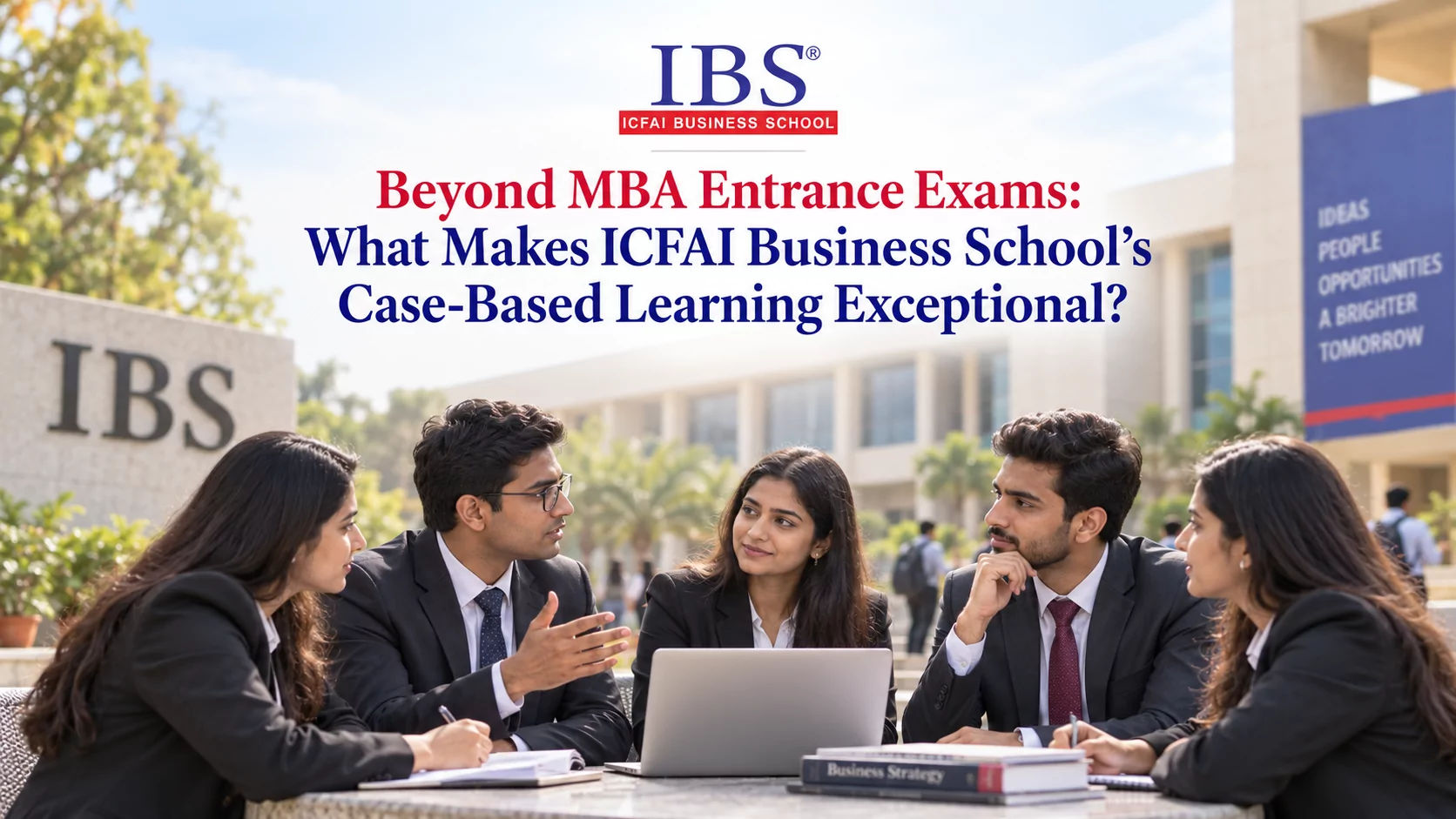
New Delhi, India – [Insert Date] – In the competitive landscape of management education, where entrance exam scores often overshadow pedagogical depth, ICFAI Business School (IBS) is carving a distinct niche. Moving beyond the traditional emphasis on standardized test percentiles, IBS is redefining leadership development through an immersive, world-class case-based learning methodology. This approach, anchored by its globally recognized Case Research Center (CRC), aims to equip future business leaders with the practical acumen and critical thinking skills necessary to navigate complex real-world challenges.
The IBS Advantage: A Global Standard in Case-Based Education
The cornerstone of IBS’s distinctive educational philosophy is its commitment to case-based learning. This pedagogical model, widely adopted by leading global business schools, places a premium on practical application and analytical problem-solving. At the forefront of this initiative is the IBS Case Research Center (IBS CRC). Its significant international recognition, ranking third globally – a position that places it alongside esteemed institutions like Harvard Business Publishing and INSEAD – underscores the quality and impact of its case studies.
These meticulously crafted case studies are not merely academic exercises; they are the very lifeblood of IBS’s rigorous two-year full-time MBA and PGPM programs offered across its nine campuses nationwide. This unified approach ensures that every IBS student benefits from direct exposure to authentic business scenarios, mirroring the learning experiences at top-tier international business schools. This shared ecosystem fosters a common understanding of business dynamics and provides a consistent, high-caliber educational experience regardless of campus location.
Sharpening Executive Capabilities: The Power of Case-Based Pedagogy
The case-based teaching methodology at IBS serves as a crucial bridge between theoretical management principles and the practical realities of executive decision-making. Unlike passive learning models that rely on rote memorization, this approach actively engages students in the intricacies of complex, often ambiguous, business situations. Students are challenged to sift through incomplete data, identify critical operational bottlenecks, and devise strategic solutions within the constraints of real-world business environments.
Technological and Practical Integration:
The integration of technology within the case-based learning framework at IBS is multifaceted. Digital platforms facilitate the dissemination of case studies, provide access to supplementary materials, and enable collaborative analysis among students. Furthermore, simulation software and data analytics tools are often incorporated to allow students to test their proposed strategies and observe their potential outcomes in a risk-free environment. This hands-on technological engagement ensures that students develop proficiency in the digital tools that are indispensable in modern business operations.
Cultivating Essential Leadership Skills:
The process of dissecting and debating case studies inherently cultivates a suite of critical skills vital for effective leadership:
- Critical Thinking and Analysis: Students learn to dissect problems from multiple angles, identify underlying assumptions, and evaluate the validity of information. This rigorous analytical process is fundamental to making sound business decisions.
- Quantitative and Data Synthesis: Cases often present a wealth of quantitative data that students must analyze, interpret, and synthesize to draw meaningful conclusions. This develops their ability to derive actionable insights from complex datasets.
- Strategic Alignment: Students are tasked with formulating strategies that align with organizational objectives, market dynamics, and resource availability. This fosters a holistic understanding of strategic planning and execution.
- Active Listening and Persuasive Communication: Classroom discussions and group presentations necessitate active listening to diverse perspectives and the ability to articulate and defend one’s own viewpoints persuasively.
- High-Pressure Decision-Making: The simulated business environments within case studies often mirror the urgency and complexity of real-world decision-making, training students to perform effectively under pressure.
These honed capabilities are precisely what employers seek in future leaders – individuals who can not only understand business theory but also apply it effectively to solve multifaceted problems and drive organizational success.
A Glimpse into Real-World Application: Student Testimonials
To provide tangible evidence of how IBS’s case-based methodology translates into practical leadership skills, a series of video testimonials from respective IBS campuses are available. These videos offer direct insights from students who have experienced firsthand how the curriculum, enriched with real-world business scenarios, has sharpened their analytical and decision-making capabilities. These testimonials serve as powerful endorsements of the efficacy of the IBS approach.
(Link to Testimonials: https://ibsindia.org/StudentTestimonials/CaseStudies.html)
Paving the Way for Future Leaders: IBSAT 2026 Admissions
For aspiring management professionals, the IBS Admission Test (IBSAT) serves as the gateway to one of India’s most reputable business school networks. The application window for IBSAT 2026 is now open, offering a streamlined pathway for candidates seeking admission to the MBA and PGPM programs commencing in the academic year 2027-2029.
Key Dates and Application Process:
- Application Deadline: [Insert Specific Date if available, otherwise state "Details available on the official website"]
- IBSAT 2026 Examination: [Insert Specific Date if available, otherwise state "Details available on the official website"]
- Selection Process: The selection process typically involves the IBSAT score, followed by Group Discussion (GD) and Personal Interview (PI) rounds. Candidates are encouraged to visit the official IBSAT website for the most up-to-date information regarding application procedures, eligibility criteria, and examination schedules.
(Apply for IBSAT 2026: https://www.ibsat.org/)
The Broader Implications: Redefining Management Education in India
The success of IBS’s case-based learning model has significant implications for the broader Indian management education sector. It underscores a critical shift away from an over-reliance on standardized testing towards a more holistic and practical approach to leadership development. By consistently producing graduates equipped with the skills to tackle real-world business complexities, IBS contributes to a more robust and globally competitive Indian corporate sector.
The emphasis on international case studies also ensures that IBS graduates are well-versed in global business practices and challenges, making them valuable assets in an increasingly interconnected world. This focus on global relevance, combined with a deep understanding of the Indian economic landscape, positions IBS alumni for success in both domestic and international markets.
Connecting with the IBS Community
Prospective students and their families are encouraged to engage with the IBS community to gain firsthand insights into the student experience and academic environment. Connecting with current students and alumni can provide invaluable perspectives on the curriculum, campus life, and career opportunities.
(Join the official IBSAT 2026 discussion forum on PaGaLGuY: https://www.pagalguy.com/t/official-ibsat-2026-icfai-business-school-ibs-mba-pgp-admissions-2027-29-pagalguy/4211078)
In conclusion, ICFAI Business School’s unwavering commitment to case-based learning, supported by its world-class IBS CRC, represents a forward-thinking approach to management education. By prioritizing the development of critical thinking, analytical prowess, and practical decision-making skills, IBS is not just preparing students for exams; it is cultivating the next generation of global business leaders.
