

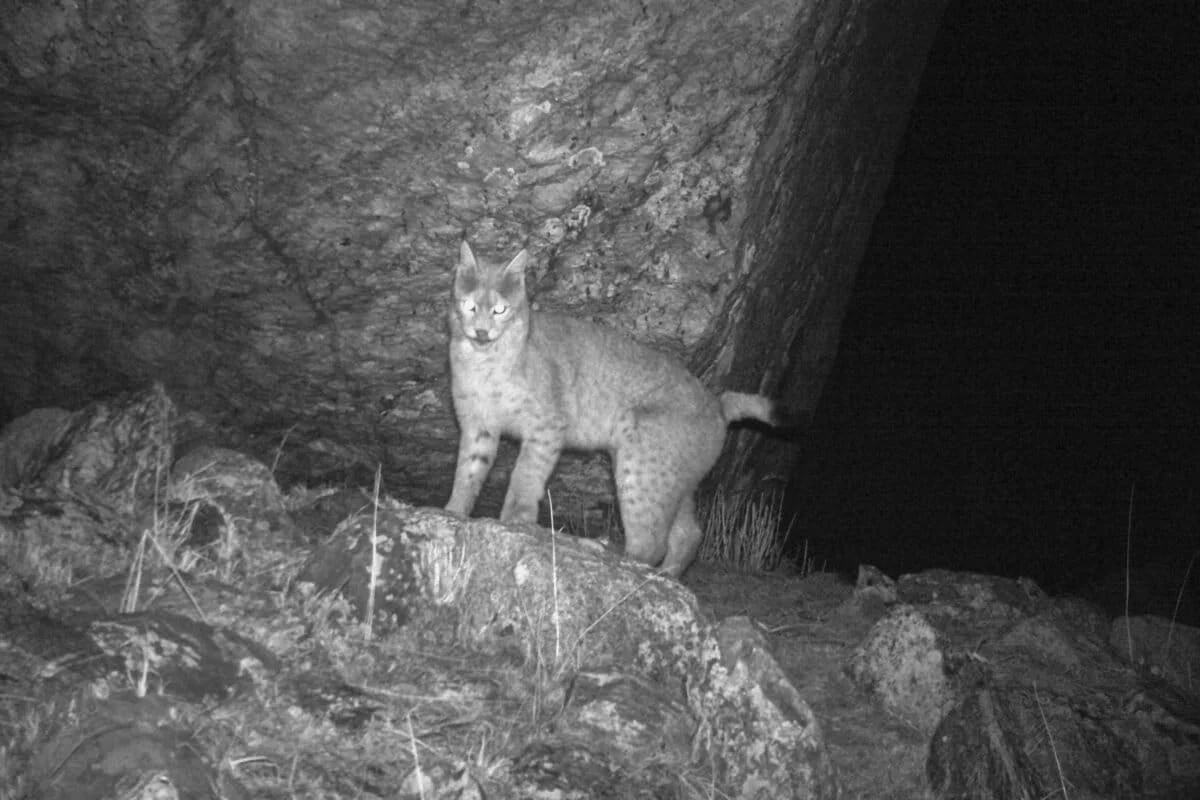
In the frozen, oxygen-thin reaches of the Tso Lhamo plateau, where the jagged peaks of the Eastern Himalayas surrender to the rolling steppes of the Tibetan Plateau, a silent resident has finally stepped into the light of scientific record. In a landmark discovery for Indian wildlife biology, a camera trap has captured the first-ever confirmed photographic evidence of the Eurasian lynx (Lynx lynx) in the state of Sikkim.
Captured at a staggering altitude of 5,250 metres in the Mangan district, the image—recorded in January 2026—depicts a solitary lynx navigating a rocky, sparsely vegetated slope. This sighting is not merely a checklist addition for the state; it represents only the second confirmed record of the species in the entire Eastern Himalayan region, following a similar discovery in Arunachal Pradesh in 2025.
The find has sent ripples through the conservation community, challenging long-held perceptions of high-altitude rangelands as "ecological voids" and highlighting the critical importance of transboundary conservation corridors.
Main Facts: A Rare Felid in a Forbidden Landscape
The Eurasian lynx is a medium-sized wild cat, distinguished by its iconic tufted ears, powerful build, and short "bobbed" tail. While the species enjoys a wide distribution across Northern, Central, and Eastern Europe to Central Asia and Siberia, its presence in India has historically been documented primarily in the western trans-Himalayan regions, specifically Ladakh and parts of Himachal Pradesh.

The Sikkim record, emerging from the Tso Lhamo plateau, marks a significant southeastern extension of its known range in the Indian subcontinent. The plateau itself is a high-altitude desert, characterized by extreme temperatures and a landscape that, to the untrained eye, appears inhospitable. However, the presence of an apex predator like the lynx suggests a far more complex and thriving ecosystem than previously understood.
The discovery was made possible through a long-term monitoring programme dedicated to snow leopards and trans-Himalayan rangelands. This initiative is a collaborative effort between the Sikkim Forest and Environment Department and WWF-India. By deploying camera traps in some of the most remote terrains on Earth, researchers are beginning to peel back the layers of mystery surrounding the "ghosts" of the high mountains.
Chronology of Discovery: From Arunachal to Sikkim
The road to the Sikkim discovery was paved by a series of incremental breakthroughs in the Eastern Himalayas over the last few years.
- The Ladakh Baseline: For decades, Indian knowledge of the Eurasian lynx was confined to the West. Research in Hemis National Park and surrounding areas of Ladakh established the lynx as a specialist of rocky scrubland, preying on woolly hares and marmots.
- The 2025 Arunachal Breakthrough: In early 2025, a joint survey by the Arunachal Pradesh Forest Department and WWF-India produced the first-ever photographic evidence of a lynx in the Eastern Himalayas. This discovery shifted the scientific focus eastward, suggesting that the species might inhabit a much broader swathe of the high-altitude borderlands than previously mapped.
- The January 2026 Sikkim Record: Building on the momentum from Arunachal, the monitoring team in Sikkim intensified their efforts in the Tso Lhamo region. In January 2026, a camera trap positioned on a high-altitude slope in Mangan district triggered. Upon retrieval and analysis, the team identified the unmistakable silhouette of a Eurasian lynx.
- Verification and Announcement: Following the sighting, experts spent months verifying the data and comparing it with existing Himalayan records. The official announcement serves as a culmination of years of "boots-on-the-ground" conservation work in a region where the terrain and climate make every day of fieldwork a logistical challenge.
Supporting Data: The "Ecotone" and a Thriving Food Web
The Tso Lhamo plateau is more than just a high-altitude desert; it is what ecologists call an "ecotone"—a transition zone where two distinct biological communities overlap. In this case, the steep, vertical landscape of the trans-Himalaya meets the flatter, rolling expanse of the Tibetan Plateau.

A Biogeographic Bridge
According to Rohan Pradeep Pandit, Associate Coordinator at WWF-India, the plateau acts as a "biogeographic bridge." The geographical positioning allows species adapted to different habitats to converge. For example, species evolved for sheer rocky cliffs (like the snow leopard) occur alongside species evolved for open steppes (like the Tibetan gazelle).
Evidence of a Healthy Ecosystem
The lynx does not exist in a vacuum. Its presence is indicative of a robust predator-prey system. Data from the same camera-trapping exercise revealed a stunning array of biodiversity, including:
- Apex and Meso-Predators: Snow leopard, Pallas’s cat, Tibetan wolf, and Tibetan sand fox.
- Wild Herbivores: Tibetan gazelle, Tibetan argali (the world’s largest wild sheep), Southern kiang (Tibetan wild ass), and Blue sheep.
The fact that three distinct wild felids—the snow leopard, Pallas’s cat, and now the Eurasian lynx—share the same landscape is a rare ecological phenomenon. It suggests a food web healthy enough to support multiple layers of predators, debunking the myth that these high-altitude rangelands are "barren" or of "little ecological consequence."
Official Responses: Collaboration and Commitment
The successful documentation of the lynx has been hailed as a triumph of collaborative conservation.

Udai Gurung, Sikkim’s Chief Conservator of Forests (Wildlife), emphasized the role of local communities in a press statement: "This record highlights the ecological significance of our high-altitude rangelands and reinforces our commitment to protecting these fragile ecosystems. The cooperation of the Lachen Dzumsa—the traditional local self-governance body—in facilitating access to these remote areas has been instrumental."
The mention of the Lachen Dzumsa is critical. In Sikkim, traditional systems of governance often hold more sway in remote valleys than centralized bureaucracies. Their support ensures that conservation efforts are not seen as external impositions but as a shared responsibility with the local people who have coexisted with these predators for centuries.
Rishi Kumar Sharma, Head of the Himalayas Program at WWF-India, noted that while the photo is a milestone, it is also a call for deeper research. "It is undeniable evidence that the Tso Lhamo Plateau supports a high-quality predator-prey system. However, we cannot view this record in isolation. The presence of multiple predators points to a landscape that requires a holistic conservation approach rather than species-specific silos."
Implications and Future Challenges: Operating in the Dark
Despite the excitement, the discovery raises more questions than it answers. The primary concern for researchers now is determining the "status" of the lynx in Sikkim.

Resident or Transient?
A single photograph after years of trapping does not prove a stable population. Scientists are currently debating whether the photographed lynx is a permanent resident, part of a breeding population within Sikkim, or an "occasional disperser" crossing over from the Tibetan side of the border. Because lynx are capable of long-distance movements, the individual captured on camera could simply be a traveler in search of new territory.
The Need for Genetic Research
Neeraj Mahar, a veteran wildlife researcher, suggests that camera traps alone are not enough. "More insights could be obtained through non-invasive genetic identification techniques—such as analyzing scat samples—to decipher aspects of Eurasian lynx ecology. We need to understand how they are thriving amidst pastoralist communities and significant defense installations."
Conservation Pressures in a Border Zone
Tso Lhamo is a sensitive frontier, and its wildlife faces a unique set of modern pressures:
- Free-Ranging Dogs: Perhaps the most immediate threat. Packs of abandoned or feral dogs hunt in groups, preying on wild herbivores and competing with the lynx and snow leopard for food. More dangerously, they act as vectors for diseases like canine distemper, which can be fatal to wild feline populations.
- Infrastructure and Traffic: Increased road traffic due to tourism and border logistics heightens the risk of wildlife-vehicle collisions.
- Waste Management: Open waste dumps near military camps or tourist hubs can alter animal behavior, attracting predators to human-dominated spaces and increasing the likelihood of human-wildlife conflict.
Conclusion: A New Chapter for Himalayan Conservation
The discovery of the Eurasian lynx in Sikkim is a reminder that even in the 21st century, the natural world holds profound secrets. The Tso Lhamo plateau, once dismissed as a cold desert of little value, has emerged as one of the most significant biodiversity hotspots in the trans-Himalayan region.

Moving forward, the focus must shift from discovery to preservation. As WWF-India and the Sikkim Forest Department continue their monitoring, the goal is to develop a "wildlife-friendly" management plan for the plateau. This includes livestock health camps to prevent disease transmission, sterilization of free-ranging dogs, and sustainable waste management.
The "ghost of the plateau" has finally been seen. The challenge now is to ensure it does not disappear once more—this time for good. Through transboundary collaboration and the continued support of the Lachen Dzumsa, Sikkim has a unique opportunity to lead the way in protecting the fragile, high-altitude tapestry of the Eastern Himalayas.
