

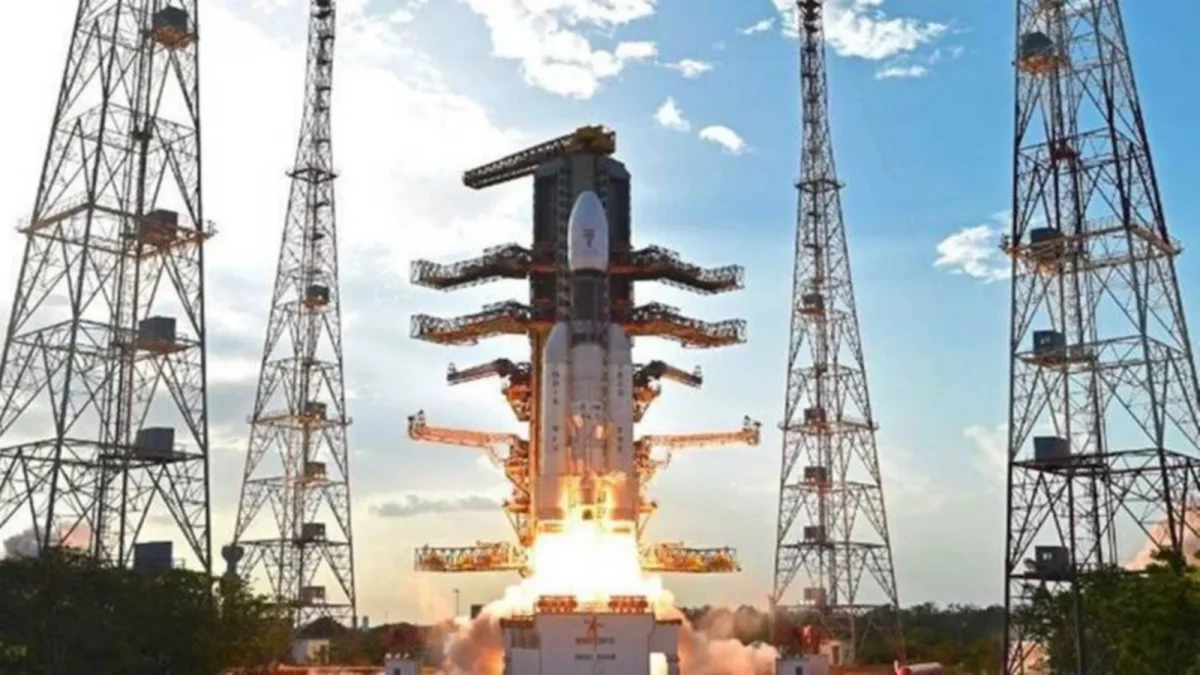
SRIHARIKOTA – Following a period of introspection and rigorous technical evaluations, the Indian Space Research Organisation (ISRO) is set to resume its launch calendar. The space agency announced on Monday that it will launch the EOS-05 Earth Observation Satellite aboard the GSLV-F17 mission. Scheduled for liftoff at 02:55 AM IST on September 4, 2026, from the Satish Dhawan Space Centre (SDSC) in Sriharikota, this mission represents a critical juncture for India’s space program as it seeks to overcome a series of recent setbacks.
The mission is not merely a routine satellite deployment; it is a redemptive flight for the Geosynchronous Satellite Launch Vehicle (GSLV) and a pivotal moment for India’s observational capabilities. The EOS-05, a state-of-the-art geo-imaging satellite, is designed to provide near real-time monitoring of the Indian subcontinent, a capability that has remained a gap in India’s orbital infrastructure since the loss of a similar satellite in 2021.
Main Facts: The GSLV-F17/EOS-05 Mission
The upcoming launch involves the GSLV-F17, a three-stage launch vehicle equipped with a cryogenic upper stage. Its primary payload, EOS-05 (formerly known as GISAT-1A), is a high-resolution imaging satellite intended for Geostationary Orbit (GEO).
Mission Profile and Payload
EOS-05 is designed to operate from a vantage point approximately 36,000 kilometers above the Earth. Unlike traditional Earth observation satellites that reside in Low Earth Orbit (LEO) and circle the globe every 90 minutes, EOS-05 will remain stationary relative to a point on Earth. This allows for "staring" capability—continuous observation of the same geographic area.
The satellite is equipped with multi-spectral and hyper-spectral sensors capable of capturing images in the visible, near-infrared, and short-wave infrared bands. Its primary objectives include:
- Disaster Management: Real-time monitoring of natural calamities such as cyclones, floods, and forest fires.
- Agriculture and Forestry: Tracking crop health, estimating yields, and monitoring changes in vegetation cover.
- Strategic Surveillance: Keeping a constant watch on border areas and maritime zones of interest.
The Launch Window
The choice of a 02:55 AM liftoff is dictated by the orbital mechanics required to inject the satellite into the precise Geostationary Transfer Orbit (GTO). From there, the satellite will use its on-board propulsion system to reach its final circular geostationary home.
Chronology: A Turbulent Two Years for ISRO
To understand the weight of the September 4 launch, one must look back at the sequence of events that led to the current seven-month hiatus. Between 2025 and early 2026, the space agency experienced a statistically anomalous run of mission failures that shook the confidence of the global space community in India’s "workhorse" reputation.
The 2021 Precursor
The story of EOS-05 actually begins in August 2021 with the GSLV-F10/EOS-03 mission. That launch ended in failure when the cryogenic upper stage (CUS) failed to ignite. A Failure Analysis Committee (FAC) later determined that a leak in a liquid hydrogen tank valve prevented the engine from reaching the required pressure. EOS-05 is the direct replacement for that lost asset.
The Recent Crisis (2025–2026)
The period between mid-2025 and January 2026 saw ISRO attempt six major missions. Disastrously, three of these failed to reach their intended orbits.
- Mid-2025: Two separate missions encountered anomalies—one involving a software glitch in a commercial satellite deployment and another involving a second-stage ignition delay in a Small Satellite Launch Vehicle (SSLV) variant.
- January 12, 2026: The most significant blow came with the PSLV-C62/EOS-N1 mission. The Polar Satellite Launch Vehicle (PSLV), known for its near-perfect success rate, suffered a rare "anomaly" in its third stage. The satellite was not injected into the correct orbit and was eventually declared lost.
Following the January 12 failure, ISRO leadership took the difficult decision to halt all launches. This seven-month hiatus was used to conduct a "bottom-up" review of manufacturing processes, vendor quality control, and testing protocols.
Supporting Data: Technical Challenges of the GSLV
The GSLV, often referred to by some in the aerospace community as the "Naughty Boy" due to its historically inconsistent success rate compared to the PSLV, is a complex machine.
The Cryogenic Hurdle
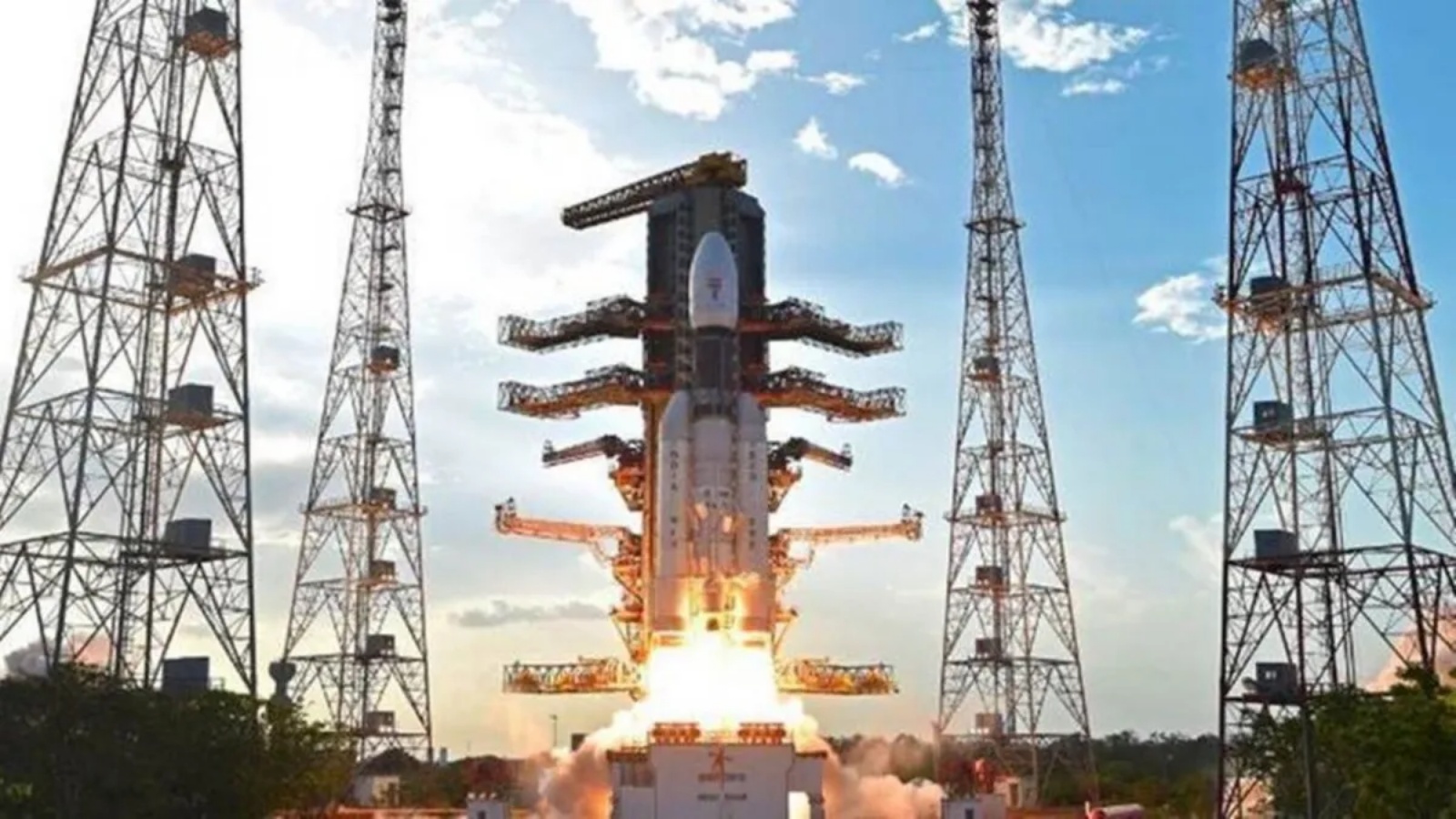
The GSLV uses a Cryogenic Upper Stage (CUS) which utilizes liquid oxygen and liquid hydrogen at extremely low temperatures. While cryogenic engines provide the high thrust necessary to carry heavy payloads to high orbits, they are notoriously difficult to manage. The failure of GSLV-F10 in 2021 was a stark reminder of this complexity. For GSLV-F17, ISRO engineers have reportedly redesigned several valve components and implemented more rigorous thermal vacuum tests to ensure the CUS performs as expected in the vacuum of space.
Orbital Comparisons
The following table highlights the difference between India’s standard Earth Observation (EO) missions and the EOS-05 mission:
| Feature | Standard EO (PSLV) | EOS-05 (GSLV) |
|---|---|---|
| Orbit Type | Low Earth Orbit (LEO) | Geostationary Orbit (GEO) |
| Altitude | 500 – 800 km | ~36,000 km |
| Revisit Time | Days to Weeks | Continuous / Real-time |
| Coverage | Global (strips) | Regional (constant) |
| Launch Vehicle | PSLV | GSLV Mk II |
Official Responses and Quality Assurance
In the lead-up to the September 4 launch, ISRO officials have maintained a cautious but optimistic tone. While the full report of the January PSLV failure has not been released to the public—a point of contention among space analysts—internal sources suggest that the agency has implemented a new "Mission Readiness Review" (MRR) framework.
The Failure Analysis Committee (FAC)
Sources within ISRO indicate that the FAC for the January failure identified a "material fatigue" issue in a component of the third-stage motor casing. While this was specific to the PSLV, the agency decided to cross-verify similar components across all launch vehicle families, including the GSLV.
"We are not just launching a satellite; we are validating our renewed commitment to reliability," a senior ISRO official stated on the condition of anonymity. "The hiatus was necessary. We chose to be thorough rather than fast. The EOS-05 mission has undergone double the standard number of ground simulations."
Transparency Concerns
Despite the technical progress, some industry experts have raised concerns about the lack of public transparency regarding recent failures. Unlike NASA or ESA, which often release detailed summaries of failure investigations, ISRO’s recent reports have remained classified. Analysts argue that for India to grow its share of the global commercial launch market through NewSpace India Limited (NSIL), it must demonstrate a level of transparency that reassures international insurance providers and satellite operators.
Implications: Why This Mission Matters
The success of GSLV-F17/EOS-05 carries heavy implications for India’s strategic, economic, and scientific standing.
1. Strategic and Border Security
In the current geopolitical climate, the ability to monitor borders continuously is a high priority for the Indian Ministry of Defence. Conventional LEO satellites only pass over a specific border point for a few minutes once or twice a day. EOS-05 will provide a "constant eye," allowing for the detection of troop movements, infrastructure development, or incursions in real-time.
2. Disaster Resilience
India is increasingly prone to extreme weather events. The EOS-05’s ability to provide frequent imagery (every 30 minutes for the entire country) will revolutionize how the National Disaster Management Authority (NDMA) responds to rapidly evolving situations like cloudbursts or cyclone landfalls.
3. The Commercial Roadmap
ISRO’s commercial arm, NSIL, has ambitious plans to compete with SpaceX and Arianespace. However, a string of failures acts as a deterrent to commercial clients. A successful GSLV-F17 mission would signal that ISRO has "fixed the glitch" and is back to being a reliable, cost-effective provider for heavy-lift missions.
4. Future Missions: NVS-03 and Beyond
The September launch acts as a gateway for a busy year-end schedule. If EOS-05 is successful, ISRO plans to launch the NVS-03 (a second-generation navigation satellite) in November. Furthermore, the data gathered from the GSLV-F17 flight will be crucial for the upcoming Gaganyaan (human spaceflight) preparatory missions, which utilize a human-rated version of the heavier LVM3 rocket.
Conclusion
As the countdown begins for the September 4 launch, the eyes of the nation—and the global space community—will be on the launchpad at Sriharikota. For ISRO, the GSLV-F17 mission is more than just a delivery of hardware into space; it is a vital step in reclaiming its status as a premier spacefaring agency. After seven months of silence, the roar of the GSLV engines will hopefully signal a new chapter of precision and success for the Indian space program.
