

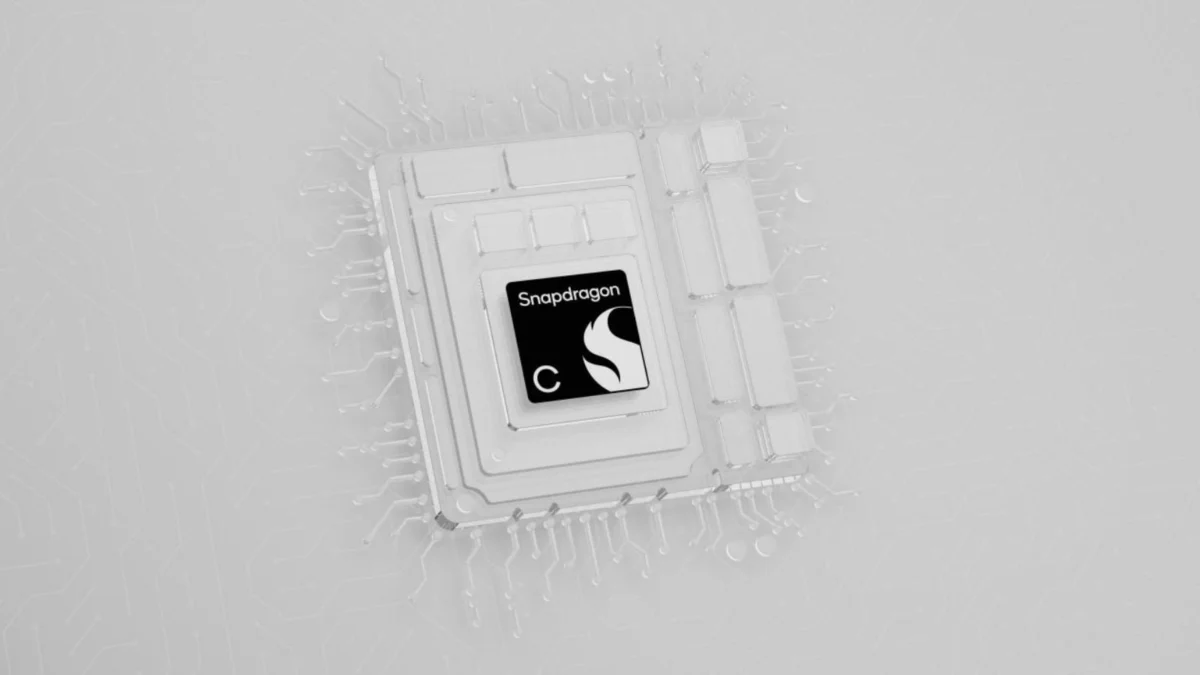
May 29, 2026 – Qualcomm has officially announced its latest innovation, the Snapdragon C platform, a groundbreaking processor specifically engineered to power affordable, entry-level laptops. This strategic move aims to bring modern computing experiences, including robust AI capabilities and exceptional battery efficiency, to a wider audience, encompassing students, families, and small businesses. Unveiled on May 28, the Snapdragon C platform is set to redefine expectations for laptops priced from approximately $300 and above, promising a compelling blend of portability, performance for everyday tasks, and advanced AI functionality.
The introduction of Snapdragon C marks a significant pivot for Qualcomm, extending its reach beyond the premium tier of Arm-based Windows PCs and directly challenging established players in the high-volume, budget-friendly segment. With major PC manufacturers like Acer, HP, and Lenovo already committed to developing devices powered by this new chip, the market is poised for an influx of accessible, AI-ready laptops later this year.
Main Facts: A New Era for Entry-Level Computing
The Qualcomm Snapdragon C platform is positioned as a transformative solution for the entry-level laptop market. Historically dominated by processors that often compromise on performance or battery life to meet price points, the Snapdragon C seeks to elevate the user experience without inflating costs.
At its core, the platform is designed to deliver a seamless and responsive experience for common daily tasks. This includes essential activities such as web browsing, streaming high-definition video, utilizing productivity applications like word processors and spreadsheets, and engaging in clear, uninterrupted video calls. A crucial design tenet is its ability to maintain cool and quiet laptop operation, a significant advantage for users who prioritize comfort and discretion in their computing environments.
One of the most compelling features of the Snapdragon C is its profound focus on power efficiency. Qualcomm asserts that the processor is meticulously engineered to provide "all-day battery life" in lightweight laptop designs. This promise of extended unplugged usage is particularly appealing to students moving between classes, remote workers needing flexibility, and families sharing devices throughout the day. The platform achieves this without sacrificing the responsiveness required for routine workloads, a common trade-off in many existing budget-friendly machines.
Perhaps the most forward-looking aspect of the Snapdragon C is the integration of a dedicated Neural Processing Unit (NPU). This specialized hardware accelerator is pivotal for supporting the burgeoning array of AI-powered features now becoming standard in modern personal computers. By embedding an NPU directly into an entry-tier device, Qualcomm is effectively democratizing AI computing, making sophisticated capabilities accessible in more affordable laptops rather than confining them solely to high-end, premium models. This strategic inclusion ensures that even budget-conscious consumers can leverage the benefits of on-device AI, from enhanced video conferencing features like background blur and eye-contact correction to more intelligent content creation tools and system optimizations.
The immediate commitment from industry giants like Acer, HP, and Lenovo underscores the platform’s potential and the confidence these manufacturers place in Qualcomm’s vision for the future of affordable computing. Their involvement is crucial for rapid market penetration and ensures a diverse range of Snapdragon C-powered devices will be available to consumers.
Chronology: Qualcomm’s Expanding PC Ambitions
Qualcomm’s journey into the Windows PC market is not new, but the introduction of the Snapdragon C platform marks a distinct evolution in its strategy.
Early Ventures and Learning Curves: For several years, Qualcomm has been steadily building its presence in the PC space, primarily through its Snapdragon 8cx and subsequently the Snapdragon X series of processors. These earlier chips, while showcasing the power efficiency benefits of the Arm architecture, often targeted premium and ultra-portable devices, competing directly with Intel’s Core i5/i7 and AMD’s Ryzen 5/7 lines. The initial foray encountered challenges, particularly regarding software compatibility for legacy x86 applications and the need to educate developers on optimizing for the Arm architecture. Despite these hurdles, significant strides were made in areas like always-on connectivity, instant-on capabilities, and multi-day battery life.
The Rise of AI PCs and Snapdragon X Elite/Plus: More recently, Qualcomm significantly escalated its commitment with the announcement of the Snapdragon X Elite and Snapdragon X Plus platforms. These high-performance chips, unveiled with much fanfare, are squarely aimed at the premium "AI PC" segment, promising industry-leading performance per watt and powerful NPUs for advanced AI workloads. This strategic move positioned Qualcomm as a serious contender at the top end of the market, signaling its intent to capture a substantial share of the next generation of computing devices.
May 28, 2026 – The Snapdragon C Announcement: Building on the momentum generated by its high-end offerings, Qualcomm officially introduced the Snapdragon C platform on May 28, 2026. The timing is strategic, coinciding with an industry-wide push towards AI-enabled computing and a renewed focus on value and efficiency. The announcement was likely disseminated through a comprehensive press release and virtual briefings, emphasizing the platform’s accessibility, AI capabilities, and "all-day" battery life. The key message was clear: Qualcomm is not just targeting the elite; it’s aiming to democratize modern computing for everyone.
"Later This Year" – The Road Ahead: Following the announcement, the industry now anticipates the arrival of the first wave of Snapdragon C-powered laptops. Qualcomm has stated these devices are expected to launch "later this year." This timeline allows OEM partners like Acer, HP, and Lenovo sufficient time to finalize their product designs, conduct thorough testing, and prepare their marketing campaigns for a competitive holiday season or back-to-school push. The coming months will be critical for Qualcomm to demonstrate the real-world performance and user experience benefits of the Snapdragon C platform.
Supporting Data: Market Dynamics and Technical Advantages
The introduction of the Snapdragon C platform is underpinned by compelling market trends and leverages distinct technical advantages inherent in Qualcomm’s Arm-based architecture.
Market Opportunity in the Entry-Level Segment: The affordable laptop market, typically defined by devices priced under $600, represents a vast and consistently growing segment. This sector caters to a diverse user base:
- Students: Requiring reliable, portable, and affordable devices for online learning, research, and basic productivity.
- Families: Often needing multiple devices for shared use, homework, entertainment, and general internet access.
- Small Businesses: Seeking cost-effective solutions for employees that offer sufficient performance for office applications, communication, and basic data processing.
- Emerging Markets: Where price sensitivity is paramount, and a reliable, connected computing device can unlock significant opportunities.
This segment has historically been dominated by Intel’s Celeron and Pentium series, and AMD’s Athlon and lower-end Ryzen 3 processors. While functional, these chips often come with trade-offs in terms of battery life, heat management, and often, raw performance under sustained load. The Snapdragon C aims to disrupt this status quo by offering a superior balance of these attributes, particularly in areas like efficiency and integrated AI.
The Growing Demand for On-Device AI: The "AI PC" is rapidly becoming a buzzword, driven by Microsoft’s integration of AI features into Windows (e.g., Copilot) and the increasing sophistication of applications leveraging machine learning. While initial AI PC conversations focused on premium devices with powerful NPUs, the utility of AI extends to everyday tasks. Features like intelligent noise suppression in video calls, AI-enhanced image and video editing, smart search, and predictive text can significantly improve the user experience across all price points. By including an NPU in an entry-level chip, Qualcomm is ensuring that even budget-conscious users are not left behind in the AI revolution.
Technical Deep Dive: Arm’s Efficiency and the NPU:
- Arm Architecture for Efficiency: Unlike the x86 architecture used by Intel and AMD, Arm processors are designed with an emphasis on power efficiency from the ground up. This allows for significantly longer battery life, lower heat generation, and often enables fanless designs for silent operation, even in thin and light form factors. For an entry-level laptop, these characteristics translate directly into a better user experience: less bulk, more freedom from power outlets, and quieter performance.
- Integrated Neural Processing Unit (NPU): The NPU is a specialized processor optimized for AI and machine learning workloads. While CPUs and GPUs can also handle AI tasks, an NPU does so with far greater efficiency, consuming less power and freeing up the main CPU for other tasks. In the context of the Snapdragon C, this NPU will enable:
- Enhanced Video Conferencing: Real-time background blur, automatic framing, and eye-contact correction for more professional virtual meetings, even on affordable devices.
- System Optimizations: AI-powered task management, adaptive performance, and intelligent power management to extend battery life further and maintain responsiveness.
- Creative Tools: Basic AI-assisted features in photo and video editing software, making entry-level content creation more accessible.
- Security: AI-driven threat detection and biometric authentication.
OEM Collaboration and Market Penetration: The immediate commitment from Acer, HP, and Lenovo is a powerful endorsement of the Snapdragon C platform. These three companies collectively command a substantial share of the global PC market across all segments, including a strong presence in the entry-level and educational sectors.
- Acer: Known for its diverse product portfolio, including popular Chromebooks and affordable Windows laptops. Snapdragon C allows them to offer a new class of efficient, AI-enabled budget devices.
- HP: A market leader with extensive reach in consumer, business, and education segments. The Snapdragon C provides HP with a competitive edge in delivering modern features to its value-conscious customers.
- Lenovo: Another global powerhouse, particularly strong in business and educational markets. Their adoption of Snapdragon C signals confidence in the platform’s ability to meet the demands of these critical sectors.
The participation of these major players ensures that Snapdragon C-powered laptops will quickly gain visibility and market availability, providing consumers with genuine alternatives to existing x86 offerings.
Official Responses: Qualcomm’s Vision and Industry Alignment
The launch of Snapdragon C is not merely about a new chip; it’s a statement about Qualcomm’s strategic direction and its vision for the future of personal computing.
Qualcomm’s Strategic Mandate: Kedar Kondap, Senior Vice President and General Manager of Compute and Gaming at Qualcomm Technologies, articulated the company’s clear objective: "We are targeting consumers and businesses looking for affordable devices that still offer modern computing experiences." This statement encapsulates the platform’s core mission – to bridge the gap between affordability and advanced functionality. Qualcomm understands that the vast majority of PC users don’t need the bleeding-edge performance of a high-end gaming rig or workstation, but they do expect responsive performance, excellent battery life, and increasingly, intelligent features that enhance their daily interactions.
This launch further solidifies Qualcomm’s broader push into the Windows PC market. For years, Arm-based processors have excelled in smartphones due to their power efficiency, and Qualcomm is determined to replicate this success in laptops. The Snapdragon C, alongside the Snapdragon X Elite/Plus, demonstrates a comprehensive strategy to address the entire spectrum of the PC market, from entry-level to premium. It underscores Qualcomm’s belief that Arm-based processors, particularly with integrated NPUs, are the future of AI PCs, offering a superior foundation for on-device intelligence compared to traditional architectures. The company envisions a future where AI capabilities are not a luxury but a standard feature across all computing devices.
OEM Endorsements (Anticipated): While specific quotes from Acer, HP, and Lenovo regarding the Snapdragon C are typically released closer to product launch, their early commitment speaks volumes. These manufacturers are likely to highlight:
- Value Proposition: Their ability to offer customers exceptional value through a combination of performance, battery life, and AI features at an accessible price point.
- Innovation: Their commitment to bringing the latest innovations, including AI, to a broader customer base.
- Portfolio Expansion: How Snapdragon C allows them to expand their product portfolios with new, highly differentiated devices that cater to evolving consumer needs.
Analyst Perspectives: Industry analysts are expected to view Qualcomm’s move as a shrewd strategic play. It addresses a critical market segment that represents significant volume and provides a clear competitive vector against Intel’s long-standing dominance in this space. Analysts will likely emphasize:
- Market Disruption Potential: The possibility of Snapdragon C significantly challenging Intel’s Celeron/Pentium and low-end Core i3/i5 lines, especially if it delivers on its promises of superior battery life and AI integration.
- Democratization of AI: The importance of bringing AI capabilities to more affordable devices to accelerate the adoption of the "AI PC" paradigm.
- Strengthening the Arm Ecosystem: How this further bolsters the Windows on Arm ecosystem, encouraging more software developers to optimize their applications for the architecture.
Implications: Reshaping the PC Landscape
The introduction of the Qualcomm Snapdragon C platform carries profound implications for the PC market, consumers, and the future trajectory of computing.
Market Disruption and Competition: The most immediate implication is the potential for significant disruption in the entry-level laptop market. For decades, this segment has largely been a battleground between Intel and, to a lesser extent, AMD, with fierce competition on price and basic performance. Snapdragon C, with its emphasis on efficiency, all-day battery life, and integrated AI, offers a fundamentally different value proposition. This increased competition is almost universally beneficial for consumers, likely leading to more innovative products, better features, and potentially more aggressive pricing across the board. Intel and AMD will be compelled to respond with their own advancements in efficiency and AI integration in their budget-tier offerings.
Accelerated Arm Adoption in Windows: The Snapdragon C will play a crucial role in accelerating the adoption of Arm-based processors in the Windows ecosystem. While Snapdragon X Elite/Plus targets the high-end, Snapdragon C will introduce millions of new users to the benefits of Arm architecture – instant-on capability, always-on connectivity (if OEMs choose to include it), and multi-day battery life – at a price point that makes it accessible. This broader exposure will help normalize Windows on Arm and encourage more software developers to optimize their applications, further improving the overall user experience.
Democratization of the "AI PC": The integrated NPU is perhaps the most forward-looking aspect of Snapdragon C. By making AI capabilities a standard feature even in affordable laptops, Qualcomm is ensuring that the "AI PC" is not an exclusive club for premium users. This means more students can leverage AI for research, more families can enhance their video calls, and more small businesses can benefit from intelligent system optimizations without breaking the bank. This widespread accessibility will accelerate the development and adoption of AI-powered applications, fundamentally changing how users interact with their devices.
Enhanced Consumer Experience: For the end-user, Snapdragon C promises a tangible improvement in the daily computing experience:
- True All-Day Battery Life: Moving beyond marketing claims, the efficiency of Arm means users can genuinely leave their chargers at home for a full day of work or school.
- Quiet and Cool Operation: Fanless designs contribute to a more pleasant and less distracting computing environment, especially in quiet settings like libraries or classrooms.
- Lightweight and Portable: The inherent efficiency allows for thinner and lighter laptop designs, enhancing portability without compromising performance.
- Smarter Interactions: AI-powered features will make common tasks smoother, more intuitive, and more efficient.
Challenges and the Future of Computing: While the outlook for Snapdragon C is promising, challenges remain. Software compatibility, though significantly improved for Windows on Arm, will still be a consideration for some legacy applications. Performance expectations will need to be carefully managed, as these are entry-level chips, not intended to compete with high-end gaming or professional workstations.
However, the long-term vision is clear: Arm-based processors, particularly with integrated AI acceleration, are poised to become a dominant force across the entire spectrum of personal computing. Qualcomm’s comprehensive strategy, now addressing both the premium and entry-level segments, positions it as a central player in this evolving landscape. The Snapdragon C platform is not just a new chip; it’s a foundational step towards a future where intelligent, efficient, and accessible computing is the norm for everyone.
