

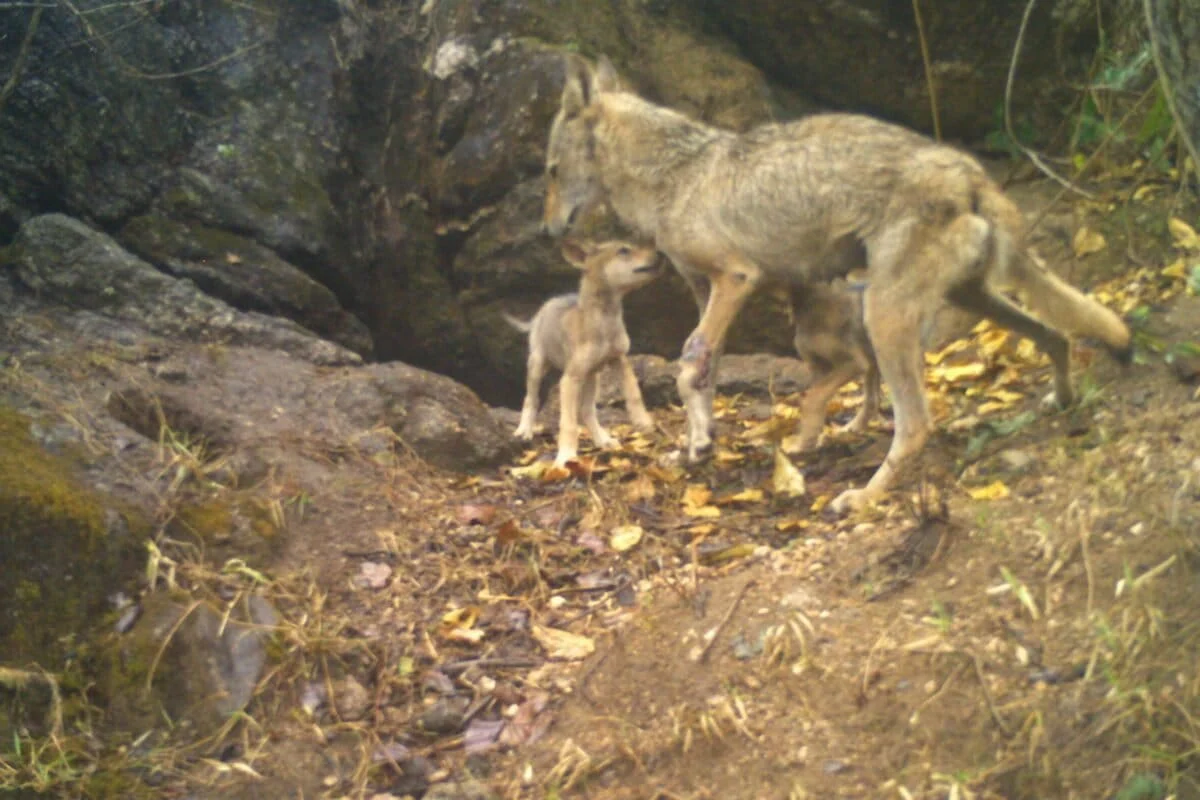
MAHUADANR, JHARKHAND – In the dense mosaic of sal forests and undulating grasslands of Jharkhand’s Latehar district lies the Mahuadanr Wolf Sanctuary (MWS), a landscape where the ancient rhythms of tribal life intersect with the survival of one of India’s most misunderstood predators: the Indian grey wolf (Canis lupus pallipes).
Established in 1976, Mahuadanr holds the distinction of being India’s first protected area dedicated specifically to the conservation of wolves. However, for the Oraon, Munda, and Birjia tribal communities who have inhabited these fringes for generations, the sanctuary is more than a conservation map; it is a shared home. A seminal new study has now shed light on the delicate balance of this "lived-in landscape," providing a data-driven roadmap for mitigating livestock depredation while preserving a unique cultural tolerance that prevents the kind of retaliatory violence often seen in other human-wildlife conflict zones.
I. Main Facts: A Landscape of Conflict and Resilience
The Mahuadanr Wolf Sanctuary spans approximately 63 square kilometers within the southern division of the Palamau Tiger Reserve. Unlike many "fortress conservation" models that exclude human presence, MWS is a patchwork of core forest, buffer zones, agricultural fields, and 69 distinct villages.

The primary challenge facing the sanctuary is the scarcity of natural wild prey. With deer and wild boar populations at relatively low densities, the resident wolf packs have increasingly turned toward domestic livestock—specifically goats and young calves—as a primary food source. This shift has turned the landscape into a theater of economic friction.
According to the recent study co-authored by Shahzada Iqbal, a member of the Jharkhand State Board for Wildlife and a PhD scholar at Aligarh Muslim University, the conflict is both widespread and economically significant. The research reveals that over 57% of households in the region have suffered livestock losses. Between 2022 and 2024, the study documented the killing of 415 goats, amounting to a staggering economic loss of nearly ₹2.1 million (₹21 lakhs) for some of India’s most marginalized communities.
Despite these losses, the study highlights a phenomenon rarely seen in modern conservation: a "remarkable level of tolerance." Rather than viewing the wolf as a pest to be eradicated, the tribal communities largely accept the predator as an intrinsic part of the forest’s spiritual and ecological fabric.

II. Chronology: From Designation to Scientific Discovery
The history of Mahuadanr is a timeline of administrative foresight followed by scientific neglect, only recently corrected by modern research.
- 1976: The Foundation. Mahuadanr was officially designated as a wolf sanctuary, recognizing the area as a critical breeding and denning ground for the Indian grey wolf.
- 1976–2020: The Knowledge Gap. For over four decades, MWS remained one of India’s least-studied protected areas. Limited accessibility, rugged terrain, and logistical hurdles meant that while the wolves were protected on paper, their behavior and the socio-economic impact on local tribes remained largely unquantified.
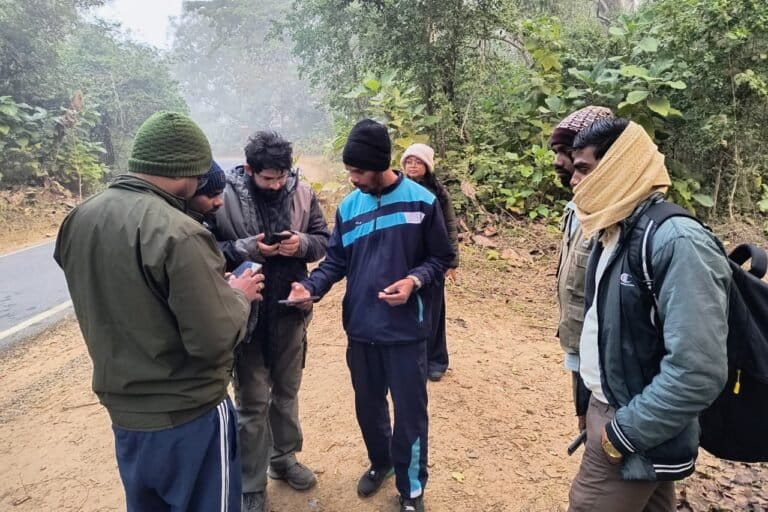
- 2022: The Fieldwork Begins. Shahzada Iqbal and his team launched a comprehensive three-year study. Moving away from purely ecological monitoring, the team adopted a multidisciplinary approach, combining GIS (Geographic Information System) mapping with structured sociological interviews.
- 2022–2024: Data Collection. Researchers conducted interviews with 345 households across 69 villages. They verified reported "kills" using site evidence and forest department records to ensure the data reflected actual wolf behavior rather than losses to feral dogs or leopards.
- 2024: Publication and Insight. The study’s findings were synthesized to identify the spatial and temporal "hotspots" of conflict, offering the first scientific blueprint for coexistence in the region.
III. Supporting Data: The Anatomy of an Attack
The study’s strength lies in its granular detail, identifying exactly when, where, and why wolves strike. The researchers utilized statistical models to correlate household characteristics with the frequency of attacks.
The Temporal Factor: Night and Seasonality
The data suggests that wolf behavior is highly adaptive. Most attacks (the vast majority) occur during the night and the pre-dawn hours. Seasonality also plays a crucial role; depredation peaks during the winter and early summer. This correlates with the wolves’ breeding season, when the energetic demands of nursing pups and maintaining dens require more frequent and reliable food sources.

The Spatial Factor: Proximity to the Edge
Geography is the strongest predictor of economic loss. Households located closest to the sanctuary boundary and those near known wolf dens or waterholes experienced significantly higher rates of livestock loss. The study found that:
- Open Grazing: Most attacks occur when livestock are left in open grazing areas or near forest edges during the day.
- Enclosures: Attacks inside villages or within properly constructed shelters were notably lower, highlighting a clear path for mitigation.
Socio-Economic Variables
Interestingly, the study found that poverty status or the specific size of a goat herd did not significantly change the likelihood of an attack, but they did dictate the impact. For a family living below the poverty line, the loss of even one goat (averaging a loss of ₹6,050 per affected household) represents a devastating blow to their annual economy. In one extreme case, a single family lost nine goats in a series of attacks, totaling a loss of ₹45,000—a fortune in rural Jharkhand.
IV. The Human Dimension: Cultural Tolerance and the Sarna Faith
One of the most profound aspects of the Mahuadanr landscape is the "generational tolerance" exhibited by the Oraon, Munda, and Birjia tribes. This tolerance is rooted in a deep, experiential knowledge of the animal.

"People here could distinguish wolves from jackals, foxes, and feral dogs," Shahzada Iqbal noted. "Many respondents could even describe individual wolves using distinctive physical or behavioral traits."
This intimacy with the predator is bolstered by the Sarna faith, an indigenous religious system that emphasizes the sanctity of nature. Sarna practitioners follow cultural protocols that mandate leaving parts of the forest undisturbed, viewing wildlife not as "the other" but as co-inhabitants of a sacred space.
This cultural buffer is what separates Mahuadanr from regions like Bahraich in Uttar Pradesh, which saw a spike in wolf-human conflict last year. In Bahraich, where the landscape is more fragmented and the historical relationship with wolves is less established, tolerance eroded rapidly, leading to public panic and calls for the elimination of the animals. In Mahuadanr, as long as the wolves do not target humans, the loss of livestock is often viewed with a stoic, albeit painful, acceptance.

V. Expert Responses and Implications for Policy
The findings have sparked a conversation among conservation biologists about the future of wolf management in India.
Devvrat Singh, a conservation biologist and independent consultant, emphasizes that Mahuadanr serves as a global lesson in coexistence. "The Indian wolf has existed alongside rural communities for centuries," Singh said. "Communities in wolf landscapes have experienced livestock losses long before formal compensation policies existed. This creates a ‘generational tolerance’ where wolves are viewed similarly to other familiar wildlife like nilgai."
However, Singh warns that this tolerance is fragile. "The situation changes when human safety is at risk. Protecting denning sites and building awareness can establish a clear ‘line of control’ between people and wolves."
Recommendations for Mitigation
The study and associated experts suggest a three-pronged approach to future management:
- Predator-Proof Infrastructure: The data shows that attacks are rare in enclosed shelters. Providing subsidies for the construction of "predator-proof" night pens could drastically reduce losses.
- Seasonal Den Protection: Since conflict peaks during the breeding season, the forest department should implement stricter "no-go" zones around known denning and rendezvous sites during winter to prevent wolves from being disturbed and pushed toward human settlements.
- Streamlined Compensation: Currently, the economic burden of conservation falls on the poorest. Speeding up the verification and payout process for livestock kills is essential to maintaining the "generational tolerance" of the tribes.
VI. Future Horizons: Technology and Connectivity
The research at Mahuadanr is far from over. Shahzada Iqbal’s team plans to escalate their monitoring efforts using advanced technology. Future phases of the project will include:
- GPS-Radio Collaring: To track precise movement patterns and identify "conflict corridors" where wolves move between the sanctuary and agricultural lands.
- Genetic Analysis: Using scat samples to determine the exact diet of the wolves and the health of the population’s gene pool.
- Landscape Connectivity Modelling: Understanding how the Mahuadanr wolves interact with other populations in the larger Palamau Tiger Reserve.
As India continues to grapple with the challenges of a growing population and shrinking wild spaces, the Mahuadanr Wolf Sanctuary stands as a beacon. It proves that while conflict is an inevitable byproduct of shared space, it does not have to result in the disappearance of the predator. Through a combination of indigenous wisdom, cultural respect, and rigorous modern science, the "lived-in landscape" of Jharkhand may provide the ultimate blueprint for the survival of the Indian grey wolf.
