

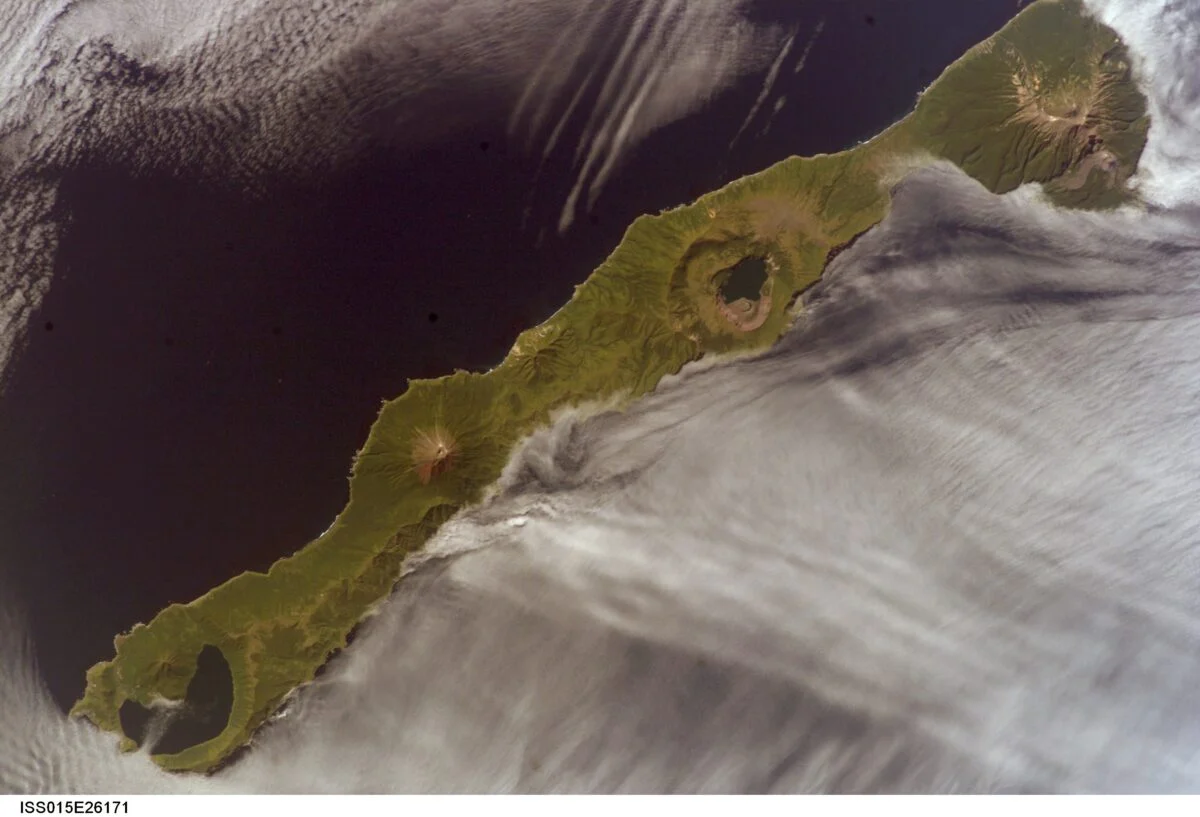
In the early 1830s, the earth’s crust fractured in two distant corners of the globe. Thousands of miles away from the Indian subcontinent, volcanic peaks in Japan and Nicaragua roared to life, ejecting massive plumes of ash and sulfur into the stratosphere. While these geological events were remote, their consequences were intimately felt by millions of Indian peasants.
A groundbreaking study published in the Journal of Historical Geography has established a definitive link between these volcanic eruptions, a subsequent failure of the Indian monsoon, and a series of devastating famines that claimed nearly a million lives. However, the research clarifies a haunting truth: while the volcanoes and a simultaneous El Niño event provided the environmental trigger, it was the extractive economic policies and environmental neglect of the British East India Company that transformed a natural drought into a humanitarian catastrophe.
Main Facts: The Triple Threat of 1830s Climate Instability
The study, authored by Richard Warren, a historical geographer at the University of Bern, identifies a "perfect storm" of climatic factors that converged between 1832 and 1838. The primary drivers were the 1831 eruption of the Zavaritzkii Caldera on Simushir Island, Japan, and the 1835 eruption of Cosegüina in Nicaragua.
These eruptions released vast quantities of sulfur aerosols into the upper atmosphere. Unlike heavier volcanic ash, which settles within days, these aerosols can linger for years, forming a shimmering veil that reflects sunlight away from the Earth. This led to a global cooling effect of approximately 1 degree Celsius—a seemingly minor shift that radically disrupted the delicate thermal balance required for the Indian monsoon.

The scientific findings highlight three core elements of the crisis:
- Aerosol-Induced Cooling: The reduction in solar radiation cooled the Indian landmass, weakening the temperature differential between the land and the ocean that typically pulls moisture-laden winds inland.
- The El Niño Factor: The peak cooling from the Japanese eruption coincided with a powerful El Niño event in 1833. This periodic warming of the Pacific Ocean further disrupted global wind patterns, creating an extended spell of dry weather across India.
- Colonial Exacerbation: Under British administration in Agra and Madras, the resulting crop failures were met not with relief, but with rigid tax collection and a refusal to intervene in soaring market prices for grain.
Chronology: A Decade of Despair (1831–1838)
The timeline of the disaster reveals how geological events thousands of miles apart synchronized to dismantle India’s agricultural stability.
- 1831: The Japanese Catalyst. The Zavaritzkii Caldera erupts. Sulfur aerosols begin to circulate globally, initiating a cooling trend that disrupts the 1832 monsoon season.
- 1833: The El Niño Convergence. As the cooling effects of the 1831 eruption reached their zenith, a severe El Niño event struck. This dual blow led to a total collapse of the monsoon circulation, plunging the Madras and Agra Presidencies into a multi-year drought.
- 1835: The Nicaraguan Reinforcement. Just as the climate began a slow recovery, the Cosegüina volcano in Nicaragua erupted violently. This injected a fresh layer of aerosols into the atmosphere, extending the period of global cooling and ensuring that the monsoon failures continued through the mid-1830s.
- 1837–1838: The Great Famine. Agricultural productivity for rice, legumes, and seasonal staples bottomed out. Grain prices in local markets skyrocketed by 71%. In the absence of state-sponsored grain reserves, mass starvation ensued, leading to the deaths of an estimated 900,000 people.
Supporting Data: Modeling the Invisible Veil
To reconstruct these events, Richard Warren utilized a "state-of-the-art" global climate model, drawing on historical weather data meticulously extracted from the archives of the British Library. By feeding 19th-century observations into modern simulations, the study was able to prove that the drought was not a localized fluke but a direct result of atmospheric forcing.
The data reveals that during a standard monsoon, many regions in India expect roughly 35 inches of rain. During the 1830s, the "thermal contrast"—the engine of the monsoon—was so severely dampened by volcanic cooling that the moisture-laden air simply failed to migrate from the ocean to the interior.

Furthermore, the study incorporates the economic data of the era to illustrate the human toll. The 71% increase in the price of wheat and rice occurred during a period when the East India Company (EIC) was focused on its primary revenue streams: land taxation and the opium trade with China. The EIC’s insistence on "laissez-faire" economics meant that even as granaries existed, the starving population lacked the "entitlement"—a term popularized by Nobel laureate Amartya Sen—to access them.
Official Responses and Expert Commentary
The study has been hailed by both scientists and historians for its multidisciplinary approach, bridging the gap between paleoclimatology and colonial history.
Richard Warren, University of Bern:
Warren emphasizes that his findings are part of a broader investigation into famines across South and East Asia. "I found two famines in India, basically straight afterwards [following the eruptions]," Warren noted. He argues that these deaths were preventable. "The famines may have been prevented had the East India Company stored grains and distributed them. Instead, they refused to intervene in the prices."
Atreyee Bhattacharya, Paleoclimatologist at the University of Colorado Boulder:
Bhattacharya, who was not involved in the study, points out that the research adds to a "growing body of work… showing these undeniable connections" between global climate triggers and societal responses. She stresses the importance of understanding how global data "trickles down" to affect local communities and the decision-makers who govern them.

Benjamin Siegel, Historian at Boston University:
Siegel, author of Hungry Nation, praises the study for not being "over-determinant." He notes, "This paper is really nice in that it says there’s an impact [from the climate] and it’s not dispositive, and it doesn’t override local conditions of politics and economics. It’s a clear-headed assessment of good evidence."
Braddock Linsley, Climate Researcher at Columbia University:
Linsley draws parallels to the 1815 eruption of Mount Tambora, which caused the "Year Without a Summer." He warns that the 1830s data serves as a cautionary tale for modern science. "If we geoengineer the stratosphere and tweak it a little bit too much the wrong way, we could end up generating drought… in places that require agricultural crops to grow."
Implications: Lessons for a Changing World and the Risks of Geoengineering
The study of the 1830s famines is more than a historical post-mortem; it offers vital lessons for the 21st century as the world grapples with anthropogenic climate change and the controversial prospect of solar geoengineering.
The Perils of Artificial Cooling
One of the most significant implications of Warren’s research concerns "solar radiation management"—a proposed method of fighting global warming by intentionally spraying aerosols into the atmosphere to mimic the cooling effect of a volcano.

Warren warns that the 1830s prove how "big disruptions to the climate" can occur when aerosols are introduced. A three-degree dip in global temperatures, while perhaps beneficial for slowing polar ice melt, could be "potentially very harmful" to equatorial nations. While Scandinavian countries might struggle with shorter growing seasons due to lack of sunlight, countries like India face the far more existential threat of a disrupted monsoon, which remains the lifeblood of its agricultural economy.
Governance as a Climate Buffer
The 1830s tragedy underscores that the severity of a climate event is often determined by the quality of governance. In the 19th century, the British East India Company’s prioritization of profit over people turned a manageable natural disaster into a mass-casualty event.
Today, as contemporary administrations face food insecurity driven by shifting weather patterns, the study serves as a reminder that policy is the ultimate variable. Whether through grain subsidies, robust social safety nets, or international cooperation, the "entitlement" of a population to food must be protected even—and especially—when the climate fails.
A New Framework for History
For decades, historians and climate scientists worked in silos. This study represents a shift toward a more integrated understanding of human history. By proving that the 1830s famines were a product of "volcanoes plus El Niño plus colonial greed," researchers are providing a more nuanced map of how fragile human civilizations are when natural cycles and political failures collide.

As the planet continues to warm, the "invisible veil" of the 1830s reminds us that we are all subject to the whims of a global atmospheric system—and that the best defense against a changing climate is not just better science, but more humane and responsive governance.
