

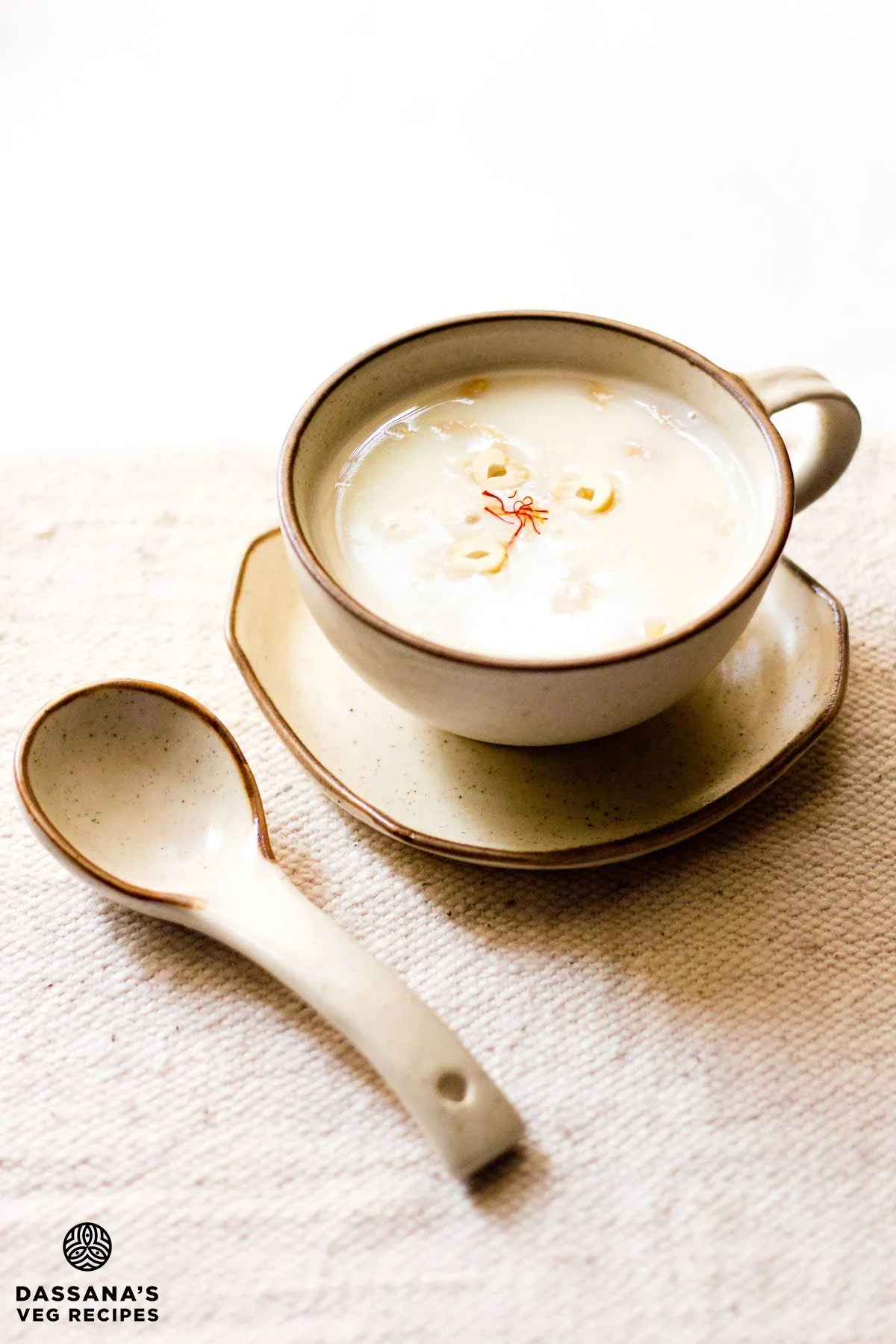
The landscape of Indian festive cuisine is a vibrant tapestry of flavors, textures, and deep-rooted traditions. Among the most revered of these offerings is Sabudana Kheer, a creamy, pearl-studded pudding that transcends its status as a simple dessert to become a cornerstone of religious and cultural observance. Often referred to as Sago Kheer or Tapioca Pudding, this dish has undergone a significant transformation in modern kitchens, moving from a labor-intensive ritual to an efficient, accessible delicacy.
As the Navratri festival approaches each year, millions of households across the Indian subcontinent and the global diaspora turn to this gluten-free starch for sustenance. Recent culinary shifts, highlighted by experts like Dassana Amit, have introduced innovative "no-soak" methods that are redefining how home cooks approach this ancient staple.
Main Facts: The Anatomy of a Fasting Staple
Sabudana Kheer is essentially a composition of five core elements: tapioca pearls (sabudana), milk, sweetener, aromatics (cardamom and saffron), and textural enhancements (nuts and raisins). While its ingredients are humble, the dish’s preparation is a study in starch management.

The primary ingredient, sabudana, is derived from the starch extracted from the cassava root (Manihot esculenta). In India, it is a "Vrat" or fasting essential because it is a pure carbohydrate source, providing the immediate energy required during periods of dietary restriction. The "Satvik" nature of the dish—prepared without grains, salt, or heavy spices—makes it the ideal fuel for devotees observing Navratri, Shivratri, or Ekadashi.
The hallmark of a well-executed Sabudana Kheer is the consistency of the pearls. They must be "translucent," a visual indicator that the starch has fully gelatinized. Traditionally, achieving this required hours of soaking to ensure the core of the pearl was hydrated. However, modern culinary journalism and recipe development have identified a faster route: cooking the pearls directly in water before the introduction of dairy. This method not only saves time but also leverages the chemistry of starch to create a naturally thicker, creamier texture without the need for condensed milk or artificial thickeners.
Chronology: From Cassava Root to the Modern Table
The journey of Sabudana Kheer is inextricably linked to the history of cassava in India. While often perceived as an ancient Vedic ingredient, cassava was actually introduced to India by the Portuguese in the 17th century. It gained significant traction in the 19th century as a famine-relief crop, particularly in Kerala, due to its resilience and high caloric density.

- The Pre-Industrial Era: Sabudana was processed manually. The pearls were irregular, and the starch quality varied. Preparation was a slow process, involving overnight soaking to prevent the pearls from remaining "kacha" (raw/hard) in the center.
- The Mid-20th Century: With the industrialization of sago production in Salem, Tamil Nadu (the sago hub of India), uniform pearls became available. This standardized the cooking times and led to the proliferation of Sabudana Kheer as a popular "anytime" dessert beyond religious circles.
- The 2013 Methodological Shift: In September 2013, culinary archives began documenting more efficient techniques. The "Dassana Method"—cooking rinsed pearls in boiling water—began to gain traction. This bypassed the 4-to-8-hour soaking window, catering to the fast-paced lifestyle of the 21st-century urban dweller.
- The Modern Era: Today, Sabudana Kheer is viewed through the lens of the "Global Gluten-Free Movement." It has transitioned from a niche fasting food to a sophisticated pudding served in high-end restaurants, often garnished with artisanal ingredients like Persian saffron and Marra almonds.
Supporting Data: Nutritional and Chemical Composition
To understand the popularity of Sabudana Kheer, one must look at its nutritional profile. A standard serving (approximately one bowl) contains:
- Calories: 220 kcal
- Carbohydrates: 36g (Primary source: Tapioca starch)
- Protein: 5g (Primary source: Whole milk)
- Fats: 6g (including 3g of Saturated Fat)
- Micronutrients: Calcium (160mg), Potassium (249mg), and Vitamin A (202 IU).
The Science of the "No-Soak" Method
The shift to cooking in water first is backed by thermal physics. Water has a lower viscosity than milk and can penetrate the starch granules of the tapioca pearl more rapidly. When sabudana is cooked in milk from the start, the fats and proteins in the milk coat the pearls, potentially slowing down the hydration of the starch core.
By simmering the pearls in water for 5–6 minutes, the cook initiates "floating" and "swelling." As the starch molecules absorb water, they expand and eventually turn translucent. When warm milk is added at this stage, the partially released starch acts as a natural emulsifier, binding with the milk fats to create a velvety mouthfeel.

Official Responses and Expert Perspectives
Culinary experts and nutritionists offer a nuanced view of the role of Sabudana Kheer in the modern diet.
The Chef’s Perspective:
"The challenge with Sabudana is the ‘clump factor,’" says a Mumbai-based pastry chef. "Many amateur cooks end up with a sticky mass. The ‘Dassana method’ of rinsing until the water runs clear is critical. This removes the excess surface starch that causes clumping. Using whole milk is also non-negotiable for the traditional flavor profile, as the fat content balances the clean, neutral taste of the sago."
The Nutritionist’s Perspective:
Nutritionists emphasize the "energy-loading" aspect of the dish. "During a fast, your blood glucose levels can dip significantly," notes Dr. Anjali Sharma, a clinical nutritionist. "Sabudana provides a quick glucose spike, while the proteins in the milk and the healthy fats in the nuts provide a more sustained energy release. However, because of its high glycemic index, we recommend it be consumed in moderation, especially for those with metabolic concerns."

The Cultural Historian’s Perspective:
"Sabudana Kheer is a beautiful example of ‘accidental’ fusion," explains a food historian. "It takes a Latin American root, processes it using techniques developed in Southeast Asia, and prepares it using the ancient Indian ‘Ksheer’ (milk-based) tradition. It is a testament to India’s ability to localize foreign ingredients into the most sacred of rituals."
Implications: Tradition in a Fast-Paced World
The evolution of the Sabudana Kheer recipe has several broader implications for food culture and the domestic economy.
1. The Preservation of Fasting Traditions
By simplifying the preparation process, traditional dishes are more likely to be preserved by younger generations. The "no-soak" method removes the barrier of "planning ahead," allowing busy professionals to observe Navratri traditions without the logistical burden of long-term food prep.

2. The Gluten-Free Boom
As gluten sensitivity becomes more widely diagnosed globally, Sabudana Kheer is being repositioned as a premier gluten-free dessert. Its texture is often compared to the "Boba" in bubble tea, making it approachable to Western palates. This has led to an increase in the export of Indian-processed sago pearls to international markets.
3. Economic Impact on Sago Hubs
The sustained popularity of Sabudana recipes directly supports the agricultural economy of regions like Tamil Nadu and Andhra Pradesh. Small-scale industries involved in cassava processing rely on the seasonal surges in demand during the Indian festive calendar.
4. Culinary Customization
The modern iteration of the recipe allows for significant dietary flexibility. While the core recipe uses raw sugar and whole milk, contemporary variations have emerged using jaggery (added after cooling to prevent curdling), almond milk for vegans, and stevia for the calorie-conscious.

Conclusion: The Enduring Legacy of the Pearl Pudding
Sabudana Kheer remains more than just a recipe; it is a sensory experience that evokes the warmth of home and the solemnity of devotion. Whether it is served hot on a rainy evening or chilled as a refreshing summer treat, its consistency—thickening as it cools, with pearls that offer a slight, soft resistance to the bite—is a hallmark of Indian culinary finesse.
The move toward more efficient cooking methods, as seen in the "Dassana archives," does not signal a loss of tradition. Rather, it represents the adaptability of Indian cuisine. By understanding the science of the starch and the needs of the modern cook, Sabudana Kheer continues to hold its place at the center of the Indian table, proving that even the most ancient traditions can find a way to thrive in the modern age.
As we look forward, the humble tapioca pearl stands as a symbol of resilience—a simple root starch that became a divine offering, surviving centuries of change to remain a beloved staple of the Indian gastronomic identity.
