

PHNOM PENH / NEW DELHI – In a move that underscores the immense scientific and logistical challenges of transcontinental wildlife restoration, the governments of India and Cambodia have officially postponed the ambitious plan to reintroduce Bengal tigers into the Cardamom Mountains. Originally slated for a 2025 launch, the project’s timeline has been pushed back to 2028.
The decision follows a rigorous technical review which concluded that the current "prey base"—the population of deer, wild boar, and other herbivores necessary to sustain a large carnivore—is currently insufficient to support a viable, self-sustaining tiger population. This strategic pause highlights a growing consensus among conservationists: for rewilding to succeed, the landscape must be prepared not just as a cage-free enclosure, but as a functioning ecosystem capable of feeding its apex predators.
I. The Core Challenge: Why 2025 Became 2028
The postponement is rooted in the fundamental biology of the Panthera tigris. As one of the world’s most demanding apex predators, a single tiger requires a substantial biomass of prey to survive and reproduce. In the rugged terrain of Cambodia’s Kravanh National Park, part of the Cardamom Mountains, that biomass is currently lacking.
According to Jimmy Borah of Aaranyak, an international consultant to Cambodia’s Ministry of Environment (MoE), the shortage of prey has been a persistent "talking point" and a primary concern since the project’s inception. The 2028 target is not merely a delay but a tactical window intended to allow Cambodia to implement intensive "prey augmentation" programs. This involves both the protection of existing herbivore populations and the potential translocation of prey species from other regions to "jump-start" the food chain.
The decision to delay also reflects a cautious approach from the Indian government and the National Tiger Conservation Authority (NTCA). Having recently navigated the complexities of reintroducing cheetahs from Africa, Indian officials are wary of the international scrutiny and ecological risks associated with moving large carnivores into habitats that may not yet be ready to receive them.
II. A Chronology of Extinction and Ambition
To understand the weight of this delay, one must look at the history of the tiger in Southeast Asia. Cambodia was once home to a thriving population of Indochinese tigers. However, decades of civil unrest, unchecked poaching, and the "silent forest" phenomenon—where forests remain standing but are emptied of wildlife by snares—led to a rapid decline.
- 2007: The last confirmed sighting of a tiger in Cambodia was captured by a camera trap in the Mondulkiri Protected Forest.
- 2016: After years of no sightings, the Cambodian government and the World Wildlife Fund (WWF) formally declared tigers "functionally extinct" in the country.
- 2017: Cambodia approved the Tiger Action Plan, signaling its intent to become the first nation to reintroduce tigers after total extinction.
- 2022: A landmark Memorandum of Understanding (MoU) was signed between India and Cambodia. India, having successfully doubled its own tiger population, agreed to provide Bengal tigers to seed a new population in the Cardamoms.
- June 2024: Reports began to surface from conservation scientists expressing deep skepticism regarding the readiness of the Cardamom landscape.
- September 2024: Following a high-level review, the official postponement to 2028 was announced.
III. Supporting Data: The Science of "Empty Forest Syndrome"
The decision to delay is backed by sobering statistical data. A pivotal 2020 study published in Conservation Science and Practice assessed the feasibility of reintroduction in the Cardamom Rainforest Landscape. The findings were stark.
The Probability of Success
The study utilized spatial modeling to estimate the carrying capacity of the 926,123-hectare Kravanh National Park. The researchers found:
- Less than a 25% probability that the current landscape could support a "viable" population of 25 adult tigers.
- An 80% probability that the forest could support a tiny, high-risk population of only five tigers.
For a reintroduction project to be considered successful, a population must be large enough to avoid the "extinction vortex" caused by inbreeding and environmental fluctuations. Starting with only five tigers in a landscape with low prey density would likely lead to the animals wandering outside protected boundaries in search of food, increasing the risk of human-wildlife conflict or death by poaching.
The Biomass Gap
A Bengal tiger typically kills about 50 to 60 large prey animals per year. To sustain a breeding population, the density of prey species like Sambar deer, Muntjac (barking deer), and Wild Pig needs to be significantly higher than what currently exists in the Cardamoms. The 2020 study suggested that without a massive reduction in snaring and a multi-year effort to boost herbivore numbers, the tigers would face starvation within months of release.
IV. Official Responses and Expert Perspectives
The postponement has drawn reactions from across the global conservation community, ranging from relief to renewed calls for structural reform in Cambodian forest management.
The Voice of Experience: K. Ullas Karanth
Dr. K. Ullas Karanth, a world-renowned carnivore biologist, has been one of the most vocal critics of a premature release. Quoted in earlier reports, Karanth has consistently emphasized that "prey availability ultimately determines whether tigers can survive."

He argues that the "glamour" of releasing tigers often overshadows the "drudgery" of protecting prey. Karanth’s stance is that releasing tigers into a forest where the prey base has been decimated by snaring is not conservation; it is an ecological death sentence for the translocated animals.
The Cambodian Ministry of Environment (MoE)
Cambodian authorities have accepted the revised timeline as a necessary period for "habitat hardening." The MoE has identified three pillars of work for the next four years:
- Intensified Patrolling: Increasing the number of rangers in Kravanh National Park to deter loggers and poachers.
- Zero-Snaring Campaigns: Cambodia has launched high-profile campaigns to eliminate the use of wire snares, which are the primary cause of the "empty forest" syndrome in Southeast Asia.
- Prey Restoration: Plans are being discussed to move herbivores from better-stocked areas or to implement intensive breeding programs for deer species.
The Indian Perspective
For India, the project represents a point of national pride and "soft power" diplomacy. However, the Indian Ministry of Environment, Forest and Climate Change (MoEFCC) is under pressure to ensure that the "gift" of Bengal tigers does not result in a public relations disaster. The 2028 delay allows India to monitor Cambodia’s progress in law enforcement before the first crates are loaded onto planes.
V. Implications: The Future of Global Rewilding
The delay in the Cambodia-India tiger project has broader implications for the global "TX2" goal—the international commitment to double the world’s wild tiger population.
1. A Shift from "Quantity" to "Quality"
The postponement marks a shift in conservation philosophy. In the past, the focus was often on the number of animals released. Today, the focus is on the "functionality" of the ecosystem. If Cambodia can successfully restore its prey base by 2028, it will provide a blueprint for other nations (such as Vietnam or Laos) that have also lost their tiger populations.
2. The Lesson of the Cheetah
The international conservation community is still processing the lessons from India’s own Cheetah reintroduction project in Kuno National Park. While the project successfully brought the species back to Indian soil, it faced high mortality rates due to unforeseen factors like skin infections and habitat suitability. The Cambodia-India tiger project is clearly benefiting from a "caution-first" approach, choosing to wait for the right conditions rather than rushing to meet a political deadline.
3. Economic and Community Impact
The Cardamom Mountains are not just a wilderness; they are home to indigenous communities and are a vital watershed for Cambodia. A successful tiger reintroduction could transform the region into a premier ecotourism destination, providing sustainable income for locals. However, a premature introduction that leads to tigers killing livestock or entering villages would turn the local population against conservation efforts. The 2028 timeline provides more time for "community readiness" programs to ensure that humans and tigers can coexist.
4. The Threat of the "Silent Snares"
The biggest hurdle remains the snare. In Southeast Asia, millions of homemade wire snares litter protected areas. They are cheap, easy to hide, and indiscriminate. Even if Cambodia imports thousands of deer, they will be vacuumed up by snares if law enforcement does not improve. The success of the 2028 launch will depend less on the tigers themselves and more on the ability of the Cambodian government to win the war against the illegal bushmeat trade.
Conclusion: A Strategic Pause for a Sustainable Future
The decision to postpone the reintroduction of Bengal tigers to Cambodia is a victory for scientific integrity over political optics. While the world must wait another three years to see the return of the "King of the Jungle" to the Cardamom Mountains, that wait ensures that when the tigers finally do arrive, they will find a home that can truly sustain them.
The 926,123 hectares of Kravanh National Park represent one of the last great hopes for rainforest conservation in Asia. By focusing on rebuilding the entire food web—from the smallest barking deer to the mightiest Sambar—Cambodia and India are attempting something far more difficult and far more valuable than a simple translocation. They are attempting to heal a broken ecosystem.
As 2028 approaches, the eyes of the world will remain on the Cardamoms, watching to see if the "silent forest" can once again find its voice in the roar of the tiger.
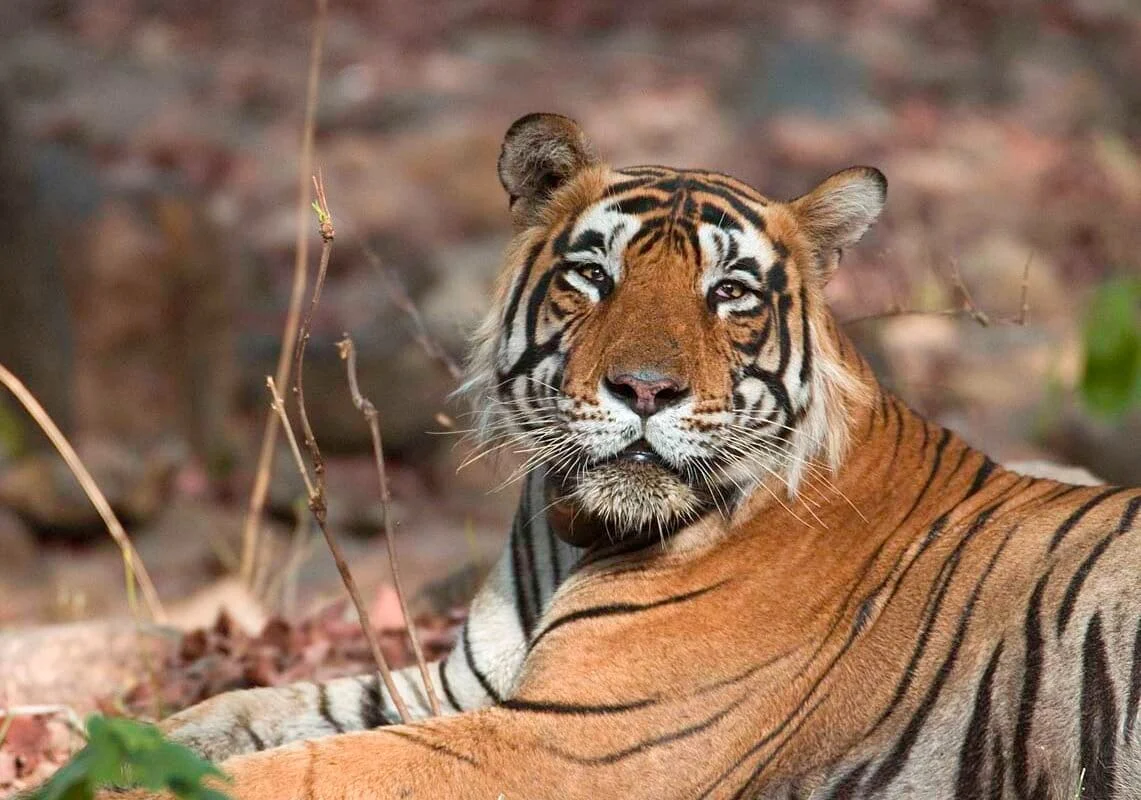
Banner image: A male Bengal tiger in Ranthambore Tiger Reserve, India. Such individuals are the potential candidates for future translocation to Cambodia. Photo by Koshy Koshy via Flickr (CC BY 2.0).
