

New Delhi – September 9, 2026, 11:00 PM IST
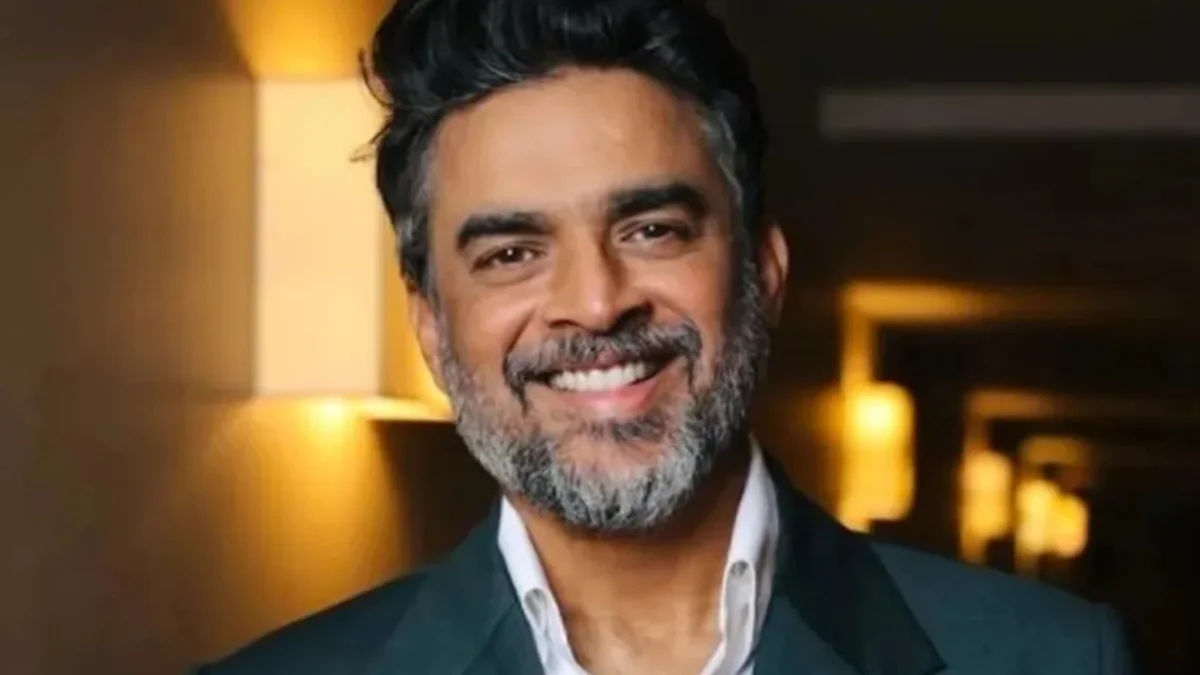
Actor R. Madhavan’s recent candid remarks about the burgeoning trend of dining inside movie theatres have ignited a wider societal debate, extending far beyond the confines of multiplexes and the etiquette of consuming street food like pani puri during a film screening. While his assertion that such practices are “stupidity” and that patrons should instead opt for dedicated restaurants for their meals has predictably divided opinion, it has also served as a potent catalyst for introspection into a more pervasive phenomenon: the modern human tendency to multitask and our diminishing capacity for singular, focused experiences.
Madhavan, known for his thoughtful and often provocative public statements, articulated his frustration during an interview with M9 News. When questioned about whether audiences had become “brutal” in their criticisms, he pivoted to a different concern, highlighting what he perceives as inherent distractions within the theatre environment itself, even before a film begins. “Want lunch or dinner? Go to a restaurant, not a theatre! Why do you want to eat pani puri in a theatre? It’s all stupidity if you ask me,” he stated, implying that the very act of combining dining with cinematic viewing detracts from the intended experience and potentially irritates other patrons.
The Case for Focused Experiences: Beyond Pani Puri
While the debate over cinema snacks and the appropriate venue for culinary enjoyment is a valid one, Madhavan’s commentary has inadvertently tapped into a deeper psychological and societal undercurrent. The core of the discussion, as highlighted by experts, transcends mere personal preference or cinema etiquette. It probes the fundamental question: when did one experience cease to be sufficient for modern individuals?
The pattern Madhavan’s observation points to is alarmingly familiar: we eat while watching television, simultaneously scroll through social media on our phones, respond to messages during important meetings, meticulously photograph our meals before even tasting them, listen to podcasts while exercising, and often reach for our devices within moments of a conversation hitting a lull. Even our leisure time, once a sanctuary for focused relaxation or engagement, has become a landscape of constant digital toggling and fragmented attention. We are physically present in one environment, yet mentally navigating a multitude of others.
The Attention Economy and the Erosion of ‘Enough’
Delnna Rrajesh, a psychotherapist and relationship breakthrough coach, offers a critical perspective on this phenomenon, moving beyond simplistic diagnoses of “shrinking attention spans” or “poor discipline.” She posits that we are living within an “attention economy,” a paradigm where countless businesses, platforms, and devices are locked in a perpetual battle for our most valuable and finite resource: our attention.
“We carefully budget money because we understand that it is finite. Attention deserves similar respect,” Rrajesh explains. “Where we repeatedly place it influences what we remember, what we learn, which relationships deepen, and ultimately what our days feel like. Attention is not merely a productivity resource. It is one of the primary ways through which we experience our lives.”
This relentless competition for our attention, Rrajesh argues, has conditioned us to seek constant stimulation, making even moments of quiet contemplation feel uncomfortable. She emphasizes that mild boredom is not inherently detrimental. In fact, “unstructured mental space allows us to reflect, daydream, notice our surroundings, and allow thoughts to develop without constantly replacing them with new input. Some of our most useful insights arrive precisely when the mind is not being continuously occupied.”
The Paradox of Pleasure: Overstimulation vs. Enjoyment
The proliferation of multitasking and the desire to layer multiple experiences simultaneously often stems from a misconception that more pleasure equates to more enjoyment. However, Rrajesh distinguishes between pleasure and overstimulation.
“A film can be pleasurable. Good food can be pleasurable. Conversation can be pleasurable. Social media can be pleasurable,” she elaborates. “But combining every available source of stimulation does not necessarily multiply enjoyment. At some point, it can dilute it.”
The consequence of this dilution is a diminished capacity to truly savor any single experience. We taste the food less because we are engrossed in the film, we absorb the film’s narrative less because our attention is divided by our phone, and we engage less with the person beside us because our cognitive resources are fragmented across multiple stimuli.
This leads to a broader critique of modern life’s underlying assumption: that experiences are inherently enriched by augmentation. A meal requires entertainment, exercise necessitates content, holidays demand constant documentation, rest is punctuated by streaming services, and even moments of natural beauty are reduced to photographs, followed by the subsequent digital validation of likes and comments. The implicit belief is that adding another pleasurable element invariably makes an experience richer. Rrajesh contends that, paradoxically, “sometimes subtraction does. That capacity for ‘enoughness’ may be one of the quieter casualties of abundance.”
Remembering Presence: The Lost Art of Unmediated Memory
In an era saturated with digital recording devices and the urge to document every moment, Rrajesh draws a poignant parallel to childhood memories. Many of our most vivid and cherished childhood recollections, particularly from pre-digital generations, were never captured by a camera.
“We remember the smell of a grandparent’s kitchen, an afternoon playing outside, the excitement before a festival, or a conversation in the car because, at that moment, we were simply there,” she reflects. “Perhaps memory does not only need photographs. It needs presence.” This suggests that the act of being fully present, without the intermediary of a device or a secondary activity, is crucial for forging deep and lasting memories.
Reclaiming Attention: Practical Strategies for a Hyper-Stimulated World
The call for a more focused existence does not necessitate a radical rejection of modern conveniences. Extreme digital detoxes, while appealing to some, are neither realistic nor desirable for the majority. Instead, the emphasis lies on cultivating conscious awareness of our automatic behaviors and making deliberate choices.
Rrajesh proposes a series of practical experiments for individuals and families to begin reclaiming their attention:
- The Attention Audit: For a single day, consciously observe every instance where a secondary stimulus is automatically added to a primary experience. This could include checking your phone while eating, scrolling while watching television, responding to messages during work, consuming videos while waiting, or taking photographs while experiencing something beautiful. The critical follow-up question is: “Did the second activity genuinely improve the first experience, or did I add it because being with one thing felt uncomfortable?”
- Pockets of Undivided Attention: Families can experiment with creating small, dedicated periods of focused engagement. This could involve:
- One screen-free meal per day.
- A twenty-minute conversation with all phones out of sight.
- A short walk without headphones.
- Watching a film without simultaneous scrolling.
- Allowing a child sufficient unstructured time to foster their own creativity and inventiveness.
- Occasionally driving without filling every silence with external audio.
“These are not rules,” Rrajesh emphasizes. “They are experiments in reclaiming attention.”
The Larger Question: Beyond Cinema Etiquette
R. Madhavan’s initial statement, while seemingly about a specific cinema-related grievance, has inadvertently opened a Pandora’s Box of broader societal issues. The evolution of cinema and audience preferences is a dynamic process, and there is no inherent virtue in advocating for an overly austere entertainment experience. However, Madhavan’s observation provides a valuable opportunity to examine a much larger, more insidious trend.
The question is not simply whether pani puri belongs in a movie theatre. The more profound inquiry is whether we are collectively losing the capacity to experience anything fully without the immediate addition of another layer of stimulation. In a world characterized by unprecedented abundance of information, entertainment, and sensory input, perhaps one of the most crucial psychological capacities we can cultivate is the ability to recognize and embrace the state of “enough.” This includes knowing when we have absorbed enough information, experienced enough entertainment, received enough stimulation, and processed enough input, allowing ourselves to simply be with the present moment.
R. Madhavan’s trending status on Google over the past 24 hours is a testament to the resonance of his simple yet profound observation. It suggests a collective yearning for a return to more focused, present, and ultimately, more meaningful experiences in an increasingly fragmented world.
