

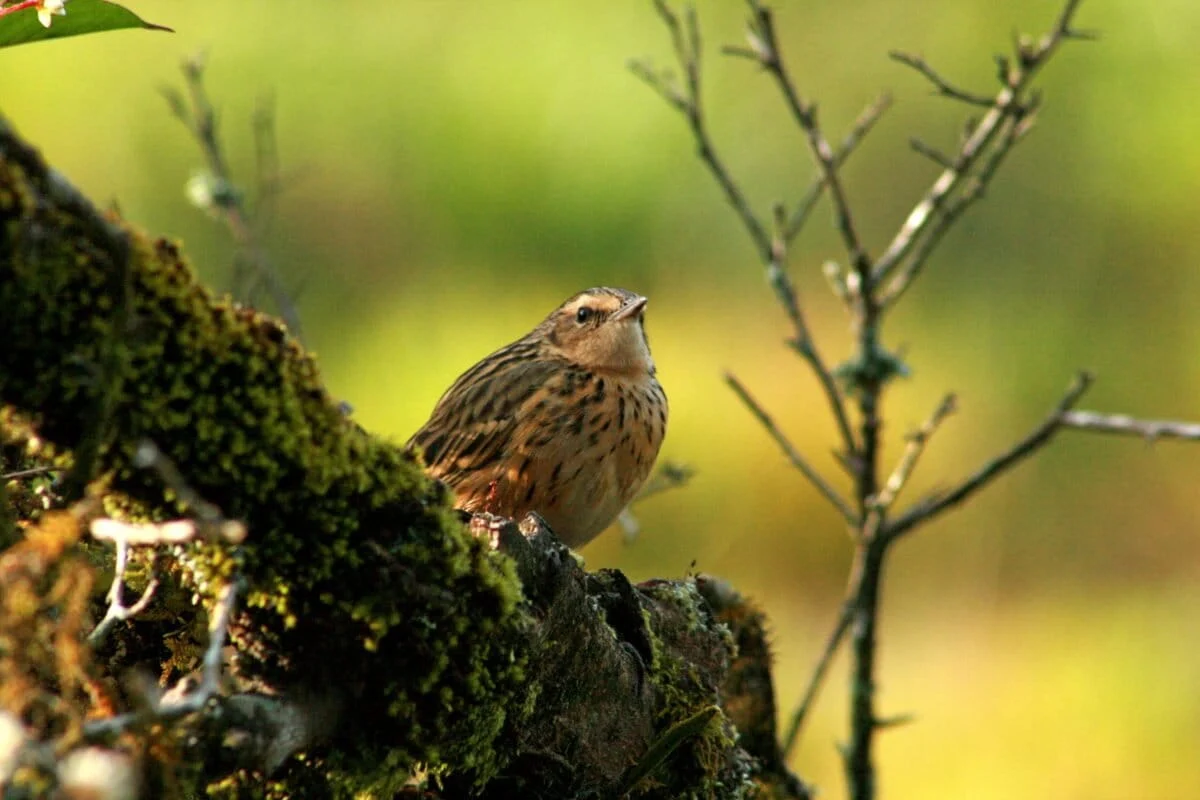
The high-altitude reaches of the Nilgiris in Tamil Nadu, often referred to as the "Blue Mountains," are home to one of the world’s most unique and fragile ecosystems: the Shola sky islands. This landscape is defined by a natural mosaic of stunted evergreen montane forests, known as Sholas, nestled in the folds of rolling, expansive grasslands. However, this ancient balance is being disrupted. Recent scientific inquiries have revealed that the gradual disappearance of these native grasslands is fundamentally altering the movement patterns of endemic bird species, creating an ecological "bottleneck" that threatens the survival of the region’s most specialized inhabitants.
I. Main Facts: A Landscape Under Siege
The Shola sky islands are biologically significant not just for their beauty, but for their role as "islands" of evolution. Much like oceanic islands, these high-elevation habitats are separated from one another by lower-elevation valleys, leading to high rates of endemism—species found nowhere else on Earth.
The core of the current crisis lies in the dramatic shift in land-use dynamics. Over several decades, the native grassland-forest mosaic has been invaded by exotic, non-native tree species. This "woody invasion" has transformed open foraging grounds into dense, artificial woodlands. The primary victims of this transformation are "grassland specialists"—birds that have evolved specifically to live, hunt, and breed in open, high-altitude meadows.
A landmark study led by researchers from the Indian Institute of Science Education and Research (IISER) Tirupati has now quantified the cost of this change. By focusing on seven endemic bird species, the research highlights a stark divide: while some forest-dwelling birds can navigate the new, human-altered landscape, grassland specialists like the Nilgiri pipit are being pushed toward local extinction due to a total loss of habitat connectivity.

II. Chronology of Change: From Colonial Ambition to Ecological Crisis
The degradation of the Nilgiris did not happen overnight; it is the result of nearly two centuries of systematic land alteration.
- The Colonial Era (1800s – mid-1900s): During British rule, the Shola grasslands were often viewed as "wastelands" because they lacked timber-producing trees. To rectify this perceived lack of productivity, colonial foresters introduced exotic species from Australia and Europe, including Acacia mearnsii (Black Wattle), Eucalyptus globulus (Blue Gum), and various Pinus species. These were intended for firewood, timber, and the tanning industry.
- Post-Independence Expansion (1950s – 1980s): The drive for industrial wood and paper pulp led to the further expansion of these plantations. Large swathes of the Nilgiris and Palani Hills were converted into monoculture plantations, with little understanding of the complex hydrological and biological roles played by the native grasslands.
- The Period of Rapid Decline (1973 – 2017): Satellite data and historical mapping reveal the true scale of the damage during this window. In just 44 years, the Shola sky islands lost approximately 516 square kilometers of grasslands and 63 square kilometers of native Shola forests.
- The Invasion Phase (Present): Today, even where active planting has stopped, the exotic species—particularly Acacia—have become invasive. They spread naturally into the remaining grassland patches, further shrinking the habitat available for native fauna.
III. Supporting Data: Modeling the Limits of Adaptability
To understand how these changes impact biodiversity, researchers Chiti Arvind, Arunima Jain, and V.V. Robin of IISER Tirupati conducted an extensive study covering 2,900 square kilometers across the Nilgiris and the Palani-Anamalai sky islands.
The Methodology
The team built 126 predictive models to simulate the movement patterns of seven endemic species. These species were categorized into two groups:
- Forest Specialists: The white-bellied sholakili, Palani laughingthrush, Nilgiri sholakili, Nilgiri laughingthrush, black-and-orange flycatcher, and Nilgiri flycatcher.
- Grassland Specialists: The Nilgiri pipit (Anthus nilghiriensis).
The Divergence in Connectivity
The models revealed a "tale of two habitats."
- Forest Specialists: As exotic plantations grew, they ironically provided a bridge of sorts for forest birds. While these birds avoid human settlements and tea plantations, the "woodiness" of exotic plantations allowed them to maintain some level of movement between forest patches.
- The Nilgiri Pipit’s Isolation: For the Nilgiri pipit, the results were catastrophic. As a bird that requires open vistas to forage and nest, the encroachment of trees acts as a physical and psychological barrier. The study found that the pipit’s movements were hindered across almost the entire study area.
Data from separate long-term surveys confirm these findings, showing that the Nilgiri pipit has suffered the steepest population decline of any bird in the region over the last few decades. The birds are now trapped in tiny, disconnected "islands within islands."

IV. Official Responses and Expert Analysis
The researchers emphasize that the current management of these landscapes requires a paradigm shift.
Chiti Arvind, Postdoctoral Fellow at IISER Tirupati, notes that the study provides a "window into how species specialized to high-elevation grassland habitat types respond to habitat alterations." She warns of the long-term genetic consequences: "Future studies examining genetic connectivity across populations of these species are needed to determine whether these habitat changes have actually reduced gene flow and whether there is a risk of isolation."
Arunima Jain, a contributing researcher, explains the mechanics of the displacement: "Since the Shola landscape alternates between forests/woodlands and grasslands, an increase in woodland cover implies a corresponding decrease in grassland, resulting in more fragmented natural grassland habitat and a subsequent decrease in connectivity."
V.V. Robin, Associate Professor at IISER Tirupati, underscores the urgency of restoration. "Different species occupying the same spaces can have vastly different survival and movement requirements. We emphasize the need to restore and preserve vanishing native grassland habitat specifically in the Shola Sky Islands of the Western Ghats." He suggests that the models developed in this study can now be used by the Forest Department to identify "priority areas" where removing invasive trees would have the greatest impact on bird connectivity.
V. Implications: Beyond Birds—The Hydrological and Global Context
The crisis in the Nilgiris is not merely an "ornithological problem." It is a warning sign of a collapsing ecosystem that provides vital services to millions of people.

1. The Water Tower Effect
The Shola-grassland mosaic acts as a giant sponge. The grasslands absorb heavy monsoon rains, allowing the water to slowly seep into the ground and replenish the streams that feed major rivers like the Bhavani and the Cauvery. Research has shown that when grasslands are replaced by exotic trees, the soil’s water retention capacity drops significantly. Exotic trees like Eucalyptus are "thirsty," transpiring more water back into the atmosphere and reducing the base flow of downstream rivers.
2. The Bioindicator Role
Birds are the "canaries in the coal mine" for the Western Ghats. The decline of the Nilgiri pipit indicates that the very structure of the high-altitude environment is failing. If the pipit cannot move, it is likely that other less-studied grassland organisms—such as specific endemic insects, reptiles, and wildflowers—are also facing isolation and local extinction.
3. The Genetic Bottleneck
When populations become isolated, they are forced into inbreeding. This reduces genetic diversity, making the species less resilient to diseases and the burgeoning impacts of climate change. For the Nilgiri pipit, which is already restricted to a tiny geographic range, this isolation could be the final precursor to extinction.
4. Lessons for Global Conservation
The situation in the Nilgiris mirrors a global trend where "afforestation" is mistakenly viewed as a universal good. In Maharashtra, similar studies have shown that planting trees on natural grasslands (often misclassified as scrubland or wasteland) destroys the habitat of specialist birds like the Great Indian Bustard. The Nilgiri study reinforces a growing consensus in ecology: planting the wrong trees in the wrong place can be as damaging as deforestation.
Conclusion: The Road to Restoration
The survival of the Nilgiri pipit and the health of the Shola sky islands depend on an aggressive and scientifically backed restoration strategy. This involves more than just stopping the spread of invasive species; it requires the active removal of exotic plantations and the re-seeding of native grasses.

The findings from IISER Tirupati provide a roadmap for this intervention. By focusing on restoring connectivity corridors, conservationists can ensure that the "blue mountains" remain a vibrant, living mosaic rather than a collection of isolated, dying fragments. The fate of the Nilgiri pipit is a test of India’s ability to protect its most specialized and vulnerable biodiversity in an era of rapid environmental change.
