

Introduction: Challenging the Established Order
Under Armour has long occupied the position of a determined challenger in the fiercely competitive running shoe market. While consistently demonstrating technical prowess and delivering occasional flashes of brilliance, the brand has yet to consistently command the top-of-mind recognition enjoyed by some of its more established rivals. Their latest offering, the Velociti Distance, enters the fray as a dedicated high-mileage, long-run trainer. This shoe is a testament to a thoughtful design process, excelling in numerous aspects. However, it also makes deliberate choices that are poised to spark significant debate among runners, creating a dichotomy that fundamentally defines the experience of lacing them up.
This in-depth review will explore the Under Armour Velociti Distance, dissecting its construction, performance on the road, and the innovative yet divisive stability system that sets it apart. We will examine its place within the broader running shoe landscape and offer guidance on who might find this shoe to be a perfect fit, and who should tread with caution.
H2: Unpacking the Design: First Impressions and Core Engineering
H3: The Weight of Expectation: A Substantial Foundation
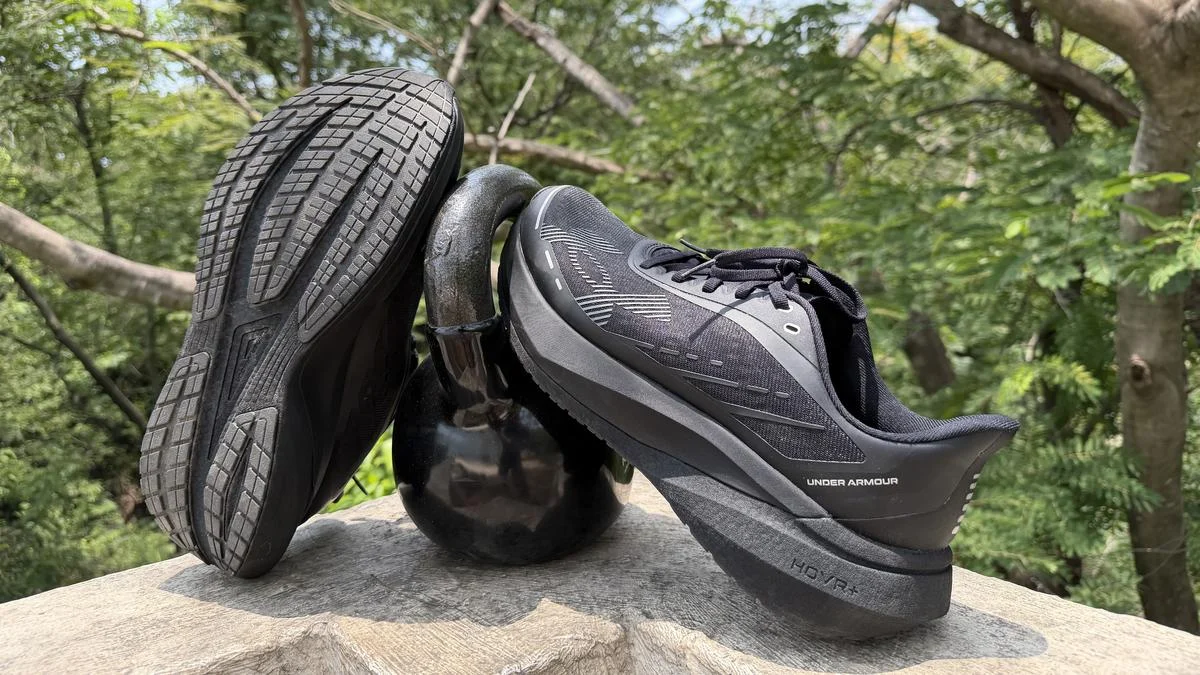
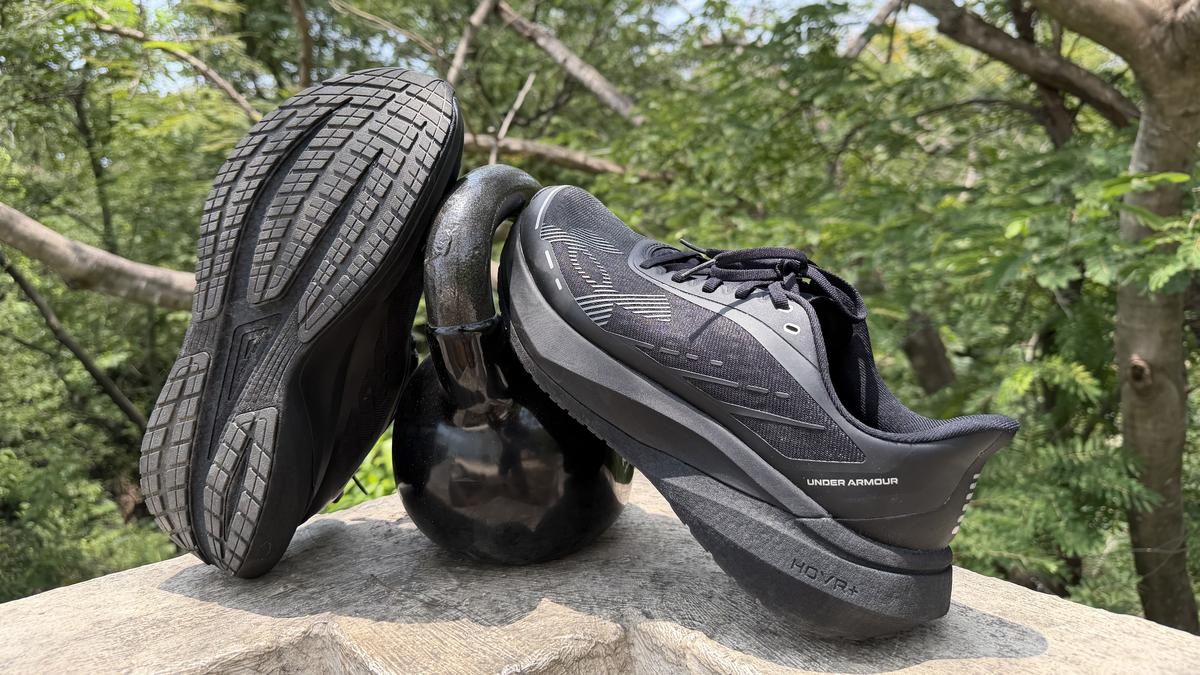
Upon first encountering the Under Armour Velociti Distance, the immediate impression is one of substance. Tipping the scales at 298 grams, it’s a shoe that consciously eschews the ultra-lightweight trend dominating modern performance footwear. This is not a shoe that apologizes for its heft; rather, it embraces it as a foundational element for its intended purpose. The generous stack height, featuring 38mm of Under Armour’s proprietary Hovr+ foam beneath the foot, immediately signals its commitment to absorbing the relentless impact of extended mileage. This isn’t just a shoe for a quick jog; it’s engineered to conquer distance.
H3: Upper Echelon Comfort: A Masterclass in Breathability and Lockdown
Where the Velociti Distance truly shines in its initial assessment is in the construction of its upper. A meticulously engineered woven mesh forms the forefoot, providing exceptional breathability. This is a critical feature for long runs, especially as ambient temperatures rise, ensuring that feet remain cool and comfortable, mitigating the risk of blisters and general discomfort. The design further incorporates a gusseted tongue, a detail often overlooked but vital for maintaining a secure fit without unnecessary pressure points. The heel counter is thoughtfully padded and structured, offering a reassuring embrace that cradles the foot without feeling overly constrictive. Overall, the lockdown achieved by the upper is confident and reliable, a crucial element for runners who demand a stable platform over many miles.
H3: A Tale of Two Fits: Security Over Accommodation
In contrast to some competitors, such as the New Balance Fresh Foam X 1080v13, which prioritizes a more relaxed and accommodating fit, the Velociti Distance leans heavily into a secure, locked-in sensation. This is precisely the kind of embrace many runners seek on their longest outings, where a feeling of being held and supported can be the difference between a triumphant finish and a struggle against an unstable shoe.
However, one minor point of contention arises with the laces. While the rest of the shoe’s materials and construction speak to a premium offering, the laces themselves feel noticeably lower in quality. This is a small detail, but in a shoe that otherwise exudes meticulous craftsmanship, it’s an element that slightly jars and detracts from the overall cohesive feel.
H2: On the Run: Performance Across Terrains and Intensities
H3: The Hovr+ Advantage: A Ride That Balances Softness and Responsiveness
The moment one steps outside in the Velociti Distance, the Hovr+ foam lives up to its promise. This supercritical TPU material, also found in Under Armour’s high-performance racing shoes, delivers a ride that is both luxuriously soft and impressively firm. It excels at absorbing impact, a crucial function for long-distance running, yet simultaneously offers sufficient energy return to maintain a feeling of responsiveness. This prevents the sensation of being bogged down by excessive cushioning, ensuring that turnover remains lively rather than sluggish. The foam provides a well-cushioned landing without sacrificing the propulsive feel needed to maintain pace.
H3: Versatility Beyond the Long Run: A True Weekly Workhorse?
What elevates the Velociti Distance beyond the category of a standard max-cushion shoe is its remarkable adaptability across different running intensities. While explicitly marketed as a long-run trainer, it performs admirably during tempo efforts and steady-state runs. This versatility suggests that the shoe is not relegated to a single-purpose role in a runner’s rotation. Instead, it can credibly serve as a dependable option for a significant portion of weekly training, potentially alleviating the need to constantly switch between different shoe types for varied workouts. This broad utility makes it an attractive proposition for runners seeking a single shoe that can handle a multitude of demands.
H3: Outsole Durability: Confidence on All Surfaces
The outsole of the Velociti Distance is a standout feature, showcasing Under Armour’s commitment to longevity and all-surface capability. The brand has been generous with its rubber coverage, a decision that, while contributing to the shoe’s overall weight, instills a profound sense of confidence when navigating varied terrains. Whether on smooth pavement or the more unpredictable surface of gravel paths, the shoe maintains its grip and stability.

This robust outsole design is a significant selling point, particularly for runners who have experienced the frustration of outsoles wearing out prematurely, leaving the midsole exposed and compromising traction long before the cushioning itself degrades. The anticipated resistance to wear through serious mileage makes the Velociti Distance a compelling choice for those prioritizing durability and a long-term investment in their running gear. The generous rubber coverage ensures that the shoe will likely outlast many of its competitors in terms of outsole integrity, offering a peace of mind for high-mileage runners.
H2: The Pivotal Element: Navigating the Stability Rails
H3: A Divisive Engineering Choice: Guiding or Forcing the Gait?
The true differentiator of the Velociti Distance, and the element most likely to elicit strong and polarized reactions, lies within its stability rails. Under Armour has integrated firm TPU inserts along both the lateral and medial sides of the midsole. The stated intention behind this design is to guide the foot through its natural gait cycle and to mitigate excessive motion within the exceptionally soft Hovr+ foam. In theory, this is an intelligent engineering solution aimed at providing a controlled and supportive ride.
However, in practical application, the effect of these stability rails is often more assertive than the gentle term "guide" might imply. The shoe possesses a distinct philosophy regarding optimal foot motion, and for runners whose natural biomechanics do not align with this prescribed path, the experience can become problematic.
H3: The Spectrum of Support: From Harmony to Hindrance
For runners whose foot mechanics naturally complement the direction provided by the stability rails, the Velociti Distance offers a sensation of unwavering support and controlled movement. Their gait is harmoniously channeled, leading to a comfortable and efficient stride.
Conversely, for those whose natural gait deviates from the rails’ directive, the inserts can inadvertently force a supinated landing. This unnatural pronation can result in a jarring and uncomfortable sensation with each stride. The correction imposed by the shoe is not subtle; it is a pronounced influence on foot placement. If the shoe’s vision for your foot’s movement doesn’t match your foot’s actual movement, runs that should feel effortless can transform into sources of discomfort rather than the intended release and enjoyment. This inherent conflict can turn an otherwise promising shoe into a source of frustration.
H3: The Competitive Landscape: A More Natural Approach Elsewhere

The Velociti Distance enters a competitive arena populated by daily trainers that often boast a longer lineage and a more established pedigree in catering to a wide spectrum of runners. Many of these established models achieve a comparable level of support and cushioning without the polarizing influence of such a pronounced stability system. They tend to offer a more neutral and less prescriptive ride, allowing individual foot mechanics to dictate the stride more freely. This comparison highlights the bold, and potentially divisive, nature of Under Armour’s approach with the Velociti Distance.
H2: The Verdict: Who Should Lace Up the Velociti Distance?
H3: The Ideal Candidate: A Runner Seeking Controlled Cushioning
The Under Armour Velociti Distance is meticulously crafted for runners who desire a high-cushion experience that remains firm enough to facilitate faster paces without necessitating a shoe change. It is a shoe that empowers runners to push beyond their usual easy pace, confident in the support and responsiveness beneath their feet.
If your gait biomechanics are demonstrably neutral, or if you experience mild pronation and find that the integrated stability rails happen to align with your natural foot strike, then this shoe presents itself as a genuinely rewarding and capable training partner. For such runners, the Velociti Distance can unlock new levels of comfort and performance over extended distances.
H3: A Word of Caution: For the Naturally Neutral Runner
However, for individuals who have consistently found comfort in neutral shoes and whose foot motion has always been characterized by a natural range of movement, approaching the stability system of the Velociti Distance requires a degree of caution. The shoe’s assertive guidance might disrupt a well-established and comfortable gait pattern. It is crucial for these runners to experience the shoe firsthand, ideally on a treadmill, to assess how their natural foot strike interacts with the integrated stability features before committing to a purchase.
H3: Conclusion: A Technically Impressive, Yet Opinionated Shoe
Under Armour has undoubtedly engineered a technically impressive shoe with the Velociti Distance. It demonstrates a deep understanding of cushioning technology and a commitment to durability. The question that remains, and the one that will ultimately determine its success, is whether its technically sound design is technically right for an individual runner. The shoe’s strong opinions on how one’s foot should move are a defining characteristic, and its success hinges entirely on whether those opinions align with your own biomechanical realities. It is a shoe that demands a personal connection, a harmonious dialogue between foot and foam, to truly unlock its potential. For the right runner, it could be a revelation; for others, a well-intentioned misstep.
