

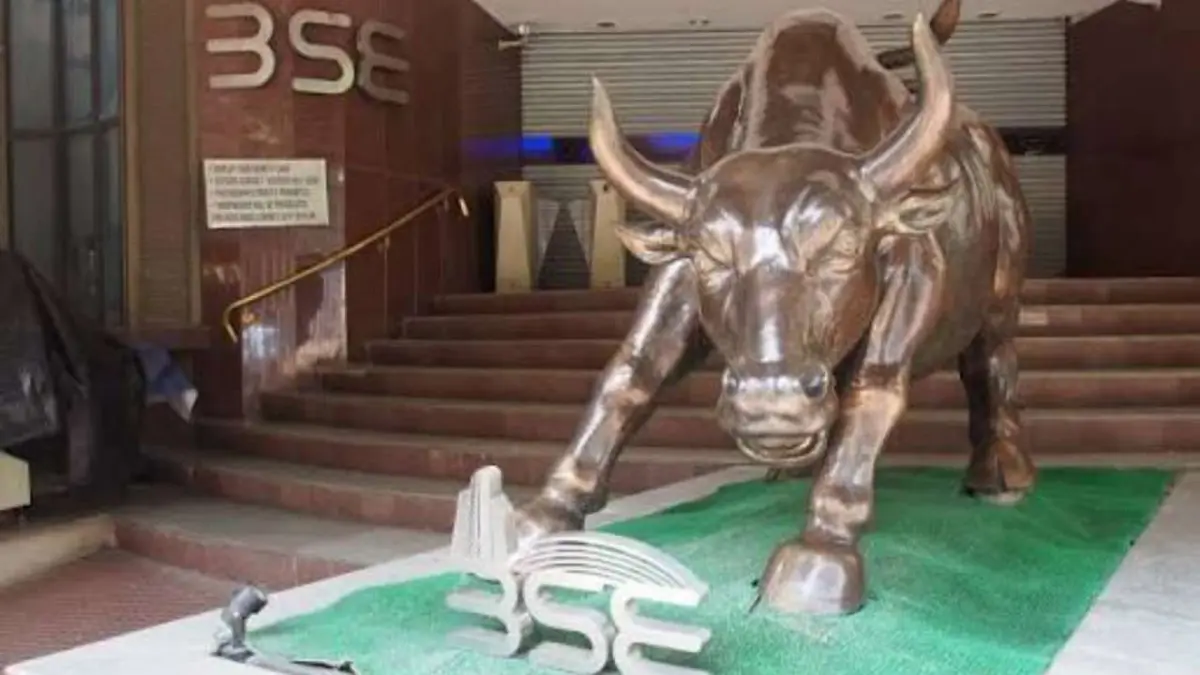
Mumbai, India – October 13, 2026 – In a perplexing turn of events that sent ripples across the Indian financial markets, RBL Bank witnessed a significant 8% decline in its share price on Tuesday, October 13, 2026, closing at Rs 388 on the Bombay Stock Exchange (BSE). This sharp correction came despite the private sector lender reporting a staggering 170% year-on-year surge in its net profit for the second quarter of the financial year 2026-27, reaching an impressive Rs 481.7 crore. The paradoxical market reaction has left many investors and analysts scrambling to understand the underlying anxieties overshadowing what appears, on the surface, to be a robust earnings report.
The dramatic divergence between a stellar bottom-line performance and a sharp stock depreciation underscores the complex interplay of headline figures, granular financial metrics, and forward-looking market sentiment. While the bank’s net profit skyrocketed from Rs 179 crore in the year-ago period, and other key operational metrics also showed considerable strength, the market’s focus quickly shifted to concerns surrounding elevated provisions and lingering uncertainties over future credit costs. This deep dive aims to unravel the layers behind RBL Bank’s recent market performance, examining the full spectrum of its Q2 FY27 results, the nuanced interpretations from leading brokerages, and the broader implications for the bank and the sector.

The Paradox Unfolds: Main Facts and Immediate Aftermath
The central enigma of RBL Bank’s Q2 FY27 results lies in the stark contrast between its headline profitability and its market valuation. On October 13, 2026, the bank announced a net profit of Rs 481.7 crore, marking a colossal 170% increase compared to the Rs 179 crore reported in the same quarter last year. Such an extraordinary jump in profitability would typically trigger a positive market response, often leading to an upward revision in stock prices. However, contrary to expectations, RBL Bank’s shares began their descent almost immediately after the results were made public, eventually shedding 8% of their value to settle at Rs 388 on the BSE.
This immediate market reaction signaled a deep-seated apprehension among investors, suggesting that while the reported profit figures were undoubtedly strong, they were perhaps overshadowed by other, less favorable aspects of the financial statement. The primary culprit, as quickly identified by market participants and analysts, appeared to be the significantly higher provisions set aside by the bank, alongside broader concerns regarding the trajectory of credit costs in the coming quarters. This swift recalibration of investor sentiment highlighted the market’s forward-looking nature, where future risk mitigation often takes precedence over historical or current profit achievements. The pronounced sell-off indicated that, for a segment of the market, the impressive profit growth might have been perceived as either unsustainable or achieved at a potential future cost, requiring closer scrutiny beyond the top-line numbers.
)
A Day in the Market: Chronology of Events
The trading day of October 13, 2026, for RBL Bank shareholders, was characterized by an initial flurry of activity followed by a sustained downward trend. Leading up to the results announcement, there was a degree of anticipation, with some analysts expecting a positive showing given the broader buoyancy in the banking sector and the bank’s efforts to stabilize its operations in recent quarters.
Pre-Market Buzz and Opening: The pre-market buzz around RBL Bank was cautiously optimistic, with some expecting the bank to capitalize on the improving economic sentiment and credit growth. The stock opened relatively flat, hovering close to its previous day’s closing price of approximately Rs 422. Initial trading saw some volatility as market participants awaited the official announcement of the Q2 FY27 results.

The Announcement and Immediate Dip: The bank officially released its Q2 FY27 results during market hours. The headline figure of a 170% profit surge initially caught attention. However, as investors and algorithmic trading systems processed the entire financial statement, particularly the section detailing provisions, the mood quickly shifted. Within minutes of the comprehensive results being available, the stock began to slide. The initial dip was sharp, indicating an immediate, negative algorithmic and institutional response to the higher-than-expected provisions and potential implications for future profitability.
Sustained Sell-Off: Throughout the day, the selling pressure intensified. Despite intermittent attempts by bargain hunters, the bearish sentiment prevailed. Large block deals were reported, suggesting institutional investors were offloading shares. The continuous decline pushed the stock through critical support levels, exacerbating panic among retail investors. By mid-afternoon, the stock had breached the Rs 400 mark and continued its downward trajectory, eventually closing at Rs 388, an 8% loss for the day. This performance was in stark contrast to the broader market, which showed mixed to slightly positive movements, indicating that RBL Bank’s decline was primarily company-specific rather than a reflection of a wider market downturn.
)
Post-Market Analysis: The sharp fall prompted immediate post-market analyses from brokerages and financial news outlets. The consensus quickly formed around the provisions and credit costs as the primary drivers of investor concern, overshadowing the otherwise robust growth in net interest income, advances, and the significant improvement in net profit. The day served as a potent reminder that in financial markets, a single line item, if perceived as a harbinger of future risk, can outweigh even the most impressive headline numbers.
Delving Deeper: Supporting Data and Financial Nuances
While the 170% profit jump to Rs 481.7 crore was the headline, a closer examination of RBL Bank’s Q2 FY27 financial statement reveals a more intricate picture, where strengths are balanced by areas of investor caution.
)
Robust Operational Performance
- Net Interest Income (NII) Soars: RBL Bank’s core lending business demonstrated impressive strength, with Net Interest Income (NII) rising 37.4% year-on-year to Rs 2,131 crore in the September quarter, up from Rs 1,551 crore in the year-ago period. This significant growth in NII is a testament to the bank’s expanding loan book and potentially improved net interest margins (NIMs), indicating healthy operational traction.
- Asset Quality Improves: Encouragingly, the bank continued its trajectory of improving asset quality. Gross Non-Performing Assets (GNPA) declined to 1.02% from 1.3% in the previous quarter, signaling a healthier loan book and effective recovery mechanisms. Similarly, Net Non-Performing Assets (NNPA) fell to 0.29% from 0.37%, reflecting a reduction in the net burden of bad loans after accounting for provisions. This improvement in asset quality metrics is generally a strong positive indicator for a bank’s fundamental health.
- Strong Advances Growth: Net advances grew by an impressive 42% year-on-year, reaching Rs 1,42,314 crore. This expansion was broad-based:
- Retail Advances: Rose 32% to Rs 79,465 crore. Within retail, secured advances saw a robust 52% growth, while unsecured advances increased by a more modest 6%. This suggests a strategic tilt towards safer, collateralized lending within the retail segment, which is generally viewed favorably.
- Wholesale Advances: Increased by a substantial 56% to Rs 62,849 crore, indicating strong corporate credit demand and RBL Bank’s increasing participation in this segment.
- Healthy Deposit Mobilization: Total deposits registered a strong 34% year-on-year growth, reaching Rs 1,56,272 crore. The Current Account and Savings Account (CASA) ratio stood at 27.2%. While the CASA ratio is a key metric for funding cost efficiency, the growth in overall deposits underscores the bank’s ability to attract funds. Granular deposits (below Rs 3 crore), a crucial indicator of retail depositor base and funding stability, increased by 16% to Rs 68,877 crore, accounting for a solid 44% of the bank’s total deposits.
- Liquidity Coverage Ratio (LCR): The average LCR for the quarter stood at a comfortable 148%, well above regulatory requirements, signifying robust liquidity management and the bank’s ability to meet short-term obligations.
The Elephant in the Room: Elevated Provisions
Despite the strong operational and asset quality metrics, the most significant point of contention for investors and analysts was the sharp rise in provisions.
- Provisions Skyrocket: Provisions increased substantially to Rs 766.5 crore in Q2 FY27. This figure is significantly higher than Rs 599.2 crore reported in the preceding June quarter (Q1 FY27) and a substantial leap from Rs 499.7 crore in the year-ago period (Q2 FY26).
- Credit Cost Concerns: While improving GNPA/NNPA typically suggests lower future provisions, the elevated current provisions raised concerns over "credit costs." Credit costs refer to the expenses incurred by a bank due to loan defaults or the anticipated risk of future defaults. The market interpreted the higher provisions as a proactive, or perhaps reactive, measure by the bank to account for potential future asset quality challenges, even if current reported NPAs looked better. This could imply that certain segments of the loan book might be under stress, or the bank is taking a highly conservative approach, which, while prudent, impacts immediate profitability and market perception.
- Impact on Net Profit Quality: Investors often scrutinize the "quality" of net profit. A profit figure that is achieved despite very high provisions can be viewed with skepticism, as it might suggest that underlying risks are being heavily provided for, potentially masking future earnings volatility or indicating that the profit would have been even higher had provisions been lower.
Capital Adequacy – A Point of Watch
While still strong, there was a slight dip in capital adequacy ratios:
)
- Total Capital Adequacy Ratio (CAR): Stood at 30.1% as of September 30, 2026, a decline from 33.3% at the end of June 2026.
- Common Equity Tier 1 (CET1) Ratio: Declined to 29% from 32.2%.
While these ratios remain well above regulatory minimums, the sequential decline, particularly in the context of strong advances growth, warrants monitoring. Rapid loan book expansion typically consumes capital, and a sustained decline in CAR/CET1 could necessitate future capital raises, which can be dilutive for existing shareholders.
In essence, RBL Bank’s Q2 FY27 results presented a dual narrative: one of robust growth, improving asset quality, and strong operational metrics, juxtaposed against a significant rise in provisions that fueled investor anxiety about future credit costs and the sustainability of its profit trajectory.
Divided Opinions: Official Responses and Brokerage Insights
The sharp market reaction to RBL Bank’s results sparked a flurry of analyses from institutional brokerages, revealing a divided stance on the bank’s future prospects.
)
Bearish Outlook: Goldman Sachs and CLSA
Leading the pessimistic camp, Goldman Sachs reiterated its ‘sell’ rating on RBL Bank, though it did raise its target price marginally to Rs 310 from Rs 285. This upward revision in the target price, despite a ‘sell’ rating, primarily stemmed from specific accounting adjustments rather than a fundamental shift in their long-term outlook.
Goldman Sachs’ rationale for its bearish stance was multi-faceted:
)
- FCNR Flows and Earnings Estimates: The brokerage acknowledged that it had raised its earnings estimates primarily to account for strong Foreign Currency Non-Resident (FCNR) flows. FCNR deposits are often high-cost and short-term, and their significant contribution to earnings can sometimes be seen as less stable or lower quality than organic, domestic deposit growth.
- Muted Retail Loan Growth: Despite an overall strong advances growth, Goldman Sachs specifically highlighted that retail loan growth remained "largely muted" when scrutinized beyond headline figures. While overall retail advances grew 32%, the distinction between secured (52% growth) and unsecured (6% growth) suggested a slowdown in the riskier, higher-yielding unsecured segment, which could impact future NIMs and profitability.
- Adjusted Deposit Growth Concerns: Critically, Goldman Sachs noted that total deposit growth was down 1% quarter-on-quarter after adjusting for the impact of FCNR-B deposits. This implies that core, domestic deposit accretion might be slowing, which is a vital metric for a bank’s sustainable funding strategy and cost of funds.
- NIM Expansion from Capital Raise: While Net Interest Margins (NIMs) expanded by a notable 48 basis points quarter-on-quarter, Goldman Sachs attributed this largely to the recent equity capital raise. Capital raises infuse fresh funds, which, when deployed, can temporarily boost NIMs. However, the brokerage implicitly questioned the sustainability of this NIM expansion without continuous capital infusion or a more fundamental improvement in asset utilization and funding costs.
- Mixed Asset Quality Trends and Credit Costs: Despite the reported improvements in GNPA and NNPA, Goldman Sachs flagged "mixed asset quality trends" and stated that credit cost improvement was "slower than expected." This suggests that beneath the headline NPA figures, the brokerage identified underlying segments or early warning indicators that could lead to higher credit costs in the future, justifying the elevated provisions. They likely view the current provisions as a necessary, rather than purely prudent, measure.
CLSA also maintained a bearish rating, likely echoing similar concerns regarding the sustainability of growth and the quality of earnings given the provisioning levels. Their analysis would likely focus on the risk-adjusted returns and the potential for higher provisions to dampen future profitability.
Positive Outlook: Citi and Nuvama
Conversely, Citi and Nuvama maintained positive ratings on RBL Bank, indicating a belief in the bank’s long-term potential and current strategic direction. While specific details of their reports were not as extensively detailed in the provided context, their positive stance would likely hinge on several factors:
)
- Strong NII Growth and Operating Leverage: The significant 37.4% year-on-year NII growth is a powerful indicator of the bank’s core earning capacity. Citi and Nuvama might be betting on this operational strength to continue, leading to improved operating leverage as the bank scales up.
- Improving Asset Quality Trajectory: Despite concerns over provisions, the sequential decline in both GNPA and NNPA is a tangible positive. These brokerages might view the elevated provisions as a conservative and prudent measure to clean up the balance sheet proactively, paving the way for healthier growth and lower credit costs in the future. They might see it as "getting ahead of the curve."
- Robust Advances and Deposit Growth: The strong overall growth in both advances (42%) and deposits (34%) signifies strong business momentum. These analysts might be more optimistic about the bank’s ability to convert this growth into sustainable, profitable expansion, viewing the dip in capital ratios as a temporary consequence of rapid growth that can be managed.
- Strategic Focus on Secured Lending: The significant growth in secured retail advances (52%) might be seen as a de-risking strategy within the retail portfolio, which could lead to better asset quality outcomes over the long term.
- Valuation Attractiveness: After the 8% fall, these brokerages might see RBL Bank’s stock as more attractively valued, presenting a buying opportunity for long-term investors who believe the underlying fundamentals are strong and the current concerns are temporary.
Bank Management’s Perspective (Plausible Statement)
While no direct official statement from RBL Bank’s management was provided in the original context, a plausible response from the bank’s leadership would likely aim to reassure investors and articulate their strategic vision:
"We are pleased to report a robust performance for Q2 FY27, marked by a 170% increase in net profit and strong growth across our key business segments. Our Net Interest Income has surged by 37.4%, reflecting the healthy expansion of our loan book and efficient margin management. We have also continued to strengthen our balance sheet, with significant improvements in both Gross and Net NPA ratios.
)
The increased provisions reflect our unwavering commitment to maintaining a prudent and conservative approach to risk management. These provisions are a proactive measure to build resilience and ensure the long-term health and stability of our asset quality, allowing us to absorb potential future uncertainties and position us strongly for sustained, quality growth. We are confident that these strategic decisions will ultimately benefit our shareholders by creating a more secure and profitable future. Our strong advances growth, healthy deposit mobilization, and robust capital adequacy ratios underscore our operational strength and our strategic focus on expanding our retail and wholesale franchises responsibly."
Future Outlook: Implications and Way Forward
The mixed reaction to RBL Bank’s Q2 FY27 results carries significant implications for the bank’s future trajectory, investor sentiment, and potentially, the broader mid-sized banking sector in India.
)
Investor Sentiment and Trust
The immediate 8% share price drop highlights the fragility of investor confidence, especially in the context of growth-oriented banks that have faced historical challenges. Even stellar profit figures can be overshadowed by perceived risks, such as higher provisions, which trigger questions about the sustainability and quality of earnings. For RBL Bank, the immediate implication is the need to rebuild trust and clearly communicate its strategy for managing credit costs and maintaining asset quality. Investors will be keenly watching for consistent improvement in asset quality without the need for elevated provisions in subsequent quarters.
Challenges for RBL Bank
RBL Bank faces a crucial balancing act:
)
- Growth vs. Risk Management: The bank has demonstrated impressive growth in advances. The challenge now is to sustain this growth while ensuring meticulous risk assessment and preventing an escalation in credit costs. The lower growth in unsecured retail advances suggests a more cautious approach, which needs to be clearly articulated as a strategic choice rather than a sign of weakness.
- Capital Management: While capital ratios are healthy, the sequential decline with rapid growth warrants attention. The bank will need to ensure that its capital generation keeps pace with its asset growth to avoid future capital raising needs that could dilute shareholder value.
- Funding Profile: The commentary from Goldman Sachs about FCNR flows and adjusted deposit growth suggests that RBL Bank needs to continuously strengthen its granular, low-cost domestic deposit base (CASA and retail fixed deposits) to reduce its cost of funds and enhance margin stability.
- Credit Cost Trajectory: The most critical monitorable for investors will be the trajectory of credit costs. If the elevated provisions in Q2 FY27 were indeed "proactive" and sufficient, future quarters should see a moderation in provisions, leading to a clearer picture of underlying profitability.
Broader Banking Sector Context
RBL Bank’s experience serves as a microcosm of the broader challenges and opportunities within the Indian banking sector in 2026.
- Credit Growth Momentum: The overall strong advances growth across retail and wholesale segments reflects a buoyant credit demand in the Indian economy. However, banks must navigate this growth carefully, learning from past cycles where rapid expansion often led to future asset quality issues.
- Interest Rate Environment: The prevailing interest rate environment and inflation dynamics will continue to influence banks’ net interest margins and the cost of funds.
- Regulatory Scrutiny: Regulators are increasingly vigilant about asset quality and provisioning norms. Banks that adopt a conservative provisioning approach, even if it impacts immediate profits, might be seen favorably by regulators in the long run.
- Differentiation: Mid-sized banks like RBL Bank need to carve out clear niches and demonstrate sustainable competitive advantages to attract and retain investor interest amidst competition from larger, more established players and emerging fintechs.
The Road Ahead: Key Monitorables
For investors considering RBL Bank, the following will be critical to monitor in the coming quarters:
)
- Credit Cost Normalization: A sustained reduction in credit costs and provisions, indicating that the Q2 FY27 provisions were indeed a one-time clean-up or a highly conservative measure.
- Granular Deposit Growth: Continued strong growth in domestic, low-cost deposits (CASA and granular retail deposits) to improve the funding mix.
- Sustainable Retail Growth: Evidence of balanced and profitable growth in the retail segment, with a clear strategy for both secured and unsecured portfolios.
- Capital Accretion: Stability or improvement in capital adequacy ratios, demonstrating internal capital generation sufficient to support asset growth.
- Management Commentary: Clear and consistent communication from the bank’s management regarding their strategy, risk appetite, and outlook on asset quality and profitability.
In conclusion, RBL Bank’s Q2 FY27 results present a complex narrative of strong operational performance overshadowed by prudent, yet significant, provisioning. While the profit numbers are impressive, the market’s reaction underscores the primacy of future risk perception over current achievements. The coming quarters will be pivotal for RBL Bank to demonstrate that its enhanced provisions are a foundation for sustainable, high-quality growth, rather than a harbinger of deeper asset quality concerns.
Find your daily dose of All Latest News including Sports News, Entertainment News, Lifestyle News, explainers & more. Stay updated, Stay informed- Follow DNA on WhatsApp.
