ANTALYA, TÜRKİYE — As delegates from nearly 200 nations descend upon the Mediterranean resort of Antalya for the 31st United Nations Climate Change Conference (COP31), the atmosphere is charged with a paradox of urgency and hesitation. Opening on November 9, the two-week summit arrives at a historical crossroads where the immediate imperatives of national security and regional warfare are increasingly colliding with the existential demands of a warming planet.
The Turkish Riviera, known for its turquoise waters and ancient ruins, serves as a poignant backdrop for negotiations that will determine whether the international community can salvage the 1.5°C goal of the Paris Agreement. While the scientific evidence of climate change has never been more definitive, the political will to address it is being strained by a fractured global order, fluctuating energy markets, and a growing divide between the Global North and South over financial responsibility.
1. Main Facts: The Antalya Agenda and the Global Crisis
The formal negotiations at COP31 are structured around four pillars: adaptation and resilience, emissions reduction, climate finance, and a "just transition." However, the Turkish presidency has introduced an "Action Agenda" intended to bridge the gap between high-level policy and private sector implementation. This agenda prioritizes clean energy, food security, resilient urban planning, and the protection of the world’s oceans.
The 35-by-35 Pledge
Central to the host nation’s strategy is the "35-by-35 Global Electrification Pledge." This initiative aims to increase electricity’s share of global final energy consumption to 35% by the year 2035. By focusing on the electrification of transport, industry, and heating, the pledge seeks to decouple economic growth from fossil fuel combustion.

The State of the Planet
The summit opens under the shadow of grim meteorological data. The World Meteorological Organization (WMO) has confirmed that the decade spanning 2015–2025 represents the eleven hottest years on record. This warming is not merely atmospheric; the planet’s energy imbalance has reached its highest level in 65 years, with the oceans absorbing over 90% of excess heat. This thermal expansion is accelerating sea-level rise and destabilizing the systems that regulate global weather patterns.
2. Chronology: The Road to Antalya
The path to COP31 has been marked by a series of critical reports and diplomatic maneuvers that have set the stage for the current negotiations.
- September 23: The New York Climate Summit
UN Secretary-General António Guterres delivered a blunt assessment of the "emissions gap," stating that current national commitments are insufficient. He urged leaders to "match an accelerating crisis with accelerating action," highlighting the disconnect between political rhetoric and the physical reality of a warming world. - October 7: Pre-COP in Fiji
UN Climate Change Executive Secretary Simon Stiell addressed delegates in Fiji, emphasizing that climate impacts are escalating faster than the capacity of vulnerable nations to prepare. The meeting focused on the "overshoot" scenario—the growing likelihood that global temperatures will temporarily exceed the 1.5°C threshold. - November 2: The State of the Cryosphere Report
The International Cryosphere Climate Initiative (ICCI) published a landmark study warning that many of the changes occurring in the world’s ice sheets and glaciers are becoming irreversible. The report underscored that even if temperatures are eventually lowered, the loss of polar ice and the resulting sea-level rise could be locked in for centuries. - November 3: Brazil’s Fossil Fuel Roadmap
Acting as a bridge to the next summit (COP32), Brazil’s presidency released a voluntary roadmap for transitioning away from fossil fuels. This document provided a framework for countries to assess their dependence on coal, oil, and gas, offering a "just and orderly" pathway for decarbonization through 2033. - November 4: The Adaptation Gap Report
The UN Environment Programme (UNEP) released its annual assessment, revealing a staggering shortfall in the funding required to protect developing nations from climate-driven disasters.
3. Supporting Data: The Widening Gap
To understand the friction at COP31, one must look at the data defining the "Triple Gap": the emissions gap, the production gap, and the finance gap.
The Production Gap
Despite pledges to reach Net Zero, the 2025 Production Gap Report found that governments still plan to produce more than double the amount of fossil fuels in 2030 than what is required to limit warming to 1.5°C. This contradiction remains the primary obstacle to meaningful progress in Antalya.

The Cost of Adaptation
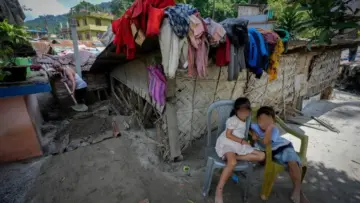
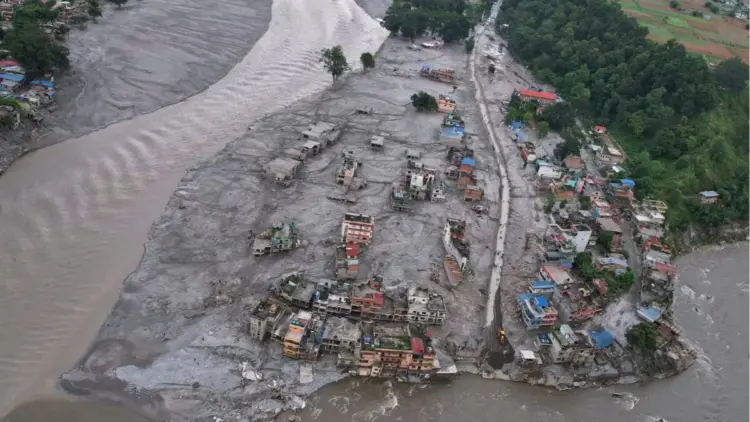
For developing nations, the financial burden is immense. The UNEP Adaptation Gap Report 2026 estimates that these countries will require approximately $305 billion annually by 2035 to prepare for extreme weather, sea-level rise, and agricultural disruption. Currently, international public adaptation finance stands at a mere $28 billion to $31 billion, representing less than 10% of the projected need.
The Renewable Paradox
While the political landscape is fraught, the economic landscape offers a glimmer of hope. Renewable energy deployment has reached record highs, driven by falling costs in solar and battery technology. However, the World Resources Institute (WRI) notes that of the 45 indicators required to meet 2030 targets, none are currently on track. While three-quarters are moving in the right direction, the pace is significantly slower than what science dictates.
4. Official Responses: National Interests vs. Global Cooperation
The discourse at COP31 reflects the varying priorities of global powers and the most vulnerable nations.
India’s Position: Finance and Equity
India’s Environment Minister, Bhupender Yadav, has emerged as a leading voice for the Global South. On November 3, Yadav articulated India’s stance, emphasizing that climate finance must be "predictable, largely public, and concessional." India is firmly resisting attempts to turn voluntary adaptation indicators into "conditionalities" for accessing funds.

For India, the stakes are domestic. The melting of the Hindu Kush Himalaya (HKH) glaciers threatens the water security of over a billion people, while coastal cities like Mumbai and Chennai face the dual threat of rising seas and intensifying heatwaves. Yadav’s message is clear: India will transition, but it will not do so at the cost of its development or by incurring unsustainable debt.
The UN’s Warning
Simon Stiell, the UN’s climate chief, has used the Antalya platform to challenge the "wait-and-see" approach of many governments. "Climate impacts are escalating," Stiell warned. "This will get worse as we head into overshoot. Yet preparedness lags behind." His remarks were directed at G20 nations, which are responsible for 80% of global emissions but are currently preoccupied with domestic inflation and geopolitical conflicts.
The Turkish Host’s Strategy
The Turkish presidency is attempting to position COP31 as the "Implementation COP." By focusing on electrification and AI-driven climate solutions, Türkiye aims to move the conversation toward practical engineering and investment opportunities, hoping to bypass some of the ideological gridlock that has plagued previous summits.
5. Implications: The Reality of the "Overshoot"
As the negotiations in Antalya proceed, a sobering consensus is emerging: the world is likely to overshoot the 1.5°C limit. This realization has profound implications for the future of international climate policy.

The End of Reversibility
The ICCI’s State of the Cryosphere report has shifted the focus from "prevention" to "damage control." Scientists at COP31 are highlighting that while temperature can theoretically be lowered through carbon removal in the future, the physical damage—such as the collapse of the West Antarctic Ice Sheet or the thawing of permafrost—cannot be undone. This makes every fraction of a degree of warming avoided today exponentially more valuable than "cooling" tomorrow.
The Security-Climate Nexus
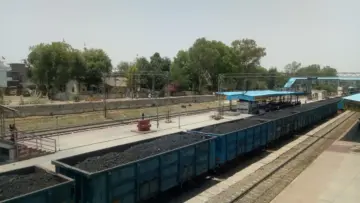
The wars in Europe and the Middle East have forced a re-evaluation of energy security. While some governments have pivoted back to domestic coal and gas to ensure immediate stability, the BloombergNEF energy outlook argues that this is a short-sighted strategy. The volatility of fossil fuel markets is itself a security risk. In contrast, clean power and electrification offer a path toward energy sovereignty, particularly for import-dependent nations like India and many European states.
The Debt Trap and Climate Justice
One of the most contentious issues at COP31 is the nature of climate finance. Many developing nations are already struggling with high debt-to-GDP ratios. If climate aid arrives in the form of high-interest loans, it risks creating a "debt-disaster cycle," where countries take on debt to rebuild after a storm, only to have their repayment capacity destroyed by the next climate event. The demand for grants and "loss and damage" payments is no longer just a moral argument; it is a fundamental requirement for global economic stability.
Conclusion: The Antalya Test
The Antalya summit will not end global conflicts, nor will it single-handedly stop the rise in temperatures. Its success will be measured by whether it can sustain international cooperation in an era of fragmentation. The "35-by-35" pledge and Brazil’s fossil fuel roadmap are important signals, but they are not substitutes for binding national policies.

As the delegates deliberate in the halls of Antalya, the message from the natural world is increasingly clear: the climate does not negotiate, and it does not wait for geopolitical rivalries to settle. The choice facing the world at COP31 is not between a perfect transition and no transition—it is between managing an orderly retreat from the brink or facing a chaotic and irreversible collapse of the systems that sustain modern civilization.