

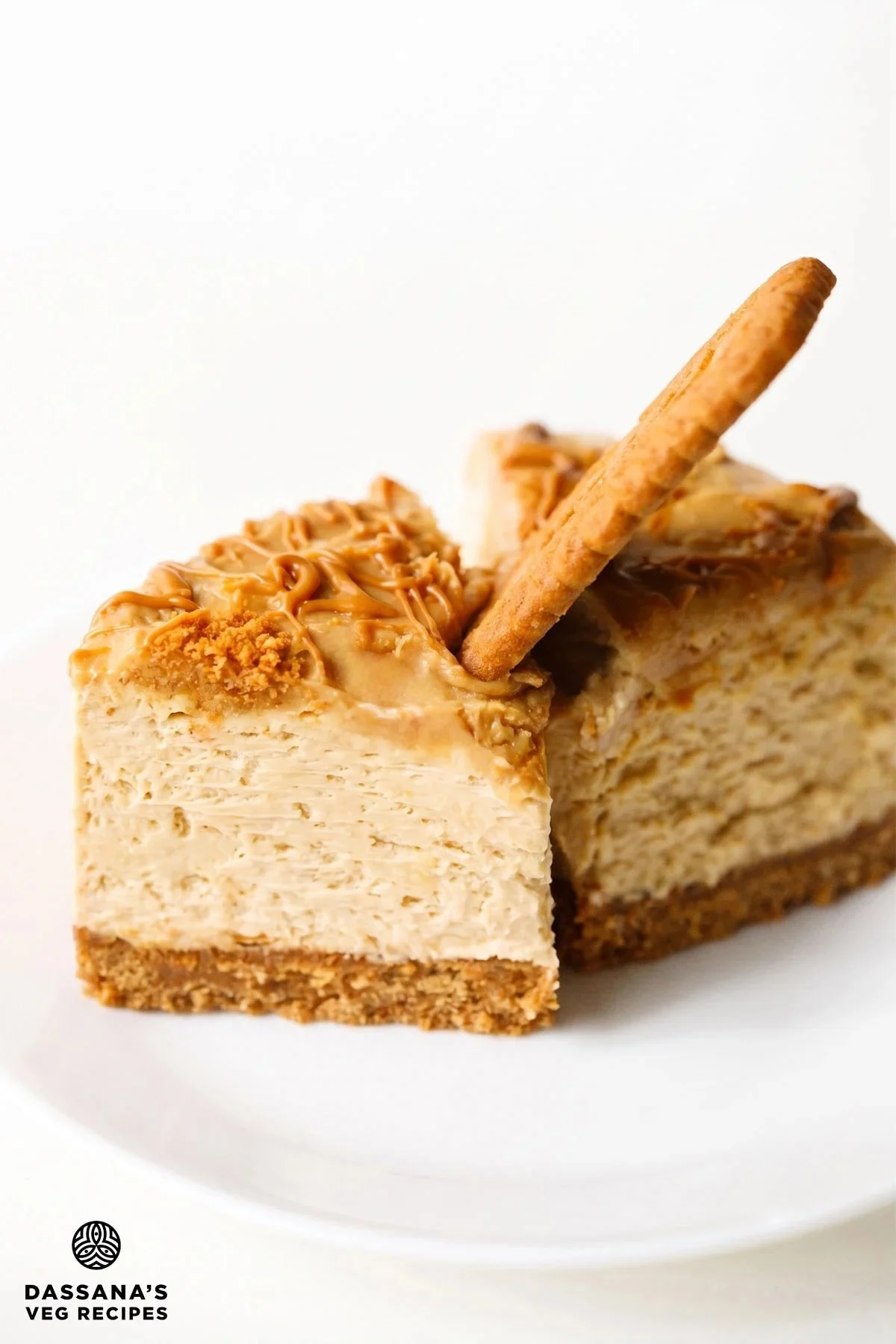
In the contemporary culinary landscape, few flavors have achieved the cult status and global reach of Lotus Biscoff. Originally a modest Belgian accompaniment to coffee, the speculoos cookie has transformed into a foundational ingredient for high-end and home-made desserts alike. Among these, the No-Bake Biscoff Cheesecake has emerged as a premier choice for home bakers seeking professional-grade results with minimal technical overhead. This dessert represents a broader shift in the confectionery world toward "no-bake" architecture—a method that prioritizes texture and flavor stability through refrigeration rather than thermal chemical reactions.

The following report analyzes the structural components, preparation chronology, and broader implications of this specific Biscoff-based dessert, which has become a staple of modern entertaining.

Main Facts: The Anatomy of a Modern Classic
The No-Bake Biscoff Cheesecake is defined by its tripartite structure: a compressed biscuit foundation, an aerated cream cheese-based filling, and a viscous cookie-butter topping. Unlike traditional New York-style cheesecakes that rely on eggs and oven heat to coagulate proteins, the no-bake variant utilizes the inherent stability of high-fat cream cheese and the structural integrity of whipped heavy cream.

Key Characteristics:
- Thermal Independence: The recipe requires no oven time, eliminating the risk of surface cracking or overcooking—common pitfalls in traditional baking.
- Structural Stability: Despite the absence of gelatin or agar-agar, the cheesecake achieves a "clean slice" consistency. This is attributed to the specific ratio of cream cheese to whipped cream, combined with the natural fats present in the Biscoff spread.
- Flavor Profile: The dessert leverages the "speculoos" profile—a complex blend of cinnamon, nutmeg, ginger, cloves, and caramelized beet sugar.
- Preparation Efficiency: While the active preparation time is approximately 30 to 45 minutes, the dessert is a "make-ahead" specialist, requiring a mandatory maturation period in a controlled cold environment.
Chronology: The Lifecycle of a No-Bake Dessert
The production of a Biscoff cheesecake follows a precise chronological sequence where temperature control and mechanical agitation are the primary variables.

Phase I: Foundation and Compression
The process begins with the mechanical breakdown of Lotus Biscoff Classic biscuits. In professional settings, a food processor is utilized to achieve a uniform "fine crumb" consistency. These crumbs are then bound with molten unsalted butter. The ratio—approximately 125 grams of biscuit to 40 grams of butter—is critical. Once mixed, the substrate is transferred to a 5-inch detachable or springform pan, lined with parchment paper for clean extraction. This base must undergo a "setting phase" in the refrigerator for at least 30 minutes to allow the lipids in the butter to solidify, creating a rigid floor for the filling.

Phase II: The Aeration of the Core
The secondary phase involves the preparation of the filling. This is a two-track process:

- Cream Cheese Stabilization: 200 grams of softened cream cheese are beaten with 40 grams of powdered sugar, vanilla, and a pinch of salt. This step ensures the sugar is fully dissolved and the cheese reaches a pliable, lump-free state.
- The Whipping Stage: Separately, 150 ml of cold heavy cream (minimum 35% fat) is whipped to stiff peaks. This introduces the air bubbles necessary for the cheesecake’s lightness.
Phase III: Integration and Folding
The most delicate stage of the chronology is the folding process. The whipped cream is introduced to the cream cheese base using a spatula. This must be done manually to prevent "deflation." Once homogenized, five tablespoons of Biscoff spread are folded in. This integrates the signature caramelized flavor without compromising the structural bubbles created in the previous step.

Phase IV: The Maturation Period
The assembled cheesecake is smoothed with an offset spatula and enters the refrigerator. Chronological data suggests that while 5 to 6 hours may suffice for a basic set, an overnight chill (12+ hours) is the gold standard. During this time, moisture is redistributed, and the fats provide a firm, sliceable texture.

Phase V: Finishing and Presentation
The final stage occurs just before service. Biscoff spread is melted (either via microwave or a bain-marie) to a pourable viscosity and drizzled over the set surface. Crushed biscuit remnants are applied as a garnish to provide a textural contrast—the "crunch" against the "cream."

Supporting Data: Nutritional and Technical Specifications
To understand the success of this recipe, one must examine the empirical data regarding its composition. A single serving of this Biscoff Cheesecake (based on a 6-serving yield) carries significant caloric density, reflective of its rich ingredient profile.

Nutritional Breakdown (Per Serving):
- Calories: 482 kcal
- Total Fat: 37g (Saturated Fat: 19g)
- Carbohydrates: 34g (Sugars: 22g)
- Protein: 5g
- Cholesterol: 76mg
- Sodium: 254mg
Technical Ratios:
The stability of the "No-Gelatin" model relies on a roughly 1.3:1 ratio of cream cheese to whipped cream. Increasing the cream cheese proportion leads to a denser, more traditional mouthfeel, while increasing the whipped cream creates a "mousse-like" consistency. The inclusion of Biscoff spread (which contains oils and emulsifiers) further aids in the "set" of the filling at low temperatures.

Official Responses: Expert Culinary Perspectives
Culinary experts and professional pastry chefs have weighed in on the "No-Bake" trend, offering insights into why this specific recipe has seen such high adoption rates.

The "Over-Whipping" Warning:
Professional bakers emphasize that the most common failure point is the over-agitation of the heavy cream. "Once the cream reaches stiff peaks, mechanical mixing must cease," notes one culinary consultant. "Over-whipping breaks the emulsion, resulting in a grainy texture that cannot be salvaged."

The Lotus Bakeries Influence:
While not an official endorsement of a single recipe, the rise of "Cookie Butter" as a global category has been spearheaded by Lotus Bakeries. Their shift from a biscuit manufacturer to a provider of spreads and "crunch" toppings has fundamentally changed home baking. The company’s focus on the "speculoos" flavor profile has created a standardized ingredient that ensures consistency across different kitchens.

Temperature Management:
Experts suggest that for the neatest presentation, the knife used for slicing should be dipped in hot water and wiped clean between each cut. This prevents the Biscoff topping from dragging through the white cream cheese layer, maintaining the visual integrity of the dessert.

Implications: The Future of Home Confectionery
The popularity of the No-Bake Biscoff Cheesecake signals several shifts in consumer behavior and the food industry at large.

1. The Accessibility of Gourmet Aesthetics
This recipe proves that "high-end" visual results no longer require specialized equipment like steam-injection ovens or sous-vide machines. The "Instagrammability" of the Biscoff drip effect has democratized food styling, allowing amateur bakers to produce social-media-ready content.

2. Seasonal Versatility
Traditional cheesecakes are often viewed as "heavy" winter desserts. The no-bake version, served chilled, bridges the gap into summer menus. It offers a cool, refreshing mouthfeel while retaining the comforting spices of the Biscoff biscuit.

3. Ingredient Synergy and Brand Loyalty
The reliance on a specific brand (Lotus) highlights the power of ingredient-driven recipes. Unlike a "chocolate cake," which can be made with any cocoa, a "Biscoff Cheesecake" requires a specific branded product. This creates a powerful synergy between recipe developers and manufacturers, where the success of a viral recipe directly impacts retail sales of the core ingredient.

4. Evolution of Dietary Adaptations
While the current data focuses on a full-fat, sugar-inclusive version, the "no-bake" structure is highly adaptable. It provides a blueprint for future plant-based (vegan) iterations, as vegan cream cheese and coconut-based whipping creams react similarly to refrigeration, allowing the Biscoff flavor to remain the star of the show.

Conclusion
The No-Bake Biscoff Cheesecake is more than a simple dessert; it is a masterclass in culinary efficiency and flavor engineering. By understanding the science of fat-based stabilization and the importance of chronological chilling, home bakers can achieve a level of sophistication previously reserved for professional patisseries. As the "no-bake" movement continues to grow, the Biscoff variant remains the gold standard for its balance of ease, stability, and unparalleled caramelized flavor.
