

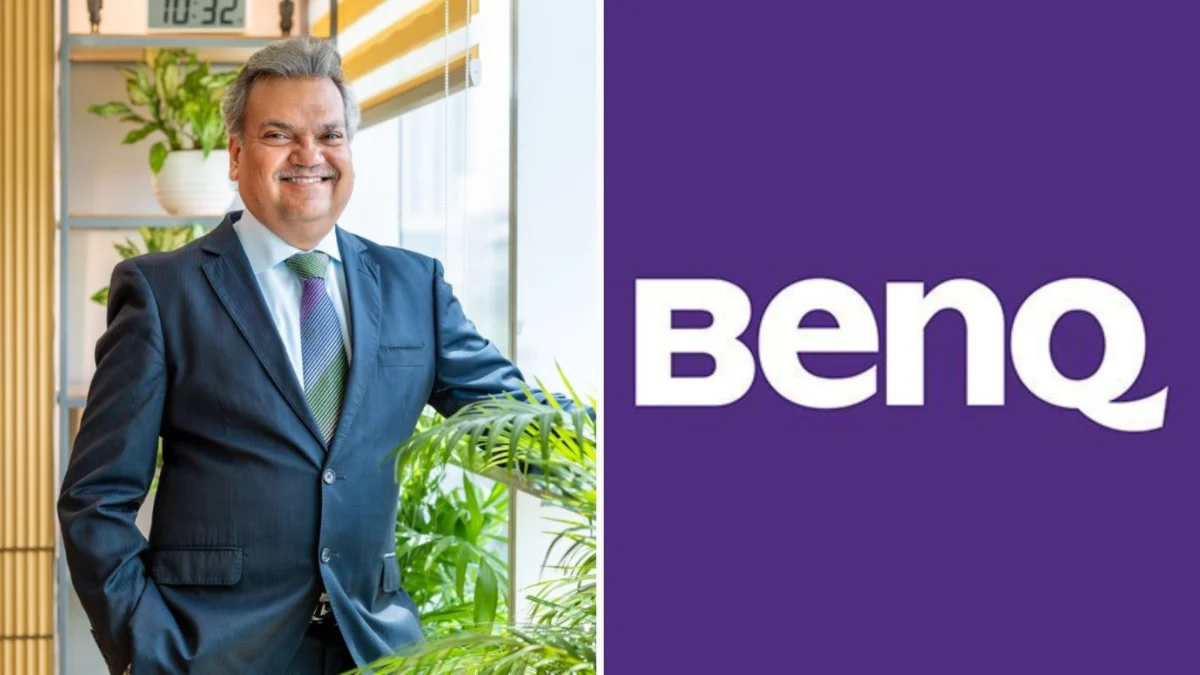
New Delhi, India – [Date] – A decade ago, the quintessential Indian classroom was largely defined by its simplicity: a blackboard, chalk, and perhaps, a teacher’s personal laptop as the sole nod to technology. Fast forward to today, and the educational landscape has undergone a profound metamorphosis, driven significantly by the pioneering efforts of companies like BenQ. The Taiwanese display maker, which strategically entered the Indian market ten years ago, now asserts a dominant position in the burgeoning education technology (EdTech) sector.
BenQ claims that its education segment currently contributes a substantial 30 per cent to its overall India business revenue. More strikingly, the company states it commands an impressive over 60 per cent share of the country’s installed base of smart classrooms. These compelling figures were recently shared by Rajeev Singh, the astute Managing Director of BenQ India and South Asia, painting a vivid picture of the company’s impactful journey and its pivotal role in reshaping India’s learning environments.
In an exclusive interview with indianexpress.com, Singh offered a candid perspective on BenQ’s evolving identity from a mere display manufacturer to a comprehensive education technology specialist. His observations underscore a fundamental shift in educational paradigms: "If a school doesn’t have a smart class, I think parents will think twice before putting their kid into that school," Singh remarked, highlighting how advanced technology has transitioned from a luxury to an essential differentiator in the eyes of discerning parents. This sentiment encapsulates the rapid evolution of expectations within India’s dynamic education sector, where digital readiness is increasingly becoming a benchmark for quality schooling.
A Decade of Transformation: BenQ’s Journey in Indian EdTech
BenQ’s trajectory in India is a compelling narrative of adaptation, innovation, and strategic foresight. From its initial foray into a market ripe for technological disruption, the company has meticulously charted a course that addresses the unique challenges and vast opportunities presented by the Indian educational ecosystem.
The Genesis: Identifying a Nascent Market
When BenQ first planted its flag in India, the concept of a "smart classroom" was nascent, if not entirely unfamiliar, to the majority of educational institutions. The pedagogical tools were largely traditional, and the integration of advanced digital aids was sporadic and often limited by infrastructure. BenQ recognised this vacuum, understanding that while the core elements of education remained timeless, the methods of delivery and engagement were ripe for modernisation. Their initial vision was not just to sell hardware, but to ignite a transformation, moving classrooms beyond the confines of static learning into dynamic, interactive spaces. This strategic entry positioned BenQ at the vanguard of a movement that would fundamentally alter how knowledge is imparted and absorbed across the nation.
Overcoming Environmental Hurdles: Engineering for India
The journey, however, was far from straightforward. Singh openly acknowledged that the early challenge was predominantly hardware-centric. India’s diverse and often demanding climatic and infrastructural conditions presented a formidable barrier that off-the-shelf global products could not adequately address. "Conditions in Indian classrooms," Singh explained, "are very different from those elsewhere." He elaborated on the specifics: a significant number of classrooms lack air-conditioning, leading to elevated temperatures; dust is a perennial issue, threatening sensitive electronic components; and the electricity supply has historically been irregular, characterised by frequent and often damaging voltage spikes. Projects that failed to account for these unique environmental stressors, Singh noted, were prone to frequent breakdowns and premature obsolescence, leading to frustration and wasted investment for schools.
BenQ’s response was a testament to its commitment to the Indian market. The company embarked on a focused effort to design and build India-specific models, tailor-made to withstand these challenging conditions. This involved engineering display solutions capable of operating reliably in ambient classroom temperatures reaching up to 50 degrees Celsius. To combat the omnipresent dust, BenQ developed a proprietary dust-proof engine that effectively shielded critical internal components from particulate matter, significantly extending the lifespan and reliability of their projectors and displays. Furthermore, the electronics were meticulously designed to withstand voltage surges and fluctuations, ensuring consistent performance despite an erratic power grid. This meticulous approach to hardware resilience, initially applied to projectors, was subsequently integrated into the design and manufacturing of BenQ’s interactive flat panels (IFPs), ensuring that their flagship EdTech solutions were robust enough for any Indian classroom. This localisation strategy proved to be a critical differentiator, earning the trust of educational institutions seeking durable and dependable technology.
The ‘Smart Class’ Revolution: A Unique Bundled Approach
Beyond hardware robustness, BenQ’s vision for Indian EdTech extended to creating a holistic learning ecosystem. Recognizing that advanced displays were only one piece of the puzzle, the company strategically forged alliances with leading software and content developers. Over the years, BenQ partnered with prominent players such as Educomp, Extramarks, Next Education, Tata ClassEdge, HCL Learning, and NIIT. These companies possessed rich repositories of lesson materials, interactive content, and pedagogical expertise, but often lacked the integrated display devices to deliver them effectively in a classroom setting.
The outcome of these synergistic partnerships was the pioneering "smart class" solution. This innovative offering comprised a cohesive package featuring a high-quality projector or an interactive flat panel, integrated speakers for immersive audio, and a vast library of digital content – all delivered as a single, ready-to-deploy bundle. Singh proudly asserted that this integrated business model is "a very unique business model in the world," adding that India was the sole market where BenQ offered such a comprehensive solution as one unified package. He contrasted this with practices in other global markets where buyers typically procured projectors and content separately, often leading to compatibility issues, fragmented support, and a less streamlined adoption process.
This bundled approach significantly simplified the procurement and deployment process for schools, offering a ‘plug-and-play’ solution that minimised technical complexities and maximised educational impact. The initial adoption of these smart classes gained significant traction in private schools, which were quicker to embrace technological advancements to enhance their competitive edge. The success in the private sector then paved the way for government institutions to recognise the immense potential of such integrated solutions, gradually leading to their wider implementation across public education systems.
Quantifying Impact and Future Trajectories
BenQ’s strategic approach, blending robust hardware with comprehensive content solutions, has translated into remarkable market penetration and financial growth, solidifying its position as a leader in India’s EdTech landscape.
BenQ’s Dominance: Numbers Tell the Story
The impact of BenQ’s efforts is clearly reflected in the numbers. According to Rajeev Singh, approximately seven lakh Indian classrooms are now equipped with either a projector or an interactive flat panel, marking a significant leap from the traditional setup. Of this substantial installed base, BenQ proudly accounts for having supplied more than four lakh units, reinforcing its claim of holding over 60 per cent of the market share. This dominance underscores the effectiveness of their localised strategies and integrated offerings.
The company’s financial performance further highlights its robust growth. Last year, BenQ India achieved a turnover of approximately Rs 695 crore, a testament to its expanding market footprint and the increasing demand for its EdTech solutions. Looking ahead, Singh revealed an ambitious target: BenQ expects to cross the significant milestone of Rs 1,000 crore in turnover this year, signaling continued aggressive growth and a strong belief in the sustained expansion of the Indian EdTech market. These figures not only reflect BenQ’s commercial success but also illustrate the rapid pace at which Indian education is embracing digital transformation.
Tapping into the Untapped: The Government School Opportunity
While significant strides have been made, BenQ recognises that the greatest frontier for educational technology adoption lies within India’s vast government school system. With over a million government schools spread across the nation, housing more than one crore classrooms, the scale of the opportunity is unparalleled. Singh shared that, to date, nearly four lakh of these government classrooms have been successfully converted into smart classes. However, he quickly contextualised this achievement by stating a crucial statistic: "Our adoption rate, in terms of number of classrooms, not the number of children, is less than 5%. So the balance is yet to happen." This candid assessment highlights the immense untapped potential and the monumental task that still lies ahead in modernising public education across the country.
A Vast Frontier for Modernization: The low adoption rate in government schools, while seemingly small, represents an enormous future opportunity for companies like BenQ. Equipping the remaining 95% of government classrooms with smart technology could profoundly impact millions of students, bridging educational disparities and providing access to quality learning experiences regardless of socio-economic background. This widespread modernisation has the potential to elevate the overall standard of public education, making it more engaging, interactive, and aligned with the demands of the 21st century.
Strategic Partnerships and Deployment: BenQ has already commenced significant partnerships with various state governments, demonstrating its commitment to public education. The company has successfully executed projects in states including Uttar Pradesh, Maharashtra, and Punjab, bringing its integrated smart class solutions to thousands of government-run institutions. A notable recent achievement is BenQ’s first project with the Delhi government, which commenced approximately six months prior and has already covered an impressive 7,000 classrooms. While Singh noted that deployment rates are steadily rising each year, he realistically acknowledged that the sheer volume of schools and classrooms means that comprehensive modernisation across the entire government sector will inevitably "take time." This ongoing effort requires sustained collaboration between technology providers, government bodies, and educational stakeholders to overcome logistical and financial challenges.
Navigating the Human Element: Teacher Training and Adoption
The successful integration of technology into classrooms extends far beyond merely installing hardware; it fundamentally relies on the readiness and proficiency of educators. When queried about teacher training, Singh offered a nuanced perspective, describing a "mixed picture" regarding teacher readiness. He observed that younger teachers, who have grown up in a more digitally native environment, tend to adapt to new technologies much faster. Conversely, those who have adhered to traditional teaching methodologies for 20 to 30 years often find the transition to smart classrooms more challenging.
Bridging the Digital Divide in the Classroom: Despite these disparities, Singh noted an encouraging trend: the widespread familiarity with smartphones and touchscreens among the general population, including experienced teachers, is proving to be a significant asset. This intuitive understanding of touch-based interfaces helps ease the learning curve for operating interactive flat panels. To further support this transition, BenQ actively runs comprehensive training programs. For its private sector clients, the company offers both physical, hands-on sessions and virtual training modules, ensuring that educators are comfortable and proficient in leveraging the full capabilities of the smart class solutions. For large-scale government projects, BenQ organises district-level training sessions, aiming to equip a broad base of teachers with the necessary skills.
However, a critical gap remains. Singh pointed out that while teacher-training institutes are increasingly deploying interactive panels within their own curricula, the pace of this expansion is "not keeping pace with the need." This highlights a systemic challenge: ensuring that new generations of teachers are adequately prepared for tech-enabled classrooms, and that existing educators receive continuous professional development to stay abreast of evolving EdTech tools and methodologies. Effective teacher training is not merely about technical proficiency but also about pedagogical integration – helping teachers understand how to leverage technology to enhance learning outcomes, foster critical thinking, and create engaging classroom experiences.
The Value Proposition: Premium Quality with Peace of Mind
BenQ’s offerings, particularly its interactive flat panels and comprehensive smart class solutions, are often positioned at a premium price point in the market. When confronted with this aspect, Rajeev Singh readily acknowledged that BenQ products indeed carry a higher price tag. However, he was quick to articulate the compelling value proposition that justifies this investment, particularly in the Indian context.
Singh emphasised BenQ’s unwavering commitment to customer satisfaction and operational continuity. He highlighted the company’s robust three-year on-site service commitment, which includes not only comprehensive technical support but also initial installation and crucial training for educators. Crucially, this commitment is offered "regardless of location," a significant factor in a geographically vast and diverse country like India, where remote schools often struggle to access timely technical assistance.
This extensive service package, according to Singh, provides customers with invaluable "peace of mind." In an environment where reliable technology and consistent support are paramount for uninterrupted learning, BenQ’s premium offering translates into a lower total cost of ownership (TCO) over the product’s lifespan, despite a higher initial outlay. Schools are assured of consistent performance, minimal downtime, and expert assistance, allowing them to focus on their core mission of education rather than grappling with technical issues. This blend of cutting-edge technology, engineered for local conditions, and unparalleled service support forms the cornerstone of BenQ’s premium positioning, resonating strongly with institutions that prioritise long-term value and reliability.
The Future of Learning: AI, Edge, and Responsible Tech
Looking beyond the immediate horizon, BenQ is actively engaged in shaping the next generation of educational technology, integrating advanced concepts like Artificial Intelligence (AI) and edge processing to create even more intelligent and responsive learning environments.
Pioneering the Next Wave: AI and Edge Processing in EdTech
BenQ’s commitment to innovation is evident in its continuous development of advanced display solutions. Singh revealed that the company is now in its second generation of AI-enabled panels, marking a significant leap forward in intelligent classroom technology.
Second-Generation AI Panels: The initial generation of AI-enabled panels primarily relied on cloud processing for their intelligent functionalities. While effective, this approach often led to noticeable delays in response times and, critically, a constant dependence on stable internet connectivity – a significant challenge in many parts of India. Recognizing these limitations, BenQ has engineered its newer, second-generation panels with integrated AI chipsets. These powerful chipsets are designed to handle a substantial portion of the AI processing directly on the device itself, a paradigm known as "edge AI." Singh confidently stated that BenQ is currently unique among its peers in offering this advanced edge AI capability in its interactive panels.
The benefits of this transition are manifold. Edge AI significantly reduces latency, providing near-instantaneous responses to user interactions and AI-driven insights. It also drastically lessens the reliance on high-bandwidth internet, making the technology more robust and accessible in areas with limited connectivity. Furthermore, processing data locally on the device can enhance data security and privacy, addressing growing concerns about cloud-based data handling. This strategic shift positions BenQ at the forefront of intelligent EdTech, offering solutions that are not only smarter but also more resilient and adaptable to diverse operational environments.
The Connected Classroom of Tomorrow: Singh articulated a compelling vision for the evolution of India’s education technology landscape over the next three to five years. He anticipates a future where classroom panels are seamlessly linked with students’ individual tablets or personal learning devices. This interconnected ecosystem would enable real-time, instantaneous scoring of tests and assignments, moving away from the laborious and time-consuming manual evaluation processes. More profoundly, this integration would allow AI algorithms to continuously monitor student performance and immediately flag "weak topics" for individual attention.
This capability directly addresses a persistent and critical problem in traditional education: the significant delays in identifying struggling students. Historically, it could take weeks or even months for educators to pinpoint specific areas where a student was faltering, by which time the learning gap might have widened considerably. With AI-powered real-time assessment and flagging, teachers can intervene promptly, offering personalised remedial support and adaptive learning paths. This paradigm shift promises to foster a more proactive and responsive educational system, ensuring that every student receives tailored support precisely when and where it is needed, thereby maximising their potential and preventing learning gaps from becoming insurmountable.
Beyond the Screen: Innovative Learning Experiences
BenQ’s innovation extends beyond traditional interactive panels to explore novel and immersive learning environments that address modern educational challenges, such as excessive screen time.
Active Floor: Gamified Learning Without Eye Strain: In a pioneering move, BenQ is actively promoting its "Active Floor" solution for early-years education. This innovative system employs a ceiling-mounted projector that transforms any floor surface into a dynamic, interactive learning space. With a vast library of over 18,000 templates, Active Floor offers gamified lessons that encourage physical movement, collaboration, and experiential learning, particularly beneficial for younger children. Singh confirmed that installations of this unique system have already commenced across India, marking a new frontier in engaging and active pedagogy.
A key advantage of Active Floor, as highlighted by Singh, is its ability to mitigate eye strain, a growing concern with increased screen time among children. Unlike traditional screens where light is directly emitted, Active Floor projects images onto the floor, meaning children are looking at "reflected light." Singh emphatically stated, "You’re not looking at the projector. You’re looking at the floor, and the floor is reflected light. There is zero harm to your eyes." This innovative approach not only promotes kinesthetic learning and active participation but also prioritises the ocular health of young learners, offering a compelling blend of engagement and safety.
A Holistic Approach to EdTech Adoption: Responsibility and Integration
As EdTech continues its rapid expansion, BenQ advocates for a thoughtful and integrated approach to its adoption, emphasising responsible procurement and the strategic utilisation of technology to enhance accessibility.
The 360-Degree View for Procurement: Singh strongly urged schools and other stakeholders involved in EdTech procurement to adopt a "360-degree view" rather than making fragmented purchases of panels and content separately. This recommendation reinforces BenQ’s successful bundled business model and highlights the advantages of integrated solutions. A holistic approach ensures compatibility between hardware and software, streamlines technical support, and optimises the overall user experience, leading to more effective and sustainable technological integration in classrooms. It prevents the common pitfalls of disparate systems that may not work seamlessly together, often resulting in operational inefficiencies and compromised learning outcomes.
Extending the Classroom Reach: Virtual Learning: Beyond the physical classroom, Singh also pointed to the growing importance of virtual classrooms as a crucial tool for ensuring continuity of learning. He underscored their value as a means for absent students to keep up with lessons, thereby preventing academic setbacks due to unavoidable absences. The recent global experiences, particularly during the pandemic, have amplified the significance of robust virtual learning platforms, transforming them from supplementary tools into essential components of a resilient educational infrastructure. Virtual classrooms enhance accessibility, allowing education to transcend geographical barriers and personal circumstances, ensuring that learning remains an uninterrupted journey for all students.
Conclusion
BenQ’s decade-long journey in India stands as a compelling case study in strategic market penetration, technological adaptation, and unwavering commitment to educational transformation. From its initial challenge of engineering hardware for India’s unique environmental conditions to pioneering a unique bundled smart class model, and now venturing into the realm of AI-powered edge computing and innovative learning solutions like Active Floor, BenQ has consistently demonstrated foresight and leadership.
With a dominant market share, ambitious growth targets, and a keen understanding of both the opportunities and complexities within India’s vast government school sector, BenQ is not just a participant but a key architect of the nation’s digital education revolution. By blending robust, localised hardware with strategic content partnerships, addressing the critical need for teacher training, and envisioning a future of hyper-personalised, interactive learning, BenQ is playing an indispensable role in empowering Indian classrooms. As the country continues its rapid embrace of digital transformation, BenQ’s integrated approach, coupled with its focus on responsible technology use and long-term value, positions it to remain at the forefront, helping India realise its full potential as a global leader in integrated education technology. The promise of a truly smart, inclusive, and future-ready learning environment for every child in India draws closer, largely propelled by the vision and innovations of companies like BenQ.
