Introduction
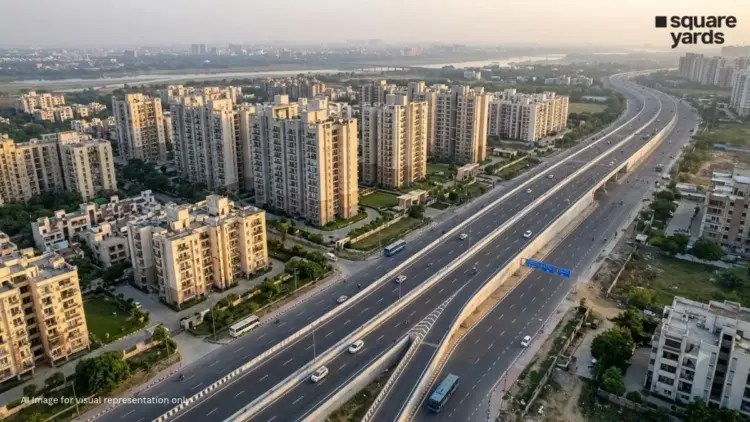
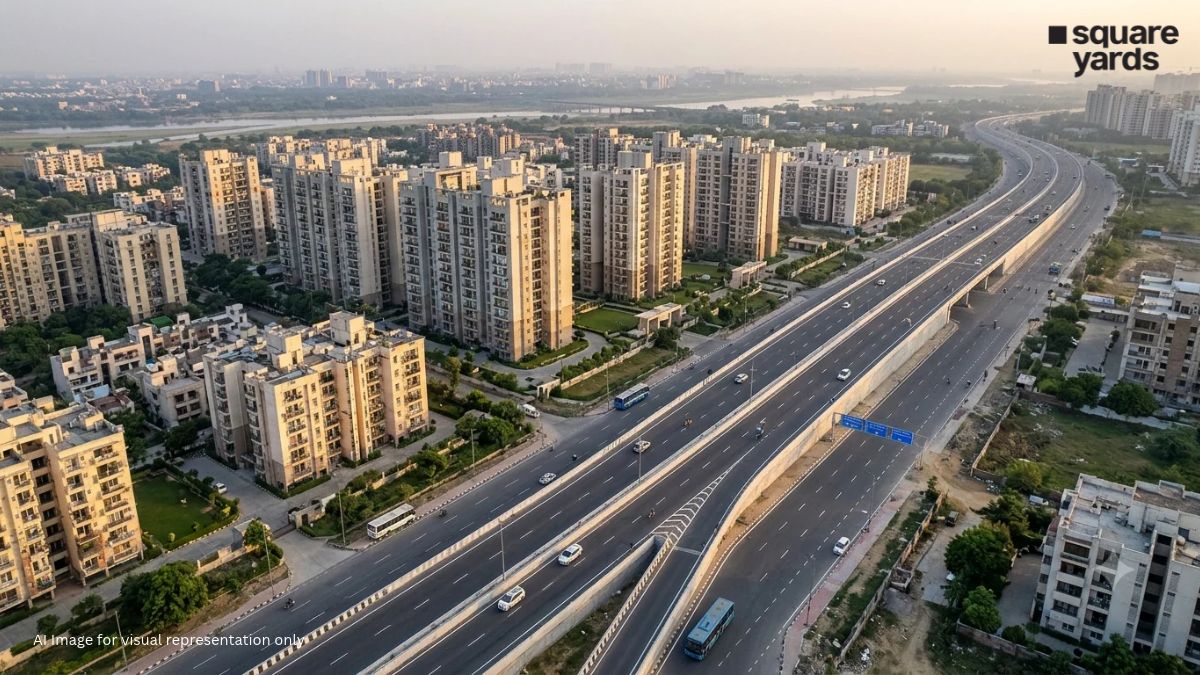
The landscape of the National Capital Region (NCR) is undergoing a seismic shift, driven by massive infrastructure investments designed to de-congest Delhi and integrate its satellite cities. At the heart of this transformation is the recent operationalization of the 9-km DND Flyway-Jaitpur stretch. While on the surface it appears to be a mere traffic solution for the thousands of commuters traversing the Delhi-Faridabad border daily, its implications run far deeper. This stretch serves as a critical link in the ambitious 59-km DND-Faridabad-Sohna corridor, a project that promises to redefine the economic and residential geography of Faridabad.
For decades, Faridabad remained the "quiet" cousin of the glitzy Gurugram and the rapidly developing Noida. However, with the opening of this new artery, the city is no longer just an industrial outpost but is emerging as a high-potential residential hub. This report explores the multifaceted impact of the DND-Jaitpur stretch, analyzing real estate data, project timelines, and the broader socio-economic implications for the region.
I. Main Facts: The DND-Jaitpur Link and the Wider Corridor
The 9-km stretch between the DND Flyway and Jaitpur is a vital component of a larger infrastructure master plan. To understand its significance, one must look at the technical and logistical scale of the project.
The DND-Faridabad-Sohna Corridor
The DND-Jaitpur stretch is part of the larger DND-Faridabad-Sohna corridor, which is being developed by the National Highways Authority of India (NHAI). This corridor is designed to provide a seamless connection between the DND Flyway in Delhi and the Delhi-Mumbai Expressway (DME) at Sohna.
Key Technical Details:
- Stretch Length: 9 kilometers (DND to Jaitpur).
- Total Project Length: Approximately 59 kilometers.
- Primary Objective: To bypass the heavily congested Mathura Road (NH-2) and provide a high-speed alternative for traffic moving from North/East Delhi toward Faridabad, Gurugram, and eventually Mumbai.
- Integration: The stretch links directly with the Delhi-Mumbai Expressway, which is touted as India’s longest expressway, significantly reducing travel time to Jaipur and beyond.
- Connectivity Hub: It creates a multi-directional transit hub, offering improved access to the upcoming Noida International Airport (Jewar) via the Faridabad-Jewar link road.
Immediate Commuter Benefits
For the daily traveler, the opening of this stretch translates to a reduction in travel time by 20 to 30 minutes during peak hours. By providing a signal-free exit from the DND Flyway toward the Jaitpur border, the project alleviates the bottleneck at the Ashram intersection and the Sarita Vihar stretch, which have historically been among the most congested points in the NCR.
II. Project Chronology: From Blueprint to Reality
The development of the DND-Faridabad-Sohna corridor has been a phased journey, reflecting the government’s commitment to infrastructure-led growth.
- Conceptualization (2018-2019): The Ministry of Road Transport and Highways (MoRTH) identified the need for an alternative route to the Delhi-Mumbai Expressway that would bypass the main city traffic of Delhi.
- Land Acquisition and Clearances (2020-2021): Despite the challenges posed by the pandemic, land acquisition along the Yamuna riverbanks and the Agra Canal was prioritized. Environmental clearances were secured for the elevated sections.
- Phase 1 Construction: Work began on the Jaitpur to Sector 62 (Faridabad) segment. This phase focused on creating a multi-lane highway capable of handling heavy commercial and passenger traffic.
- The DND-Jaitpur Link (2023-2024): This 9-km section was the most challenging due to its proximity to the Yamuna floodplains and existing urban density. Engineering solutions, including elevated pillars and specialized interchanges, were employed.
- Operationalization (Late 2024 – 2026): The phased opening of the stretch has culminated in the current accessibility, marking a milestone in the "Bharatmala Pariyojana" initiative.
- Future Integration (2026 and beyond): Complete integration with the Sohna interchange and the full operational capacity of the Noida International Airport link are expected to be the final pieces of the puzzle.
III. Supporting Data: Real Estate Micro-Market Analysis
The real estate market in Faridabad has historically been price-sensitive. However, data from Square Yards indicates that the "accessibility premium" is beginning to influence property valuations across different sectors.
Comparative Price Points in Residential Hubs
The following table illustrates the current average apartment sale prices in key Faridabad sectors, highlighting the disparity between established and emerging markets:
| Micro-Market | Location Profile | Avg. Price (per sq. ft.) |
|---|---|---|
| Sector 15 | Established/Premium | Rs 10,500 |
| Sector 21C | Mature Residential | Rs 8,750 |
| Sector 86 | Neharpar (Phase 1) | Rs 7,450 |
| Sector 9 | Mid-range Established | Rs 7,100 |
| Sector 88 | Emerging/Affordable | Rs 6,100 |
| Sector 17 | Older Residential | Rs 5,450 |
Analysis of the "Neharpar" Belt
The "Neharpar" region, often referred to as Greater Faridabad, stands to benefit the most from the DND-Jaitpur link. Sectors like 86 and 88 offer modern high-rise living at price points (Rs 6,100 – Rs 7,450 psf) that are significantly lower than comparable areas in Noida (Sector 150) or Gurugram (Dwarka Expressway).
Previously, the "distance penalty"—the time taken to reach South or Central Delhi—kept these prices suppressed. With the new connectivity reducing the commute to a manageable 30-40 minutes, these emerging sectors are witnessing a surge in inquiries from Delhi-based professionals who were previously priced out of the South Delhi or Gurugram markets.
The Yield Gap
Investors are noting that while Sector 15 remains the "gold standard" for luxury in Faridabad, the capital appreciation potential is currently higher in the Neharpar belt. As the DND corridor matures, the price gap between the old city (Sector 15) and the new developments (Sector 86/88) is expected to narrow.
IV. Official Responses and Market Sentiment
Government and NHAI Perspective
Official updates from the NHAI emphasize that this corridor is not just a road but an "economic catalyst." Officials have stated that the project is designed to handle a capacity of over 100,000 passenger car units (PCUs) daily, which will significantly lower the carbon footprint of the region by reducing idling time at traffic signals.
Furthermore, the Haryana state government has signaled its intent to upgrade the local "last-mile" connectivity. Plans are reportedly in the works to widen internal sector roads in Faridabad to ensure that the influx of traffic from the DND corridor does not create new bottlenecks within the residential sectors.
Real Estate Expert Opinions
Market analysts suggest that Faridabad is undergoing a "rebranding."
"For years, Faridabad was viewed through the lens of its industrial heritage. Today, it is being viewed through the lens of connectivity," says a senior researcher at Square Yards. "The DND-Jaitpur stretch changes the psychology of the homebuyer. When you can reach your office in South Delhi in under 40 minutes, the affordability of Faridabad becomes an irresistible proposition."
Developers are also responding to this shift. There is a visible transition from mid-segment housing to "luxury-affordable" projects, featuring amenities like clubhouses, sports facilities, and smart-home integration, aimed at the millennial workforce.
V. Implications: The Future of Faridabad
The opening of the 9-km DND-Jaitpur stretch is the "tipping point" for several long-term regional shifts.
1. The "Reverse Migration" Trend
Historically, residents moved from Faridabad to Gurugram or Noida for better lifestyle options. We are now seeing the beginning of a reverse trend. Families living in cramped apartments in South Delhi are looking at Faridabad for larger 3BHK and 4BHK configurations. The DND link makes this "lifestyle upgrade" feasible without sacrificing professional proximity to the capital.
2. Commercial and Retail Expansion
Infrastructure always precedes commercial growth. With improved road access, Faridabad is likely to see an uptick in Grade-A office spaces. The city’s proximity to the Delhi-Mumbai Expressway makes it an ideal hub for logistics, warehousing, and regional corporate offices. This, in turn, will create local employment, further boosting the residential demand.
3. Impact on Social Infrastructure
The increased residential interest is already triggering a second wave of social infrastructure development. Reputed school chains and multi-specialty hospitals are expanding their footprint in Greater Faridabad, anticipating the needs of the growing population.
4. Integration with the Noida International Airport
Perhaps the most significant long-term implication is the connectivity to the Jewar Airport. The DND-Faridabad-Sohna corridor, linked with the upcoming greenfield expressway to the airport, will place Faridabad at the center of a "Golden Triangle" between Delhi, Gurugram, and the new aviation hub. This positions the city as a strategic residential choice for frequent flyers and aviation industry professionals.
Conclusion
The 9-km DND Flyway-Jaitpur stretch is far more than a civil engineering achievement; it is a gateway to a new era for Faridabad. By bridging the gap between affordability and accessibility, it has dismantled the primary barrier that held the city’s real estate market back for decades.
As the wider DND-Faridabad-Sohna corridor reaches full completion and integrates with the Delhi-Mumbai Expressway, Faridabad’s position within the NCR will be permanently elevated. For homebuyers, the window of "undervalued" pricing is likely closing, as the city transitions from a peripheral option to a primary contender in the regional housing market. The road ahead for Faridabad, quite literally, looks smoother than ever before.